
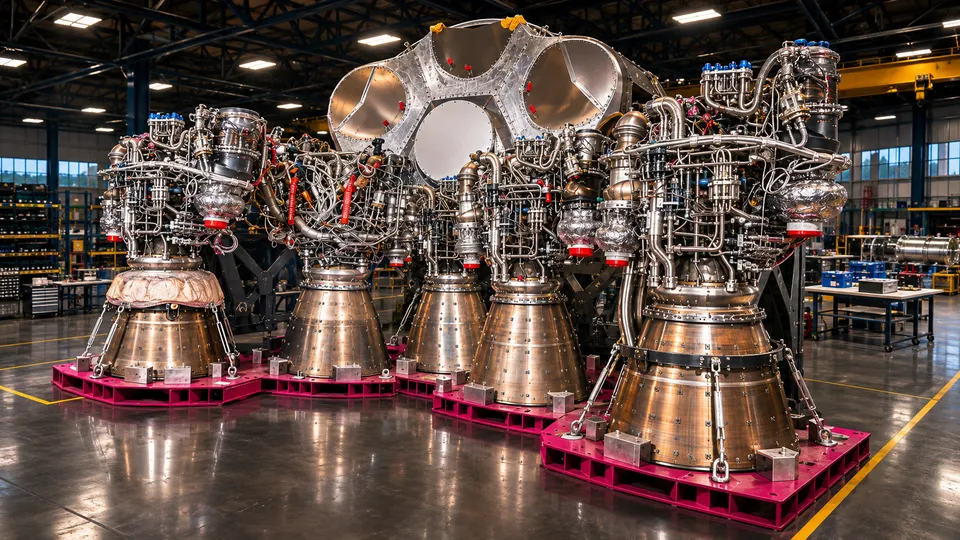
United Launch Alliance (ULA) has flown rockets since 2006, through two legacy vehicles and 70-odd Vulcan Centaur missions sold to the US Space Force and Amazon. None of them had ever failed outright until November 15, 2026, when a Vulcan carrying 40 satellites for Amazon’s Leo broadband constellation lost the mission roughly ten minutes after liftoff from Cape Canaveral. It was the company’s first total loss in twenty years of operation, and the first of 38 Vulcan flights Amazon has booked to build out a network meant to compete with SpaceX’s Starlink.
What failed
ULA said the first stage suffered “low first-stage performance,” and that stage separation happened “when the vehicle was low in altitude and below minimal velocity to reach orbit.” A follow-up update, reported by technology.org on November 19, narrowed the cause to “inadequate fuel supply from the vehicle to the BE-4 engines,” and explicitly cleared the engines themselves. The BE-4 is built by Blue Origin, which also supplies the same engine to its own New Glenn rocket — grounded since a test-stand explosion on May 28 — and which, by one shareholder estimate cited by Payload, collects close to 45 percent of the value of ULA’s Amazon contract either directly or through the engine deal. Blue Origin gets paid whether the fuel reaches the engines or not. The flight was Vulcan’s first in nine months. Elon Musk, never one to let a rival’s bad week pass quietly, replied to ULA’s own statement with “Hope you are back to flight soon.”

| From | To | How |
|---|---|---|
| Liftoff, SLC-41 | Inadequate fuel supply to BE-4 engines (first stage) | |
| Inadequate fuel supply to BE-4 engines (first stage) | Stage separation too low, too slow | |
| Stage separation too low, too slow | Below velocity needed for orbit | |
| Below velocity needed for orbit | 40 Amazon Leo satellites lost | ~10 min after launch |
Based on ULA statement, via technology.org
A day earlier, SpaceX had the opposite kind of week. On November 14, Starship’s Flight 15 spent 22.5 hours and 14 orbits aloft before its upper stage, Ship 42, returned to Starbase, Texas, and was caught by the launch tower’s mechanical arms — the first time any Starship vehicle has been recovered this way. The booster half of the attempt went worse: SpaceX’s Super Heavy, caught successfully on three previous flights, triggered a low-fuel alarm and diverted to a splashdown in the Gulf of Mexico, where it exploded before hitting the water. One catch out of two, on a flight explicitly designed to test both.
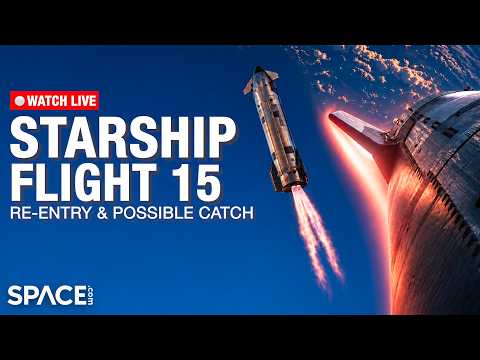
Watching Starship launch from here a little less than a day earlier, and knowing it had orbited the planet multiple times, added to the sense of unreality in seeing this spaceship return to Earth under its own power and be captured by the tower. It felt like stepping into the future.
Militaries hedge the shortage
Both failures land on a launch market that is already tight on capacity, which is why NATO spent the same week building its own workaround. On November 17, at the NATO EDGE conference in İzmir, the alliance launched Starlift, a brokerage that lets member states pool their military launch demand and reserve slots on commercial rockets through a new coordination office inside the NATO Support and Procurement Office, as Bloomberg reported. Eleven countries signed up: Belgium, Canada, Finland, Germany, Italy, the Netherlands, Norway, Sweden, Turkey, the UK and partner South Korea. Alongside it, NATO opened a Global Data Marketplace, built on the US Space Force’s Bluestaq platform (itself a rebrand of a commercial-data marketplace the Space Force has run since 2020), through which more than 220 companies have already registered to sell space data to allied militaries, with first orders expected before the end of 2026. Bloomberg also reported that NATO’s technology agency will award roughly $2.7 billion in contracts over the next two years, spanning commercial space, AI, cybersecurity and command-and-control systems.
The same squeeze is driving Finnish radar-satellite operator ICEYE to try to buy its own rocket maker, as previously reported. ICEYE, valued at more than $12 billion after a funding round in June, has offered over $2.2 billion for Italy’s Avio, which builds the solid-fuel Vega C, rated to carry 3.3 metric tons to low Earth orbit. Avio’s order backlog stood at €1.86 billion as of the third quarter of 2025, up 7.8 percent from the prior period, according to the company’s own results, built mostly on European government contracts rather than commercial ones. Most of ICEYE’s own satellites currently fly on Falcon 9, which SpaceX’s launch chief has said the company intends to retire in favor of Starship. A satellite operator buying a rocket maker only makes sense if you expect rides to get scarcer, not cheaper.
Smaller signals
Three further data points from the week round out the picture of where reusable and expendable rockets stand. Stoke Space said it has finished acceptance testing on all seven Zenith engines for the first stage of its Nova rocket, together rated for about 700,000 pounds of thrust; the company’s second stage, built around 24 thrusters surrounding a cooled heat shield, is still in hot-fire testing, with a first launch expected sometime in 2027. In China, LandSpace said it has completed ground testing of nine methane-fueled engines pulled from the first Zhuque-3 booster it recovered in August — a flight after which the booster itself toppled over on the pad, even though the touchdown looked clean, according to Guandian News. And Russia launched a Soyuz-2.1b from its Vostochny Cosmodrome on November 14, carrying two imaging satellites and a cluster of smaller payloads, including CubeSats for NPO Kaisant’s drone-communications constellation serving Russian forces in Ukraine — one more flight out of a pad that, by Ars Technica’s accounting, cost more than $5 billion to build and has averaged two launches a year since 2016.
ULA has not said when Vulcan flies again, and Amazon’s second Vulcan mission, originally due within weeks of the first, is now on hold. The next number worth watching is simple: how many days pass before ULA puts a Vulcan back on the pad, and whether Blue Origin’s own BE-4-powered New Glenn, still grounded since May, returns to flight first.