
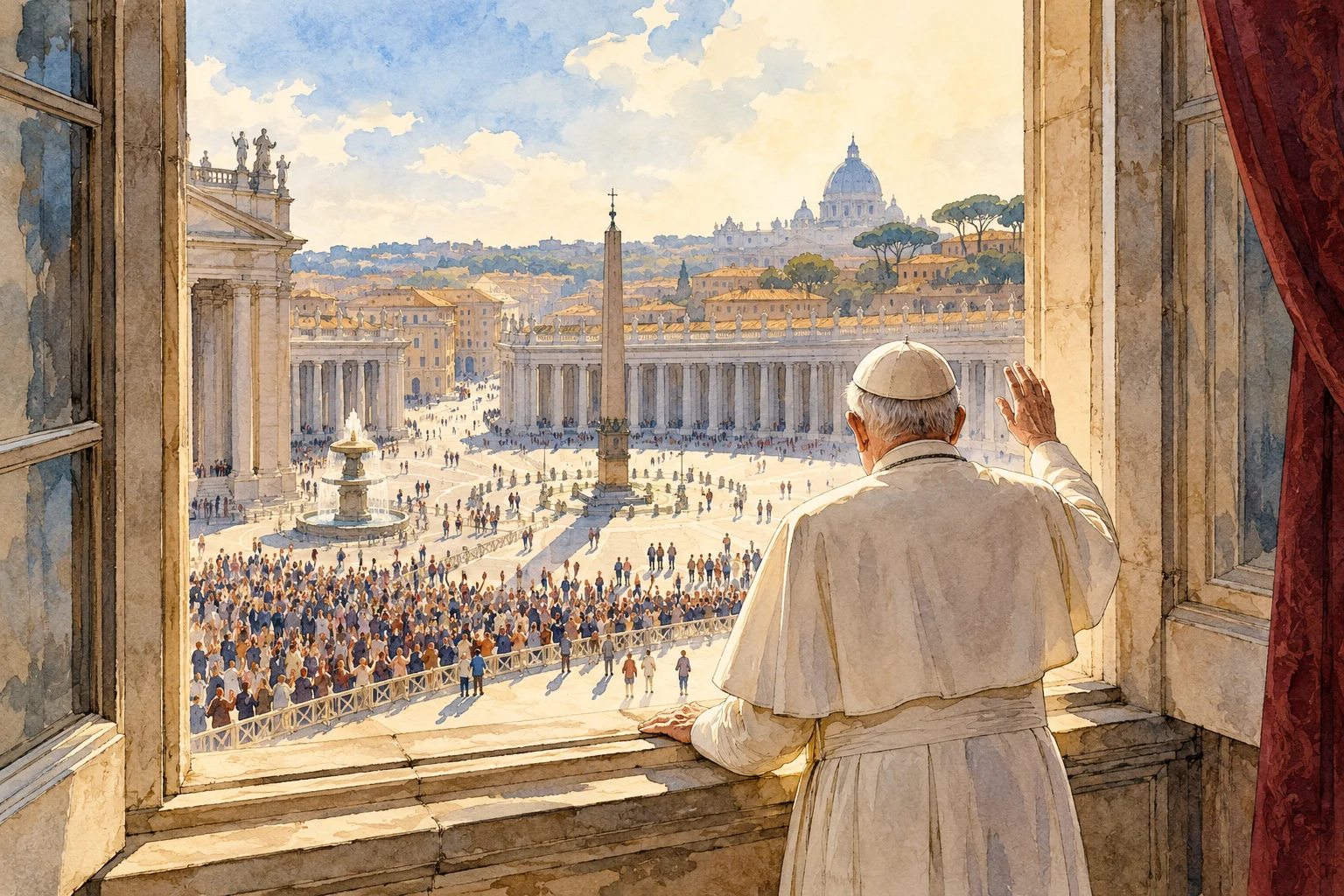
Above St Peter’s Square there is a window where the Catholic world goes, now for the second time in eight days, to read a man’s health in his face. On Sunday morning thousands of runners in the Rome marathon were still jogging up the great walkway into the square, turning right past the Apostolic Palace, when the crowd waiting below began to clap and sing. At midday Leo XIV appeared at the window — unaided, as Angela Giuffrida reported in the Guardian — and wished the faithful a happy Sunday in what CNN’s Christopher Lamb heard as a firm and strong voice. Five days earlier, surgeons had removed part of his right lung.
It was the 71-year-old pontiff’s first appearance before his people since the Sunday before, when from that same window he announced that a nodule had been found on his lung and he would have an operation — the first major health trial of a pontificate only seventeen months old. This time he thanked his doctors and all who had prayed for him, and said he would gradually return to his duties.
Now that this delicate phase has passed, I will gradually resume my activities – always with the help of God and your prayers. Thank you once again
“This experience has given me a profound sense of closeness to all those who are going through illness or a state of infirmity,” he told the square. He said he had “truly felt your support” and offered, in the Associated Press account carried by CBS News, “particular gratitude to the doctors, nurses and all the staff at Gemelli Hospital,” where he was treated.
The Nodule That Became a Lobe
A week earlier, at the same window, Leo had told the crowd that doctors had found a “localized nodule” at a “very early stage.” “Following their advice, I have therefore decided to undergo an operation to remove it,” he said — an announcement that turned a Sunday blessing into a week of prayer. The nodule had surfaced, reportedly by chance, on a scan made for another reason.
But Tuesday’s operation went further than the announcement suggested. Using a video-assisted technique, as Willem Marx reported for NPR, surgeons worked for about 90 minutes and removed the entire lower lobe of the pope’s right lung. Tissue examined afterward confirmed adenocarcinoma — the most common form of lung cancer, about 40% of all cases in the United States by the Lung Cancer Foundation of America’s count, and the most common among nonsmokers too, notes the Johns Hopkins oncologist Otis Brawley. Leo is not known to have smoked. Cancer runs in the family: his mother, Mildred, died of it in 1990, and on the day of his surgery the Vatican revealed that his older brother Louis had been hospitalized in Florida with a form of cancer.
Fit for Discharge
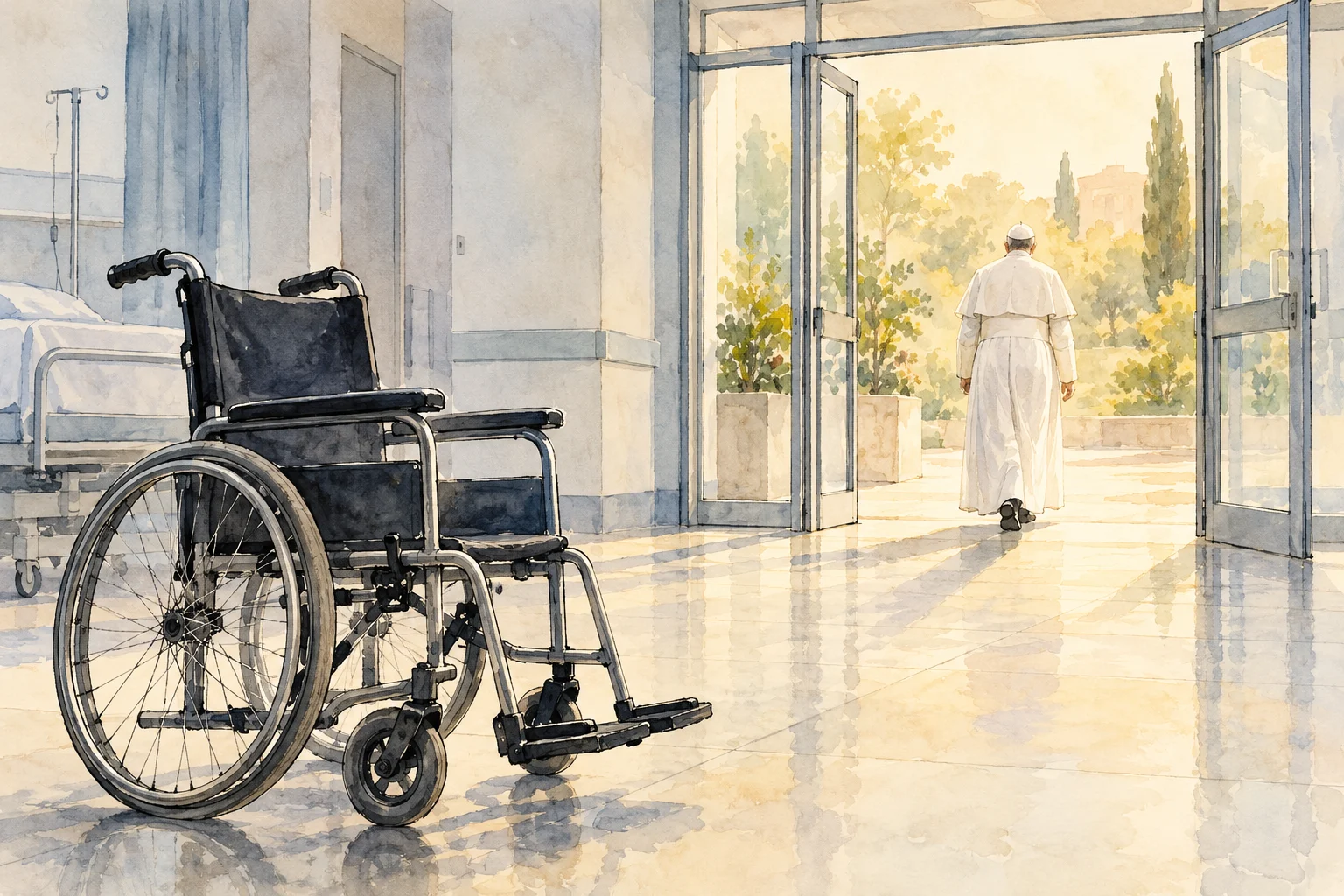
He came home sooner than promised. The Vatican had forecast a week in hospital; on Saturday morning, after blood tests and a chest X-ray, his personal physician Luigi Carbone and the thoracic surgeon Stefano Margaritora declared him fit to leave. Before departing, Leo celebrated Mass in a room set aside on the Gemelli’s tenth floor; then, video showed, he walked out without physical support, flanked by officials and security men in dark suits, past the well-wishers. “The estimated post-operative recovery time will be about one week,” said the Vatican spokesman Matteo Bruni. Driving away, the pope told a reporter in English he was doing “much better.”
The surgeon spoke like a man with bookings to protect. “There are no clinical reasons why it should not take place,” Professor Margaritora told Vatican News of the pope’s November voyage, adding that Leo “has put his heart and soul into his recovery” and should mend fully “in another 10 days or so.” Doctors uninvolved in the case read the same chart with measured hope. “The fact that surgery was the first tool that they utilized is a really good sign,” Dr Vin Gupta of the American Lung Association told NPR. “It suggests that they think this is early stage.”
Much remains unsaid. Doctors have not disclosed the tumour’s size or whether the disease reached nearby lymph nodes — the facts on which a prognosis turns — and no prognosis has been shared publicly. Histological testing of the tumour and lymph nodes is under way; the results, with the tumour’s molecular profile, will decide whether Leo needs chemotherapy, chemotherapy combined with immunotherapy, or a targeted oral drug. The Vatican has announced no further treatment.
A Pope’s Calendar Does Not Wait
The institution, meanwhile, kept its appointments. From his hospital bed on Friday the pope telephoned Vladimir Putin to urge a ceasefire in Oleshky, the Russian-occupied Ukrainian city. His public schedule is cleared only until at least October 20, and the Vatican has published the list of journalists accredited for his November 6–17 journey to Uruguay, Argentina and Peru — a trip of a dozen flights and two helicopter rides, one of the most intense arranged for a pope in decades — saying the work was “going forward.” Cardinal Pietro Parolin, the secretary of state, allowed that Leo may need to pace himself “according to the condition of his health,” an unusual thing for a cardinal to say aloud, the South China Morning Post noted.
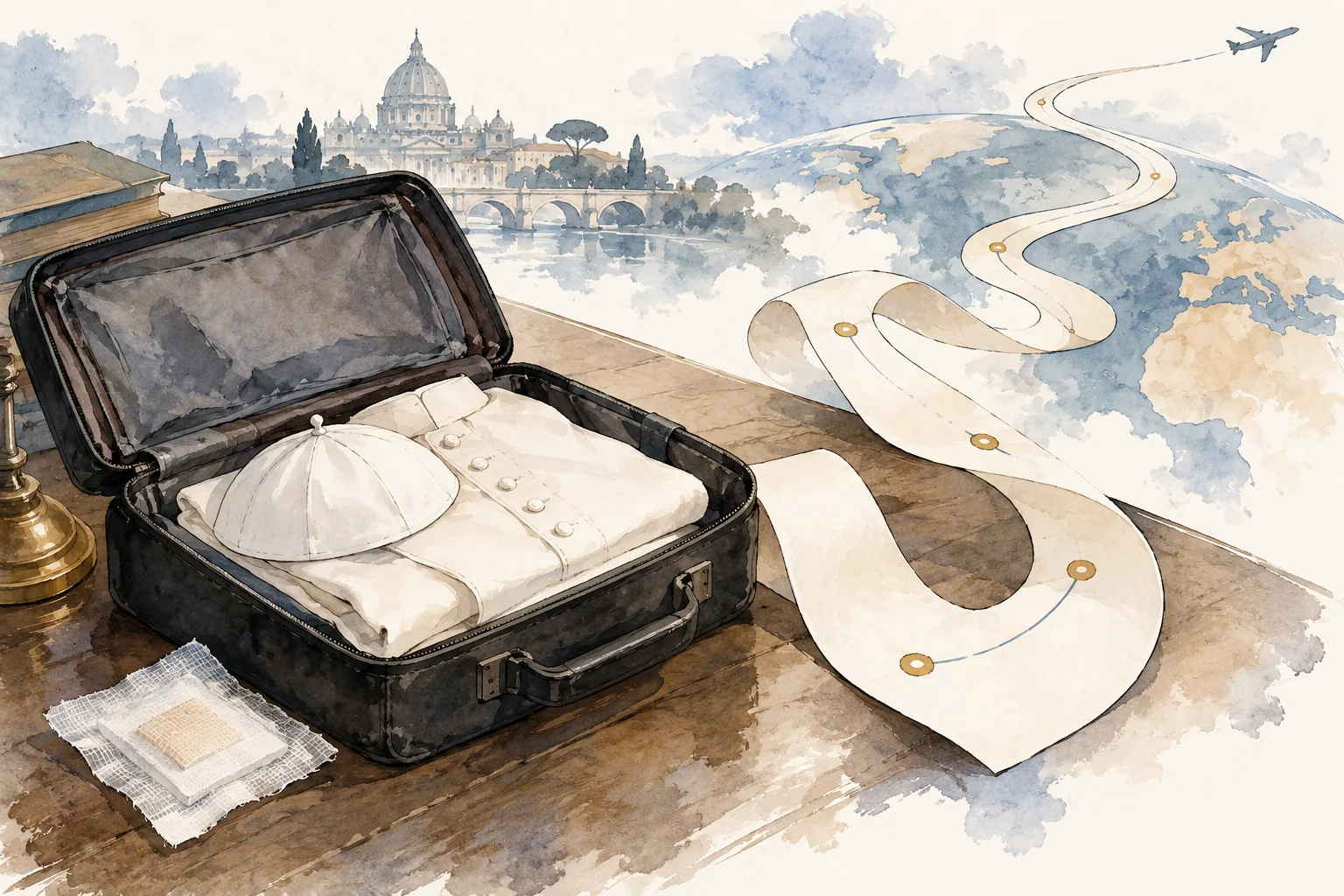
Peru is the tender point of the itinerary: Leo lived there on and off for two decades and holds citizenship, and the route includes Cusco, 3,350 metres above sea level, where each breath offers roughly a third less oxygen — thin air for a man whose right lung is newly smaller. Outside surgeons offered reassurance. “He had a minimally invasive surgery,” said Dr Jonathan Villena Vargas of Weill Cornell. “Because we do this all the time, most patients are allowed to travel about two weeks after the surgery.” Brawley’s verdict was shorter: “I think he can do it.”
In the square, joy outran arithmetic. A delegation from Africa, in Rome for a congress, danced and ululated after the blessing. “He was always in our prayers when he was sick, and we are happy to see him today,” said Alain Kalembu of the Democratic Republic of Congo. Cosimo Mastrocinque, a retired factory worker up from Puglia, could hardly credit it: “It is a miracle that he recovered already.” And Marla Marsala of Michigan, whose Mass with the first American-born pope was cancelled last week by his hospitalization, gave the week its simplest accounting: “I am just happy that we are praying with him today instead of for him, like we were before.”