
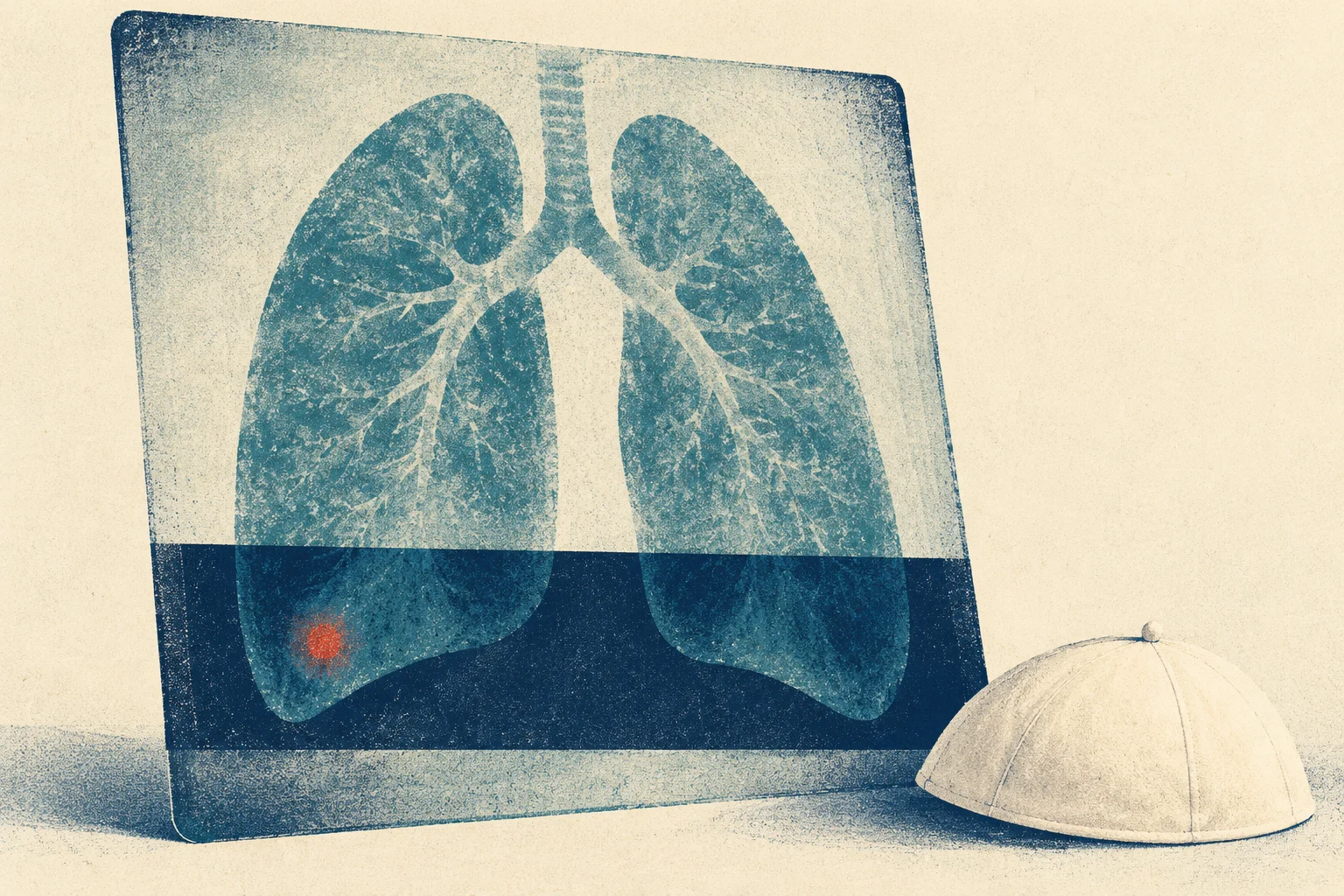
Medicine finds a lot of things because someone was looking for something else. Pope Leo XIV, who is 71, had no respiratory symptoms and, by his surgeon’s account, felt perfectly well. He was being examined for an unrelated reason, and the examination turned up a tumor at the base of his right lung. Had it been sitting “a little higher up,” the surgeon says, “it certainly would not have been seen.”
The surgeon is Dr. Stefano Margaritora, director of the thoracic surgery unit at the Agostino Gemelli University Hospital Foundation in Rome. He gave a long interview to Vatican News, which CBS News summarized on Saturday, the day the pope went home. This is how he put it:
“The Holy Father falls into the category of people who discover they have lung cancer entirely by chance — not because they are undergoing preventive screening, but because they undergo examinations for other reasons.”
The sequence went like this. On Oct. 11, at the end of his Sunday noon blessing in St. Peter’s Square, Leo told the crowd he would have surgery to remove a “localized nodule.” He described it as “well-contained” and “detected at a very early stage,” according to OSV News. The operation took place on Oct. 13. Margaritora calls it routine and says it went “without any complications.” OSV adds the specifics: a 90-minute video-assisted procedure in which surgeons took out the lower lobe of his right lung, so a bit more than the word “nodule” might suggest. The diagnosis, made during the surgery, was lung adenocarcinoma, a common form of lung cancer. The Vatican has not said whether the cancer had spread. OSV reports that more tests on the removed tissue were planned, according to Vatican News, and no results have been made public.
He was also discharged early. The Holy See Press Office had first said he would be in hospital for about a week. He left on Saturday at about 3:30 p.m., four days after the operation, waving to a large crowd of well-wishers and reporters outside. The joint statement from his personal physician, Dr. Luigi Carbone, and Margaritora reads like a clinical note: “Based on the blood tests and chest X-ray performed this morning,” and after evaluating his clinical condition, “the Holy Father has been deemed fit for discharge.” On his way out he met Varvara, a 13-year-old Ukrainian girl, who said an embrace from him before her own cancer surgery had given her “the strength to overcome the illness.”
The ideal patient
Margaritora’s interview spends some time on the pope’s conduct as a patient, which he rated highly. “An ideal patient,” he said, and then, before anyone could accuse him of telling the boss what the boss wants to hear: “I am not saying that to flatter him. He truly did not cause the slightest problem for the team caring for him.”
His evidence is an anecdote. Two days after the surgery, staff found the pope rearranging the chairs in the hospital’s makeshift chapel. They told him, “Holy Father, we can do that.” He replied: “It doesn’t matter. I can do it, so I will.”
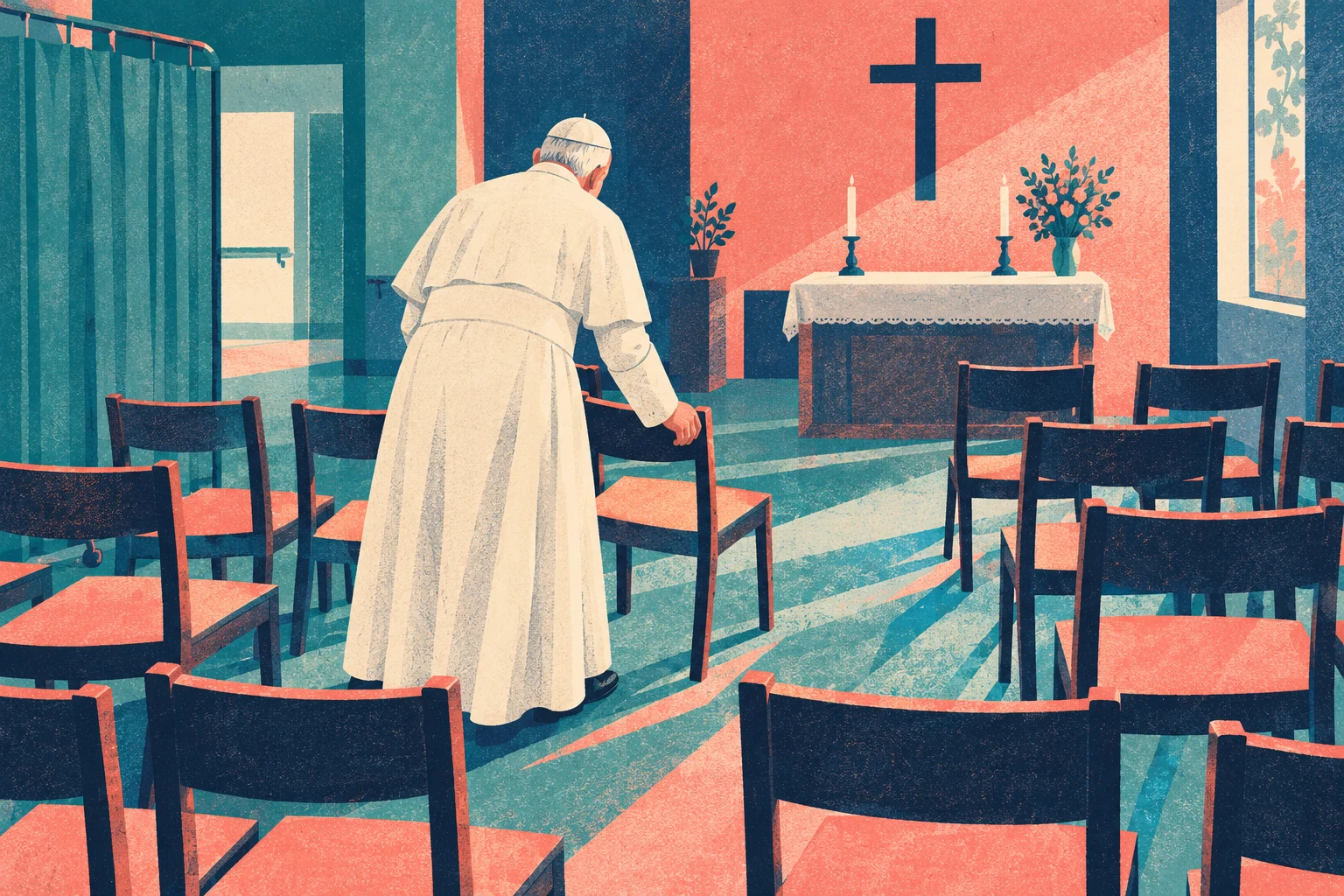
For a hospital, the most demanding patient you could get is probably the head of the Catholic Church, with the world’s press camped outside. What the hospital got instead was a man who sets out the furniture himself.
He was back at work from his hospital room on Thursday. On Friday he spoke by phone with Russian President Vladimir Putin. The Vatican released photographs of him in green vestments at the altar of a small hospital chapel, celebrating Mass. OSV reports he said a noon Mass there on Friday and again on Saturday before he left. He also held separate meetings with Cardinal Luis Antonio Tagle, dean of the College of Cardinals, and Cardinal Baldassare Reina, vicar general of the Diocese of Rome. The Vatican has confirmed he will lead the Angelus on Sunday, Oct. 18, from the window of the Apostolic Palace, and his Nov. 6-17 trip to Uruguay, Argentina and Peru is still on the schedule.
The free option
Margaritora’s larger point, the one he seems keenest for people to hear, is about prevention. Early-stage cancers, including the kind the pope had, can produce no symptoms at all. That is why, he says, regular preventive checkups matter.

I think the way to see this is that a symptom is a message from the disease, and it usually comes late. By the time a lung tumor makes you cough or struggle for breath, it has generally had plenty of time to grow. Screening means paying up front, in time, money, appointments and the occasional false alarm, to get that message earlier. The pope got his early message without paying for it. A scan ordered for something else happened to cover the bottom of his right lung, and something was there. That is a lucky outcome, and Margaritora is clear that the luck was geometric: a few centimetres higher and the scan misses it.
Luck does not scale, though. Most people are not having their chests imaged for unrelated reasons by one of Rome’s leading thoracic teams, and a public-health system cannot count on tumors settling where an unrelated scan will catch them. The choice is between screening on purpose and finding out from symptoms. That gap between what screening could catch and what it actually catches has come up here before, and the tools for closing it are mostly not the problem.
So the surgeon on the most closely watched lung operation of the year is using the attention to tell everyone else to book their checkups. This time the scan that mattered happened to be pointed at the right spot. Most people will have to make the appointment themselves.