
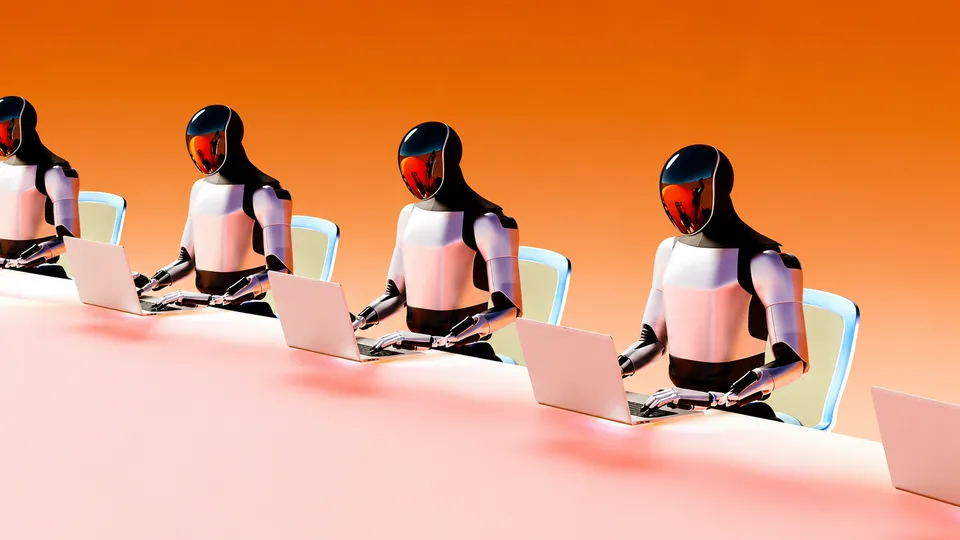
In 2020 the world’s robotics and physical AI companies did not manage to raise even $5 billion between them, across the whole year. In the first six months of 2026, as Dan DeFrancesco writes in Business Insider, they raised $33.4 billion. He opens with Daft Punk, the French duo who performed in robot helmets and retired five years ago, and his column introduces the outlet’s new series, Robonomics. Its first instalment, by the robotics reporter Rya Jetha, asks why Silicon Valley is putting billions on a robot revolution.
The total depends on who does the counting. A Forbes contributor, Sabbir Rangwala, puts physical AI investment in the first half of 2026 at about $50 billion over roughly 500 deals, but his wider net takes in later-stage money for companies such as Waymo and Anduril as well as young startups. Each tally measures something a little different. They all point the same way.
The fifty-trillion horizon
The money comes because the work seems endless. Robots could be wanted on construction sites and as butlers at home, and the demand for physical labour is so vast that the possibilities look almost unlimited. Jensen Huang, chief executive of Nvidia and one of physical AI’s loudest champions, has valued the industry at $50 trillion. He has been saying so for some time: in June 2025 GamesBeat reported that Nvidia saw a $50 trillion opportunity in factories, transportation and humanoid robots, and according to Benzinga he repeated the figure at GTC 2026 and on the BG2 podcast.

A number that size is better read as a horizon than as a forecast. It tells investors which direction to walk in and says nothing about how far they will get. The walkers keep coming all the same. A few weeks ago FieldAI raised $700 million at a $10 billion valuation for software meant to serve as a robot’s brain.
Promises are cheap. Hands are not.
The hand
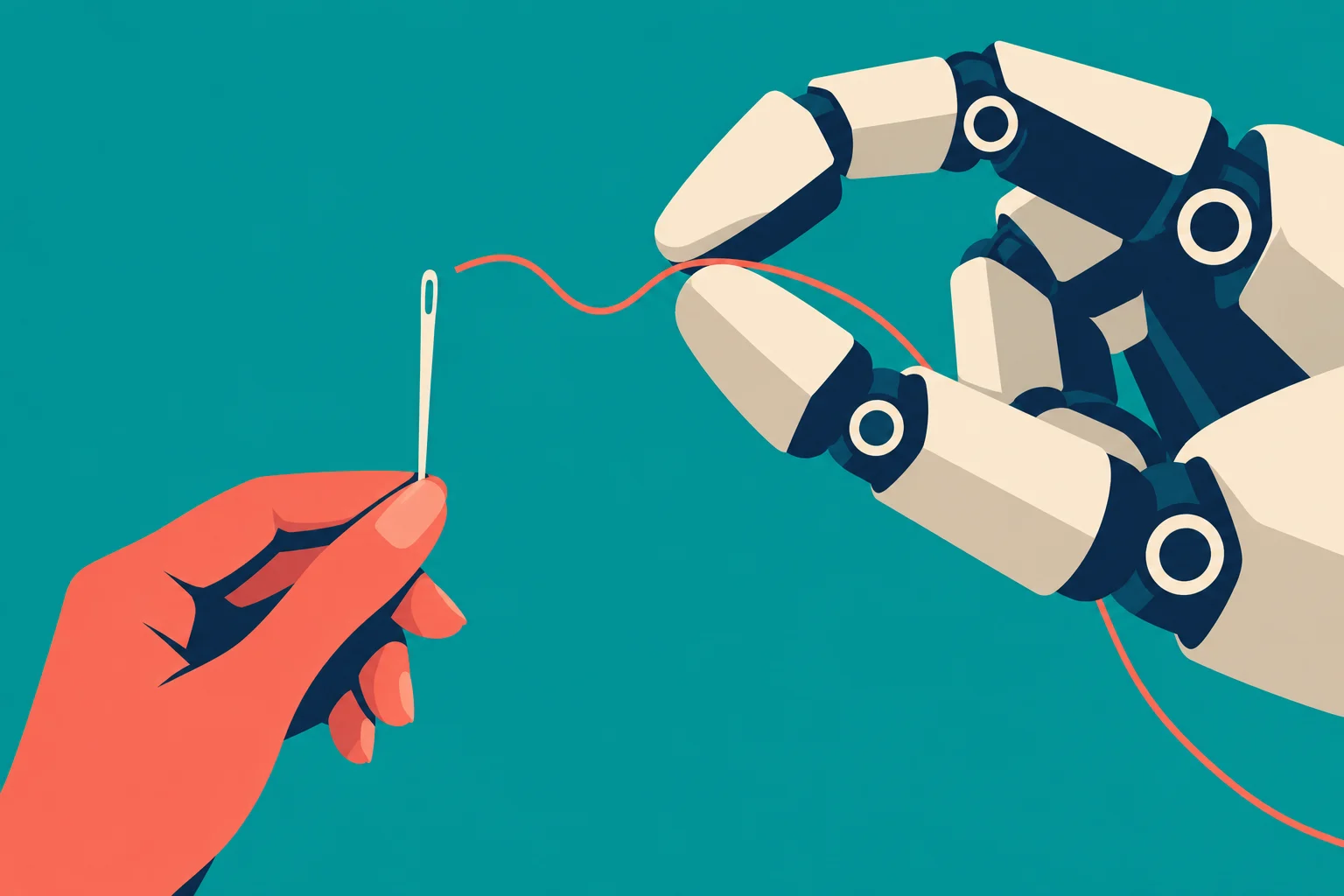
DeFrancesco notes that talk about robots tends to begin and end with the human hand. The hand is an extraordinary tool, and copying it has proved very hard. Not every company tries: plenty of robots will never need fingers. But a great many tasks call for the dexterity people take for granted, and nobody has yet found an easy way to build it into a machine.
The difficulty is old. Every attempt to mechanise labour has first had to measure how much skill the labour actually contained, and the measurement usually comes out higher than the planners hoped. The fingers of a bricklayer or a seamstress turn out to hold more knowledge than anyone wrote down.
The weight of metal
Then there is hardware. Building robots costs far less than it did a few years ago, thanks to progress in computing and components. It still costs much more than most software work. A programmer who gets something wrong rewrites a few lines. An engineer who gets something wrong builds a new prototype.
Scale makes it worse. Once production moves into factories, a small error that slips far enough down the supply chain becomes a large one. DeFrancesco’s advice is to ask Elon Musk. Amazon, meanwhile, already runs a million robots in its own operations, which shows that scale can be reached, and how much patience and capital it takes.
Silicon Valley got rich in a world where fixing a mistake cost almost nothing. Robots bring it back to the factory floor, where mistakes are made of metal and have to be paid for in metal.
The people in the way
The last obstacle is people. Software companies usually pitch their AI tools as helpers for workers, not replacements, and whether that holds true is still argued over. A robot built to do the same physical job as a person leaves much less room for that kind of argument.
Some in the industry still say nobody has to lose. Edward Mehr, chief executive of the robotics startup Machina Labs, told DeFrancesco that his new factory employed as many people as a comparable plant with no robots in it.
If robots do start taking human jobs, they will run into something particular to blue-collar work: unions. For now, AI has been good for parts of the trades. Building the data centres that run AI has brought work to tradespeople, and some national unions have taken the developers’ side. That goodwill is unlikely to last if robots begin replacing their members.
For now the electricians and builders putting up the data centres are on the side of the people who will fill them with machines. History suggests such alliances hold only as long as both sides keep getting paid. Investors who price robots at $50 trillion will one day need the consent of the people those robots are meant to replace, and no one has put a figure on that yet.