
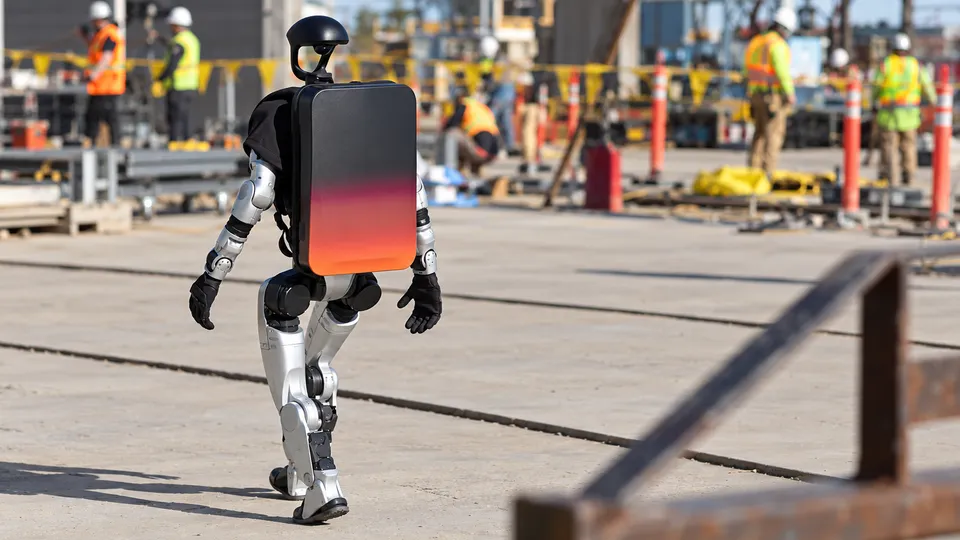
FieldAI, a startup building a general-purpose brain for robots, has raised $700 million at a $10 billion valuation, more than quadrupling its value in just over a year, Business Insider reported on Friday.
The deal, described to the outlet by a person familiar with it, puts FieldAI near the top of the crowded race to build what investors call physical A.I.: systems that can act in the real world rather than on a screen. The company was last valued at $2 billion, after raising more than $400 million last year from investors that included Jeff Bezos’s family office, Laurene Powell Jobs’s Emerson Collective and Khosla Ventures.
It was not clear which venture capital firm led the new round. FieldAI did not respond to a request for comment, Business Insider said.
Founded in 2023, FieldAI says its software is a “universal general-purpose brain” meant to work across robots, tasks and environments. It can run humanoids and robot dogs along with drones and industrial rovers, letting the machines operate on their own in settings that don’t follow a script.
Customers are starting to pay. Since June, the company has added at least $35 million in revenue and customer contracts, bringing the total to more than $135 million, the person said. Business Insider had previously reported that FieldAI passed $100 million in revenue and contracts, spread across more than 30 customers.
Even at $10 billion, FieldAI trails its best-financed rivals on paper. Physical Intelligence, another robot-brain company, is valued at roughly $11 billion, and Skild AI at more than $14 billion.
The price is a bet that FieldAI’s approach can hold up in the messy conditions that have long tripped up robotics companies. Teaching a machine to work in the real world, where nothing stays where you left it, is far harder than training it to do one task in a controlled room.
“We have seen very, very fast growth in the last several months,” Ali Agha, the company’s chief executive, told Business Insider in June.
FieldAI is based in Irvine, Calif., and the Bay Area, and it has hired engineers and researchers from Google DeepMind, Tesla, Nvidia and Boston Dynamics. Its customers include construction firms, data center operators and defense companies.