
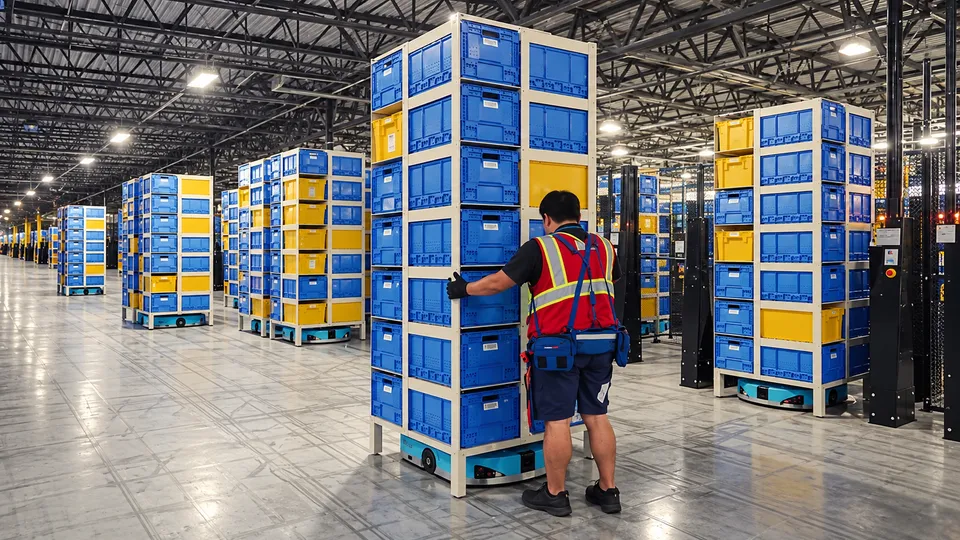
Amazon has more than 1 million robots and, as Jeremy Hsu reports for Ars Technica, more than 1.5 million full-time and part-time human workers, according to its 2025 annual report. That makes it the world’s second-largest corporate employer and its largest operator of robots. So it has roughly two robots for every three people, and the robots are the ones whose numbers are climbing fastest. Amazon passed the million mark in July 2025, when its 1 millionth robot went to a fulfillment center in Japan. At the time CNBC reported that robots helped with about 75% of Amazon’s deliveries in some way.
Amazon’s executives tell a simple story about this. The robots take the hardest jobs in the building, the ones most likely to wear people out or hurt them, and the humans are better off. Labor advocacy groups and independent researchers say the evidence is more mixed than that. I think the most useful framing of the disagreement comes from Brian Greenwood, a business professor at George Mason University:
“For the last 100 years, most of the automation that we’ve seen usually happens away from workers—you’re taking that high-risk task away from the worker, and you’re doing so in a way that is not physically proximate. The rise of collaborative robots really changes that dynamic for two reasons: one is that it is physically proximate, and two, the robot has the ability to dictate the pace of work.”
That second point is the interesting one. Old-style automation replaces a person. It does the dangerous stamping or welding in a cage across the room, and the human either has a different job or no job. Collaborative automation keeps the human and changes the job. If a robot carries a shelf of goods to your workstation, the robot decides when the next shelf shows up. In practice your quota is now a property of the software. That isn’t necessarily sinister. It’s just that the person who used to control the tempo, a supervisor you could argue with, has been replaced by a routing algorithm, and there’s no arguing with that.
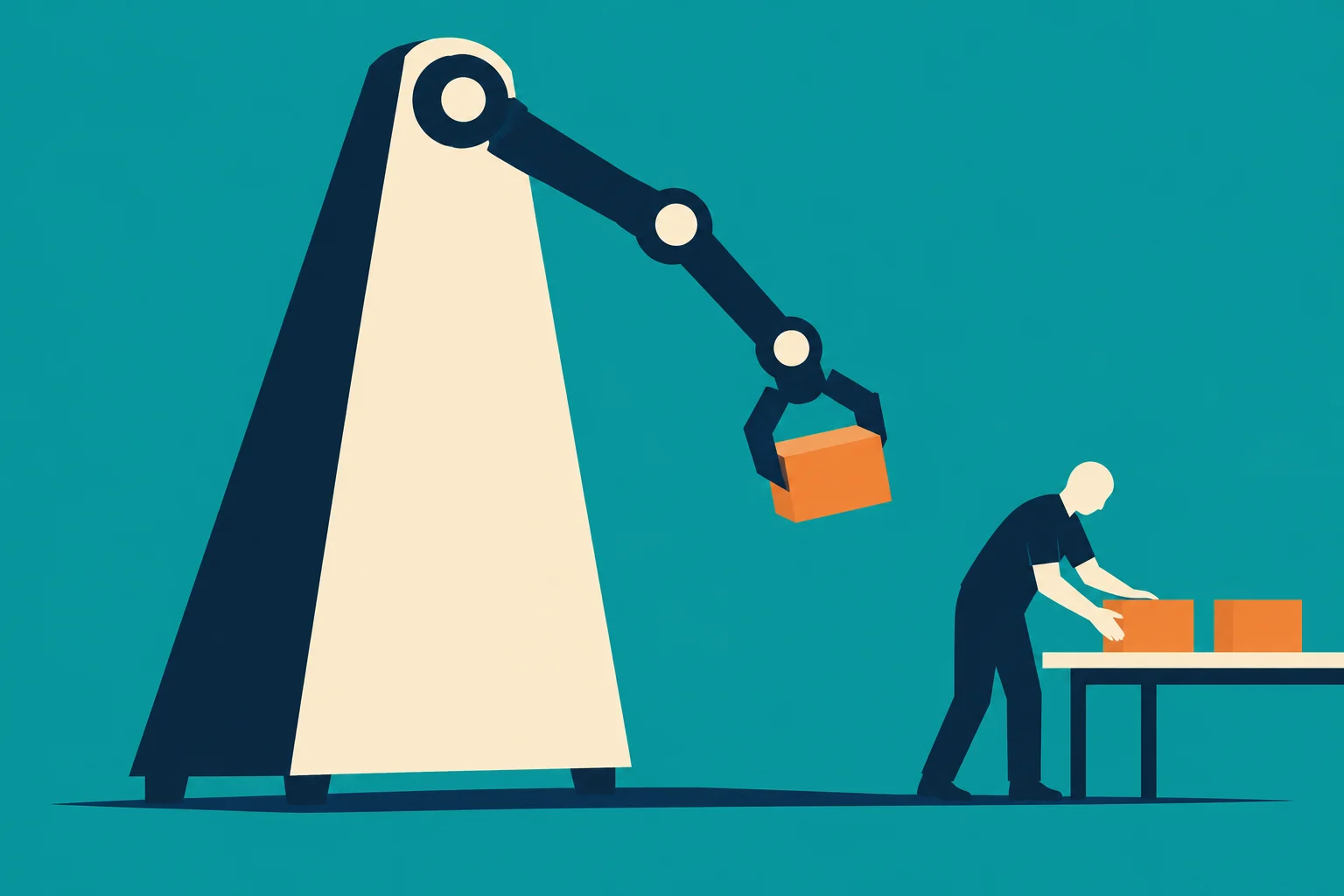
The tempo is also the whole business. Amazon has 200 million Prime subscribers who expect orders the same day or the next day, and filling those orders, often a weird mix of products in one box, still takes hundreds of thousands of people. Warehousing was rough work before any of this. The US Occupational Safety and Health Administration says the sector’s injury and illness rate has usually been more than double the all-industry average. “You have almost 2 million people working in the warehousing sector in the United States, and it’s characterized by very high turnover and very high workplace injury rates,” Greenwood said. That’s the case for robots, and it’s a real one. It’s also the case for watching closely what the robots do to the speed of everything around them.
The fleet
It began with Amazon’s 2012 acquisition of Kiva Systems, which paid about $775 million for robots that drive shelves to workers so the workers don’t have to walk to the shelves. Kiva became Amazon Robotics, and it makes most of its machines in-house in Massachusetts. This year Amazon said it would build more factories. One is a multibillion-dollar plant in Austin, Texas, announced in August. The other is in Greenwood, Indiana, where Amazon will put more than $100 million into a 585,000-square-foot plant. That plant is expected to open by 2028 with about 300 jobs, and Amazon says those jobs will average nearly $100,000 a year. (That’s the town; the professor is a different Greenwood.) So the company is hiring well-paid humans to build the robots that change the work of the less well-paid humans. This is the most Amazon sentence in this piece.
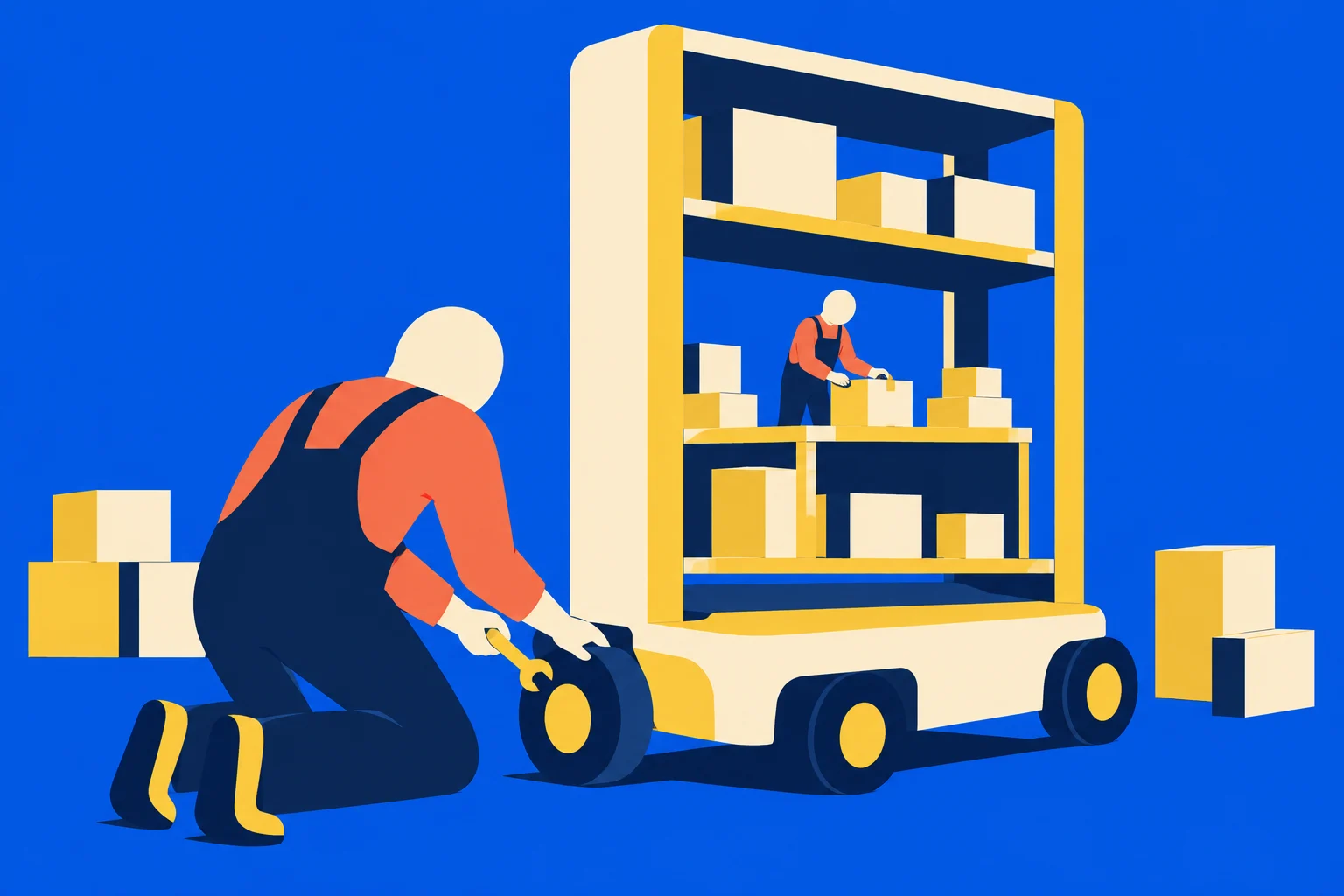
Most of the million are still wheeled. Hercules is about the size of a pool table and Titan about the size of a baby grand piano. Both fetch tall fabric pods full of plastic totes and bring them to human stations, usually following floor stickers inside fenced areas. Amazon says its Sequoia system, which coordinates swarms of these robots, can identify and store items up to 75 percent faster. Proteus, the newest mobile robot, has sensors that let it roam freely among people. Put enough robots in narrow lanes and you get robot traffic jams, so Amazon now coordinates them with a set of AI foundation models called DeepFleet, which tries to predict congestion before it happens. Amazon said at launch it expected DeepFleet to cut fleet travel time by 10%.
The newer frontier is arms, robots that pick things up. On a July earnings call CFO Brian Olsavsky said Amazon expects to more than double its fleet of robotic arms this year. Asked what that means, Scott Dresser, vice president of Amazon Robotics, put the current number in the single-digit thousands. Out of more than a million robots, that’s well under 1%. The arms race is just getting started.
Counting failures
Robin, Amazon’s first in-house arm, uses eight suction cups to pull mailers and boxes out of jumbled piles. It started testing in 2021 and went into service in Lakeland, Florida, in 2022. In a 2023 paper the team described its early hand-written picking rules and how each one broke down. A rule that favored big packages got confused when smaller ones sat on top of them. A rule that favored packages at the top of a pile kept missing “unreachable picks” and half-buried boxes.
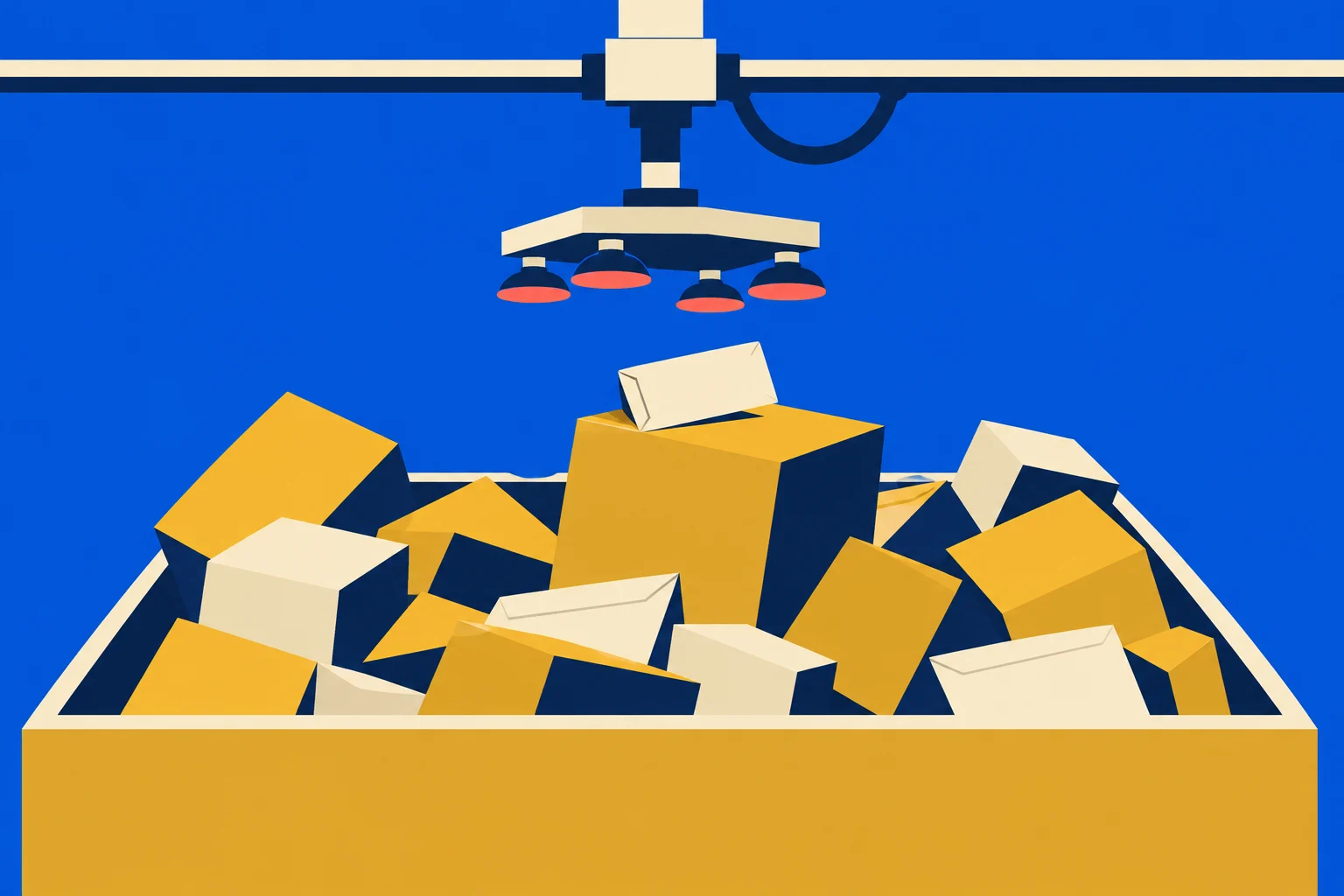
So they switched to machine learning, with a model trained on more than 394,000 picks from deployed arms that estimates how likely each possible grab is to work. The best machine-learning method succeeded 93.73 percent of the time. The best traditional algorithm managed 92.28 percent. That’s a gap of 1.45 points, which sounds like nothing. Look at failures instead of successes, though: 7.72 percent falls to 6.27 percent, which is about a fifth fewer misses. Over a stretch of more than 1 million picks, Amazon says that came to roughly 16,500 fewer failed picks. In a separate test of 2 million picks on workstations set up like the Robin fleet, the team cut the failed-pick rate by 20 percent, and it presented that work at the International Symposium on Experimental Robotics in July 2025. At Amazon’s scale, a rounding error is a staffing decision.
Then came Cardinal, which since November 2022 in Nashville has loaded packages of up to 50 pounds into carts bound for trucks. “Think of it as a game of Tetris,” Dresser said, adding that “dense containers are great from a sustainability perspective and from a transportation cost perspective.” Translation: fuller carts mean fewer trucks.
There’s a live debate, which Bill Gates has joined, about whether robots that replace workers should pay the same payroll taxes those workers did. Amazon’s version of the problem is a little different. Most of its robots aren’t replacing anyone yet. They’re working next to people, and the question of who sets the pace in a warehouse turns out to have a technical answer. It’s whatever the 10% travel-time improvement is set to.