
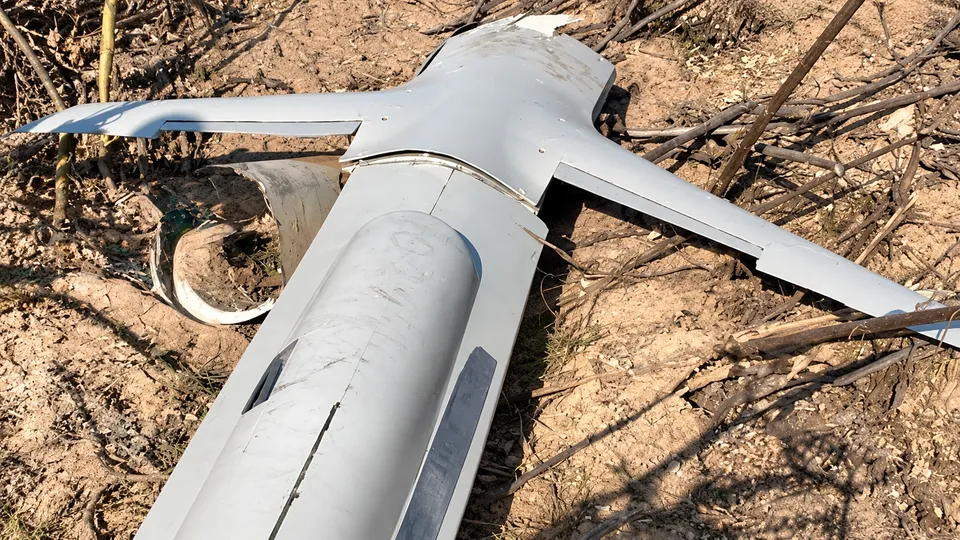
There is a particular genre of bad news in this war, and it goes like this: the cheap thing Russia has been throwing at Ukrainian cities gets a cheaper, faster successor. The latest entry arrived Wednesday, when Ukraine’s military intelligence agency, GUR, published extensive details on the Filin, an 11-foot winged cruise missile it says Russia began deploying at the end of summer 2026 — and two of Ukraine’s most prominent drone experts promptly told their Telegram audiences to brace for it. “The mass use of this type of aerial attack weapon is what awaits us very soon,” wrote Serhii Sternenko, who runs a major crowdfunding foundation for the military. “Then we will remember the jet Shaheds only as a small problem compared to this.”
As Matthew Loh reports at Business Insider, the Filin’s specifications explain the gloom. GUR describes it as the “continuation of the trend of the Russian military-industrial complex to develop inexpensive air attack weapons with jet propulsion and ground launch.” It carries a 100kg warhead, flies — by Russia’s account — at nearly 500 mph over a range of 745 miles, and can hug the ground at ultra-low altitudes or climb as high as 3.7 miles. For comparison: the Geran-5, Russia’s most advanced jet-powered drone to date, tops out at 370 mph, and it has already been outrunning Ukraine’s existing interceptors. Kyiv’s improvised answer to that problem has been AI-aimed machine-gun turrets that shoot down fast drones; a target a hundred miles per hour faster, with a real missile’s warhead, is a harder day at the office.
The other Serhii — Beskrestnov, the analyst known as “Flash,” and like Sternenko a former drone advisor to the defense ministry — said he had “long predicted that our adversary is betting on cheap cruise missiles for the future, not on jet Shaheds.” His list of practical advantages is worth reading as a procurement officer would: the Filin flies faster, maneuvers better, and carries more than current turbojet drones; “they do not need drone ports, many of them can be launched from helicopters and UAVs. And most importantly, they can be produced from Russian components.”
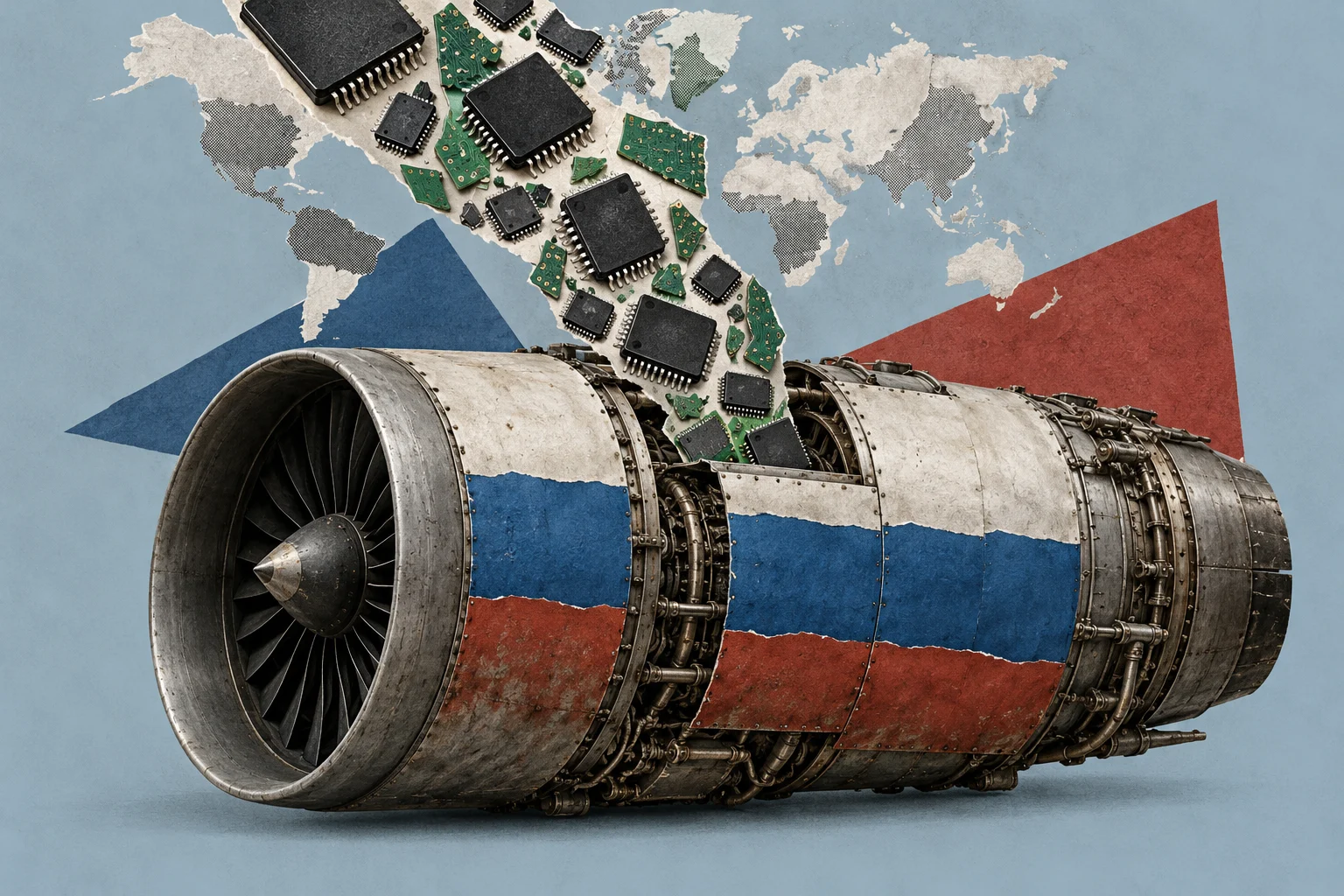
That last clause is doing some interesting work. Physically, GUR says, the Filin resembles the Shahed family — carbon and fiberglass fuselage, some parts 3D-printed — and it is, like the Shaheds, stuffed with foreign electronics: 35 components from the United States, including transistors and converters, 22 from China, and 13 more from Japan, Switzerland, Taiwan, and the Netherlands, spread across its flight controller, inertial navigation, control unit, and counter-jamming hardware. The engine, though, is Russian-made, unlike the Chinese engines powering many of Moscow’s turbojet drones — and the same engine has turned up in other recently unveiled Russian missiles, the air-launched Kover and Monochrome. Sanctions, it seems, still leave the chips porous even as the propulsion goes domestic.
The strategic logic is arithmetic rather than technological. Russia figured out a while ago that air defense is a cost-exchange problem: a defender firing an expensive interceptor at a cheap incoming weapon loses money on every successful shooting and loses the building on every unsuccessful one. The Banderol — another civilian-tech missile that appeared in spring 2025 and has strained Ukrainian air defenses in recent months — flies slower than the Filin and carries less range, but still hits 435 mph, fast enough to shrug off most interceptor drones. Its estimated cost is $150,000 a unit, about a sixteenth the price of a traditional Kh-101 cruise missile, which is what makes mass production, and the tactic soldiers call “missile spam,” affordable.
You can think of the Filin as the Banderol’s bet doubled: more speed, more range, more payload, the same philosophy of building strategic weapons out of commercial supply chains. The economics of the exchange get worse for the defender with each iteration, and the countermeasures — cheap interceptors, AI-aimed guns, electronic warfare — have to be redesigned for each new number on the speedometer.
Sternenko ended his post with the question that matters, directed at his own side, and it is not really rhetorical: “What is the Air Force command doing now to build up countermeasures in advance?” Russia has shown Ukraine, and anyone watching, its roadmap for the air war. The roadmap is short. The answer is due soon.