
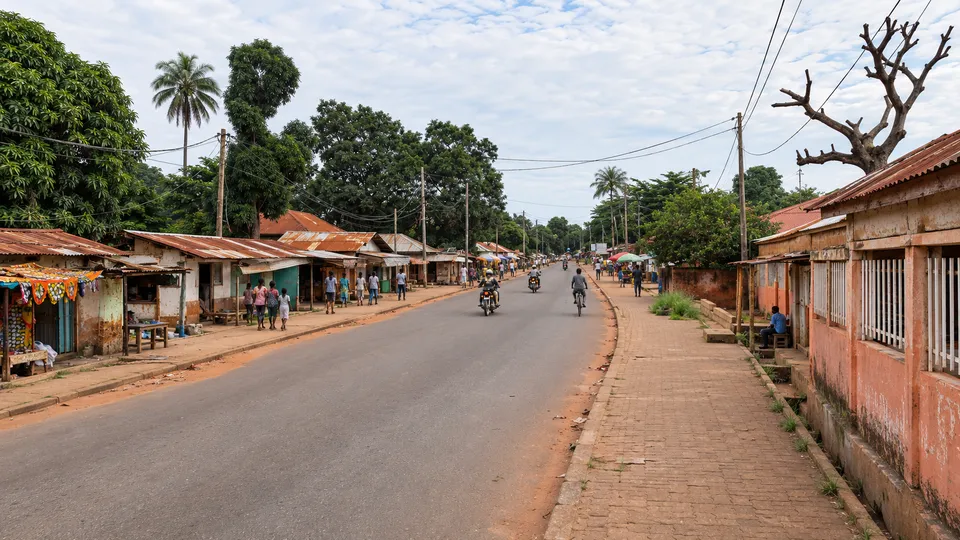
Guinea-Bissau has 2.2 million people, and about one in five of them lives with hepatitis B. The rest of this story follows from that figure. The virus usually passes from mother to child at birth. It cannot be cured, and over the years it can scar the liver or turn into cancer. CIDRAP reported that without vaccination up to 90% of babies exposed at birth develop chronic infection, and that 15 to 25% of them die early of liver cancer or liver failure.
A study that planned to leave half of 14,000 newborns without that protection for their first six weeks now appears to be over. Shola Lawal reported for Al Jazeera that the US-funded trial has reportedly been halted. A researcher on the project said in a statement that it had not received the government approval it needed, and called its end a “significant setback” for African science. Officials have not commented.
The house in Bissau
The trial belonged to the Bandim Health Project in the capital, Bissau, which is part of the University of Southern Denmark. It is run by Christine Stabell Benn and Peter Aaby, a married couple who have worked in Bissau since 1978. Their subject is the unintended effects of vaccines. They have theorised that vaccines made from inactivated virus, hepatitis B among them, can cause death. One of their earlier studies linked the DTP vaccine to more infant deaths, especially among girls. The World Health Organization (WHO) called that work inconsistent but worth further review, and told countries to keep vaccinating.
Some Danish colleagues have accused the pair of downplaying results or holding back evidence that did not suit them. Last February, the Danish newspaper Weekendavisen reported that a randomised DTP trial run 14 years earlier, which found no effect, had never been made public. It was published after the exposé.
The design of the new study was simple. Babies would be randomly split into two groups. One group would get the WHO-recommended hepatitis B dose at birth, the other six weeks later, and both would be followed for five years. Doctors and parents would know which group each child was in. According to CIDRAP, the study was meant to look for “non-specific” effects of the vaccine, including skin and neurodevelopmental conditions. The money, $1.6 million, came from the US Centers for Disease Control and Prevention under Health Secretary Robert F Kennedy, who has voiced anti-vaccine views. CIDRAP reported that critics asked why the December grant skipped the usual competitive process.
The researchers’ argument rested on a shortage. Guinea-Bissau does not have enough doses, so it allows babies to be vaccinated up to six weeks after birth, and it plans to give every newborn the dose from 2028. Until then, the researchers said, the country offered a “unique window of opportunity.” A reader may reflect that in poor countries a gap in supply can be written up as a chance for research. In a joint statement, Benn and Aaby said they were not asking whether the vaccine prevents disease, but
“whether the prevention [of the disease] comes at a prohibitive price.”
The objections
The WHO called the trial “unethical.” In February it warned that a six-week delay would expose newborns to “serious and potentially irreversible harm.” Critics compared the study to the Tuskegee syphilis study, which ran from 1932 to 1972 and in which more than 100 men died. Magda Robalo, a former health minister of Guinea-Bissau, said: “It is unethical to deny children an intervention that we know works.” She added that the researchers had taken advantage of the country’s weak research capacity. Benn denied any wrongdoing in an email to Al Jazeera in February, and she and Aaby said their critics lacked curiosity and humility.
Paper, then police
The trial was announced in December and drew wide anger. In January the government paused it and opened an inquiry with Africa CDC and the WHO. Officials said the transitional government, which took power in a coup the previous November, had not been part of the approval. Members of the US Congress also objected. According to CIDRAP, Foreign Minister João Bernardo Vieira told Reuters in February: “It’s not going to happen, period.”
That did not end it. A Danish ethics committee looking into the case separately reportedly heard that Guinea-Bissau had approved an updated proposal, and its members voted to let the project go ahead. In mid-October, after meeting the researchers and local health agencies, Health Minister Quinhin Nantote denied that any such approval existed. On 19 October the judicial police searched Bandim’s facilities in Bissau and seized batches of vaccine. Inquiries into whether the project met safety standards are still going on.
So a dispute over medical ethics ended up with police at the door. Days after the raid, Bandim researcher Frederik Schaltz-Buchholzer wrote on LinkedIn: “It is now clear that the hepatitis B-NSE trial will not move forward in Guinea-Bissau – we were not given the necessary governmental approval.” CIDRAP had reported in February that he hoped a new trial proposal might be accepted in the future.
For now, the doses are still short, and children in Guinea-Bissau can still wait up to six weeks for their first shot. The difference is that no foreign protocol now decides which of them wait. The government plans to start giving the vaccine at birth in 2028.