
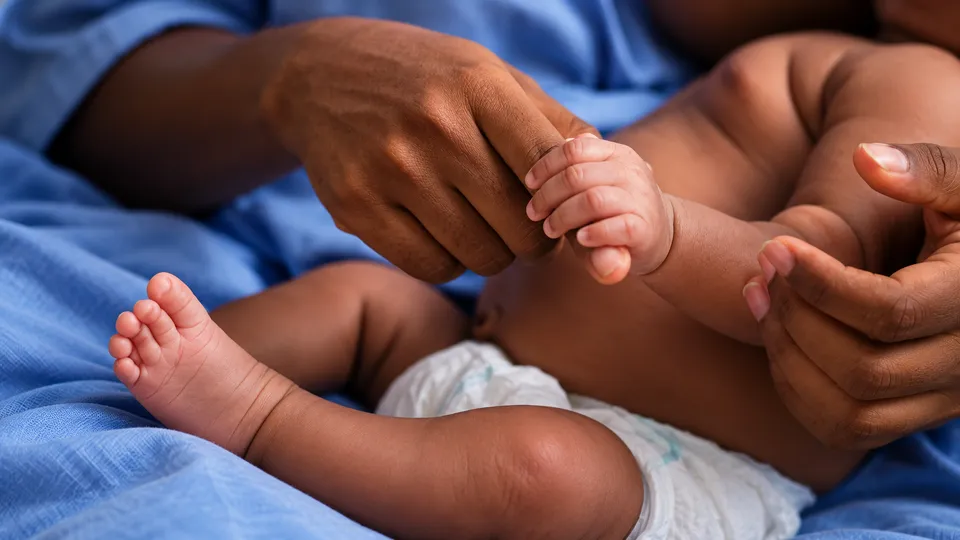
Guinea-Bissau is a small country on the western shoulder of Africa where the state, when it exists at all, exists thinly. It went through a coup in November 2025. Its clinics cannot give every newborn the single injection at birth that blocks hepatitis B, a virus carried widely in its population — a virus that settles into a child’s liver for life and ends, for many, in cirrhosis, cancer and an early death. The health authorities want to begin universal birth doses in 2028. They do not yet have the money or the infrastructure to do it.
Into this country, in December, came money from Washington. The US Centers for Disease Control and Prevention announced an unsolicited grant of $1.6 million to a research group at the University of Southern Denmark, led by a married couple, Christine Stabell Benn and Peter Aaby, for a trial of that very vaccine. As Beth Mole reported at Ars Technica, the plan was to enroll 14,000 newborns — half receiving the newborn dose, half denied it — in a hunt for alleged harms from a vaccine that decades of global use have shown to be safe and effective, and that stands as the standard of care.
Halted, not buried
When the design came to light there was an international outcry, and in January officials in Guinea-Bissau suspended the research while ethical and technical reviews continued. “There has been no sufficient coordination in order to take a final decision regarding the study,” the country’s minister of public health, Quinhin Nantote, said at the time. “Faced with this situation, we decided to suspend it.”
The trial remains suspended. The money, it appears, never went away. Staff in the office of the CDC’s director instructed the agency’s budget office in late September to set aside $1.6 million for the trial, according to a report by Rolling Stone. The sum was to be drawn from the CDC’s global health security programs — funds that might otherwise go toward work such as containing the Ebola outbreak now raging in the Democratic Republic of the Congo. The Department of Health and Human Services, which oversees the CDC, did not respond to Ars Technica’s request for comment.
What the rules of medicine say
Stabell Benn and Aaby argue the trial is not unethical, because newborns in Guinea-Bissau are not routinely vaccinated at birth in any case. Outside experts answer with the Declaration of Helsinki, which obliges a trial to provide the “best proven intervention” — here, the birth dose — whatever the prevailing standard in the host country, and permits a placebo only where no proven intervention exists or there are “compelling and scientifically sound methodological reasons” to withhold one.
In February the World Health Organization issued a bullet-pointed rebuke laying out “why withholding the vaccine is unethical”: the entire premise, it said, rests on “hypothetical safety outcomes without sufficient credible evidence,” which cannot justify putting newborns at risk. The agency dismissed the researchers’ defense outright:
Resource constraints cannot be used to justify withholding proven care in a research study involving people. Ethical obligations require minimizing risk and ensuring a prospect of benefit for participants.
The Danish pair have produced numerous studies promoted by anti-vaccine advocates, to the concern of other researchers. They are currently under investigation by Danish authorities over allegations of “falsification” and “scientific misconduct” related to previous vaccine research.
The second application
According to the Rolling Stone report, the design has since been revised: mothers would now be asked whether they are infected with hepatitis B — which can pass from mother to infant during birth — and a small fraction of them tested. The unvaccinated group remains, and so do the objections.
Researchers at the University of Southern Denmark recently approved the revised design, CIDRAP reported Thursday, and Professor Jakob Grauslund, dean of the university’s faculty of health sciences, told the outlet that the “relevant ethics committee in Guinea-Bissau” has signed off, with government authorization the last step. “[T]he study cannot begin until the necessary national authorization has been obtained,” Grauslund said.
In Washington, the CDC now answers to Health Secretary Robert F. Kennedy Jr., a longtime campaigner against vaccines who has lately announced new funding for research into vaccine injuries. His agency appears eager to proceed with the Guinea-Bissau trial the moment approval arrives.
The nonprofit advocacy group Stand Up for Science has vowed to stop it. “We stopped this unethical study the first time and we’ll do it again,” Colette Delawalla, the group’s CEO and founder, said in a statement. “This is a gross violation of human rights and the use of bad science against some of the most vulnerable people in the world.”
On a ledger in Washington, it is a small entry: $1.6 million. On the other side of the ledger stand seven thousand infants — the half who would go unvaccinated — in a country that cannot yet afford to protect them itself, waiting to learn what the powerful have decided their livers are worth.