
France protested the cost of living on Saturday for the fourth weekend running, and then both sides counted the crowd. The Interior Ministry said 146,000 people rallied nationwide, 46,000 of them in Paris, as Al Jazeera reported. The unions said 250,000 and 75,000. That is a gap of 104,000 people nationally and 29,000 in Paris, which makes the unions’ national figure about 71 percent larger than the government’s. French protest weekends now reliably come with two numbers, as they did on October 17, and you can probably guess which side is motivated to describe a shrinking movement and which side is motivated to describe a durable one.
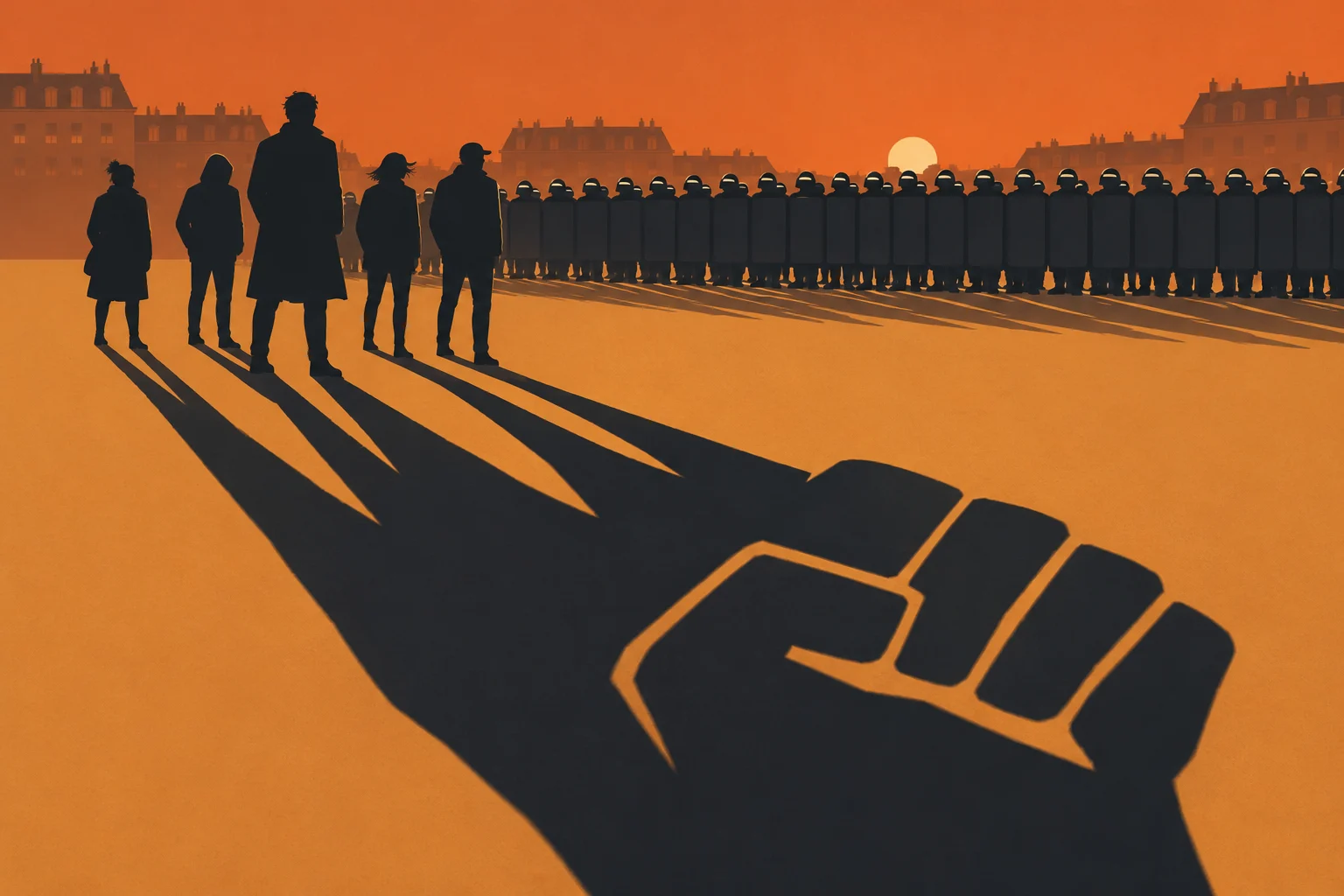
Still, both numbers went down. Days earlier, an estimated 575,000 people had joined a union-organised rally. On Saturday the state deployed about 70,000 security personnel. Against the ministry’s count, that works out to roughly one officer for every two marchers, which is a lot of officers for a falling turnout. Police used tear gas and batons in Paris and fired tear gas canisters at hundreds of people blocking a road in central Lyon, France’s third-largest city. The interior minister warned that the authorities were “ready and waiting” for rioters and looters.
So the headline number is shrinking. My guess is that it’s the least interesting number around.
Counting the events, not the people
Head counts measure how many people showed up. The Armed Conflict Location & Event Data project, ACLED, counts something else: how many separate events happened, and what kind they were. Al Jazeera’s analysis of ACLED data, by Hanna Duggal, found that France had more than 1,200 protests and riots of 100 or more people between September 15 and October 30, over education, public services and the cost of living. That window is 46 days long, so it comes to around 26 sizeable events a day, every day, for six and a half weeks.
On October 19, ACLED’s chief executive, Clionadh Raleigh, put that in historical context. Over the previous five years, ACLED had recorded an average of 20.5 demonstrations a day in France. “During the current protest cycle, that has jumped to almost 66 a day, more than three times the usual rate,” she said. Protest cycles normally last about 20 days, or 36 for major movements. By ACLED’s count this one had reached 45 days and was still going. Nearly three weeks later, it still hasn’t stopped.
Then came the part she called the most striking:
“Almost a quarter of events, 24.2 percent, have been classified as riots, compared to a median of just 1.9 percent in previous cycles. Only the unrest following the death of Nahel Merzouk in 2023 recorded a higher proportion.”
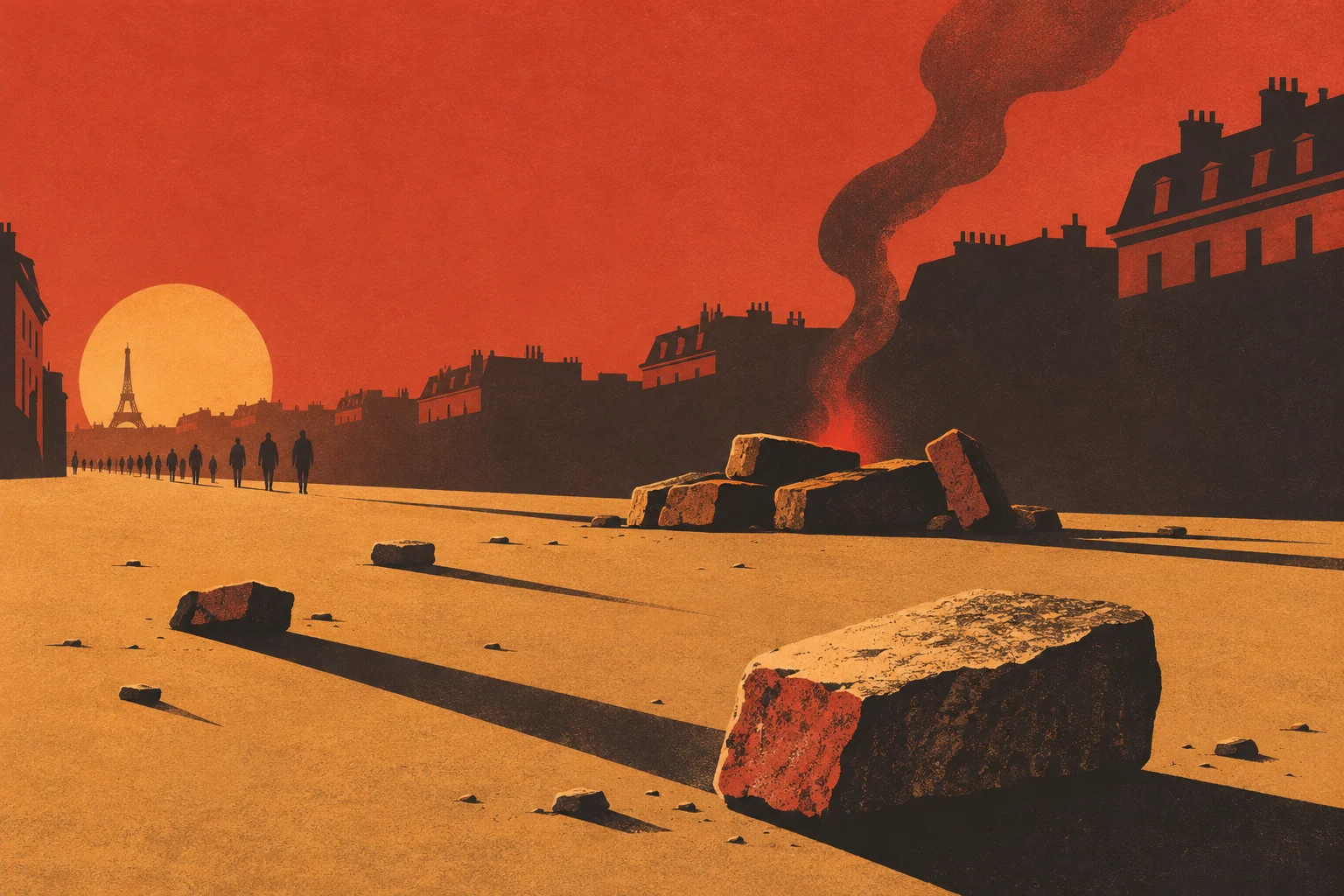
A riot share of 24.2 percent is nearly 13 times the 1.9 percent median. ACLED also recorded more than 400 events involving arrests, against a previous high of 138 during the 2023 pension reform protests. It found that peaceful protests in big cities such as Paris, Marseille and Lyon had sometimes escalated into rioting by smaller groups, while demonstrations in smaller towns had stayed “largely peaceful.” Put those numbers next to the crowd counts and you get a movement that is losing marchers and getting more confrontational at the same time. A lower turnout does not obviously mean a calmer one.
The movement started in mid-September in high schools, where students complained about overcrowded classrooms, too few teachers and crumbling buildings. It then took on the cost of living more broadly, including fuel prices, wages and social housing, and drew in trade unions and the “yellow vests.” Looting and rioting have broken out on the sidelines.
The police response
Critics have accused police of excessive force, including barricades, tear gas and batons. On October 28, four United Nations experts mandated by the Human Rights Council, including Gina Romero, the special rapporteur on freedom of peaceful assembly, and Farida Shaheed, the expert on cultural rights, said they were appalled by the crackdown. “The scale of the arrests and detention, affecting several thousand people, mainly minors, appears disproportionate and deters demonstrators from exercising their freedoms of expression and peaceful assembly,” they said. They also argued that putting security first had pushed the root causes of the protests aside. In the northern city of Lille, a teenager lost a hand when a grenade exploded during clashes between school protesters and police.
France’s neighbours
France isn’t doing this alone. According to the same ACLED analysis, more than 1,700 protests and riots of 100 or more people took place across Europe between September 15 and October 30, in France and 30 other countries from Portugal to Poland. France accounts for roughly 70 percent of that total. Next come Spain with 173, Italy with 160, Germany with 70 and Portugal with 33. Those four add up to 436, which leaves only a few dozen events for the other 26 countries combined. So it’s a European phenomenon in the sense that it shows up across Europe, but most of it is still French.
The grievances are recognisably the same ones: underfunded schools, rising prices and housing people can’t afford. In Spain, tens of thousands rallied in early October after parliament rejected two emergency housing decrees on October 2, a blow to Pedro Sánchez’s minority government. In Italy, cost-of-living and housing protests have led to clashes with police. In Portugal, tens of thousands marched over living costs, low wages and housing, some of it on the same Saturday as France. Alberto Alemanno, a professor of EU law and policy at HEC Paris, told Al Jazeera last month: “France is the epicentre of this movement … and there are signs now that this is spreading beyond France.”
The awkward part for Paris is the money. The original complaint was that the state was not spending enough on teachers and buildings, and the state is now paying more to borrow, with France’s 10-year yield passing 5 percent last month. That is not a budget with a lot of room for new classrooms. It does, apparently, have room for 70,000 officers on a Saturday.