
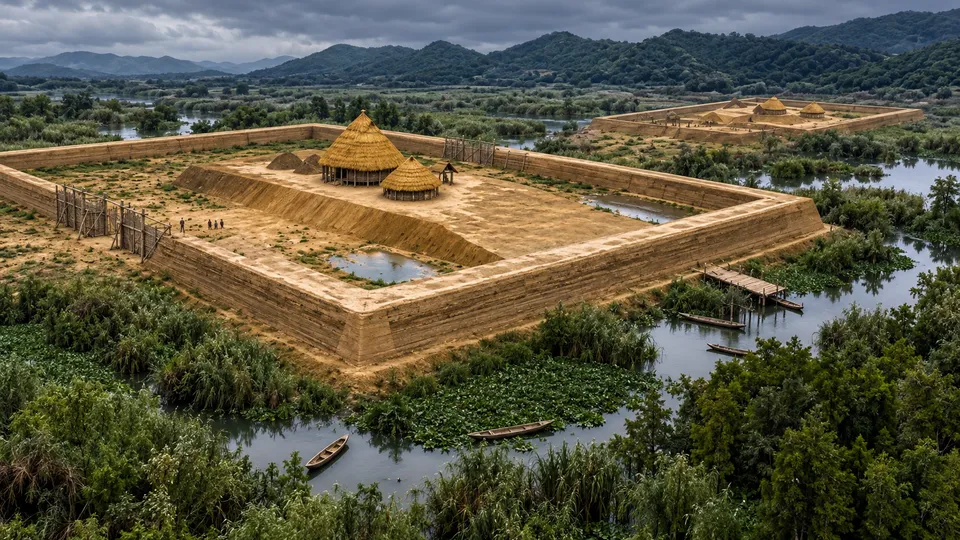
After five thousand years a building is mostly gone. The timber has rotted and the roof has fallen in, and nobody is left who knew what it was for. In the ground east of the Fanshan cemetery, on the edge of the ancient city of Liangzhu in Zhejiang Province, what was left came to 120 holes. Posts once stood in them. Now they hold soil of a different colour.
From those holes, Leman Altuntaş reports for Arkeonews, researchers at the Zhejiang Provincial Institute of Cultural Relics and Archaeology have rebuilt three wooden structures on paper. They sit beside the highest-ranking graves of the Liangzhu civilization, a society that grew rich in jade thousands of years before China had emperors. The team raises the possibility that the rulers buried there were honoured with ceremonies held next to their tombs, much earlier than any such rites had been documented at the site.
The work was presented at the fourth Liangzhu Forum, held in Hangzhou from October 18 to 20, according to China News Service. The forum fell in the ninetieth year since Liangzhu was discovered, an anniversary Xinhua marked with a long retrospective on the city.
The geometry of absence
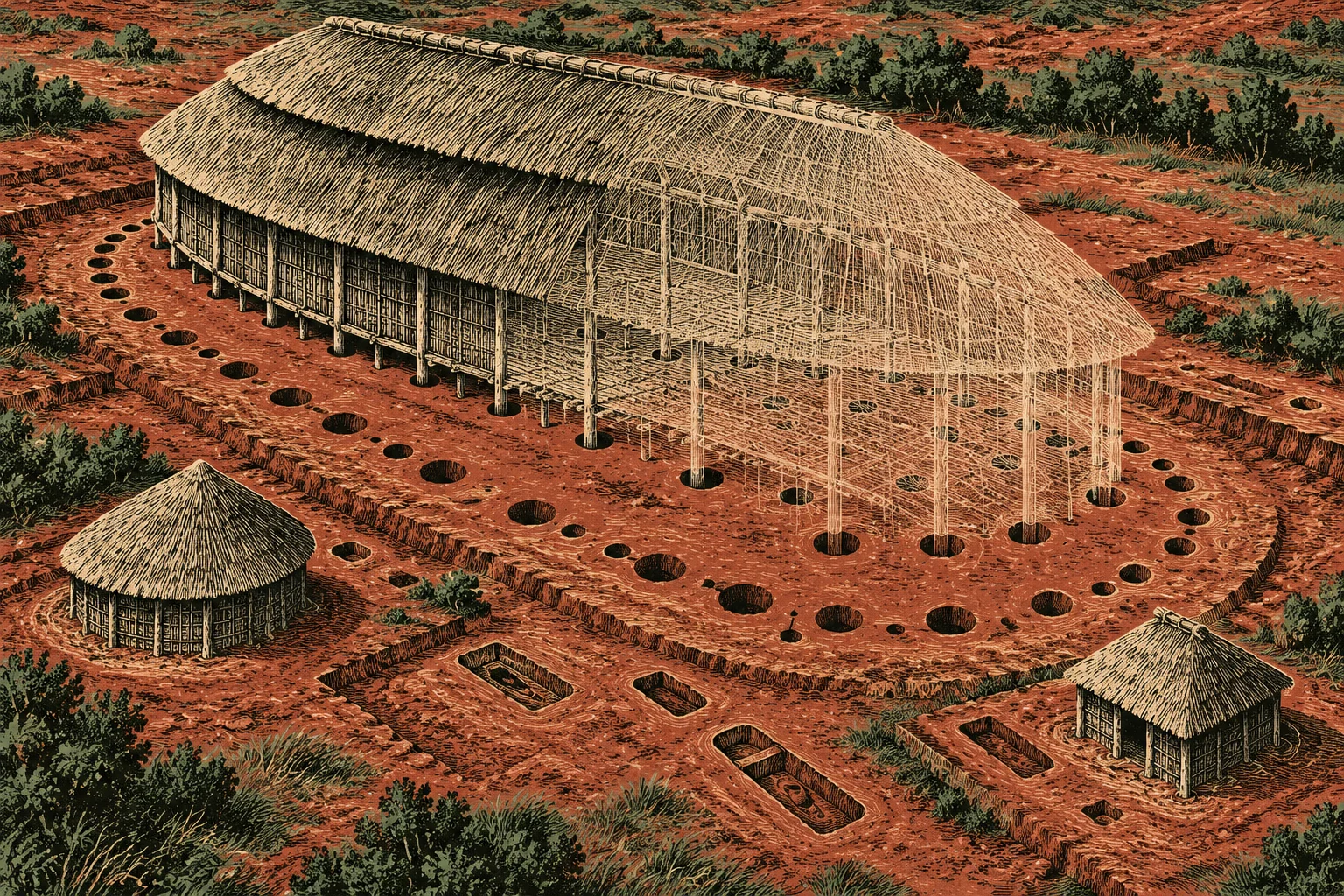
The archaeologists sorted the postholes into three groups and labelled the buildings F1, F2 and F3. They measured the holes and checked them against architectural analysis and against the houses Liangzhu people modelled in clay or drew on their pottery. China News Service quotes Li Songyang, an architectural historian at the institute, as saying the team studied the diameter, depth and placement of every hole. The oval outline of the largest building, he said, came from two kinds of evidence read together: the edge of a layer of red earth and a line of small postholes.
F1 is the largest. It was oval, about 25.2 metres by 16 metres, and covered roughly 316 square metres. In the reconstruction it has a raised wooden floor, a corridor running around it and a heavy roof that may have taken it to about 15 metres high. Li described the roof as two-tiered and built on an artificial slope, with the floor inside raised about the height of an adult’s waist so it stayed level on the hillside. A passageway appears to have linked it to its neighbour, a round building of about 105 square metres. The third building, roughly square, covered only 23 square metres. Li called the two smaller ones ordinary thatched huts.
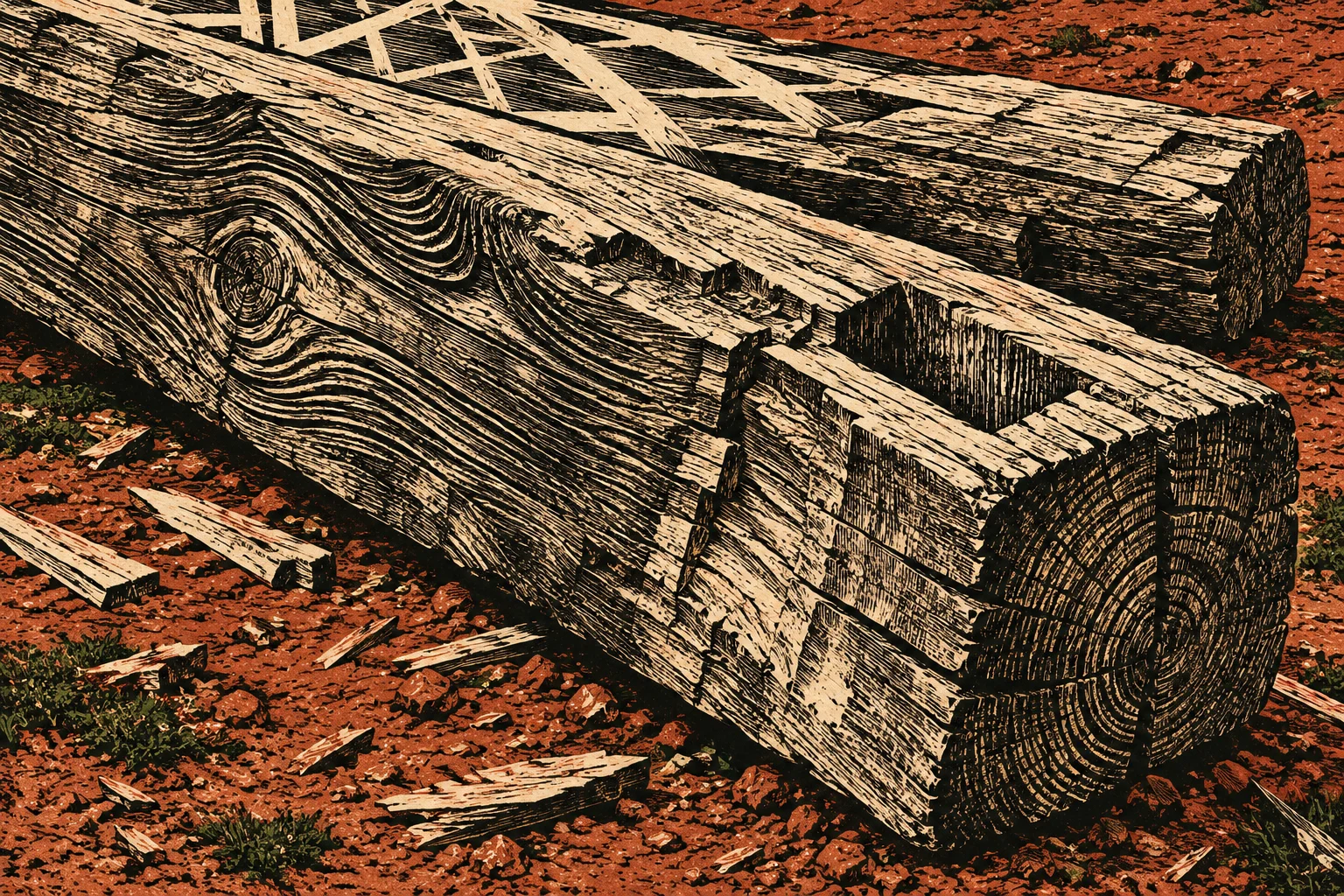
Li also said more than one reconstruction is possible. The team drew on large worked timbers from the Zhongjiagang site inside Liangzhu City, but holes in the ground are all that survive of the buildings themselves. Everything above the soil line is educated inference.
A hall for the dead?
These are no ordinary neighbours. The buildings stand beside Tomb M12, the most famous grave at Fanshan. Fanshan became celebrated in 1986, when excavators opened graves filled with elaborate jade. Out of M12 came some of the most prestigious objects Liangzhu produced, among them a monumental jade cong, a squared ritual piece pierced by a round hole, and a ceremonial jade axe that marked rank.
Wang Ningyuan, the senior researcher who leads the Liangzhu investigations, has suggested that the oval hall may have been a xiangdian, a hall for rites commemorating dead rulers or high-ranking ancestors. He pointed to its size, its unusual design and its position on raised ground overlooking the burials. Xinhua’s Chinese-language report says Wang told the forum that the team now considers a ceremonial function more likely.
More likely is not proven, and the researchers do not claim it is. The next excavations will look for signs of everyday living, such as hearths and household rubbish, which would point to an elite residence or some other use. In the end the gap between a palace and a shrine to the dead may come down to whether anyone cooked there.
The wall around the kings
The hall is only part of the discovery. Excavation at Fanshan resumed in 2024 with approval from the National Cultural Heritage Administration, Xinhua reported, and earlier rounds of digging found a rectangular enclosure around the burial ground, about 180 metres from east to west and 140 metres from north to south. Radiocarbon dates from its eastern and southern walls put it at around 5,000 years old, broadly the same age as the richest burials.
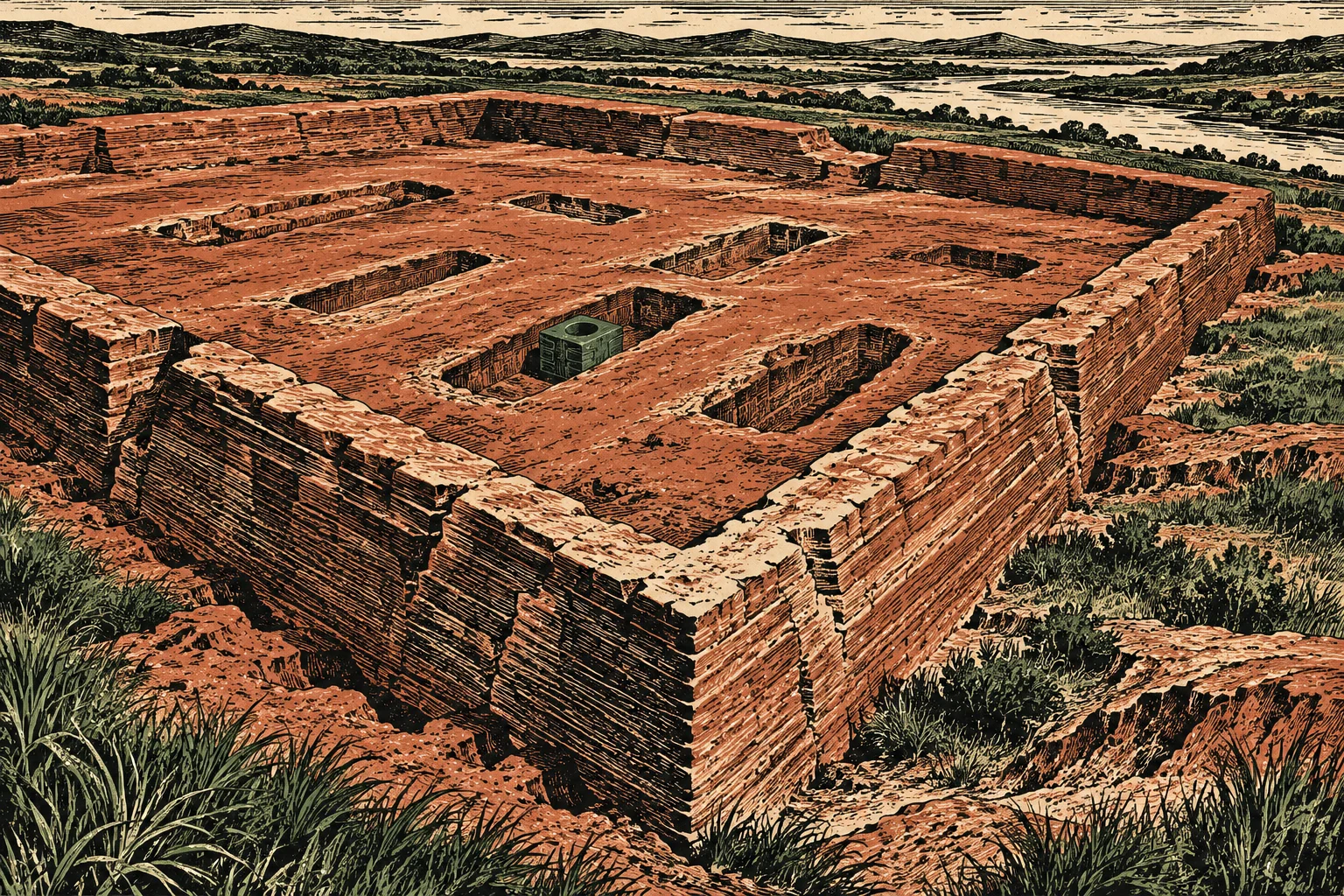
If the walls, the tombs and the buildings were planned together, Liangzhu’s elite had something larger than a graveyard: a formal royal burial precinct with boundaries and with buildings that may have been meant for rites. Wang put the question directly at the forum, asking whether hall and wall together point to an early system of royal mausoleums. Guangming Online ran its report under a headline saying such a system may have existed 5,000 years ago.
What follows is reflection, not finding. Rulers have always wanted their authority to outlast them, and one way to manage it is to build a fence around the dead and a hall beside them where the living must keep coming to pay respects. The graves told us that Liangzhu’s lords owned jade. A walled precinct with a hall would tell us they also expected to be visited after death, and to have someone in charge of the visiting.
Fanshan is not the only place this autumn where the timber of early power has been read from the ground. At Nanzuo, in the same millennium, a palace was stripped of its beams and buried. Far to the west and much later, Bronze Age Seddin put up a square hall beside a king’s mound. The people who dug the postholes, carried the timber and raised the walls at Fanshan left no names. Whatever the hall turns out to have been, it was their labour that stood there, around a ruler whose jade is now in a museum case.