
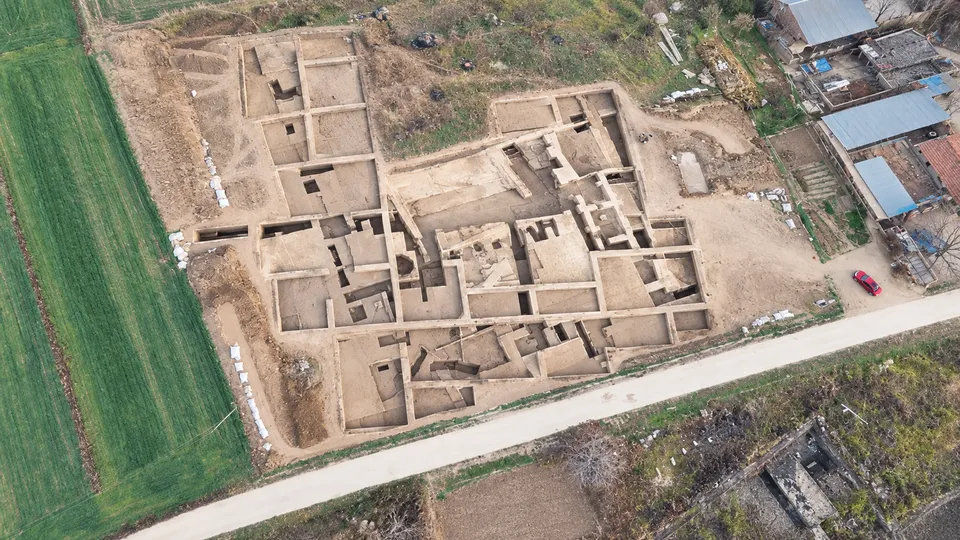
On the Loess Plateau near Qingyang, in China’s Gansu Province, about five thousand years ago, a community did something strange to the grandest building it had. It pulled out the wooden columns and beams, which were valuable and could be used again. Then it packed the halls with earth, layer on layer, until much of the palace lay buried. As Leman Altuntaş reports for Arkeonews, the archaeologists now digging there can show in detail how it was done. They cannot yet say why.
A capital before capitals
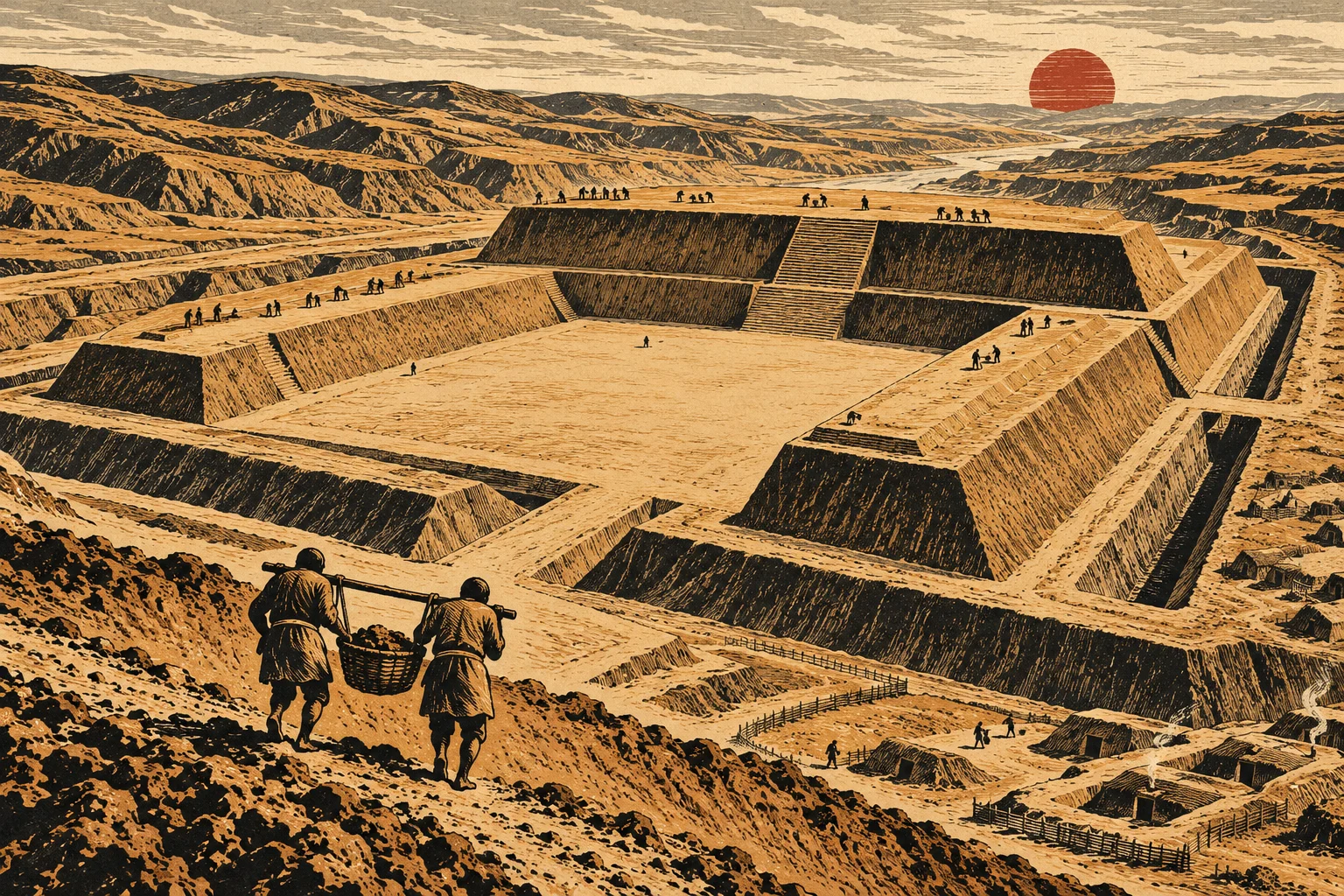
Nanzuo was identified in 1957. China Daily dates the find to a 1958 national survey instead, and reports that the main building turned up during excavations in the 1980s and 1990s but drew little interest at the time. Its scale only became clear after a new campaign began in 2021. The remains date to roughly 5,100 to 4,700 years ago, the Late Yangshao period. The settlement spreads over about six square kilometres, which China Daily puts at some eight times the size of Beijing’s Palace Museum. At its heart lies a monumental zone of about 300,000 square metres. Nine huge rammed-earth platforms stand around it in an inverted U, and wide ditches cut it off from the houses beyond, among them courtyard dwellings dug partly into the ground.
Han Jianye of Renmin University, who led the excavation, estimates that more than 10,000 people may have lived there. His reasoning is that building on this scale needed thousands of labourers working over several years. The figure is an estimate. The earthworks themselves are not.
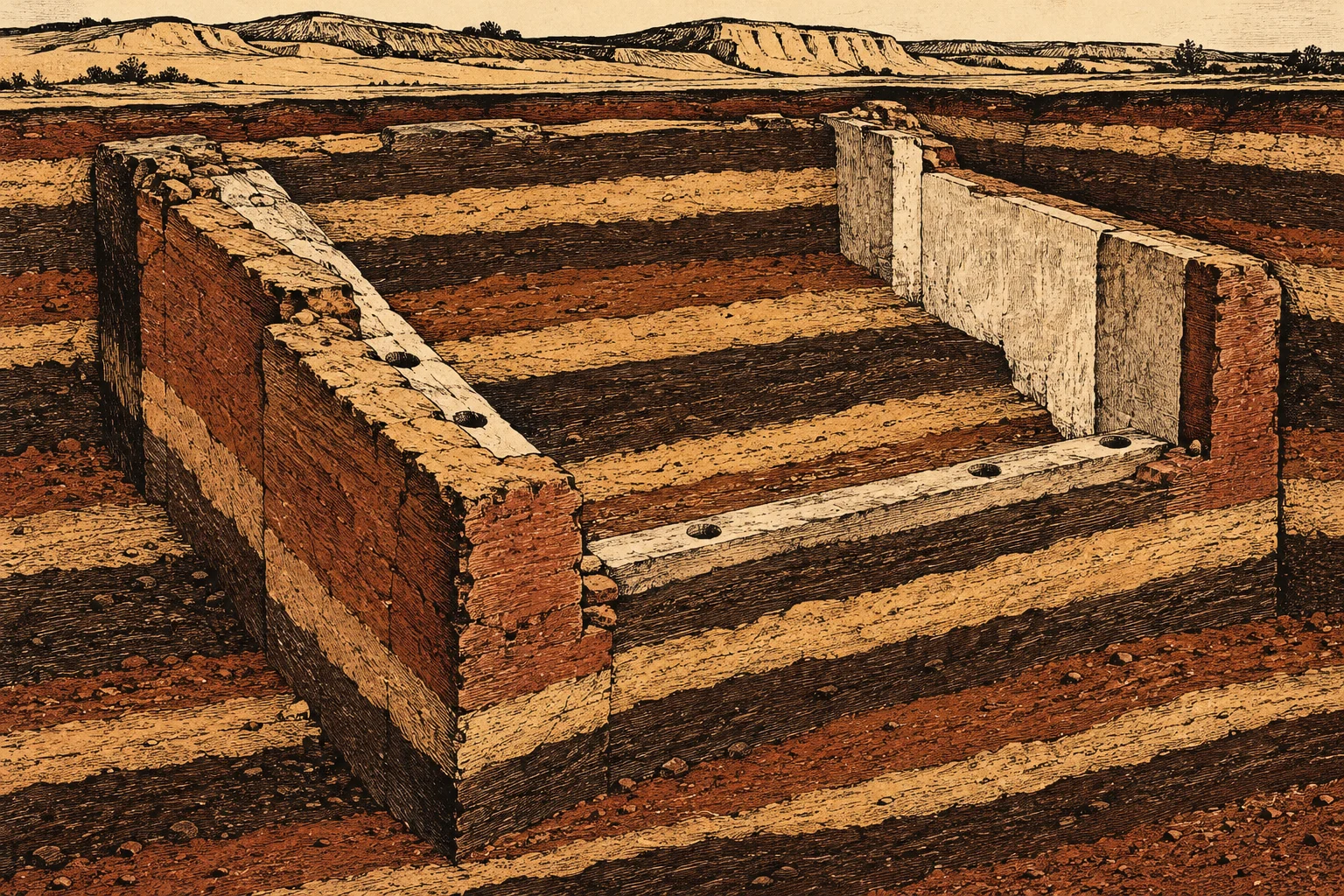
In the middle of it all was a palace courtyard of roughly 4,000 square metres, and in the middle of that stood the main building, designated F1. It had a front hall and a larger rear chamber joined by three doorways. Guangming Daily gives its area as about 824 square metres, and China Daily gives more than 800, with over 630 square metres of interior floor. The walls were thick rammed earth covered in several coats of white lime plaster. Inside was a circular fire installation 3.2 metres across. Zhang Xiaoning, a field director at the site from the Gansu Provincial Institute of Cultural Relics and Archaeology, calls the arrangement, with everything set along one central axis, the earliest known layout of its kind among China’s prehistoric capital-like settlements.
Here is a reflection, not a finding: the straight line running through the centre is one of the oldest ways power speaks. Everything faces one way, toward one place, and so toward whoever sits there.
The burial
When the palace stopped being used, its builders did not leave it to fall down. They took out the timber that held up the roof. In the front hall they laid down alternating bands of dark brown and pale yellow soil, a dense, deliberate fill over the old floors. Most of the palace precinct was raised and levelled in the same way. Earth does not pile up like that around a deserted building by itself. Someone organised it and fed the workers, and the job took a great deal of labour.
The excavators have found no clear sign that an attack or a disaster brought the building down. The sequence in the ground points to a planned change. The fill also explains why the walls survived: the packed earth held them up and protected details that would otherwise have crumbled away.
The people who buried the palace ended up preserving it.
What was left in the eastern room
The best clues come from F2, a ceremonial space of about 70 square metres just east of the main hall. It held hundreds of small white decorated pottery jars, nine painted ceramic bottles, a white vessel with a lid and a large painted jar nearly 70 centimetres tall. Some pieces were arranged in groups. Others lay broken among animal remains and traces of burning. A field assessment from September 2025 also recorded intact pig skulls, white pottery fragments and vessels decorated with cinnabar. Researchers think F2 may have kept a ceremonial role while the rest of the precinct was being filled in.
Close by, archaeologists traced an artificial winding channel with at least twelve bends inside roughly 15 square metres. East of F1 they recovered millions of carbonized rice grains, along with large quantities of pig bones. This was a region where millet mattered a great deal, so so much rice is surprising. It may have been offerings, stored food, shared feasts, or the remains of activity over many years. Zhang has told China Daily that if crops at the site came from elsewhere, “we can infer there was probably a tribute system, involving transportation and trade”. The objects suggest the burial came with ritual. They do not yet say what the ritual meant.
Those who stayed
According to Zhang, the palace was in use for about 300 years, and people went on living at Nanzuo for nearly 200 more. They put up new buildings over parts of the buried complex, though too little of them survives to reconstruct. Zhang’s view is that the ruling group may have moved away and left part of the population behind. Nothing found so far settles whether the burial marked new building plans, the end of a ceremonial era or a change of rulers.
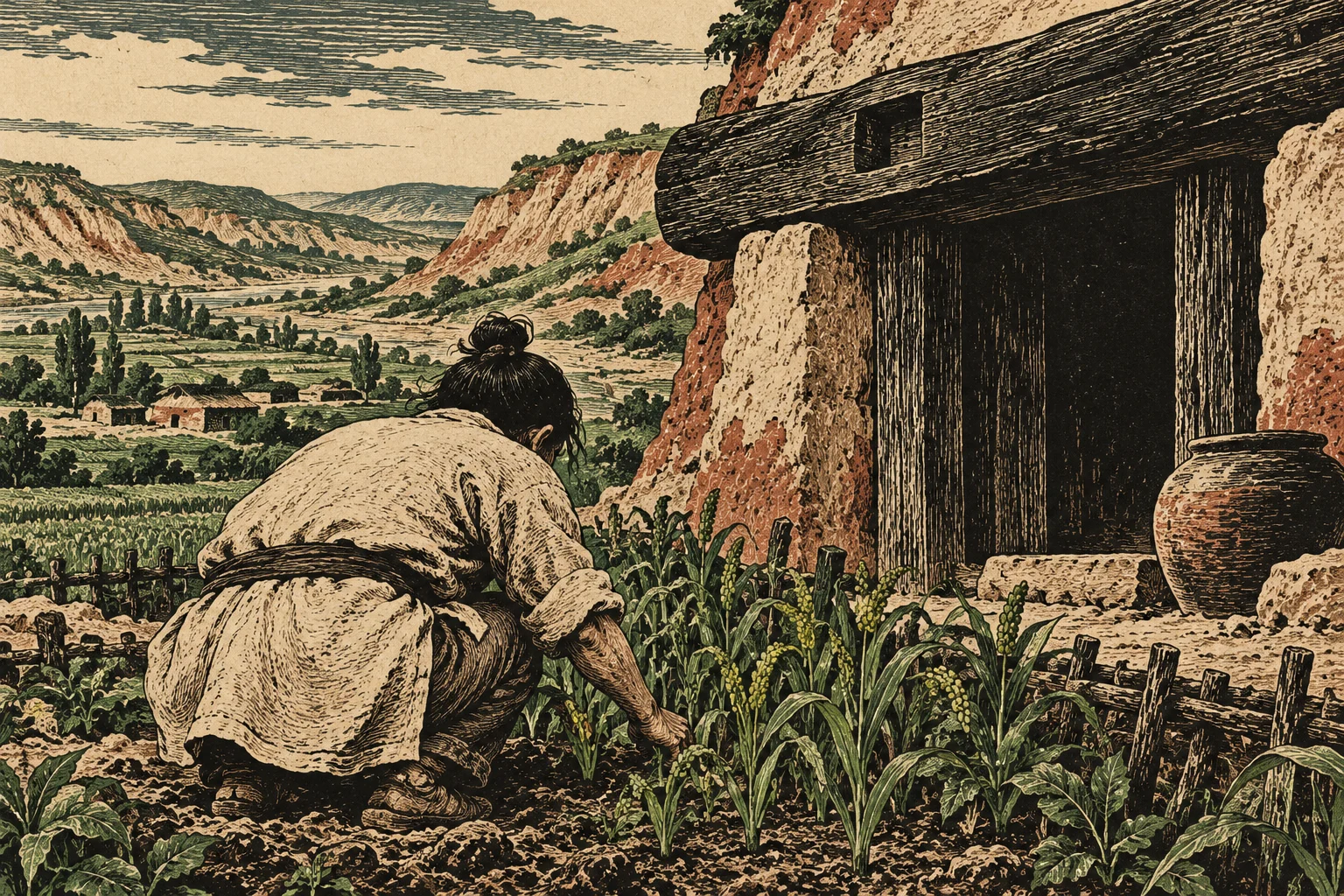
Again as reflection: the history of power is full of courts that left and people who stayed. Rulers take the beams with them, and the farmers keep living on the ground they leave.
North, toward stone
Han goes further. He suggests that as Nanzuo lost its importance, some of its people may have moved toward northern Shaanxi. Several centuries later, Shimao rose there. According to the Chinese Social Sciences Net, it stands at the southeastern edge of the Mu Us Desert, in Gaojiabao Town in Shenmu, and was built around 2300 BCE and abandoned around 1800 BCE. Its stone walls enclosed more than four square kilometres, with heavily defended gates and a central elite complex. Science has reported that no other settlement in China at the time covered so large a walled area. Nanzuo was built mainly in rammed earth. Shimao was built in stone.
The two sites belong to different archaeological contexts, and no direct evidence shows that people from Nanzuo founded Shimao. Han’s idea is a hypothesis, and it is presented as one. Its point is that when a centre declines, its people, its skills and its habits do not have to vanish with it. Longdong, the eastern Gansu region around Nanzuo, may have been one of the routes they travelled.
The full report on the 2021–2022 seasons, focused on the big rammed-earth structures in the north of the site, appeared in Chinese Archaeology in December 2024. The burial’s purpose is still unexplained. Millions of rice grains, burned black, lie east of a hall that its own people filled with earth.