
For more than a century, Seddin, a village in the Prignitz in northern Brandenburg, has been known for one thing: a hill raised by human hands. The Königsgrab, the royal tomb, was opened in 1899. It is a burial mound from around 800 BC, and inside it lay the cremated remains of three people with bronze weapons, vessels and other valuables. Whoever was buried there stood near the top of the local order. A mound like that is meant to be seen, and according to the dpa news agency it could once be seen from kilometres away.
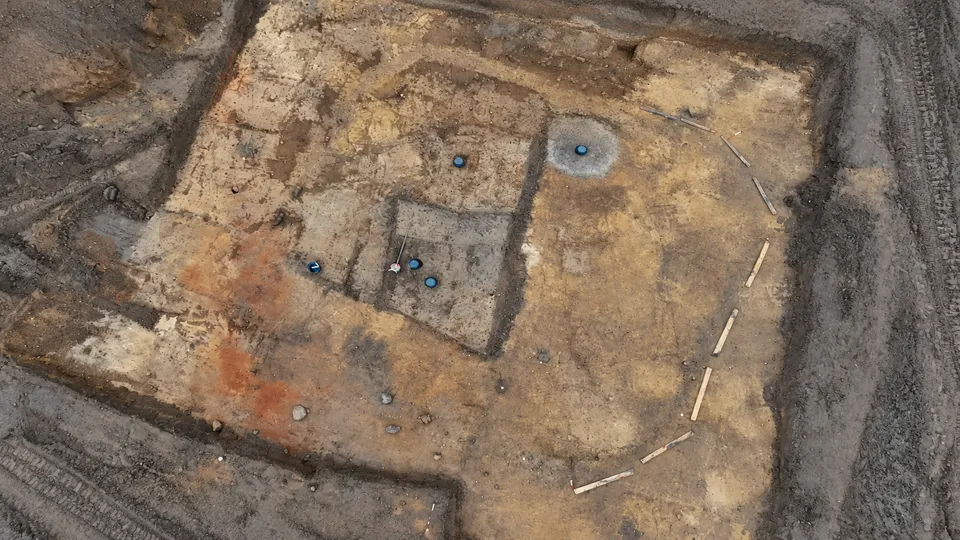
On October 14 the Brandenburg State Office for Monument Preservation and Archaeological State Museum, known as BLDAM, announced a find that draws attention from the dead to the living. As Leman Altuntaş reported for Arkeonews, excavators working in the settlement around the tomb have uncovered the foundations of a building that, by the building habits of its time, should not exist.
A house with the wrong shape
In the Late Bronze Age people built in long rectangles, whatever the region and whatever the style. The new building at Seddin measures 10.6 metres from north to south and 11.4 metres from east to west. It is almost square. Its floor plan was exposed in September. It stood on a slight rise above the surrounding ground, and its walls sat in narrow foundation trenches packed with stones.
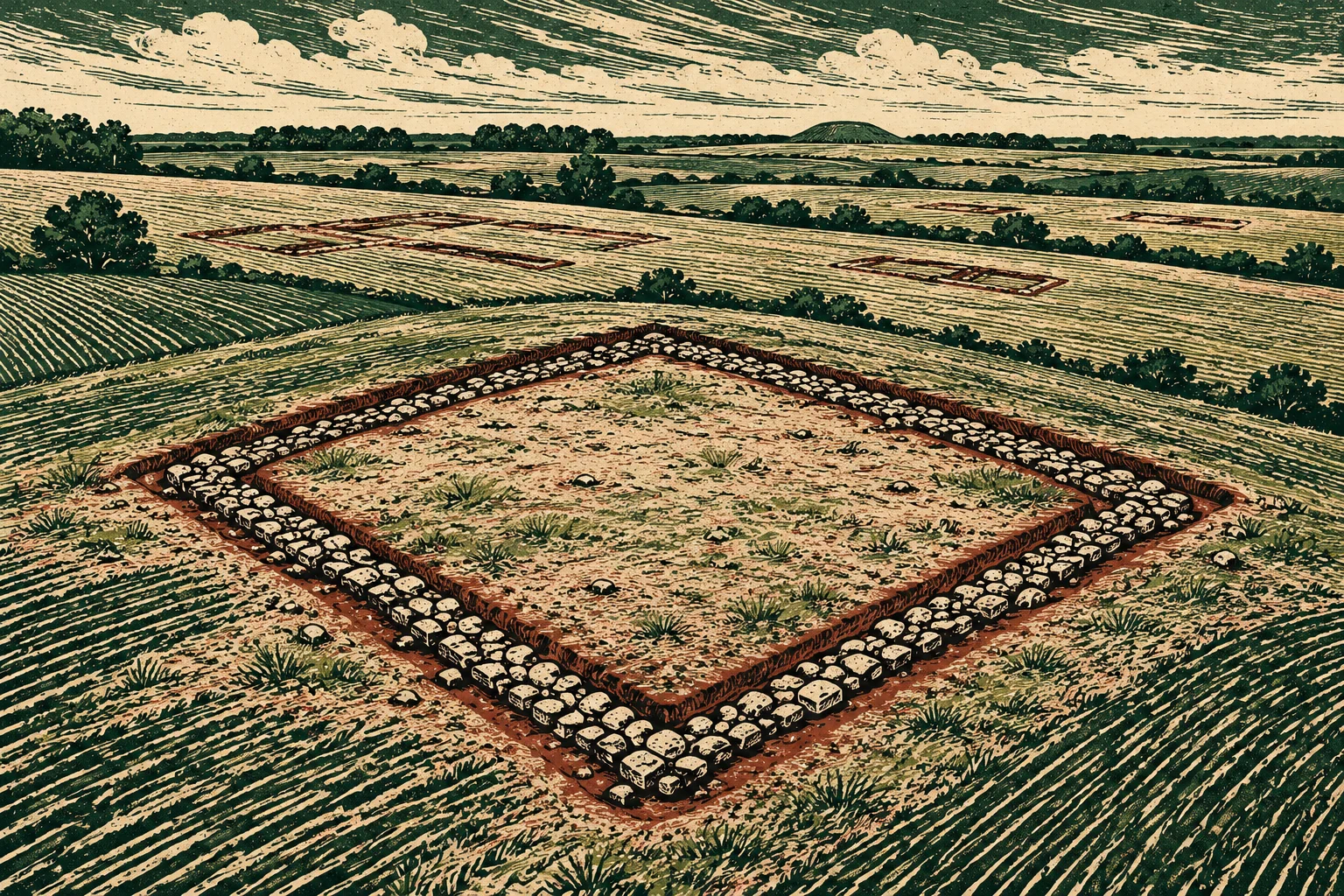
The same technique was used for Seddin’s other monument, the so-called King’s Hall, which was excavated in 2023. BLDAM described that building at the time as the largest hall of the Nordic Bronze Age. It is about 10 metres wide and 31 metres long, and radiocarbon dates place it in the tenth to ninth centuries BC. The new building is not as large overall, but it is wider.
A long hall for assembly. Now a square one, for something else.
Franz Schopper, Brandenburg’s state archaeologist and BLDAM’s director, told dpa, as carried by Nordkurier, that nothing like it had been found in the region:
The form is extremely unusual and has not been known so far in the entire north German Bronze Age.
Pots too big for one household
The ordinary settlement has yielded little. According to dpa, perhaps 200 to 300 people lived there at any one time in the ninth century BC, probably carpenters, metal casters, other craftsmen and farmers. Ten years of digging among their houses produced relatively few potsherds: bowls, tureens, double cones and storage jars of standard sizes, with rims of 30 to 40 centimetres.
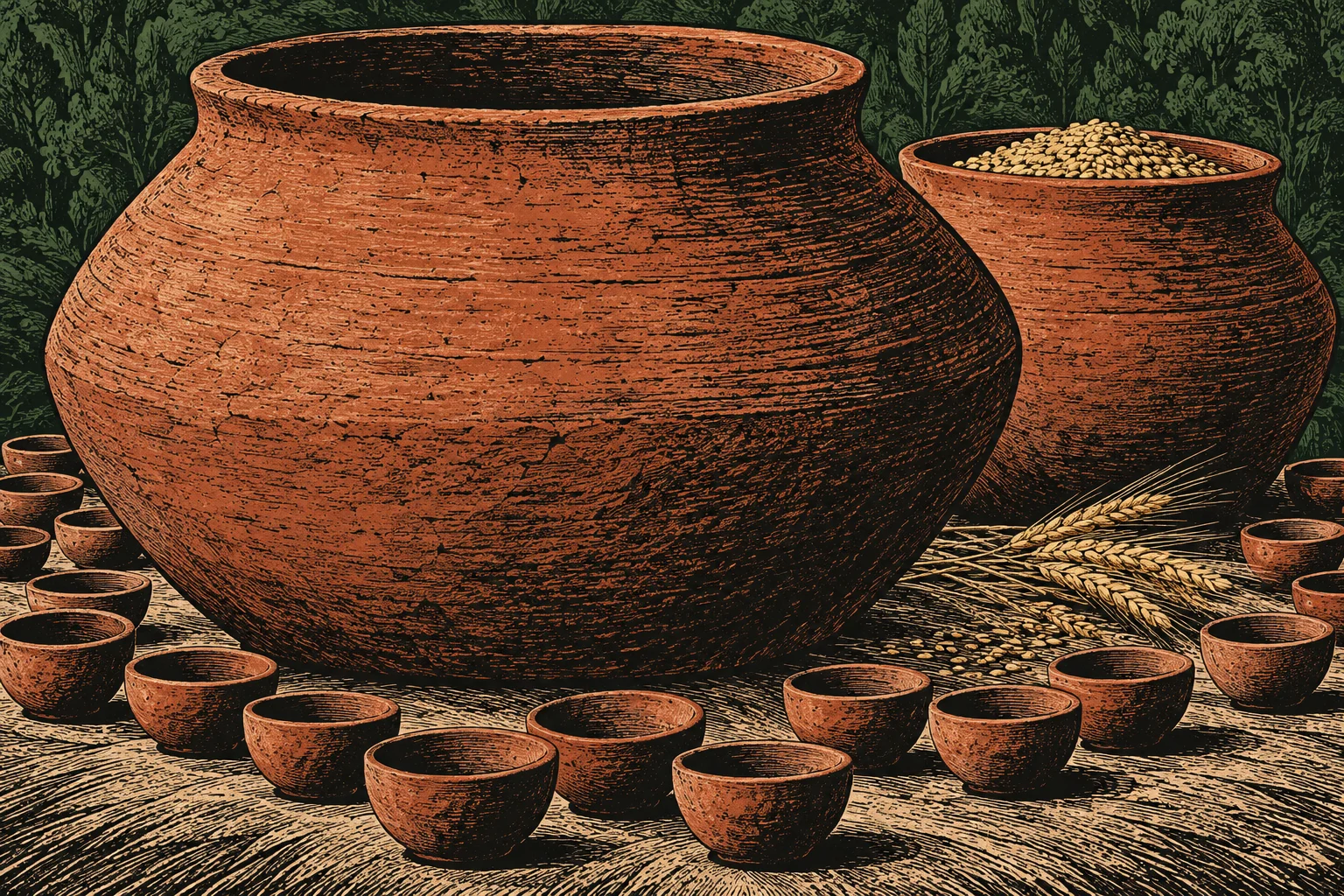
Around the square building the ground is full of pottery, and some rims measure more than 50 centimetres across. Vessels that size were not made for one family’s supper. They suggest food and drink served to many people at once. Dpa reported that they may also have held offerings to higher powers and to the forces of nature, perhaps grain or fermented fruit wines.
The bones show the difference even more clearly. In a decade of excavation across the settlement, researchers recovered two animal bones in total. Around the square building, every larger pit examined so far has contained fragments of burned animal remains, along with soil stained a fiery red. The bones have not yet been analysed. Cattle, wolves, sheep and goats are all possible. One pit also produced a small amber bead, the first ever found at Seddin, which points to trade with the amber coasts of the Baltic.
The king who may not have been
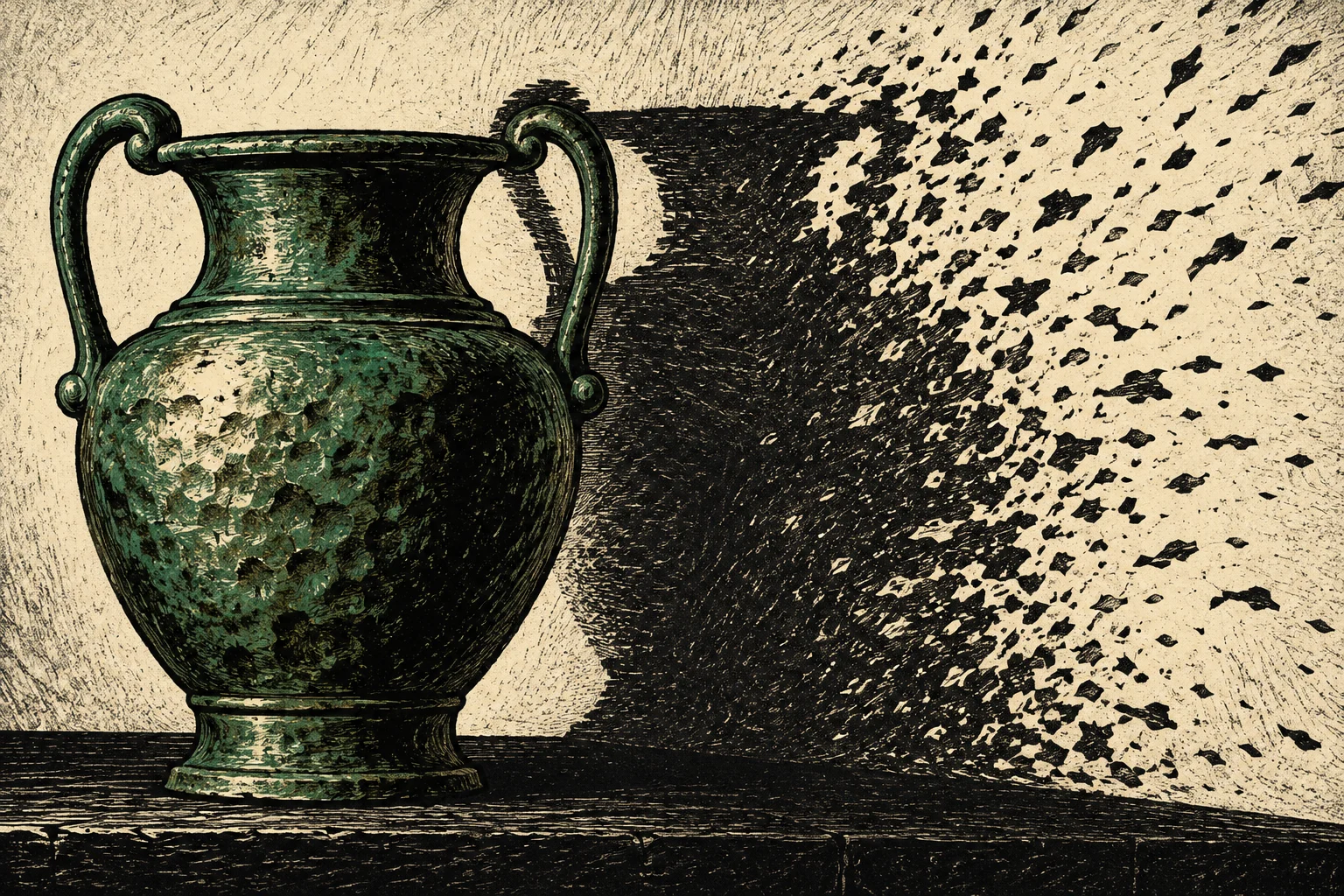
The tomb takes its name from a local legend about King Hinz, a powerful ruler said to have been buried inside three nested coffins. When the chamber was opened, excavators found a bronze urn holding human remains inside a larger clay vessel, which is uncomfortably close to the old story. Still, there is no evidence that Hinz ever lived, or that the man in the mound was a king. There are no written records, and the cremated remains were lost in the Second World War. The grave goods, including the bronze amphora that served as the urn, are on display in Berlin’s Neues Museum.
Schopper does not make much of the name. “An everyday name,” he said. “Later one might perhaps say King Fritz, so it is simply a nickname.”
This is how power is usually remembered, if it is remembered at all. The bronze survives, the body is lost, and the people end up giving the ruler a pet name.
BLDAM dates the square building roughly to 850 BC. According to Arkeonews, the pottery and the radiocarbon dates available so far place its use in the same period as the burial. The reports describe its location differently. Arkeonews puts it about 900 metres from the tomb, while dpa describes it as directly beside the grave, on one of the highest points of the site.
Temple, or table
Schopper uses the word templum. “We assume that the almost square building was used for cultic and ritual purposes,” he told dpa. He called the burned bones and pottery probably “remains of burnt-offering rites that are known from the Bronze Age across the whole of Europe.”
The investigators believe the animal remains were burned on purpose. There are two possible explanations. Large meals may have ended with the leftover bones being thrown into a fire, or whole animals may have been sacrificed. The unusual shape, the raised position, the oversized pots and the burned bone all point to a building with a special role. None of these clues proves it was a temple. Large communal meals could leave the same traces in the soil, and the finds do not yet identify any particular religious practice.
The dig is a joint project of BLDAM and the University of Göttingen’s seminar for prehistory and early history, called Siedlungsumfeld Seddin. In May the German Research Foundation approved one final year of funding, with Schopper and Immo Heske of Göttingen leading the work since April. According to dpa, Brandenburg’s culture ministry has also recently provided money. The field is farmed today. Somewhere in a store room, the bones from the pits are still waiting to be identified.