
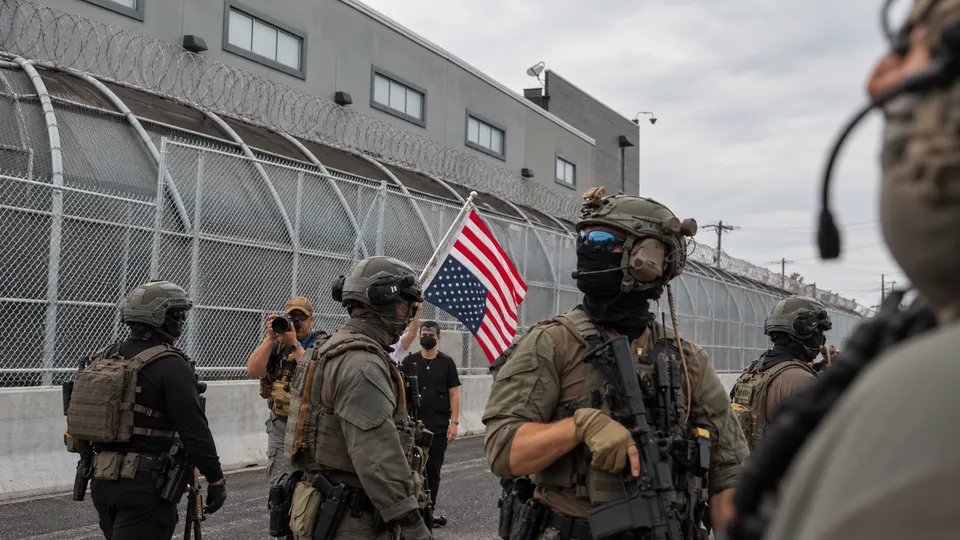
The law dates from 1865, the year the Civil War ended. It bars anyone in the “civil, military or naval service of the United States” from bringing “any troops or armed men” to a place where Americans vote. It allows two exceptions: when force is needed “to keep peace at the polls”, or “to repel armed enemies of the United States.” With ten days to go before the midterm elections of November 3, lawyers, judges, election officials and frightened voters are reading that old sentence very closely.
Their reason has a name and an address. As Umar Farooq set out for Al Jazeera, rights groups fear that Immigration and Customs Enforcement, the agency leading President Donald Trump’s second-term campaign to find and deport the country’s undocumented immigrants, could be used to sway the vote. It sits inside the Department of Homeland Security.
The agency
ICE was created in 2003. By January it had about 22,000 officers and agents, after a 120 percent increase in staffing, and recent spending packages have reportedly made it the best-funded law enforcement agency in the federal government. Critics point to its aggressive tactics and its fast-tracked hiring. During Trump’s second term, immigration agents have been involved in at least 25 shootings, six of them fatal. Since January 2025, at least 60 people have died in ICE custody.
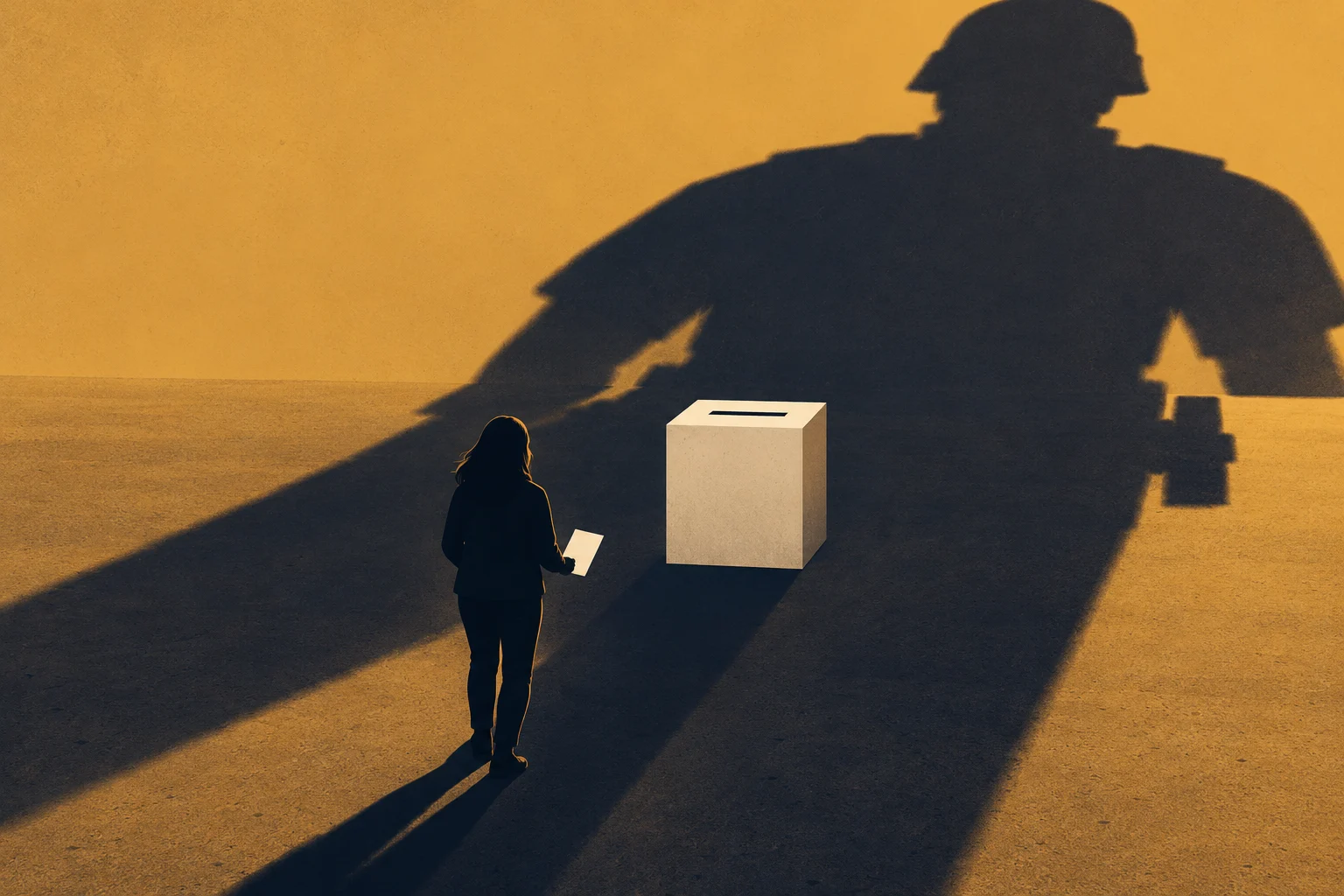
An agency of that size does not have to walk into a polling station to be felt inside one.
In September, a University of California, San Diego poll found that 40 percent of respondents expected ICE agents to be near polling stations on election day.
The promises
Washington has said several things, and they do not all agree. In February, on a call with state election officials, the DHS official Heather Honey said, as CNN reported: “Any suggestion that ICE is going to be present at polling places is simply disinformation. There will be no ICE presence at polling locations.” Arizona’s secretary of state, Adrian Fontes, a Democrat, said he was not persuaded. That same month Karoline Leavitt, then the White House press secretary, said she could not “guarantee” that agents would stay away from polling locations in November.
In March, at a conservative conference, Attorney General Todd Blanche waved the concern away: “Why is there an objection to sending ICE to polling stations?… Illegals can’t vote.” In May, Trump was asked whether he would send the National Guard or ICE to polling sites. He did not answer the question directly: “I’d do anything necessary to make sure we have honest elections.”
In September, Homeland Security Secretary Markwayne Mullin said ICE would not “patrol” polling stations but might be there for other reasons: “The only reason why we would be at polling places is if there is a threat to that polling place…” He also mentioned agents “serving a warrant on someone that we have been actively tracking down.” On October 21 the department gave NBC Washington its standing line: “ICE is not planning operations targeting polling locations.” It added that if an active public safety threat endangered a polling location, people “may be arrested as a result of that targeted enforcement action.”
Here, by way of reflection, is how power often talks. The denial and the exception come out in the same breath, so that either one can later be quoted as the truth.
Door to door
The primaries offered a preview. In San Antonio, Texas, and in Ventura County, California, ICE agents reportedly carried out routine operations near polling places. In both places they left when local police asked them to.
Something larger was happening at the same time. Homeland Security Investigations, an office within ICE, was reportedly told to make non-citizen voting a priority. Non-citizens are barred from voting in federal elections, and experts say very few of them do, but Trump has used the issue to back his false claims of widespread fraud. Since August, DHS has sent HSI agents on “field investigations” in at least nine states, and some of them reportedly went door to door asking residents about their citizenship and their voting plans. This week a federal judge ordered the department to pause those inquiries. The judge cited a “high likelihood of error” and the risk that citizens would be “wrongly swept up” and “subjected to intimidation.” People who watched ICE closely have ended up in its files before: in Maine, observers who filmed agents were logged in a case system.
The courts and the states
The 1865 law is now codified as 18 U.S.C. § 592, and violating it carries up to five years in prison. Some states have similar rules. Other federal laws forbid the military from interfering in elections and make voter intimidation a crime. According to the Campaign Legal Center, as Votebeat reported, “The person who orders the agents or officers to the polls also would face criminal liability for doing that.”
The lawsuits have followed. On September 10, Denver, Common Cause, the League of United Latin American Citizens and UnidosUS sued in federal court in Washington. A coalition of civil rights groups and unions filed a second suit. The Justice Department, a defendant in that case, rejects its premise and argues that federal officials never said they would send law enforcement to polling places. On October 20, Arlington County, Virginia, sued DHS, ICE, the Justice Department and the FBI to keep federal agents away from its election sites.
The states are splitting. Several Democratic states are moving to bar immigration agents from the area around polling places. In Arizona, the Republican state senator Jake Hoffman introduced a bill that would have counties sign agreements with ICE to provide a federal law enforcement presence at the polls.
The voter
On Tuesday, Human Rights Watch called on the administration to keep ICE away from polling and election sites. “Voters should not have to fear being caught in an ICE dragnet when they head to the polls,” said its executive director, Philippe Bolopion. He said the agency’s abuses had already harmed US citizens, some of whom had been detained, some deported and some killed. On October 16, Amnesty International asked for voting free of barriers, “intimidation by armed forces, or fear of harm.”
The Attorney General’s argument was that illegals can’t vote. That is true. The people who will queue on November 3 are citizens, many of them the same Latino voters both parties are courting. The law of 1865 was written for them, so that the only armed men they would meet at the polls would be enemies of the United States.