
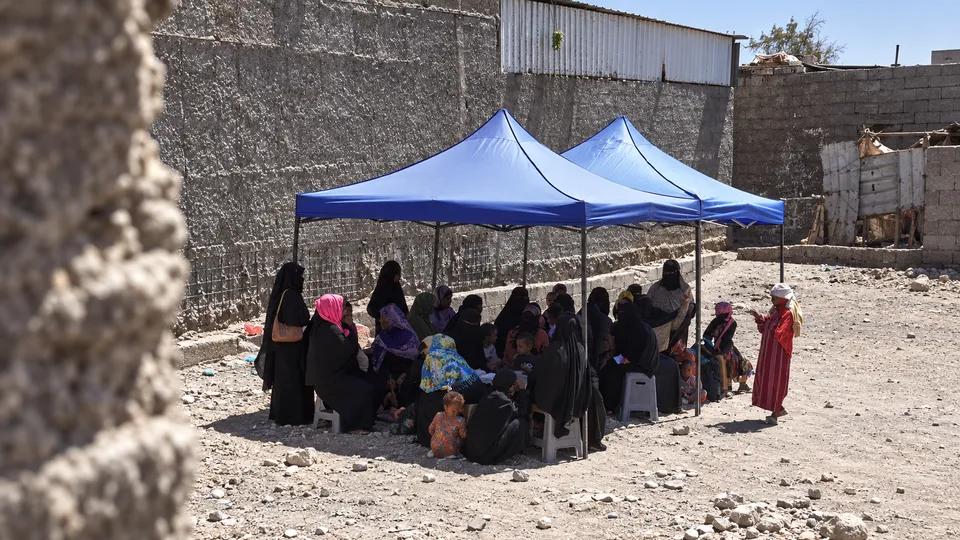
The United Nations counts people the way a clerk counts sacks: in round figures, at the end of a week, on a Friday. On Friday, 30 October, the figure from its humanitarian office, OCHA, was 290,000. That is how many Yemenis have been driven from their homes since the war started again in August, Al Jazeera reported. Forces loyal to the internationally recognised government and the Houthi movement are fighting hardest in Taiz governorate and along the coast, and thousands are reported killed.
The 290,000 come on top of an older count. Before the fighting resumed, more than 5.2 million people were already internally displaced in Yemen, according to Arab News, and thousands more have since crossed the Red Sea to Djibouti. In a country like this, flight is close to a permanent condition.
Two weeks
Among the newly displaced, the UN Population Fund estimates, are nearly 6,100 pregnant women. About 600 of them are expected to give birth within the next two weeks. UN spokesperson Stephane Dujarric passed the estimate on. The agency says it has sent mobile teams and midwives to the displacement sites and is delivering maternal health supplies.
In this war, giving birth now depends on roads and front lines. On 16 October the same agency had already warned that more than 147,600 women and girls of childbearing age in Taiz city had lost access to life-saving care. That was two weeks before the latest count, and the siege has tightened since.
The city on the hills
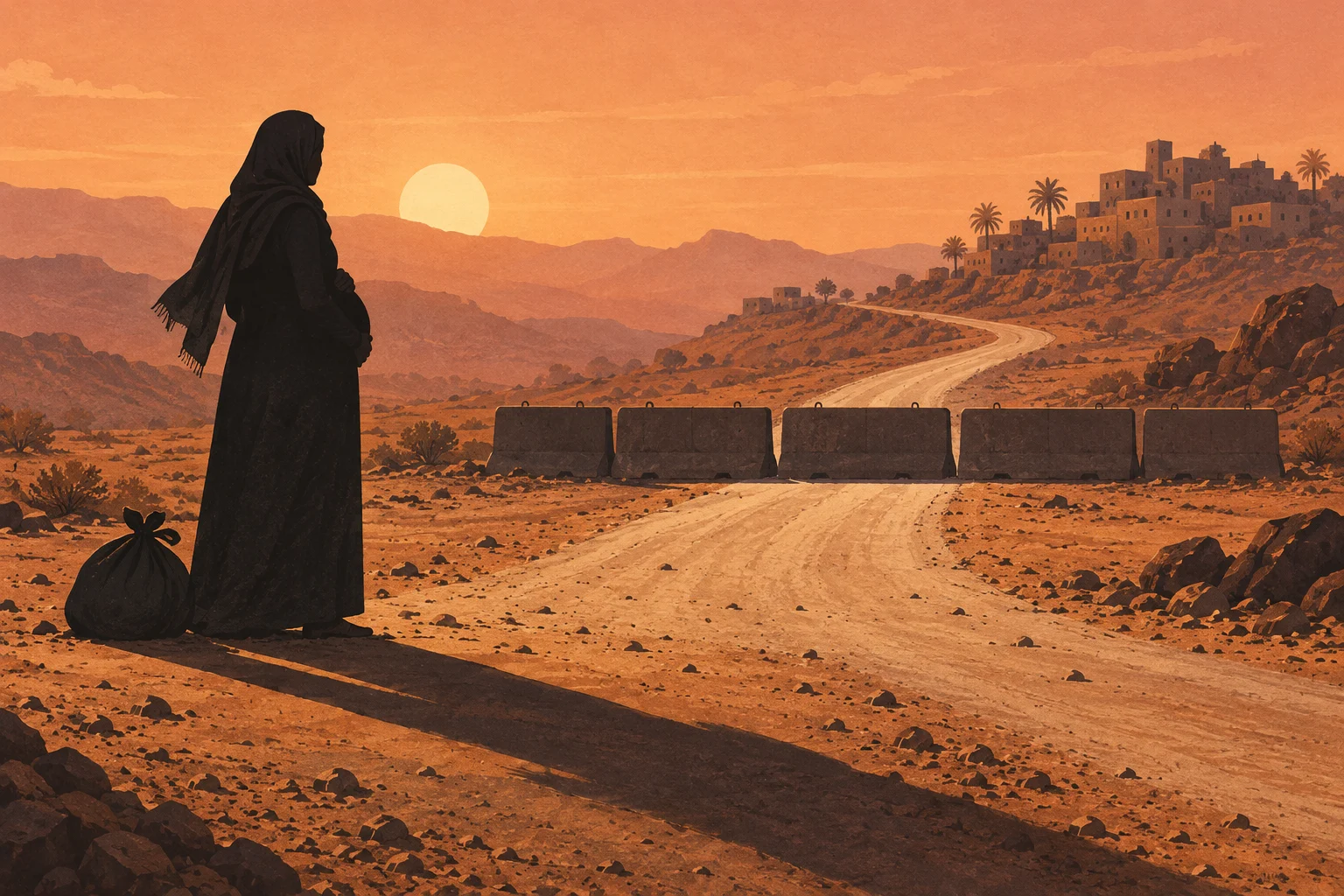
This month the Houthis took ground south of Taiz, including al-Turbah, and pulled their ring around the city tighter. Life inside has got worse, and the UN had already warned that 800,000 people were cut off there. Closed roads have now severed food, medicine, fuel and water for about two million people in the surrounding area. On the coast, the Houthi offensive has given the group control of the Bab al-Mandeb strait, the narrow passage between the Red Sea and the Gulf of Aden. The government says it has launched an offensive to take territory back.
The dead are counted three ways, and the counts do not match. The UN has verified 270 civilian casualties since August. Of those, 68 were killed, and half of the dead were children. The Yemeni Network for Rights and Freedoms, counting only Taiz and only from 1 September to 29 October, recorded at least 189 civilians killed, among them 38 children and 27 women, as well as 23 field executions and more than 300 abductions or enforced disappearances. Saba, the government-aligned news agency, reported one civilian killed and five injured, a child among them, in Houthi attacks across Taiz: a woman shot dead, the injuries caused by shelling and gunfire.

Then there is the soldiers’ arithmetic. Majed Abdullah al-Nuzaili, a spokesman for government forces, said about 336 Houthi fighters had been “neutralised” and 112 vehicles and pieces of equipment hit “in recent hours” on the Taiz, Marib, al-Jawf and al-Bayda fronts. Armies have always preferred the word “neutralised”. It sounds like a chemistry lesson, and it spares the reader the bodies. Those bodies have families too, and rews has reported that the families of slain Houthi fighters say the group’s aid does not cover the bills.
Fire over the capitals
The war is not staying inside Yemen. On Saturday the Saudi-led coalition said it had destroyed a “hostile” drone over the Riyadh region, the second such interception there in two days. Its spokesman, Turki al-Malki, said “the relevant authorities are continuing to inspect the site” and reported no casualties. On Friday Saudi Arabia had reported drones brought down near Mecca, Medina and Riyadh, and a missile fired toward the south of the kingdom. The Houthi spokesman Yahya Saree called the drone claims “egregious lies”. The group denies aiming at the holy cities, but it has claimed strikes on Riyadh, on airports and on oil facilities. Its attack on King Khalid International Airport on 10 October killed at least 13 people and injured more than 300, the deadliest attack on Saudi soil in more than a decade.

In Aden, the government said the Houthis fired at least three ballistic missiles at the Maashiq presidential palace. Missiles were also fired at Aden International Airport, which had reopened only on Thursday after repairs. The cabinet called the airport strike “a direct attack on the interest of citizens”. Meanwhile, at the G20 foreign ministers’ meeting in Atlanta, the Saudi foreign minister, Prince Faisal bin Farhan Al Saud, discussed Yemen with American, Russian and European counterparts, and he and Canada’s Anita Anand jointly condemned the Houthi attacks.
An old war, restarted
The war began in September 2014, when the Houthis seized Sanaa. The Saudi-led coalition intervened in March 2015. After several truces, fighting resumed when government forces struck Sanaa airport and stopped a plane carrying a Houthi delegation from landing. One aircraft kept on the ground was enough to restart a war that had never really ended.
Aid groups say they have reached nearly 249,000 of the displaced, roughly three in four, with food, hygiene kits and emergency cash. They have done it with little money: TechTimes reported that the response is funded at 18 percent of what it needs, close to the fifth of budget on which Yemen’s hunger response was already running. The UN refugee agency adds that more than 65,000 refugees and asylum-seekers inside Yemen face disrupted services and food and fuel prices that are climbing fast.
The UN has again asked all parties to “protect civilians and civilian infrastructure, respect international humanitarian law, and allow safe, sustained and unimpeded humanitarian access”. The appeal is made every time, in the same words. Meanwhile, somewhere among the displacement sites, 600 women are expecting to give birth within two weeks.