
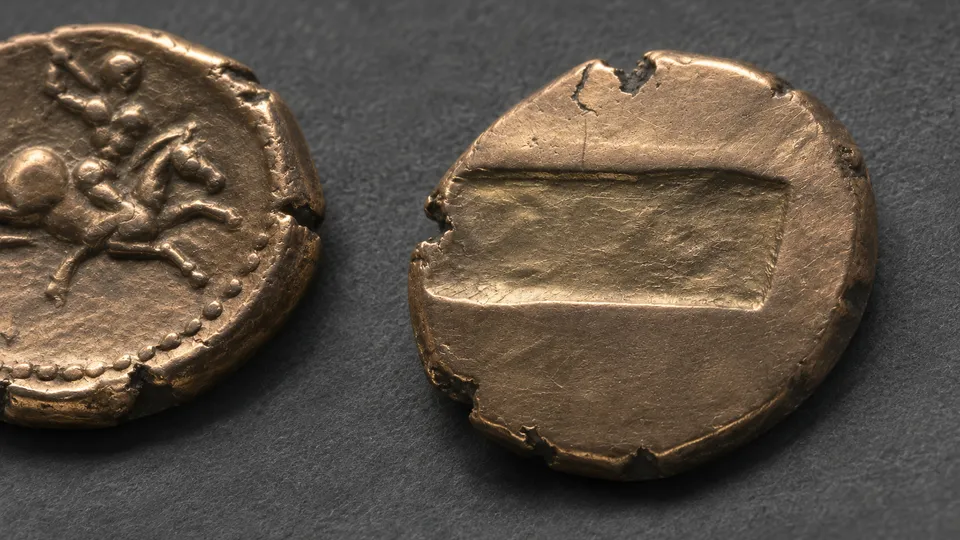
On a gold coin from southern Britain a rider gallops to the right with a spear raised. Above the horse are three letters, VIR. Below it are three more, REX. The catalogue of Museums Victoria calls the figure a “horseman galloping right brandishing spear.” Miles Russell, director of archaeological fieldwork at Bournemouth University, sees someone else: a slender rider, bare-breasted, a woman.
Russell has set out his case in Current Archaeology and in his book Caratacus: Great King of Britain, published by Bloomsbury. He argues that Verica, the ruler of the Atrebates whose exile came just before Claudius invaded in AD 43, was almost certainly female. As Arkeonews reported, he has found no new coins. He has gone back to old ones and read them again. The university’s press release carries the headline “New research reveals Iron Age King was female,” which is more certain than the evidence is. Russell’s explanation for the old reading is short: “Verica is assumed to have been male because of the patriarchal mindset of 19th century, classical historians.”
The exile
The Atrebates held land covering much of what is now Hampshire and West Sussex. According to StudyFinds’ account, the coins point to a reign from about AD 10 to 40, ruled from Calleva Atrebatum, where Silchester now stands. Rome recognised the Atrebates as a client kingdom. Its ruler was friendly with the empire, close enough to depend on it.
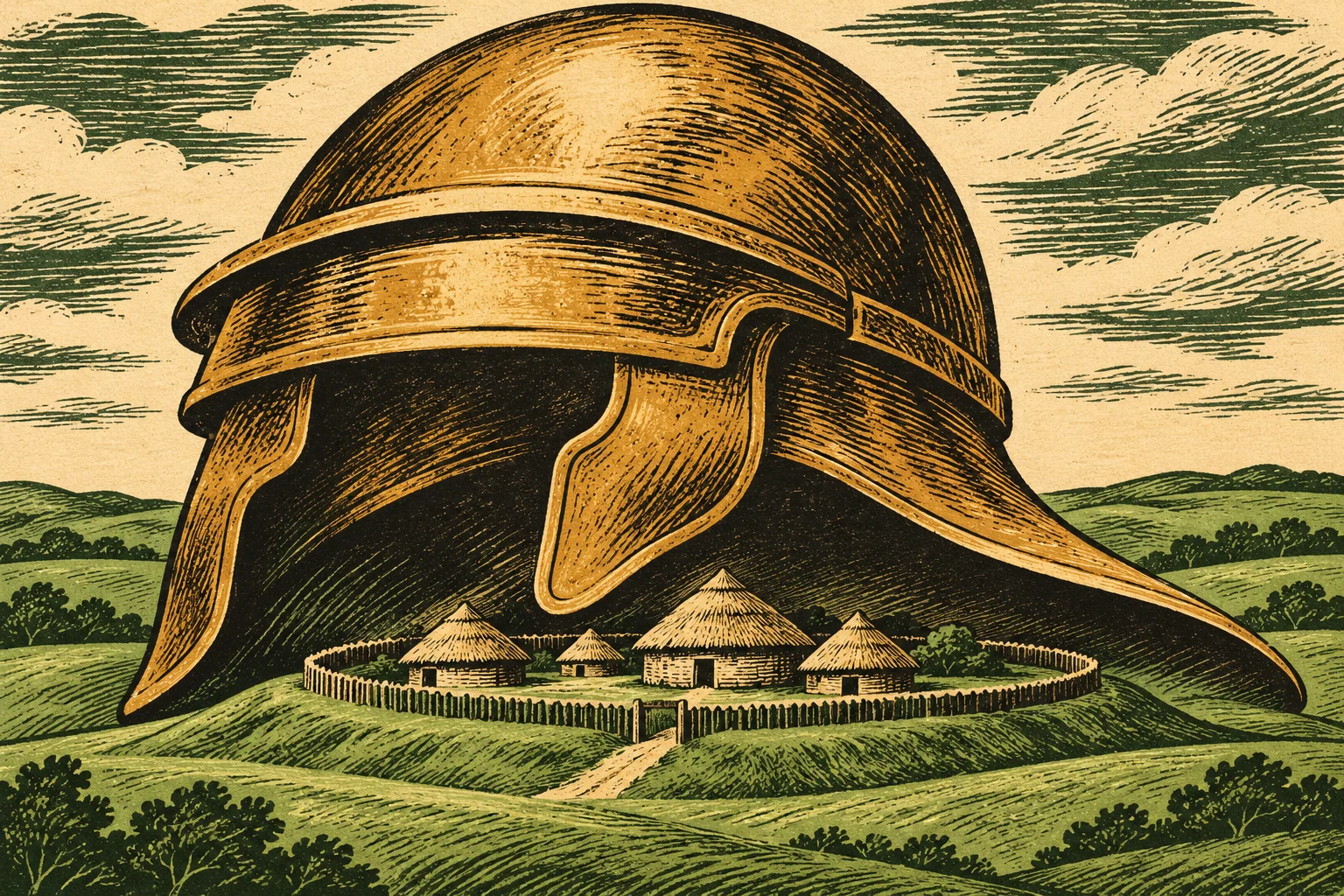
Around AD 40 Verica was driven out. English Heritage blames the neighbouring Catuvellauni, led by the brothers Togodumnus and Caratacus, the man Russell’s book is named after. Verica crossed the Channel to the emperor. Claudius had come to power in AD 41, after the murder of his nephew Caligula, and needed a military victory. In 43 about 40,000 soldiers under Aulus Plautius crossed the other way, in a fleet that may have needed 700 to 1,000 ships.
A reflection, and only that: empires seldom lack reasons to expand. What they lack is someone to ask them in. The exile from Calleva gave Claudius that request. Arkeonews warns that one petition cannot explain the invasion alone, because Rome’s own ambitions and the quarrels inside Britain played their part. Still, the petitioner is the person history remembers being at the emperor’s side.
That memory comes from Cassius Dio, who wrote his Roman History in Greek around AD 200. He tells of an exiled Briton, Bericus, who persuaded Claudius to send troops, and historians have generally taken Bericus to be Verica. The two outlets date Dio differently: StudyFinds puts him roughly 150 years after the invasion, Arkeonews about 160.
A name, a title, one letter F
Russell’s first clue is the name. Verica ends in “a”, a common feminine ending in Iron Age Britain, the same ending as Cartimandua, queen of the Brigantes in what is now Yorkshire, and Boudica of the Iceni, who rose against Rome in AD 60.
His second clue is the title on the coins. “Rex is a non-gender-specific title; both male and female kings were recognized by Rome, Cleopatra of Egypt being the most famous,” he said.
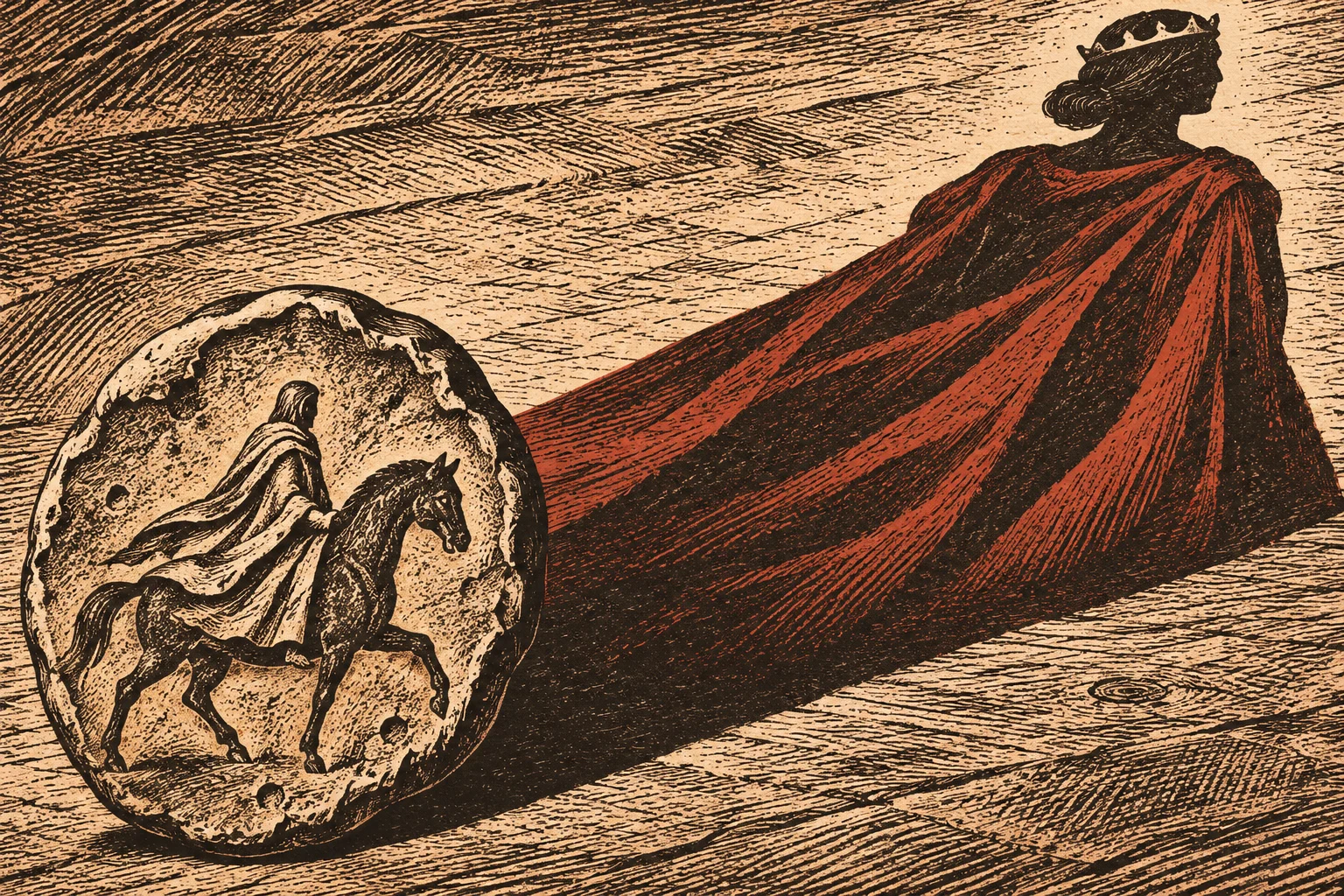
His third clue is the rider. Other British rulers who minted coins showed clearly male fighters, Russell notes, while “Verica is depicted as a slender, feminine, bare-breasted figure riding on horseback.”
Then there is the abbreviation COM F, long expanded as Commios filius, “son of Commius”, an earlier Atrebatic king. In Latin the F could just as well stand for filia, “daughter”. The two readings differ by a few letters that nobody stamped. Rulers have always used coins to say who they are, as Mithradates VI did with Medusa. Here the message has been cut short by the size of the metal.
The objections
Specialists are pushing back. Roger Tomlin of Oxford University says there needs to be clear comparative evidence that rex was actually used for female rulers. Rome recognising queens does not prove that it called them by this word. The coin expert Daphne Nash Briggs points out that some of Verica’s coins show figures that could be read as male. ZME Science reported that Russell’s answer is that such a portrait may show the Roman emperor, not Verica.
There are wider cautions too. Figures on Iron Age coins were not always portraits of whoever struck them. They could stand for authority, military force or a myth. The images are tiny and stylised. The argument appears in a book, not a peer-reviewed paper. Dio’s Greek gives the name as “Berikos”, which sounds masculine, and Arkeonews says he described Bericus as a man, though his text does not prove that Bericus and Verica were the same person.

Russell also reads Dio as a hostile witness, writing inside an old Roman stereotype of Claudius as submissive and ruled by women. “In effect, Dio was saying that the campaign was undertaken solely because of the whisperings of a barbarian femme fatale,” he said. In his version Verica was a partner, not a seductress, whose local knowledge helped the campaign while Claudius got his triumph. “Verica provided the excuse for regime change and the emperor seized it.” Had she kept the throne, he argues, Rome “may never have invaded Britain in the first place.”
The female line
Russell’s theory draws on other work he has been part of. A 2025 study in Nature, with Russell among its authors, analysed DNA from 57 people buried in Dorset and found that most were related through the female line. The researchers said this pattern had not been described elsewhere in European prehistory. In some communities women stayed in the same settlement for generations, and men moved in when they married. As Arkeonews cautions, that tells us about kinship and where people lived. It does not show that women held political power, and it says nothing directly about Verica.
Russell wants her remembered, in the university’s words, “as a female-king and one of the earliest and most important of British female leaders.” Nothing has yet proved that she was one. The rider on the gold coin still gallops to the right with the spear raised, and the F after COM is still just an F, stamped in a mint in southern Britain two thousand years ago by someone who knew which word it stood for.