
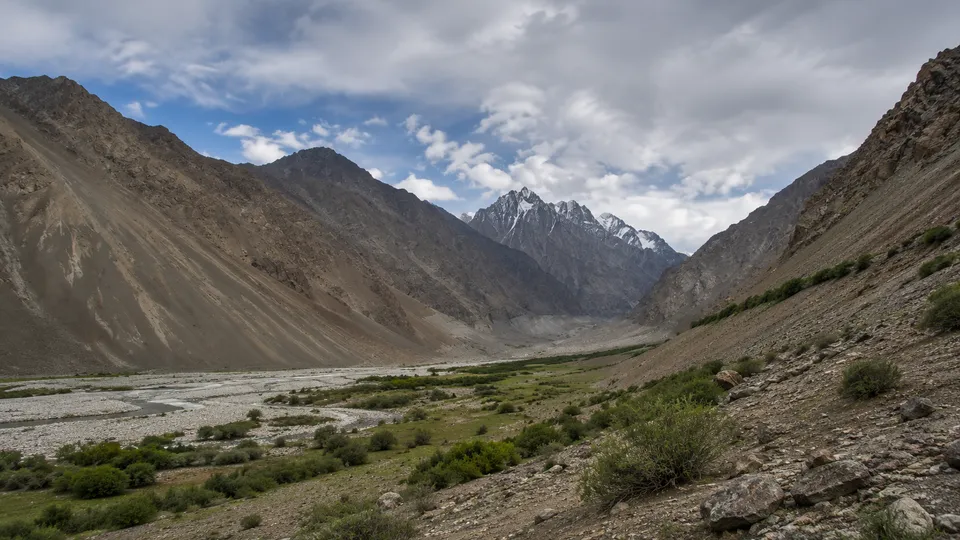
Afghanistan ends and China begins at the Wakhjir Pass, nearly 4,900 metres up. Snow closes the pass for at least five months of every year. In the months when it can be crossed, people cross it only now and then. No official border crossing exists there. Even so, on October 4 the Taliban government held a ceremony to open a road to this frontier, a road that, as Hamidallah Mohammad Shah reports for Al Jazeera, runs right up to the border and does not cross it.
They held a ribbon-cutting for a road that ends at a locked door.
The cost of gravel
The Ministry of Rural Rehabilitation and Development says the track was built in two phases for 365 million afghanis, about $5.5m. It is gravel, not asphalt. Agenzia Nova reported that the route covers 121 kilometres, from Sarhad-e Broghil in Wakhan district to the zero point at the frontier. It also gave the structures along the way: four bridges, 66 culverts and more than 3,000 metres of retaining walls. China has no customs facility on its side of the pass, and its foreign ministry has said nothing about the opening. According to The Times of Central Asia, no Chinese representatives were reported at the ceremony.
A strip of land drawn by empires
The Wakhan Corridor runs about 350km (220 miles) between Tajikistan and Pakistan, and all of it is Afghan territory. Its odd, thin shape comes from an Anglo-Russian agreement of 1895, which left Wakhan as a buffer between Russia’s possessions and British India. Kabul and Beijing did not settle their shared border until 1963.
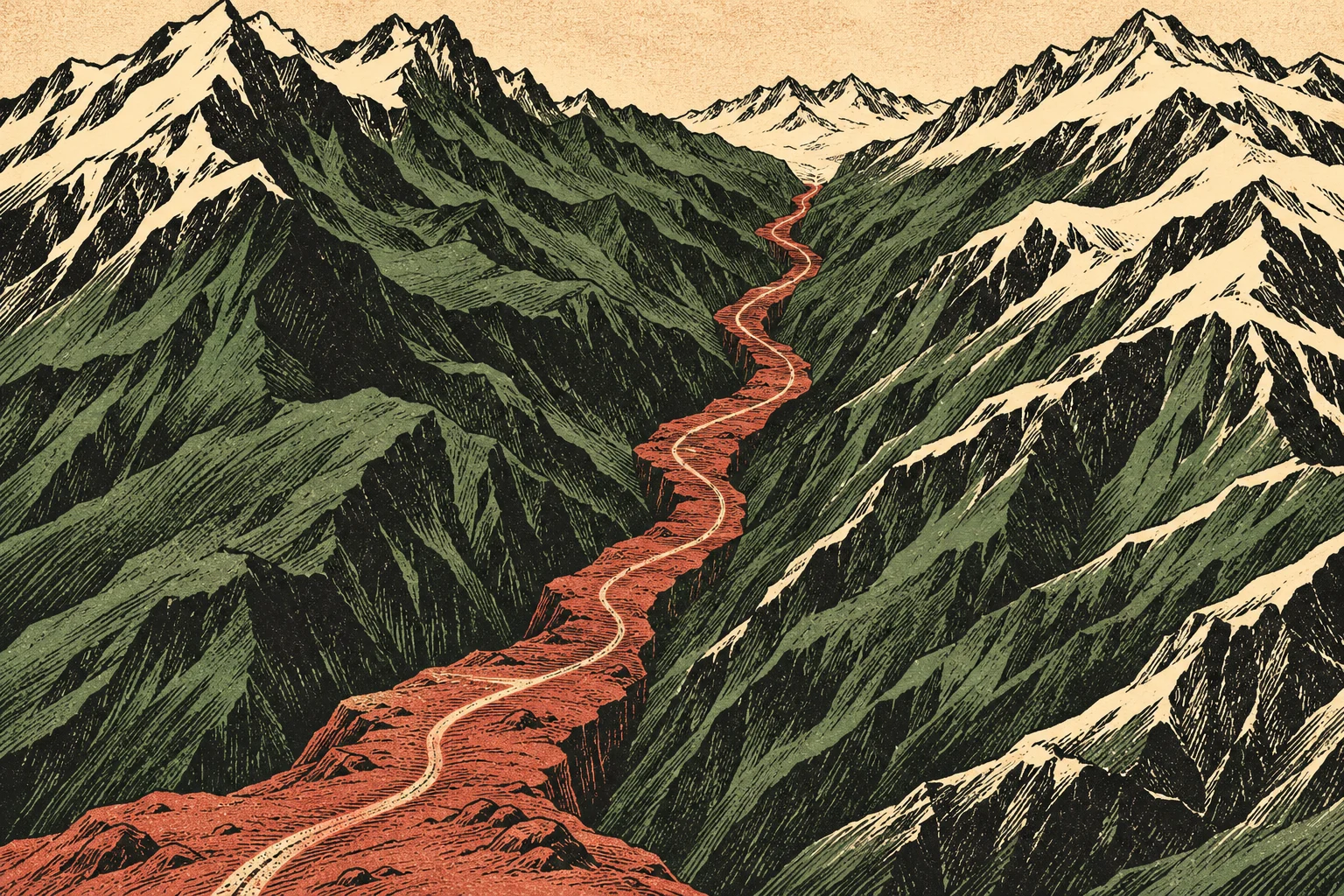
One could reflect that the corridor was drawn so that two empires would never touch. Now the government in Kabul wants this strip, made to keep powers apart, to connect it to one.
Fifteen years of waiting
Talks with China on a road began in June 2009 and soon stalled over the terrain. Chinese media also voiced a fear that Uighur fighters could use the route to enter China. Work began in 2019. Javid Qaem, the former Afghan ambassador to China, says 60km had been built by the time the Taliban took power in 2021. Shah Mahmoud Miakhel, a former acting defence minister, blamed the slow progress on “the presence of [United States] and foreign forces and the security situation.”
Construction started again in September 2023, and the road reached the border in January 2024. A second phase of 71km was contracted in March 2025, paid for by Afghanistan, with no sign of Chinese money. Qaem’s explanation for the closed border is short: China “has not yet agreed to open its border with Afghanistan because of security threats.” The Times of Central Asia, citing the state agency Xinhua, reported that Beijing’s own press said in January 2026 that the corridor’s security was complex, that altitude and climate make it impassable for most of the year, and that a crossing was unrealistic in the short term.
What Beijing asks for first
In August 2025 China’s foreign minister, Wang Yi, came to Kabul and met the interior minister, Sirajuddin Haqqani. Wang backed “the early resumption of bilateral patrols in the Wakhan Corridor” and pressed Kabul to act against the East Turkestan Islamic Movement. Beijing’s priorities are to secure its western border, keep armed groups out of Xinjiang, and protect its investments, the China-Pakistan Economic Corridor (CPEC) among them. An Afghan official, speaking anonymously, said China ties any opening of the border “to the availability of effective security guarantees.” In 2022 a United Nations human rights report documented the detention of Uighurs in Xinjiang. China rejects its findings.
Patrols come first, and trucks perhaps later. The investments that were supposed to bind the two countries together have stalled. In June 2025 the Taliban cancelled a Chinese oil contract in the Amu Darya Basin. In May, Afghanistan’s mining minister complained to the Chinese ambassador about delays at the Mes Aynak copper mine. China has 14 neighbours, and Afghanistan and Bhutan are the only two with no direct overland trade crossing.
Two closed doors
Afghanistan has no coastline. Over the past year its trade routes through Pakistan and through Iran were almost closed at the same time. Mohammad Ismail Ghaznawi, once governor of Badakhshan and now deputy minister of public works, says the road is meant to “reduce dependence on Pakistani border crossings”. He pointed to the fighting with Pakistan and to the US-Israel war on Iran. In Kabul there is talk of a future railway, a link to China’s Belt and Road Initiative, and transit fees.
For now a seasonal gravel road cannot do the work of Torkham, the main crossing with Pakistan. Beijing, for its part, still promotes extending CPEC into Afghanistan, a plan that would take Afghan trade through Pakistan. Miakhel says there are “attempts to obstruct its completion”, and he stresses that this is his personal view. Abdul Ghafoor Liwal, a former ambassador to Iran, says Tehran sees the corridor as “a strategic opportunity” for an overland link to China. Writing for the Central Asia-Caucasus Institute, analysts note that the road’s eastern stretch crosses the Little Pamir. Most of Afghanistan’s remaining ethnic Kyrgyz live there. In theory, if Wakhjir ever opened, Kyrgyz cargo could reach Afghanistan through the Irkeshtam crossing and Chinese roads.
Badakhshan
The road runs through Badakhshan, one of the Taliban’s least settled provinces. In May 2024 it saw protests against poppy eradication. The National Resistance Front has claimed recent attacks in the province. Hours after the ribbon was cut, the group said it had killed the deputy Taliban intelligence chief in Faizabad, the provincial capital.
So Afghanistan now has a road to China. On the other side are the pass, the snow that closes it for five months a year, and a foreign ministry in Beijing that has said nothing.