
It began, the Ukrainians say, in the middle of the night, without warning. On October 13, government officials and military units reported that the military-grade version of Starlink — the satellite lifeline that has carried their resistance since the first days of the full-scale invasion — was being throttled for terminals moving faster than about 99 miles per hour, or 160 kilometres. Drone pilots found they could fly at up to half their previous speeds. In practice, Michael Kofman of the Carnegie Endowment for International Peace noted in an October 19 social media post, the service had grown unstable even at 130 kilometres per hour.
The consequences were listed, as Jeremy Hsu reported for Ars Technica, like damage after a storm: multiple drone missions broken off — drones that carry supplies to frontline units, reconnaissance flights, mid-range strikes on Russian units and supply lines up to 125 miles behind the front. President Volodymyr Zelenskyy said the new speed limits interfered even with the fast interceptor drones that defend Ukrainian cities against Russia’s one-way attack drones. The disruption coincided with some of Russia’s largest drone and missile attacks of the war, aimed at the power grid, at data centres, at blocks of flats.
Nor was the sky the only thing dimmed. Newsweek’s Ellie Cook reported that Kyiv also stopped receiving the usual intelligence data on Russian ballistic missile strikes; Zelenskyy said flows from Washington had been restored by Tuesday, while US officials denied ever choking off the early warnings.
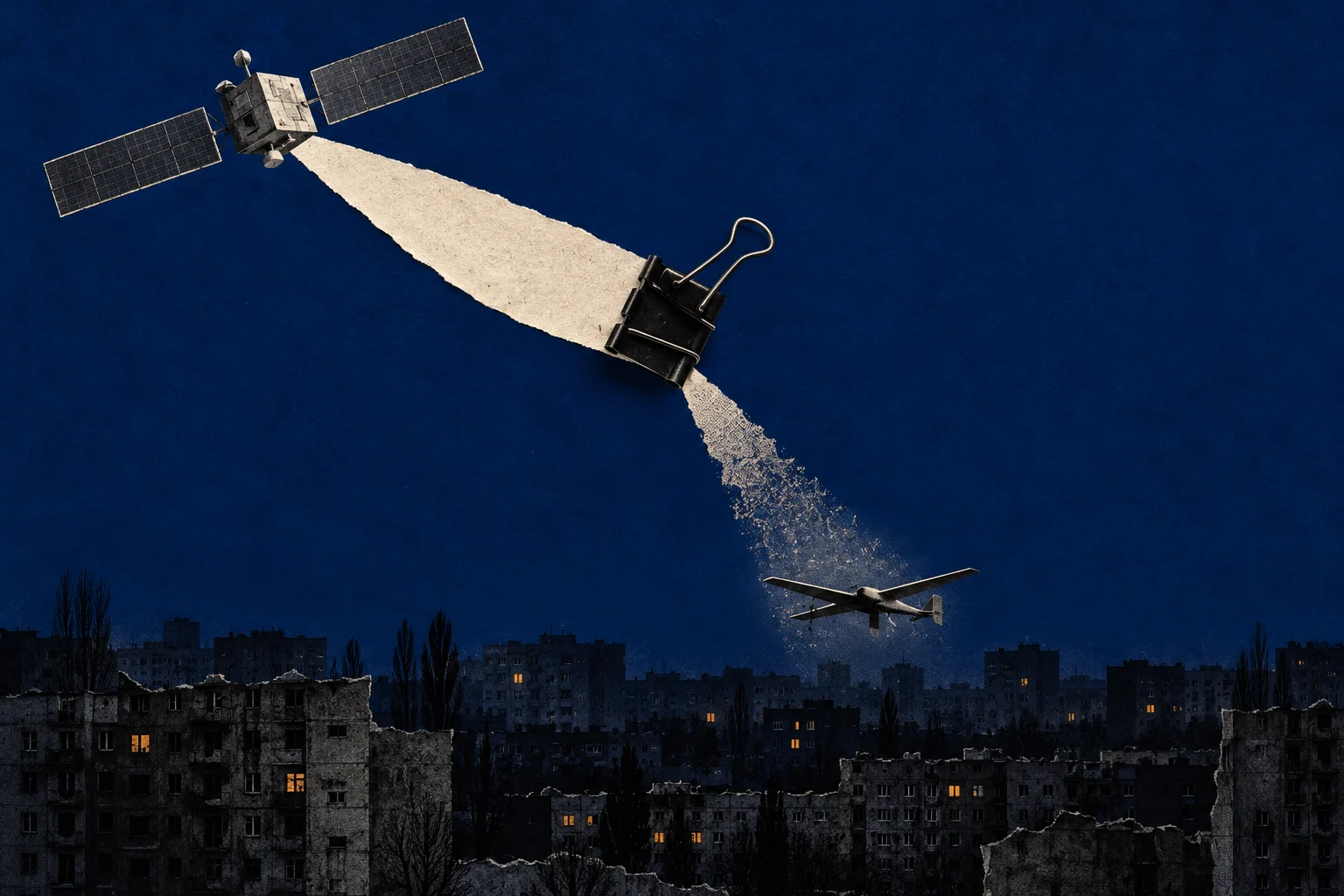
Three capitals, one button
Who turned the dial depends on who is asked. The restrictions were reportedly imposed at Elon Musk’s order, potentially in consultation with President Donald Trump; Musk and the Trump administration have each denied responsibility and pointed at the other. Anonymous US officials told Reuters the Pentagon had received a message from inside the White House saying Starshield speed should be limited for the Ukrainian military.
Musk answered that Starshield systems are “owned and controlled” by the US government, so “any limits on speed or usage” are dictated by the US military and, ultimately, the US president. Then, on Thursday, Trump announced that full access had been restored — refusing to say whether he had asked for it himself.
“Bottom line, he put it back.”
Kyiv remains unconvinced. Ukraine has confirmed no lifting of the curbs, Serhii Beskrestnov, a presidential adviser, said on Friday; Starlink now sometimes works above the old speed limits, he wrote on Telegram, but that does not mean the constraints have been loosened. The Wall Street Journal reported that Trump telephoned Musk on Wednesday to ask him to peel back the limits. The cap itself, and the cascade of denials around it, has already torn across the front once this month.
Timing, in politics as in war, is rarely innocent. Zelenskyy said on Sunday the United States had sent a “message” by throttling the connections — as Trump contends with high fuel prices at home, no tangible results on a peace deal, and midterm elections. The White House withheld intelligence and military aid in March 2025 to force Kyiv to the negotiating table. This week the Kremlin said Vladimir Putin had agreed to resume three-way talks next month, shortly after Trump’s envoy Steve Witkoff visited him in St. Petersburg and praised him as a “humanitarian” — a remark widely decried as missiles kept falling on Ukrainian towns.

The long goodbye to a benefactor
Dependence of this kind builds quietly, like silt in a river. Washington and European governments such as Poland and Germany paid SpaceX for tens of thousands of Starlink terminals and their subscriptions; the US granted Ukraine’s military access to the military-grade Starshield, which defence firms could test with the army. The terminals rode on ground robots and on drone boats in the contested Black Sea. Russian units used smuggled terminals too — until SpaceX’s February 2026 whitelist shut them off and severely disrupted Russian operations. The warning signs are older still: in February 2023 SpaceX’s president Gwynne Shotwell confirmed steps to block Starlink’s use with drones, after Musk said he would not allow “long-range drone strikes.” And even before October 13, with Russian forces erecting cumbersome jamming systems across the occupied territories, Ukrainian companies had begun fielding drones that need Starlink less, or not at all.
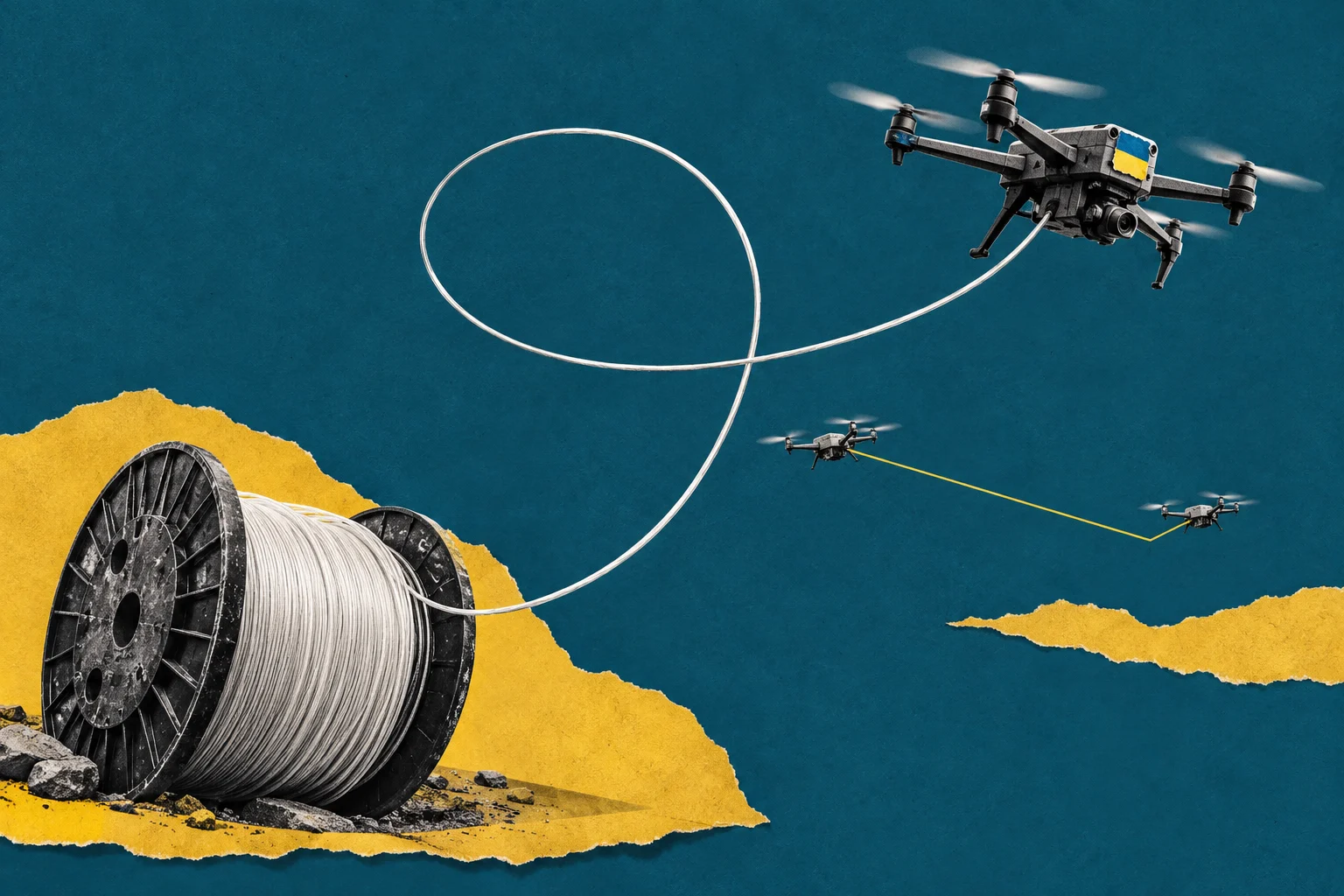
“Starlink currently offers some of the best satellite coverage available, with virtually no competitors when you consider the combination of cost, availability, and ease of use,” the head of hardware R&D at the Ukrainian defence company BlueBird Tech told Ars, speaking anonymously for security reasons. “We don’t tie our products to any single technology, and we don’t manufacture systems that are critically dependent on Starlink. We’ve long been aware of the risks of Starlink jamming along the front line, which is why we’ve avoided using it as the sole means of control and telemetry.” Starlink figures in a “small percentage” of the company’s products; its Zhakh FPV drones unspool a long fibre-optic cable behind them, keeping a physical link to the operator that no electronic warfare can cut. There remain “certain product configurations for which no direct replacement for Starlink currently exists,” he conceded, but the company is “actively exploring ways to add redundancy and potentially replace these components” — ground-based LTE or 5G, laser-optical links, mesh radio networks with drones as relay nodes, an approach Russian strike missions have also adopted, as detailed by The Kyiv Independent.
At Buntar Aerospace, the scenario was written into the design from the start. “The recent Starlink and Starshield disruptions did not affect our operations because we had prepared for this scenario in advance,” cofounder Bohdan Sas told Ars. “Losing access to one communications service does not necessarily mean losing the ability to conduct a mission.” His fixed-wing reconnaissance drones fly up to 62 miles (100 kilometres), guided by AI software called Buntar Copilot that adjusts flight plans for weather, signal quality or interference, and battery life; each data stream from the Buntar-3 — sensor readings, camera video — travels its own channel, and a Starlink terminal aboard carries alternatives beside it. “Commercial communications services can provide valuable capabilities, but defense systems must account for the possibility that those services may become unavailable,” Sas said.
There is still no real alternative: Starlink is by far the largest constellation in orbit and is already woven through Ukraine’s military systems, mostly carrying communications and data rather than guiding strikes. Europe, weary of decades of dependence on American arms, is slowly building its own designs, and Ukraine said on Thursday it would “make greater use of Finland’s satellite capabilities.”
Every army in history has depended on something it did not own — a road, a railway, a strait. Ukraine’s road runs through one man’s constellation, and the man answers to politics. So in the workshops the new drones are being built for the night the link dies — a night that, for this army, has now come twice.