
The limit was a speed: between 130 and 161 kilometres per hour. Above it, Ukraine’s president said, the equipment stopped working in various sectors of the front. Nobody disputes that the limit exists. The argument is over whose hand set it, and so far every hand that might have done it has been raised in denial.
A private wire into a public war
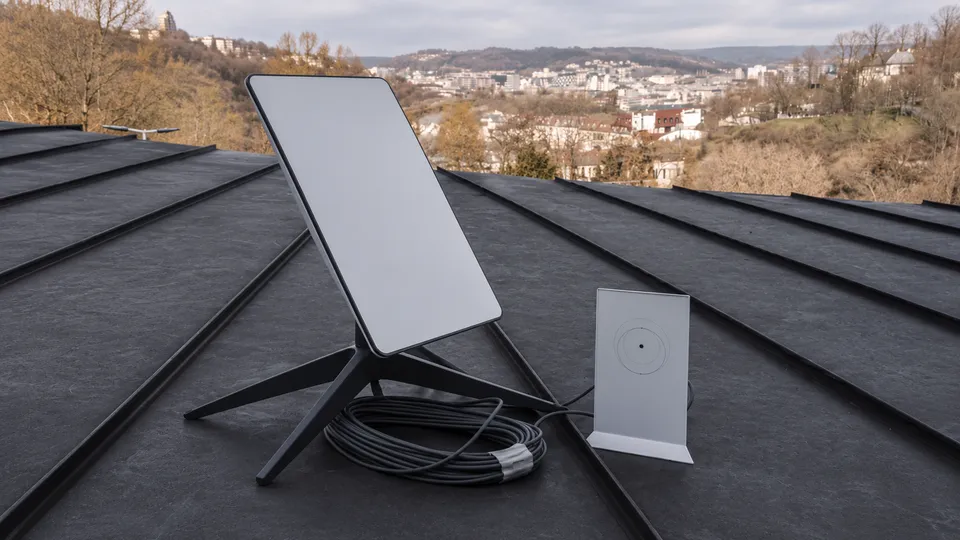
The history is short and already tangled. In February 2022, after the Russian invasion knocked out Ukraine’s broadband, Elon Musk sent Starlink terminals into the country. That gift gave one businessman, as Jon Brodkin writes in Ars Technica, an unmatched ability to shape the war, because his company dominates low-Earth-orbit satellite broadband and its service is so useful to armies. In 2023 SpaceX confirmed it had blocked Ukraine from flying military drones over Starlink, on the grounds that its contract did not permit offensive use. Then, in August 2024, the Pentagon gave SpaceX a contract to widen Ukraine’s access to Starshield, the military version of the network, Bloomberg reported later that year. That was apparently the second such deal. It reportedly let Ukraine connect another 2,500 terminals to Starshield, on top of the 500 already linked under an earlier contract.
So Kyiv depended on a private network for military communications, and the terms of that dependence were written partly in Washington and partly in a company’s terms of service. The arrangement was fragile from the start.
The order
The Wall Street Journal reported on October 20, according to CNBC’s account, that Musk himself ordered the slowdown of the Starlink version Ukraine uses. The paper cited U.S. officials and people familiar with the matter. Speeds at which Ukrainian hardware could stay connected were capped, and some Ukrainian drones became close to useless. The Kyiv Post reported that the restrictions began on October 14 and disrupted both drone strikes and air defence. Some strike and interceptor drones were grounded, a loss rews traced at the time in its account of the night Ukraine’s Starlink went dark.
The motive, as reported, was Ukraine’s strikes on Russian diesel refineries. Musk and Trump were said to be angry about them, and Trump has blamed them for high energy prices. Most analysts say the U.S.-Iran war has done more to push prices up. The refinery dispute had already soured relations between Kyiv and Washington, as Zelensky’s anger over the Russian diesel deal showed.
Whether Musk acted alone is where accounts split. Two people told the Journal that Musk and Trump discussed the decision on a call soon after the slowdown became public, and sources said the two men had also spoken beforehand. Some U.S. officials told the paper that Musk acted on his own and that Trump gave no specific order. SpaceX staff later contacted the White House, the Journal reported, seeking a joint message that the company and the administration had “coordinated ahead of Musk’s directive.”

Nobody’s decision
Musk’s public account points the other way. On X he wrote that Starshield systems are “owned and controlled by the US government” and that “any limits on speed or usage are decided by the US military and ultimately POTUS.”
The president was asked whether Musk had given the order. “I don’t know who did it, but I was not involved,” Trump said, CNBC reported. The White House press office repeated the line to Ars: “As President Trump said, we didn’t slow down Starlink at all, and the service is currently operational.” Defense Secretary Pete Hegseth said the United States had pulled nothing back and issued no directives, and that Starlink can make its own decisions under its terms of service.
Secretary of State Marco Rubio went further. “The president has nothing to do with the decisions that are made by Starlink and Starshield and by Mr. Musk. That’s a private company. The president doesn’t run that company and can’t direct that company to do anything,” he told reporters, adding that the administration had “no foreknowledge” of the slowdown. Earlier he had said that “nobody” ordered it, and that it had just “sort of happened.”
Other reporting does not fit that account. Reuters reported that the order came from inside the White House. The Telegraph reported last week that Musk had put to Trump “the idea of slowing down Starlink in Ukraine,” and that Trump “agreed.”

A reflection, and only that: an order in a chain of command usually passes downward and leaves a trail. This one, if all the denials are taken at face value, came from no one. The company says it belongs to the government, and the government says the company is private. Musk named the president, and the president says he does not know who did it.
The network Ukraine does not have
A second dispute runs underneath the first. On Saturday Rubio said Ukraine uses only Starlink, not Starshield. “I know Ukraine wants access to Starshield. They do not have Starshield now. They’ve asked for access to it in order to conduct deep strikes inside of Russia,” he said. The Pentagon contracts Bloomberg described say otherwise. Rews reported Rubio’s position at the time as a request “under discussion”.
Volodymyr Zelenskyy says his forces use Starshield and that the restrictions have not been fully lifted. On Monday he wrote on X that the limits hit “units using Starlink/Starshield services. Unfortunately, we have established that the equipment stops functioning at speeds of 130–161 kilometers per hour in various sectors of the front.” His office said he then spoke to Rubio by phone about several matters, among them “the situation with Starlink/Starshield, which needs to be restored.”
Washington says the service is operational. Kyiv says it needs to be restored. SpaceX had not responded to Ars by the time of publication. Meanwhile, according to Zelenskyy, the equipment on parts of the front still stops working once a drone passes a certain speed.