
On Thursday, 19 November, in Washington, the Federal Communications Commission did something it had refused to do for ninety years. It gave state and local prisons and jails permission to jam. As Jon Brodkin reported for Ars Technica, the commission voted to let correctional facilities block contraband cellphones with radio interference, despite warnings that the interference will also stop lawful calls outside the prisons.
“Today, we are finally authorizing state and local prisons and jails to use targeted jamming against contraband cell phones for the first time,” said the chairman, Brendan Carr. “The technology has advanced to the point where it can be focused with geographic precision. No facility will be required to do it.”
The wall and the air
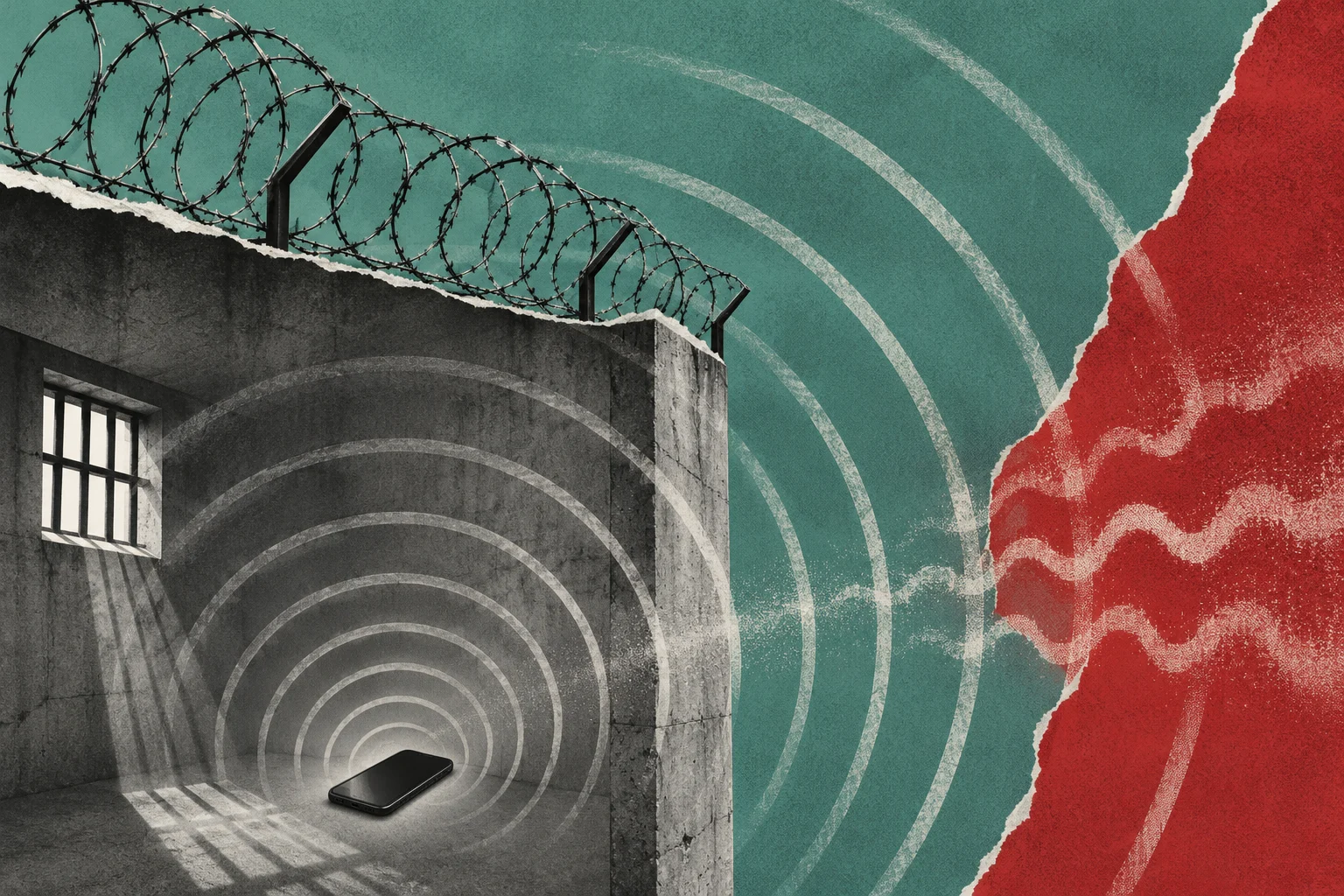
A prison is built to separate people. It has walls, wire, gates and head counts. A radio wave passes through all of them. A phone smuggled into a cell undoes the separation, and so the state has always wanted to fill the air with noise.
Carr said contraband phones “continue to pour into prisons by the thousands each year,” citing estimates that as many as 500,000 inmates nationwide have regular access to them. According to the Associated Press account carried by ABC News 4, he put confiscations in state and local prisons at about 25,000 phones a year and said drones were dropping devices into prison yards. The phones, he said, have been used to plan scams, drug trafficking and violent attacks. “In Georgia, an incarcerated gang leader directed a drive-by shooting that killed two 13-year-old boys at a birthday party,” he said, referring to a 2024 shooting.
Those lining up behind the order included the National District Attorneys Association, the Correctional Leaders Association and the National Association of Police Organizations, which said inmates use the phones “to coordinate attacks against correctional officers and their families, as well as inmate violence, strikes, disturbances, and full-scale riots.” So did two prison phone companies, ViaPath, also known as Global Tel*Link, and NCIC Correctional Services. The firms that sell prisoners their permitted calls want the unpermitted ones silenced.
Two and a half miles
South Carolina has been the testing ground for prison jamming since 2008, the AP reported. In July 2026, according to an FCC fact sheet dated 29 October, the Virginia Tech Applied Research Corporation tested a micro-jamming system from the vendor TalkTelio at Broad River Correctional Institution, working with the wireless lobby CTIA, its member carriers and the state Department of Corrections. An earlier pilot, run by the Federal Bureau of Prisons in April 2019 at a state prison in Columbia, had been described by the Justice Department in far brighter terms: signals blocked inside the housing unit, legitimate calls possible a foot outside it.
CTIA’s reading of this year’s test, filed with the commission on 1 October, was bleak:
Even with these constraints, the micro-jamming system blocked 911 calls, interfered with public safety and other communications, and caused interference that impacted wireless network infrastructure up to two and a half miles away.
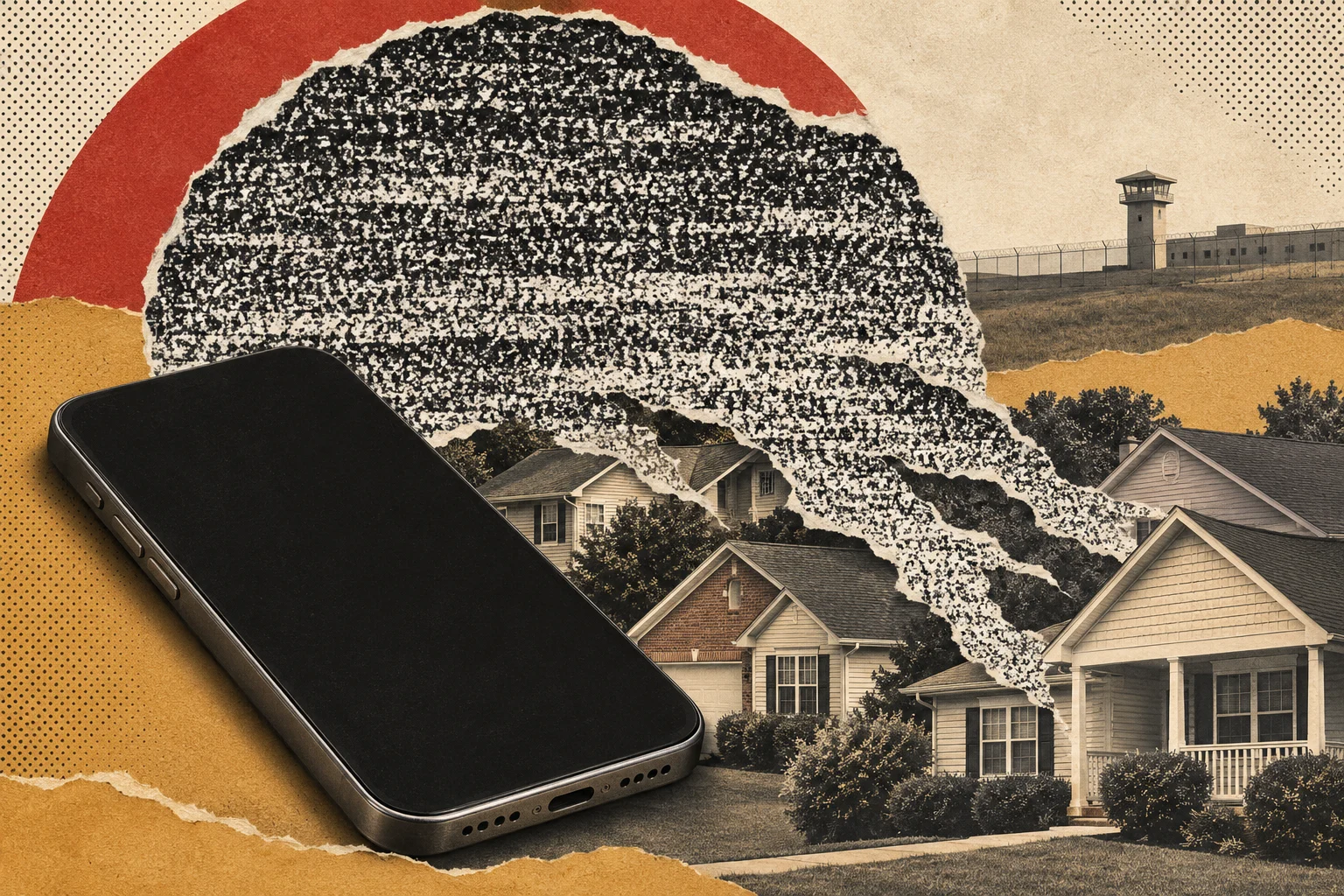
The jammers also missed much of their target, the carriers’ group said. In outdoor inmate recreation areas, contraband devices completed their calls in one-half to two-thirds of attempts. That was with a limited number of jammers, a limited set of bands and capped power. CTIA concluded that the technology “seems to be both over and underinclusive at once.”
AT&T, in comments from December 2025, put it more bluntly: “There is no way to jam some communications on a spectrum band but not others.”
The safeguards
Carr answered with procedure. “Those that want to use the technology will apply to the FCC, explain how they plan to deploy it, and show through testing that it stays inside the designated area and doesn’t interfere with lawful communications outside the prison walls,” he said. Nearby communities are to be notified before operations begin. The commission is also seeking comment on closing “remaining loopholes on other frequencies” and on possible quiet zones around correctional facilities.
The legal ground is narrow. The Communications Act forbids willful or malicious interference with licensed radio communications, and the FCC has long read that as barring non-federal jamming. Federal prisons were never covered, because the commission does not regulate the government’s own spectrum. A draft of the order claims authority to “deauthorize subscriber operation of contraband wireless devices” and so permit jamming. CTIA says the agency “has no authority to allow jamming”; AT&T calls the theory “premised on a fundamental factual error.” A court challenge is possible. Senator Tom Cotton, Republican of Arkansas, responded to the vote by urging Congress to pass his Cellphone Jamming Reform Act and write the power into statute, the AP reported.
The commissioner who said yes, partly
Anna Gomez, the only Democrat on the three-member commission, voted with the Republicans once safeguards were added. She did so without enthusiasm. “For the last 90 years, the Federal Communications Commission has prohibited jamming by non-federal actors and even prohibited jamming equipment to be introduced into the American market,” she said. Jammers, she warned, can stop 911 calls and disrupt fire, police and ambulance networks, and once on the market such equipment may be sold without authorization. Criminals already use Wi-Fi jammers to defeat cameras and alarms in robberies of homes and stores, she said.
Her partial dissent concerned money. The FCC caps what families pay for inmate calls and weighs prisons’ security costs in setting those caps. Gomez feared jamming would be billed to them. “It is not the responsibility of the families of incarcerated people to pay for the costs of these measures,” she said. “We should have made this clear in today’s order. Because we failed to do so, I dissent in part.”
What else the phones carried
The contraband phone has carried more than threats. Seth Stern, chief of advocacy at the Freedom of the Press Foundation, wrote to Gomez’s office that “prisons are the most secretive government institutions in the country.” He pointed to The Alabama Solution, the Oscar-nominated documentary built partly on footage incarcerated people shot on smuggled phones, footage he said also bolstered a Justice Department investigation into Alabama’s prisons and was “crucial evidence” in the since-settled civil suit over Steven Davis, who he wrote was “brutally killed by prison guards.”
Testimony from inside rarely gets out at all. When it does, as with the women who spoke about Chowchilla, it has usually come through some narrow and unofficial opening. The commission was asked to weigh that, and its order does not.
Meanwhile, by the carriers’ account, half to two-thirds of the contraband calls attempted from the yards during the test went through anyway.