
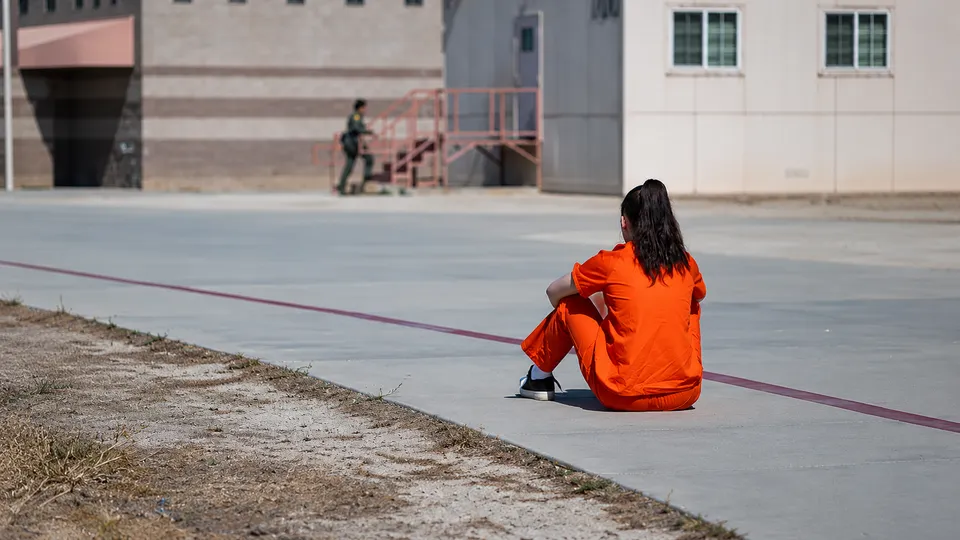
On the evening of Aug. 2, 2024, Aliksandria Prout’s phone rang at home. On the prison line was Catrina Cameron, her former cellmate at the Central California Women’s Facility in Chowchilla, about 35 miles from Fresno, and she was barely making sense. She said she could not see out of one eye. Officers had sprayed her and dozens of other women with tear gas and pepper spray, she said, and staff had beaten up another of their cellmates.
The rest became public later. Correctional officers had taken 159 women out of a housing unit and held them for more than four hours in a dining hall, with no food, no water and no medication. When tempers rose, the officers let loose pepper spray and chemical blast grenades. Afterward the women sat on the hot, dusty yard with their hands zip-tied behind their backs, and officers used tear gas and pepper grenades on them again. Women suffered strokes, blindness and seizures. A retired prison administrator who reviewed the footage told KQED: “It looks like they’re lining ’em up for the firing squad.”
In internal documents the operation was called “Operation Breakdown.” That name, and what happened before it, sits at the centre of a two-year KQED investigation published with CalMatters by Madi Bolaños and Sukey Lewis. The reporters drew on interviews with more than a dozen women, six years of sexual assault complaints, trial transcripts, court filings, leaked internal affairs interviews and hundreds of disciplinary records. What they found was a pattern: women who reported assault faced retaliation, their complaints went uninvestigated, and an accountability system that did not work let staff sexually exploit the people in their custody.

The room with the green chair
Prout had been at Chowchilla only a few days in May 2022 when correctional officer Gregory Rodriguez stopped her on her way to a medical appointment and told her to pull down her N95 mask so he could check her identity. “He said, ‘You have beautiful lips and beautiful eyes,’” she told KQED.
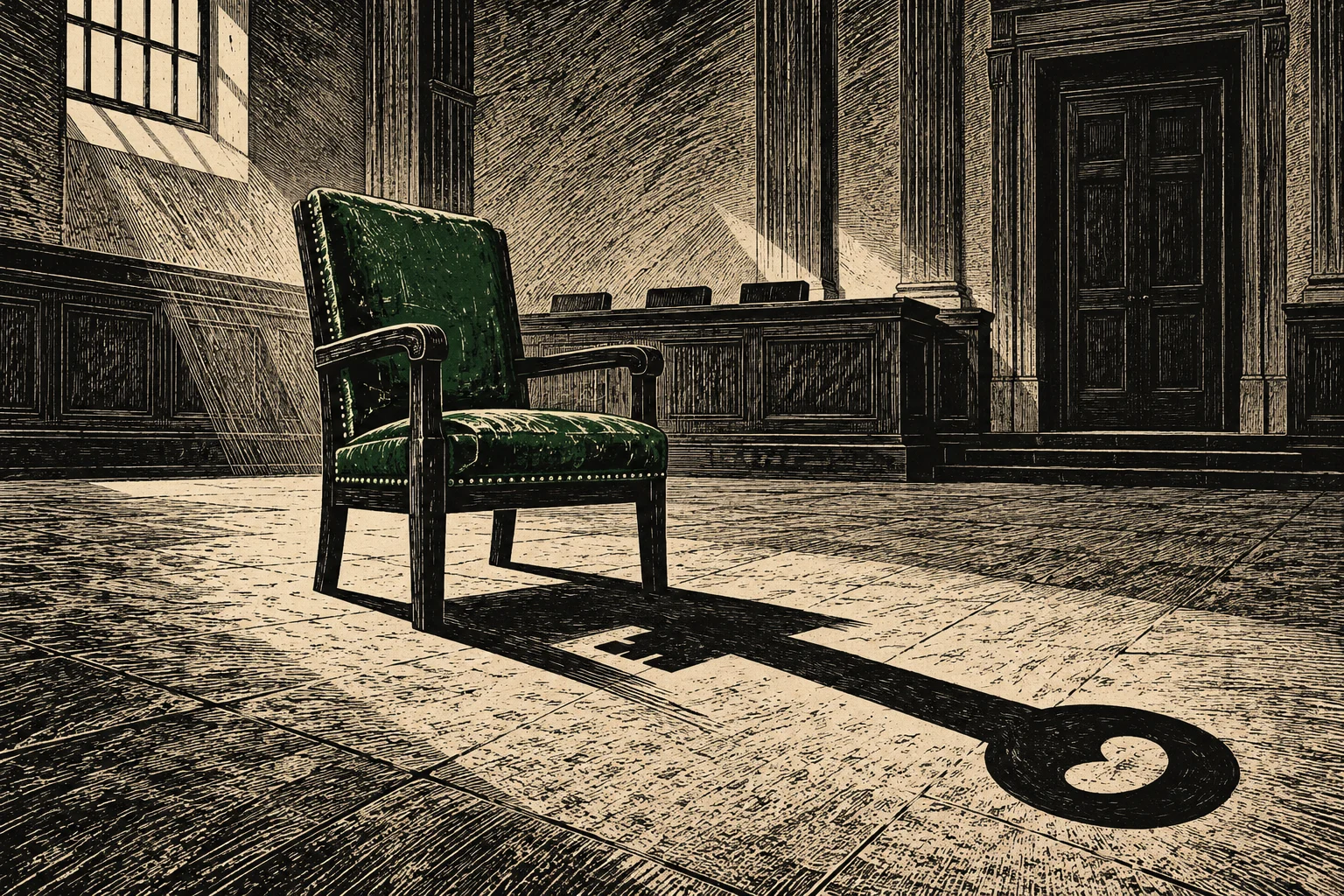
Three days later an officer handed her a paper pass, a ducat, for an attorney visit, and escorted her to the Board of Parole Hearings room. There was no attorney. There was Rodriguez. He tried to kiss her, lifted her shirt and turned her around on a chair beneath a window. She remembers staring at his boot, propped against the left side of the green upholstered chair. “What really upset me was he didn’t use protection,” she said. Afterward, she said, he warned her that if she told anyone she could be disciplined, which could mean more time in prison. She had never spoken to the media about it before.
She said nothing then. She kept count of the times he called her back to that room. After a few months she was paroled, and she started calling attorneys.
Six months
The department’s Office of Internal Affairs was already investigating Rodriguez. It eventually identified 22 potential victims, Prout among them, and in May 2023 the Madera County District Attorney’s Office arrested him. Prout testified as a Jane Doe. A jury convicted him on 64 counts of sexual abuse, including rape and sexual battery. In August 2025 he was sentenced to 224 years, the maximum, for assaults on nine women over 11 years. ABC30 reported that the jury acquitted him on 21 counts, including every count involving four other women, and that his lawyer, Roger Wilson, said Rodriguez maintains he did nothing wrong and is appealing.
A prison spokesperson said the sentence “reaffirms CDCR’s own internal investigation.” The department’s own internal affairs report, obtained by KQED, says otherwise. For six months, investigators and the leadership of the California Department of Corrections and Rehabilitation had been told about Rodriguez’s misconduct and did nothing. In that time he assaulted at least six women, Prout among them, many times. Before Prout even arrived, a woman had told investigators that Rodriguez called her to the same parole hearings room for fake attorney visits and assaulted her three times. He stayed at his post until Aug. 17, 2022, when he was moved to the mailroom. Soon after, he retired. The department did not say why it took so long.
Rodriguez had been reported before. In 2014 someone raised possible relations between him and a young woman the trial transcripts call Nicole Doe. The allegations were dismissed. Nicole Doe spent more than six months in solitary confinement and was then transferred to another prison. “I was treated like I was the problem,” she said at trial.
The warden at the time, Michael Pallares, was transferred to Pleasant Valley State Prison as an associate warden. One reading of this, offered as reflection: in some institutions the punishment for failing is a lateral move, and the punishment for reporting is the hole.
A curve on a chart
After Rodriguez’s arrest, the complaints came. KQED’s analysis of the department’s Prison Rape Elimination Act data found that the rate of sexual misconduct complaints against staff at Chowchilla rose by about 1,800% from 2022 to 2023. The department did not answer questions about the figures. Eight women told the reporters they feared write-ups, repeated cell searches and other retaliation if they reported assaults by staff.

In August the U.S. Justice Department reached the same conclusion. Its findings on Chowchilla and the California Institution for Women describe an “unbroken pattern” of staff sexual abuse and retaliation going back more than two decades. According to KQED’s coverage of the report and CBS Los Angeles, federal investigators reviewed hundreds of allegations and found that the state failed to protect women from staff abuse. Chowchilla is one of only two women’s prisons in California, and one of the largest in the world, holding more than 2,000 women, nonbinary and trans people.
The accounting
Corrections press secretary Terri Hardy said the department investigated 95 employees over Aug. 2 and disciplined 34, firing three for excessive force and dishonesty. It started out with 41. The number fell as officers won appeals, and some appeals are still pending. The department calls this the largest corrective action from a single incident in its history. It has not explained how the operation relates to the surge in sexual assault complaints that came before it.
After the federal report, and as KQED’s investigation neared publication, Warden Anissa De La Cruz was demoted and transferred, and several officers were put under investigation for sexual abuse. The department said it cannot comment on personnel matters, that it is “fully committed to protecting victims of sexual assault,” and that “sexual abuse, harassment and retaliation against incarcerated people is unacceptable.”
On the night of the call, Prout was 33, a nursing student and a mother of three, almost two years out of prison. Within a couple of months she was due to testify against Rodriguez. She could not shake the thought that her testimony was tied to what had happened to her friend and to more than 150 women in her old unit. The KQED investigation concluded that her fears were well-founded.
Cameron later described what she had wanted that night. “I didn’t know what they were doing to us or why, but I needed help, and I need somebody out there to know.”