
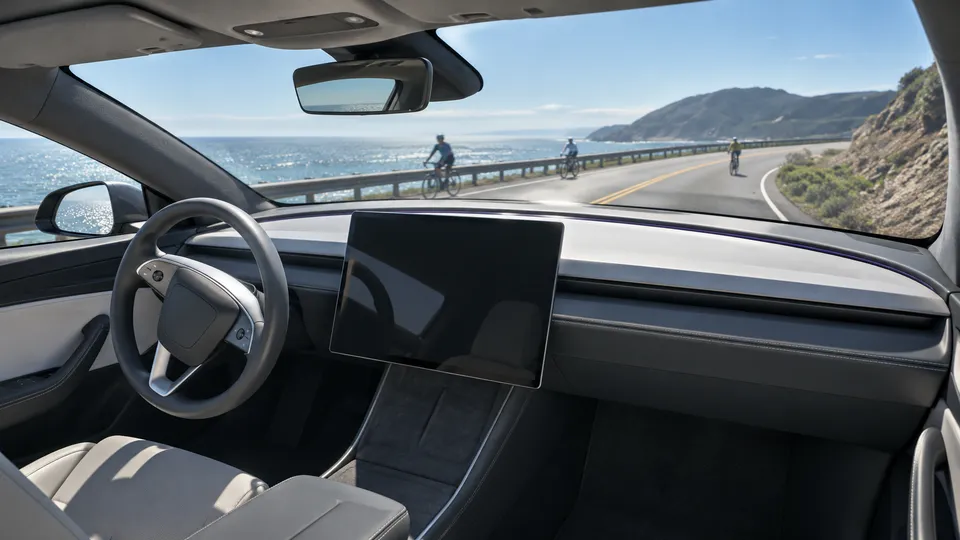
There is no drone. On the screen of the newest Teslas, a camera seems to hang somewhere above the roof and look down on the car, the crosswalks, the buildings and the traffic around it. Arrows float over the asphalt and point out the way. Nothing is up there. The picture comes from the car itself, a machine drawing its own portrait while it drives.
On Saturday, November 21, 2026, Tesla began opening FSD (Supervised) v15 to select customers, as Business Insider’s Ben Shimkus reported. It is the company’s first major consumer update to its semi-autonomous driving software in more than a year. The first build, v15.0.1, arrived with software update 2026.38.6.11, according to Teslarati. For now it is going to American cars with Tesla’s AI4 hardware, Paul Tan reported, and Elon Musk has said a wider release should follow in December. Tesla has not said how many drivers are in this first wave.
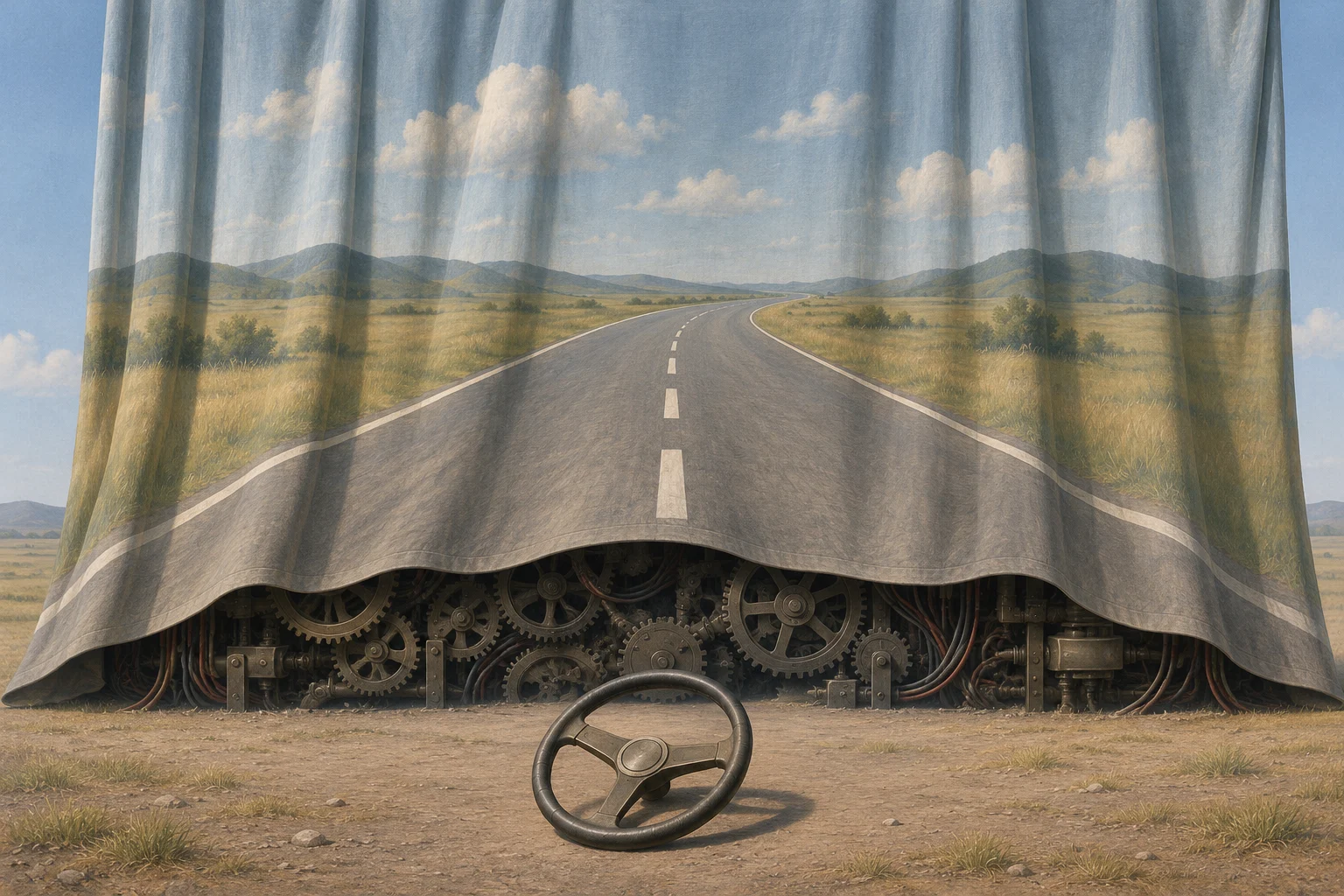
The painted road
Until now the display was spare to the point of austerity: a simplified Tesla on a white road, with gray blocks standing in for nearby vehicles. It was a diagram, and nobody mistook it for the world. Reality View is something else. It depicts surrounding traffic, crosswalks, buildings and the route ahead, rendered from that impossible height.
Musk, the company’s chief executive, has compared it to a video game. “It’s like GTA,” he posted on X on Saturday. Then came the technical boast: “This is real-time AI video generation (no gaming engine!) using just half of one AI4 TRIP accelerator.”
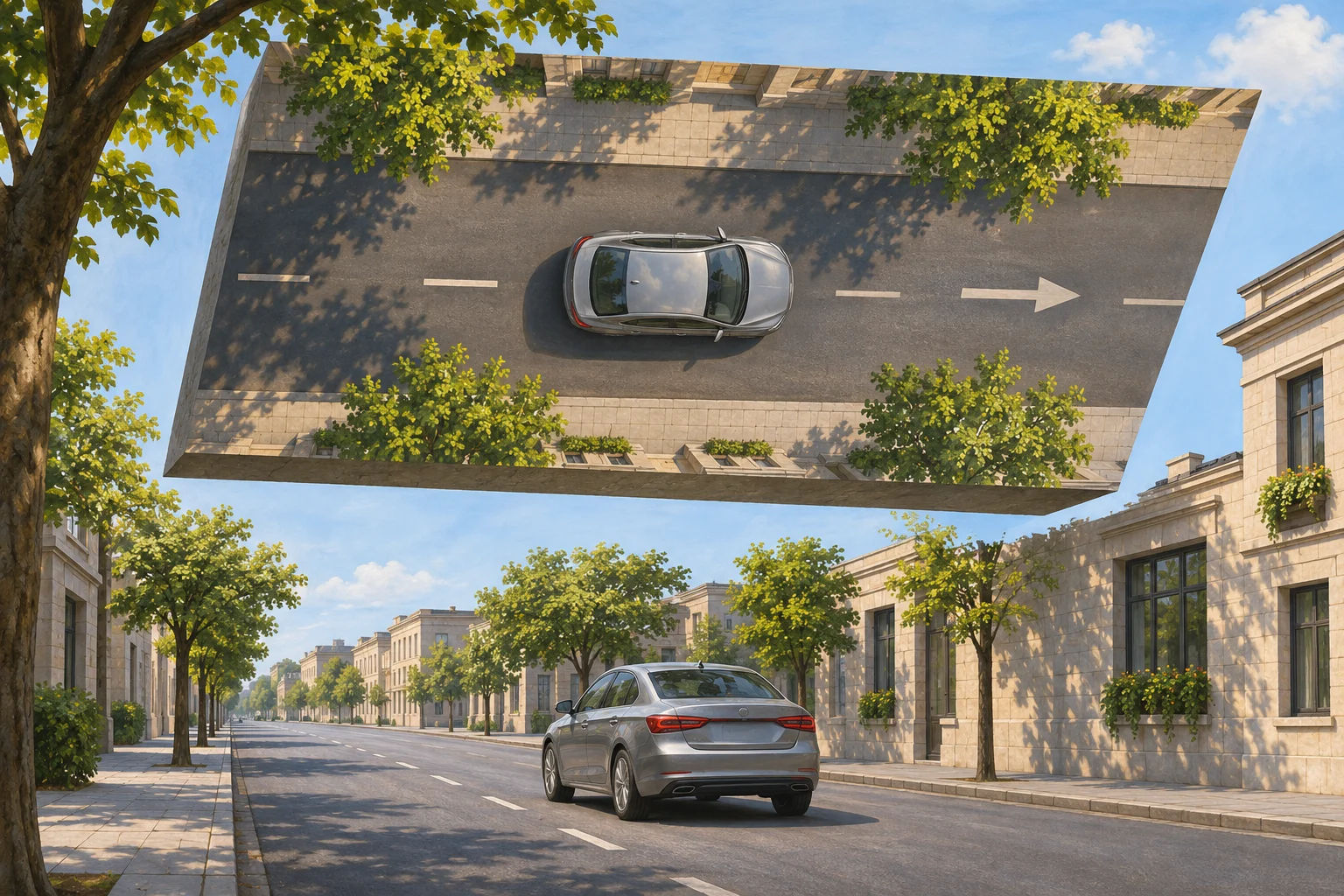
He explained the plumbing in another post. The car’s cameras feed the same vision system that produces FSD’s driving decisions. Tesla takes that visual information and branches it into a separate model whose only job is to generate the video-like image on the screen. In the release notes published with the update, Tesla calls it a “real-time generative driving visualization that continuously streams a view from an arbitrary virtual camera situated above your vehicle, enabling you to see and control what FSD is planning to do.” Not a Tesla App reported that the rollout began much sooner than expected and is reaching more than early-access testers.
Ashok Elluswamy, Tesla’s vice president of AI software, gave the feature its serious justification: the system, he said, “communicates the intent of the car.” That is no small thing. A person supervising a machine needs to know what the machine means to do before it does it. A gray block told you almost nothing. A floating arrow tells you where the car intends to turn.
A reflection, offered as no more than that: power that asks to be trusted learns sooner or later to put on a show, and the show and the substance are rarely the same thing. Here the show is generated video. The substance is somewhere underneath it.
Twenty-five times
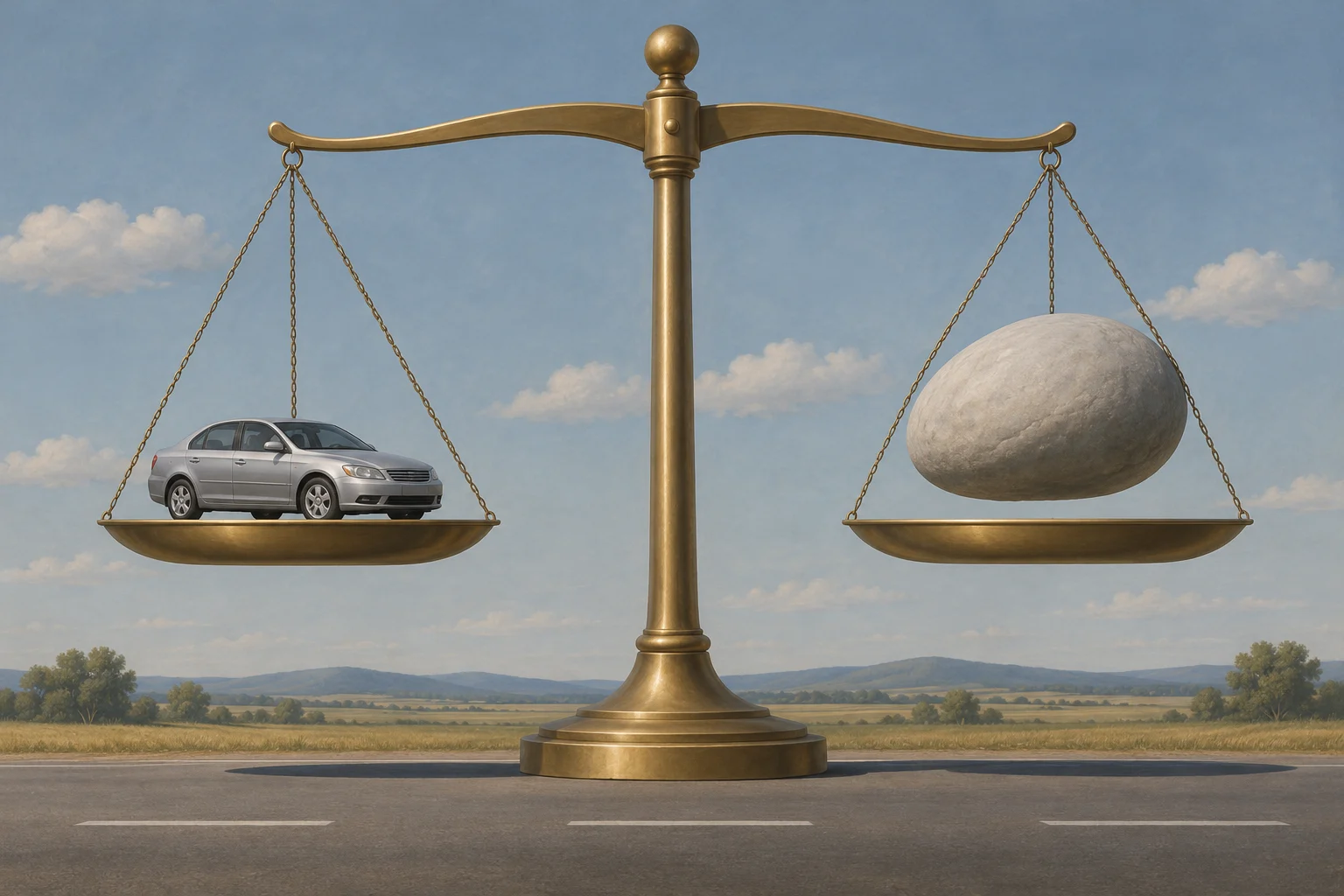
The substance, as Tesla tells it, is a number. In its announcement on X, the company promised “Safety 25x better handling of safety critical cases.” The release notes credit a new vision encoder shared among FSD, Robotaxi and Optimus, the humanoid robot, and say it improves “the critical intervention rate by 25x.” Phil Duan, a Tesla self-driving lead, wrote on X that “v15 is 25x safer than v14 across the fleet,” adding that a driver would hardly notice the difference on any single trip, because it shows up only over millions of miles.
What Tesla has not done is explain the measure. It has not said how it defines a critical intervention, what the starting rate was, or how many miles stand behind the figure, and it has released no supporting data, as Digital Trends and others have pointed out.
A multiplier without a base. A ratio with the numbers on both sides missing.
The rest of the list is more ordinary, and more checkable. Tesla says v15 detects signs, animals, debris, potholes and standing water better. It promises “more natural speed handling in school zones and inclement weather.” Navigation at the start and end of a trip now learns from the route preferences of the whole fleet, and Tesla says later v15 releases will extend that to the entire route. FSD can now slow for speed cameras, and a Bike Rack Mode lets owners use the system with bike racks or similar hitch accessories fitted. Tesla also claims better parking.
Some of these promises point straight at old complaints. The line about school zones comes while federal regulators review claims that Tesla’s robotaxis sped through active school zones, and Not a Tesla App reports that v15 has been running in parts of the Robotaxi fleet for months. The better animal detection follows Musk’s own admission that the Austin robotaxis stop at 11 p.m. because the cameras struggle with pets in the dark. Release notes are written to answer the questions people have been asking, and the questions here have been asked in public.
The hands on the wheel
For all the new imagery, the legal and practical fact has not moved. FSD remains a supervised driver-assistance system. The person in the seat must keep their eyes on the road and be ready to take over if the software makes a mistake.
So the screen grows richer while the burden stays where it was. The car now shows its driver a cinematic view of the street from above, along with its intentions drawn as glowing arrows. The driver’s job is still the old one: look past the picture, through the windshield, at the road the picture is meant to show.