
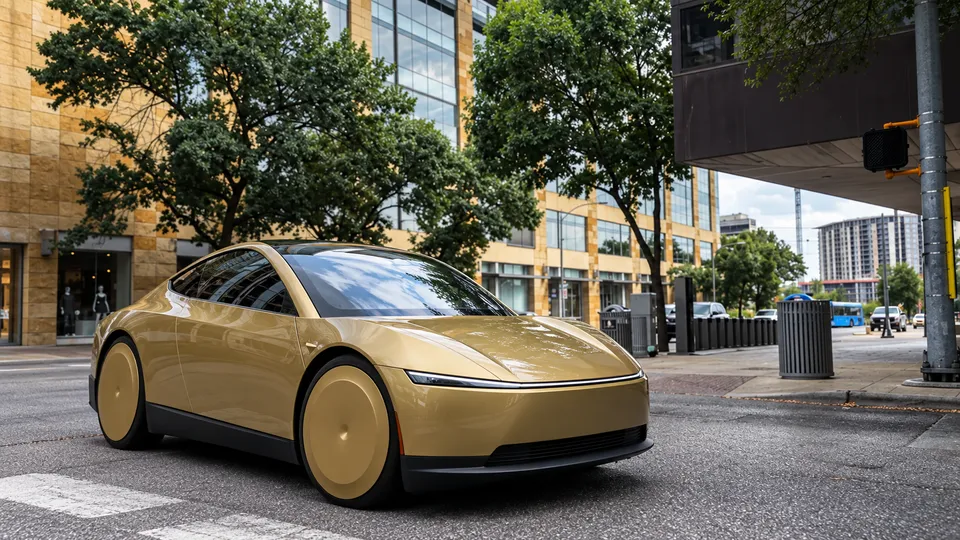
The National Highway Traffic Safety Administration said on Monday that it had opened a review of claims that Tesla’s driverless taxis exceeded speed limits in active school zones, the third federal action aimed at the company’s robotaxi fleet in about five weeks.
An unnamed petitioner submitted three videos showing 2026 Tesla Model Y robotaxis and Cybercabs going over posted limits while their automated driving systems were engaged, according to the filing. The agency’s Office of Defects Investigation received the petition on Sept. 23 and opened the file, numbered DP26010, on Friday, as Electrek reported. The agency counted four incidents in its own tally of the videos.
The filing lists no crashes, injuries or deaths. It estimates that about 1,000 vehicles could be affected — the first federal count of a fleet Tesla does not disclose. Community trackers counted only a few dozen active robotaxis across Austin, Dallas and Houston as recently as June, before the Cybercab began carrying passengers in Austin on Sept. 3.
The review is not yet an investigation. Under federal rules, the agency has 120 days from receiving a petition to grant or deny it, which puts the deadline around Jan. 21, 2027. A grant would mean a formal defect inquiry, and those can end in a recall.
Tesla did not immediately respond to a request for comment, Business Insider reported.
The petition lands on a pile of scrutiny. Hours after the Cybercab, a taxi with no steering wheel, pedals or mirrors that Tesla certified itself, started service in Austin, the agency opened an audit inquiry into that certification. It then ordered Tesla to prove under oath that the car meets federal safety standards. The company’s answers were due Sept. 30 and have not been made public.
Speed has come up before. Videos from the robotaxi launch in Austin in June 2025 showed cars going over the limit, and the agency said then that it was in contact with Tesla. In October 2025 it opened an investigation into Tesla’s Full Self-Driving software over reports of red lights run and wrong lanes entered. About a week later Tesla shipped a driving profile it called “Mad Max” that ignores speed limits.
There is a difference. With the consumer software, an owner picks a profile and stays responsible. A robotaxi has no one at the wheel, so when the car decides how fast to pass a school, Tesla made that decision.
School zones have caught rivals too. Austin’s school district logged about 20 instances of Waymo vehicles passing stopped school buses, and the Google-owned company filed a voluntary recall in December. In January, a Waymo vehicle struck a child near an elementary school in Santa Monica, Calif., causing minor injuries. The vehicle “braked hard, reducing speed from approximately 17 mph to under 6 mph before contact was made,” Waymo said in a statement published on its website.
Tesla faces the same question about how fast its software chooses to go across the Atlantic, where speeding is what has stalled EU-wide approval of its driver-assistance software, The Next Web reported. Germany wants the system held to 10 percent above the limit and will press that position in Brussels. Reuters has reported that the version Dutch regulators approved allows up to 50 percent over, and France and Sweden have raised concerns. A committee vote due this month did not happen, and December is now the earliest.
Underneath both cases is a harder problem. A review at King’s College London of eight pedestrian-detection systems found accuracy nearly 20 percent higher for adults than for children, and worse in low light. The systems Europe is weighing are not the same ones driving Austin’s taxis: there, a licensed driver stays responsible, while the American petition concerns cars with nobody inside who can intervene.