
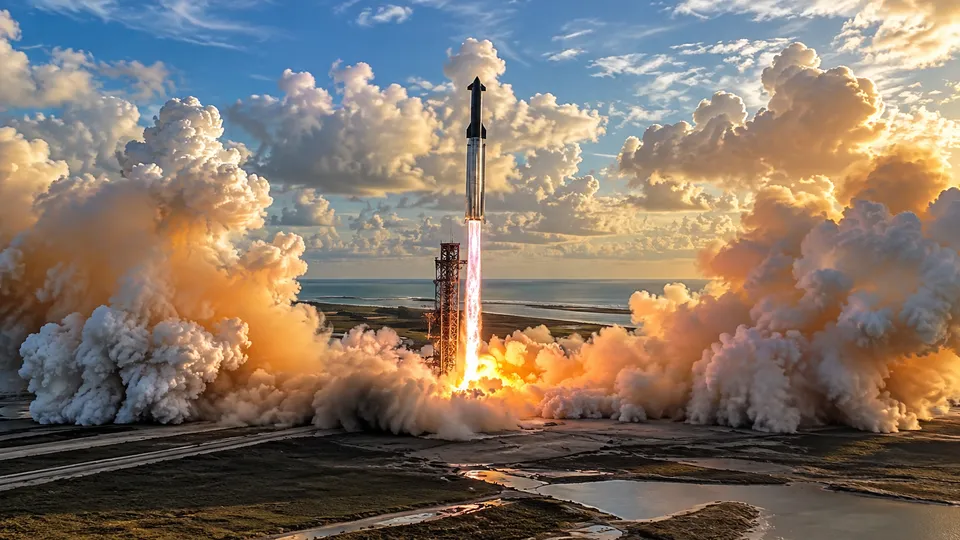
The fourteenth time, SpaceX’s Starship went all the way. The giant rocket reached Earth orbit for the first time on its test flight on the 28th and put 26 Starlink satellites up there with it, the Chosun Ilbo of Seoul reported. Earlier flights had carried test satellites. These 26 are the first bound for the real Starlink network. The biggest rocket ever built has begun, for the first time, to carry cargo that matters.
Starship lifted off from Starbase in Texas. About two minutes and 20 seconds into the flight it separated from the Super Heavy first stage and climbed on. Then one of the second stage’s six Raptor engines shut down earlier than planned. The Ship flew on with the five that remained and, about 25 minutes after launch, entered orbit at roughly 275 kilometers up. All 13 test flights before it had flown suborbital paths that never went around the world.
In orbit the Ship released its 26 satellites, next-generation Starlink V3 craft, one after another over about 30 minutes. SpaceX said it made contact with the satellites after deployment. The 13th flight had released V3 satellites too, but they were test articles. When Starship can lift 60 V3s at a time, a single launch will add far more communications capacity than a Falcon 9 can manage, and the Starlink network will grow that much faster.
The flight also showed the rocket’s reliability problems again. The plan had been to fly for about ten hours, six times around the Earth, then come down in the Pacific west of Chile. The engine trouble cut the mission short. Starship completed fewer than two orbits and came home about three hours after launch, down into the North Pacific near Hawaii. It went through the maneuver of turning itself vertical and touched the sea. Then the fuel still aboard caught fire, and the Ship burned in the water.
Starship is the largest and most powerful rocket ever developed. First stage and second together, it stands 124.4 meters, taller than a 40-story apartment block. SpaceX means to recover and reuse both stages and to carry about 100 tonnes of cargo to low Earth orbit at a time. The fourteenth flight went further than any before it and still ended seven hours early, one engine short of the plan. The engine failed and the mission shrank, and the orbit held, and the satellites are up there now, answering.