
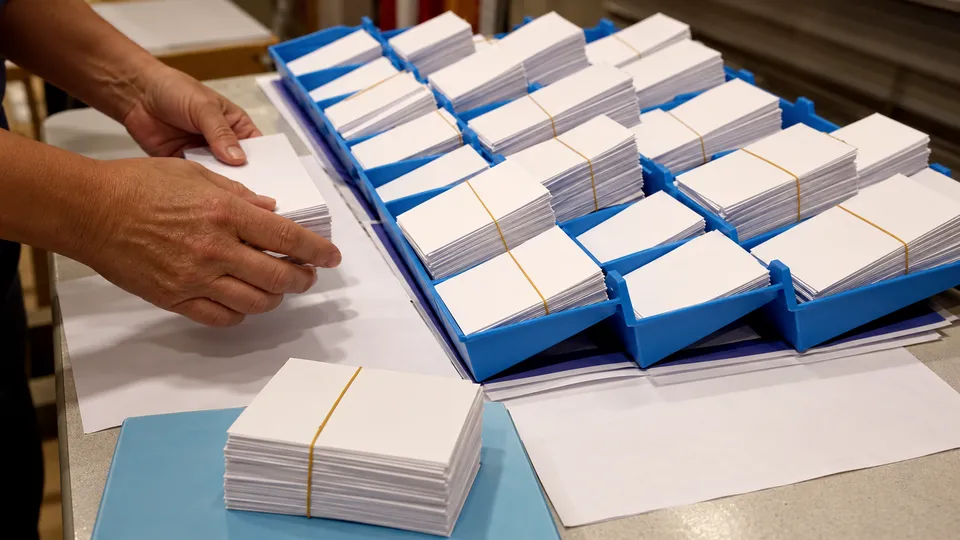
On Tuesday, October 27, Israel holds its sixth national election since 2019 — and, strangely for that country, its first in 38 years to arrive simply because a full term has run its course. Voters are choosing the 26th Knesset in what Al Jazeera’s election guide frames as the first general vote since the genocide against Palestinians in Gaza and the wars on Lebanon and Iran. Benjamin Netanyahu, nineteen years in office across three stints and the longest-serving prime minister in the state’s history, is asking for another term while standing trial on corruption charges he denies. Polls show his far-right coalition and the Jewish-led opposition bloc in a close race, with neither tracking toward the 61 of 120 seats that power requires. No party has ever won that outright, and finishing first guarantees nothing: after the count, parties get 28 days, with a possible 14-day extension, to assemble a majority, failing which the country votes yet again.
The arithmetic of the ballot
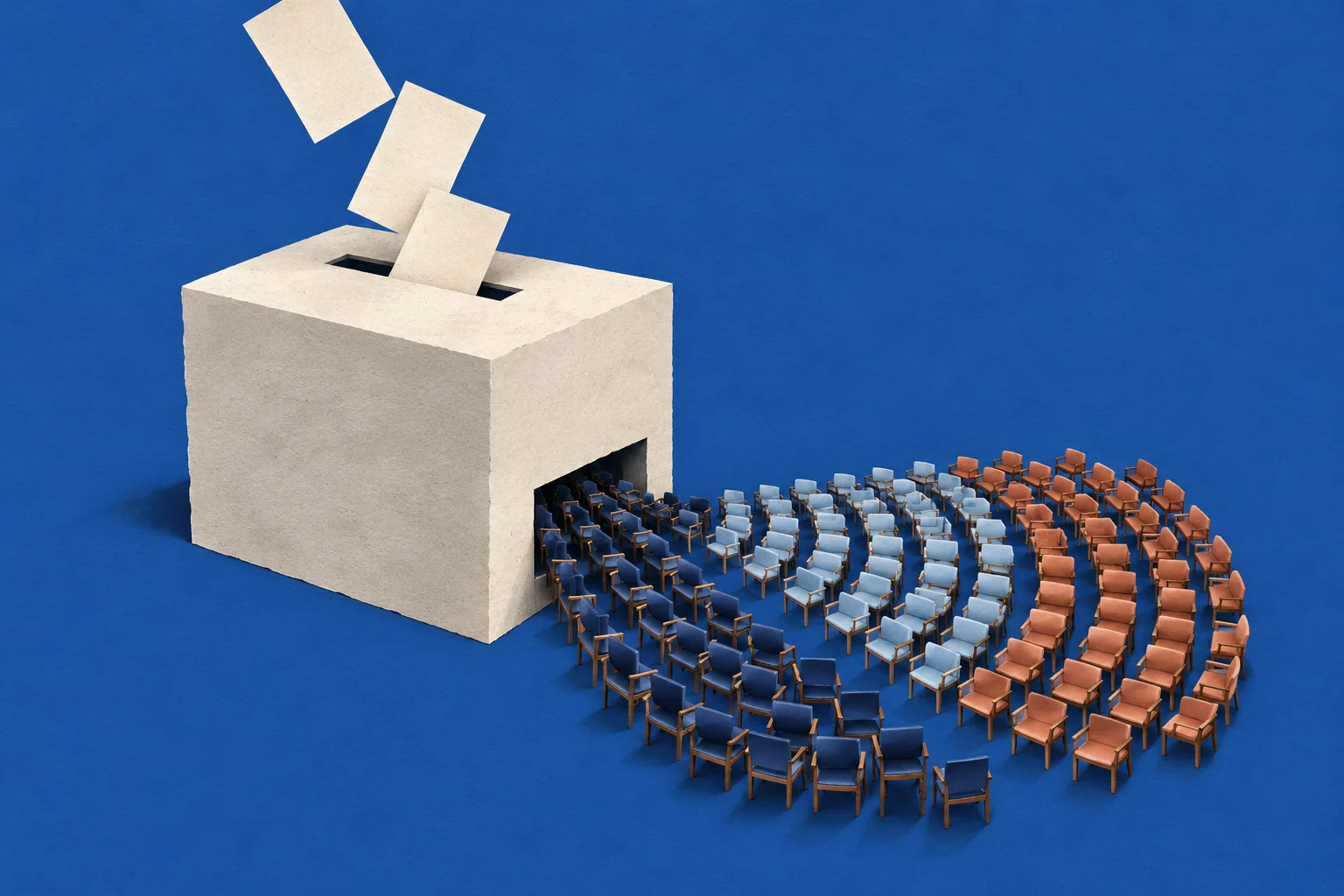
Israelis vote for a party, not a candidate. Election day is a national holiday; most polls open from 7am to 10pm, and anyone still queuing at closing time is entitled to vote. Some 7.3 million citizens aged 18 and over are eligible, according to the Central Elections Committee. A party must clear 3.25 percent of the national vote to enter parliament; ballots cast for those below the line are discarded, which is why small parties merge ahead of every election. Seats are then divided in proportion to the vote. A Knesset sits for four years, and there are no term limits for a prime minister.
Who votes, and who is governed
The 7.3 million eligible are not the only adults living under the government they will choose. Roughly three million adult Palestinians in Gaza, the occupied West Bank and occupied East Jerusalem have no vote in the state that controls their borders, their movement and their legal status. About 1.2 million Palestinian citizens of Israel do vote, as do adult settlers among the more than 750,000 Israelis living in the occupied West Bank and East Jerusalem. Most Palestinians of East Jerusalem hold residency rather than citizenship — they may vote for the city council but not for the Knesset. The anomaly is sharpest in the West Bank, where a settler casts a ballot and a Palestinian family living nearby, under the same military authority, does not. Most Israeli citizens abroad cannot vote either, since there is no general absentee ballot; diplomats and state emissaries are the exception, and they cast their votes at missions on October 20.
The account presented to the electorate
The issues stacked before voters are heavy. Three years after the Hamas-led attack of October 7, 2023, which killed some 1,200 people and saw about 250 taken captive, the government has still not formed a state commission of inquiry into the failures of that day. The war Israel launched in its wake has killed at least 74,000 people in Gaza and left most of the territory in ruins. Netanyahu promised “total victory”, yet Hamas and Hezbollah remain operational. At home, the exemption of the ultra-Orthodox from military service divides the country — defenders call it protection of Torah study, critics an unfair burden on everyone else. The push to curb the Supreme Court’s powers, which filled the streets before the war, is still an open wound. And the defence budget has doubled since 2023, squeezing wages and prices already high.
The men contesting the throne
The outgoing parliament dissolved in July with Netanyahu’s coalition on 60 seats — Likud’s 32, Shas’s 11, Religious Zionism’s seven, Itamar Ben-Gvir’s Otzma Yehudit with six and New Hope with four — against an opposition of 59: Yesh Atid with 24, Blue and White with eight, United Torah Judaism with seven, Yisrael Beiteinu with six, Hadash-Taal and Raam with five each, Labor with four, and one unaffiliated member of Noam. Shas had left the government in July 2025 but stayed in the coalition; New Hope folds into Likud for this race. Opposing Netanyahu is a pact of four Jewish-led parties — former army chief Gadi Eisenkot’s new Yashar party, which polls level with Likud and makes him the opposition’s likeliest candidate for premier; the Together list of former prime ministers Naftali Bennett and Yair Lapid; Avigdor Liberman’s Yisrael Beiteinu; and Yair Golan’s Democrats — whose leaders signed a declaration not to attack one another and to unite after the vote, the pact sealed in Lapid’s Tel Aviv home. Benny Gantz has already quit the race, his Blue and White stranded below the threshold.

On the margins stand men who may matter more than the front runners: the far-right ministers Ben-Gvir and Bezalel Smotrich, the ultra-Orthodox parties, and the Arab-majority lists. Last month the Central Elections Committee voted to bar Ra’am and the Joint List from the ballot; on October 2 the Supreme Court unanimously overturned both bans, ruling the evidence did not meet the legal threshold, though Balad’s leader Sami Abu Shehadeh withdrew after the court signalled it would uphold his personal disqualification. The Arab-led parties could hold the balance of power — and most leaders of the Jewish opposition bloc have already ruled out governing with them. Nine days before the vote, Donald Trump endorsed Netanyahu with a condition attached.
A wheel that keeps turning
The pattern of the seven years is worth recording, because it is the country itself. April 2019: Likud 35, Blue and White 35, deadlock. September 2019: 33 to 32, deadlock again. March 2020: Likud 36, a Netanyahu-Gantz unity government that collapsed within a year. March 2021: an eight-party coalition under Bennett and Lapid — including, for the first time, an Arab party, Ra’am — that ended Netanyahu’s twelve-year reign and itself lasted a year. November 2022: Netanyahu returned at the head of what has been described as Israel’s most right-wing government. Fourteen men have been prime minister since 1948; only David Ben-Gurion, who led from 1948 to 1954 and again from 1955 to 1963, comes near Netanyahu’s nineteen years. And whatever the count delivers on October 27, Netanyahu remains caretaker prime minister until a new government is sworn in — if one can be.