
There is a particular kind of power that comes from being the party everyone says they will never sit with. In the final week before Israel’s October 27 election, Al Jazeera reports that Prime Minister Benjamin Netanyahu has aimed more of his attacks at Ra’am and the Joint List than at almost any other rival — which is a funny way to treat parties you supposedly consider irrelevant. The two Arab-led lists, representing Palestinian citizens of Israel who make up about 20 percent of the population, are together projected to win 13 seats. If that projection holds, they could be critical to any post-election coalition, regardless of its political stripe. That is Al Jazeera’s framing, and it is the right one: in a 120-seat Knesset where 61 is the magic number, 13 seats that nobody wants to be seen needing are 13 seats everybody needs.
Meanwhile, one of the men who might have built a government without them has left the field. Benny Gantz — former army chief, former defence minister, the man Netanyahu once had to share a rotating premiership with — announced Monday he is withdrawing from the race after polls showed his Blue and White party below the 3.25 percent threshold needed to enter the Knesset at all. He said he will “continue to work for unity,” which is what you say when the arithmetic has stopped working for you personally.
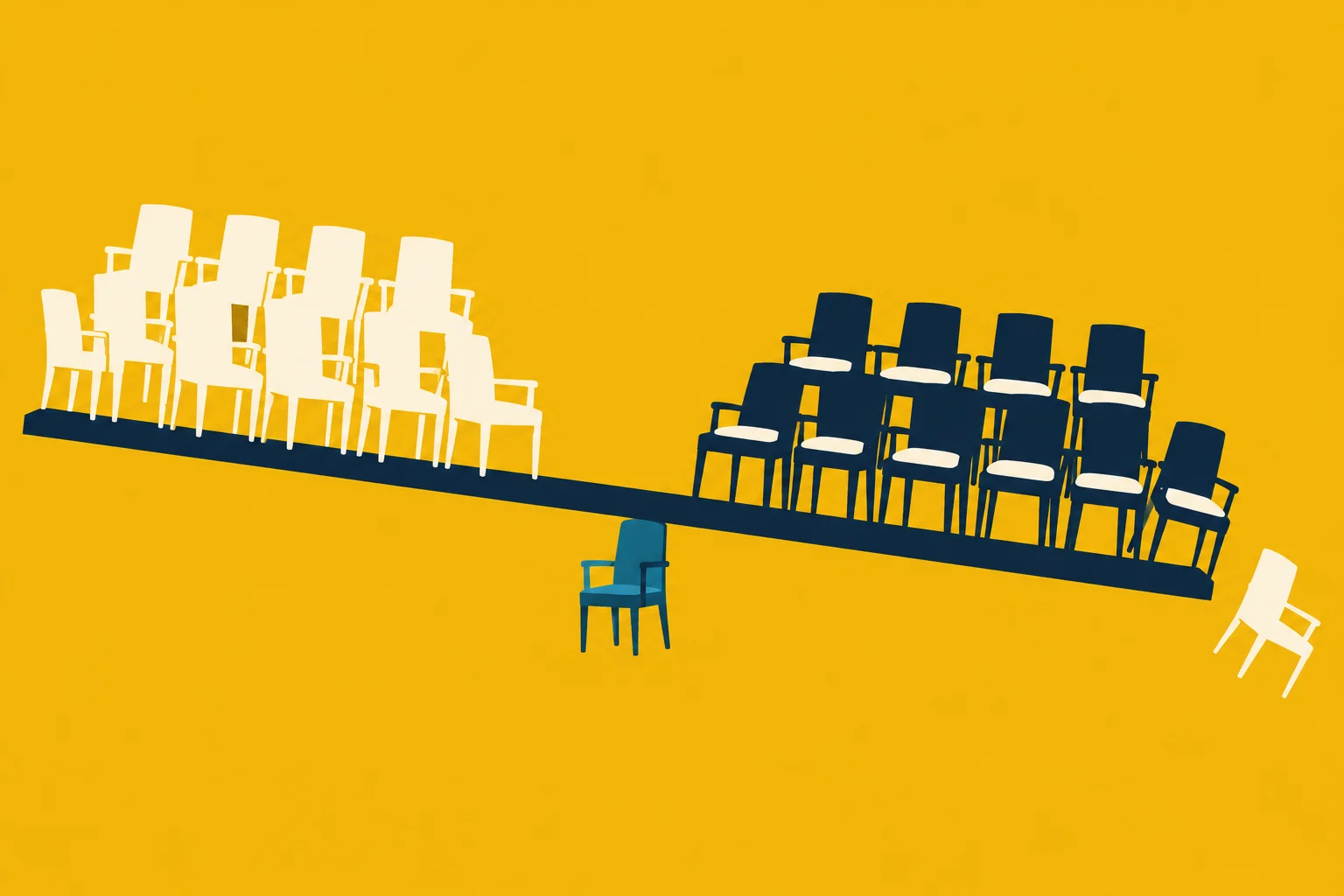
The mechanics here are worth lingering on, because the threshold is the whole game. Israel’s electoral system offers no consolation prizes: a party that wins 3.2 percent of the national vote gets exactly zero seats, and the votes cast for it are effectively redistributed to everyone else. So a Blue and White polling at, say, 3 percent is not a small faction — it is a rounding error that also happens to waste the ballots of its supporters. Gantz’s withdrawal is, among other things, a rational act of arithmetic hygiene: fold now, spare your voters the waste, and let your share migrate to surviving centrist parties rather than evaporate on election night.
The polling numbers make the kingmaker logic concrete. One survey reported by Anadolu Agency projects Netanyahu’s bloc at 51 seats against 53 for the main opposition parties — Gadi Eisenkot’s Yashar leading on 21, Naftali Bennett’s Together on 13 — with Netanyahu’s own Likud at 19, and the ultra-Orthodox parties Shas and United Torah Judaism at seven apiece. Do the arithmetic at home: 51 plus 53 is 104, which leaves 16 seats in the 120-seat Knesset belonging to parties outside both declared blocs, most of them Arab-led. An opposition at 53 does not reach 61 alone. Add the Arab-led lists’ projected 13 and suddenly there is a government — but only if someone is willing to be photographed building it.

That willingness is the contested part, and it is why Netanyahu’s attacks are best read as pre-emptive demolition: make the price of relying on Ra’am or the Joint List so high that no rival coalition can be assembled even when the seat count says one could be. Ayman Odeh’s Joint List within the current Knesset, and Ra’am under Mansour Abbas before it — which broke precedent by actually joining a coalition in 2021 — have lived in this space for years: too many seats to ignore, too radioactive to embrace publicly. Al Jazeera notes both Arab-led and ultra-Orthodox parties face attacks in the campaign’s final stretch even as either could hold the balance of power. The ultra-Orthodox parties at least have an invited suitor; the Arab-led lists have a constraint that acts like one.
I think the interesting question is what Gantz’s exit does to the bargaining table. Every viable anti-Netanyahu arithmetic now runs, in whole or in part, through parties that much of the Jewish political mainstream refuses to court openly — which means the people being courted least loudly may end up charging the highest price. That is usually how leverage works: the fewer the alternatives, the more the necessary ones cost. Gantz, at least, has priced his own exit at “unity.”