
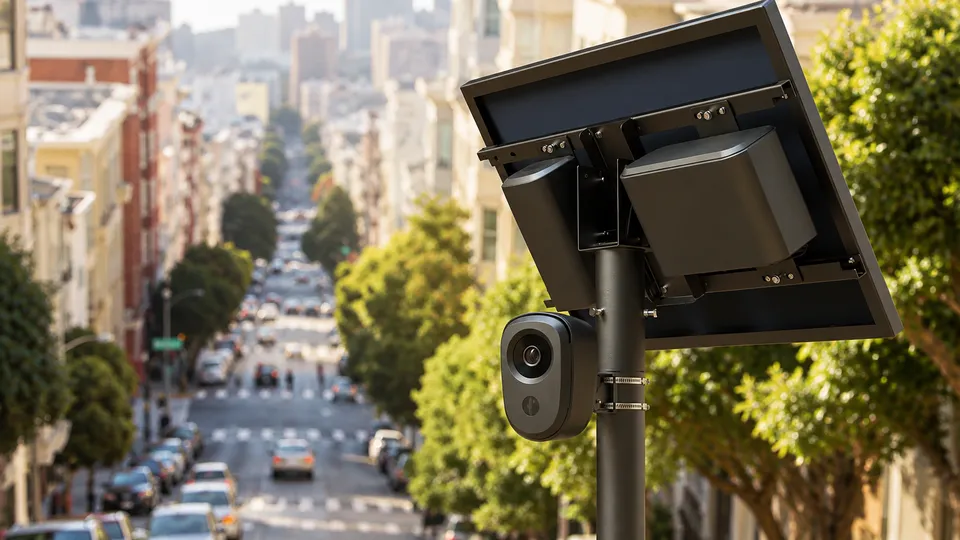
Here is a sentence about how the modern American surveillance state actually gets built: a federal program designed in the 1980s to fight drug trafficking has become a pipeline carrying local license plate data to federal databases, and the privacy review of that arrangement exists, is finished, and nobody outside the government has been allowed to read it.
On Thursday, Sen. Ron Wyden of Oregon sent a letter to Sara Carter, director of the White House’s Office of National Drug Control Policy, demanding the release of that review, as Jason Koebler of 404 Media reported. The letter follows 404 Media’s own investigation, published last month, into the High Intensity Drug Trafficking Area program — HIDTA — a grant program run under the drug control office that, among other things, redistributes money to state and local police. One thing those police departments buy, with money that originates in the White House’s drug office, is license plate reader systems. And according to 404 Media’s reporting, the program has created a mechanism by which data collected by cameras from vendors like Flock, Axon and Motorola — cameras installed in cities and towns around the country — is mirrored onto federal databases. In other words, local surveillance, federal reach, and the whole thing routed through agreements with municipalities rather than any single visible federal purchase order.
The structure here is almost elegant, if you find distributed opacity elegant. If the White House bought a national license plate documentation network directly, there would be a procurement process, oversight hearings, and probably a headline or two. If a city council buys a few dozen cameras from Flock, there is a council meeting. HIDTA sits in the middle, funding the local end and aggregating the data at the federal end, and the result is that the whole system is composed entirely of pieces that individually look unremarkable. We covered the mechanics of those data-flow arrangements last week — including the detail that the off switches cities have been using against Flock do not mention the HIDTA program at all.
Wyden’s letter adds something genuinely new to the file: the paper trail. He wrote that the drug control office commissioned a privacy review of HIDTA’s surveillance programs — including both its license plate reader database and its cell phone data collection — and that the nonprofit contractor MITRE completed that review in 2024. “404 Media has reported that the HIDTA program is being used to aggregate location data on Americans derived from Flock, Axon, and other vendors’ ALPRs,” Wyden wrote. “There is currently limited transparency into these HIDTA-funded surveillance programs, but ONDCP has commissioned an assessment into the privacy practices of these programs that should be released to the public.”
The review was completed in 2024. According to Wyden’s letter, the office refused to give it to his office and has not made it public since. Wyden is also demanding the release of a separate “analysis of automated license plate reader systems and practices.”
Think about what that sequence of decisions implies. The office looked at its own surveillance programs seriously enough to hire an outside contractor to examine them. MITRE did the work. And then the institution that commissioned the scrutiny decided it did not want anyone — including, apparently, the senior senator from Oregon — to see the results. The review conducted, and then withheld, is either one that found problems or one that found nothing worth finding, and a rational reader might observe that the office’s behavior is more consistent with the first scenario. That’s a guess. What isn’t a guess is that the report has now been withheld from Congress for two years.
The drug control office has some history that colors all of this. It ran Hemisphere, a secretive cell phone data surveillance project conducted in partnership with AT&T, which operated for years before its scope became public. So when that office sits on a privacy assessment of a related system, the skepticism writes itself. The license plate program has also drawn legislative fire beyond Wyden: four bills are now pending in Congress targeting the Flock network in various ways, and at least one federal judge has already ruled a warrantless Flock search unconstitutional. The HIDTA angle is newer, and in some ways more awkward. Legislation aimed at a single vendor does not obviously reach a federal funding-and-data pipeline piggybacking on that vendor’s cameras.
Wyden’s ask is not, in fact, very ambitious. He is not demanding the program be shut down, or even changed. He is asking the office to publish a report it already commissioned and already has. The interesting question isn’t whether the report comes out — eventually these things usually do — it’s whether a document that needed a senator’s intervention to see daylight will have said anything the office was right to want hidden.