
Here is one business model. You collect dead electric-car batteries, put them through giant machines and pull out the nickel, lithium and cobalt, then sell those metals back to people who make new batteries. That is Redwood Materials, the recycling company Tesla cofounder JB Straubel started in 2017.
Here is another business model. You collect dead electric-car batteries and don’t shred them.
The second one is newer, and Redwood’s chief technology officer thinks it could end up the bigger of the two. Colin Campbell, who spent 17 years at Tesla before joining Redwood, told Business Insider’s Alistair Barr at one of the outlet’s AI Insider live events that reusing retired batteries for energy storage is “easily as large as the metals and refining business,” and then improved on it: “At least as large as the metals business, maybe larger.”
Dead, but only for driving
The trick is that “dead” is doing a lot of work when people talk about EV batteries. A pack that has stopped being good enough for a car hasn’t stopped holding charge. Campbell said Redwood’s engineers noticed this while watching used batteries roll toward the company’s recycling equipment: plenty of them could still store a lot of electricity, maybe for another five or ten years. Destroying them right away started to look wasteful.
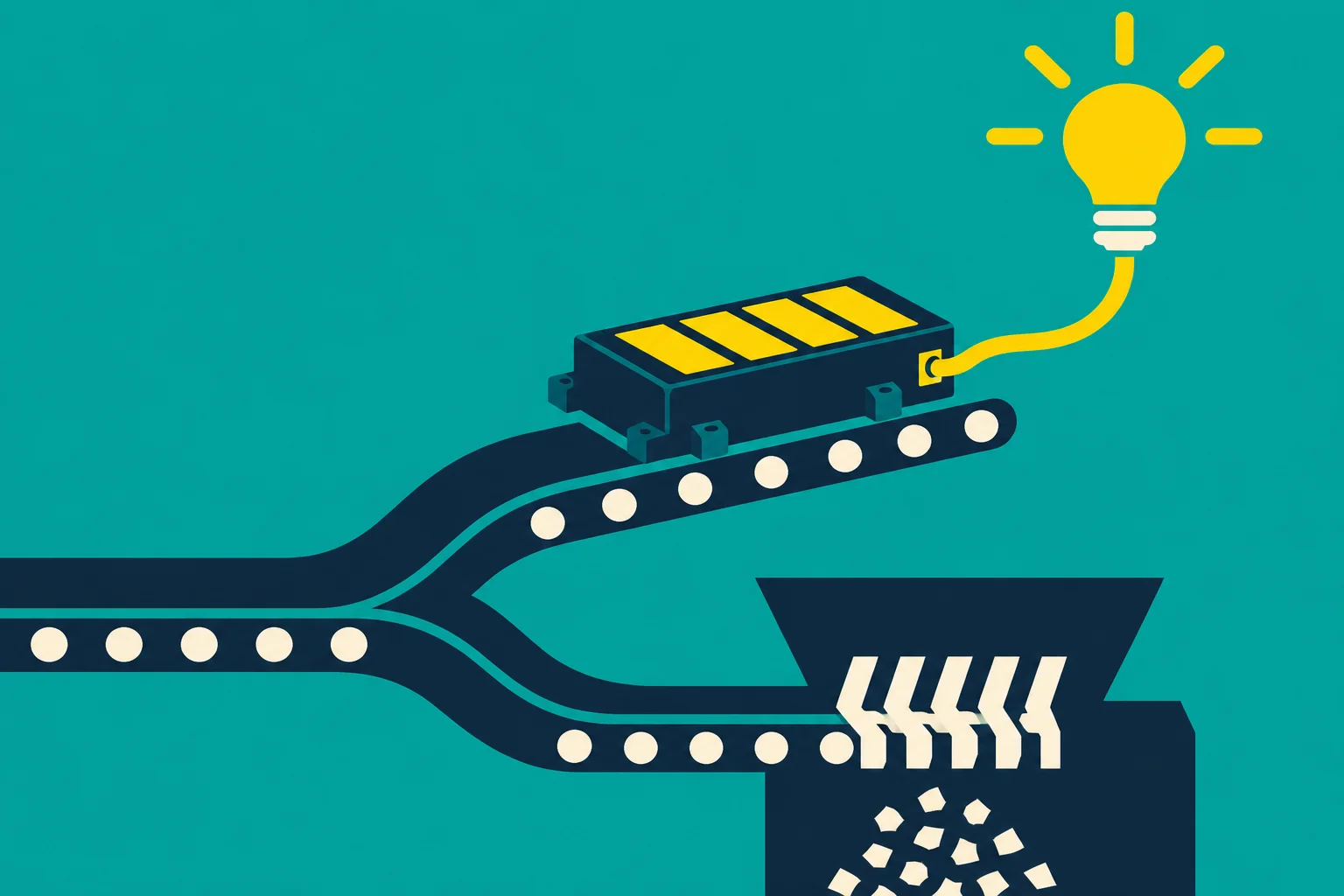
What I like about this is that the two businesses don’t really compete. The metals inside a battery aren’t going anywhere. If you put a pack to work in a storage system for five years and then shred it, you still get the nickel and the lithium at the end, and you also got five years of rent in between. The second-life business mostly just pushes the recycling business back a bit. (It also fits neatly with the argument that the climate answer is fewer new batteries: one easy way to need fewer is to keep using the ones you already have.)
That insight became Redwood Energy, which builds large electricity-storage systems out of retired packs. And it found a buyer that badly needs electricity and can’t wait for it: AI data centers. Getting a new facility hooked up to the grid can take years. A battery yard next to a solar farm takes a lot less time.
The flagship is in Nevada. In June 2025, Crusoe and Redwood announced a microgrid at Redwood’s campus in Sparks, running on solar panels and second-life EV batteries. According to the companies it delivers 12 megawatts and stores 63 megawatt-hours, and Redwood calls it the largest second-life battery deployment anywhere. They said it was built and commissioned in under four months. Divide 63 by 12 and you get about five and a quarter hours of output at full power, which is what lets the computers keep running after the sun goes down. In March of this year, the two companies said they were expanding the data center project at the site.

The translator
The obvious problem with building a power plant out of used car parts is that the parts don’t match. Different automakers use different batteries, with different electrical characteristics and different software. A yard full of retired packs is a crowd of strangers who don’t speak the same language. Redwood built a device it calls the Pack Manager to let batteries from different carmakers work together in one system. Campbell described it as a “universal translator” for batteries. Redwood is now ramping up production and working on more technology to make whole power installations cheaper and quicker to build.
Campbell said the hard part of all this is less the science than the economics at scale: huge factories, expensive equipment, and being willing to change course when the numbers move. Redwood, for instance, put plans to expand its copper foil manufacturing on hold after the economics shifted. “We are not wedded to the original business plan,” Campbell said. “It’s very dangerous to just plow ahead regardless of the current economics two or three years later.” Put plainly, Redwood stops doing things when they stop making money. That sounds like a low bar, but in climate hardware it is apparently worth saying out loud.
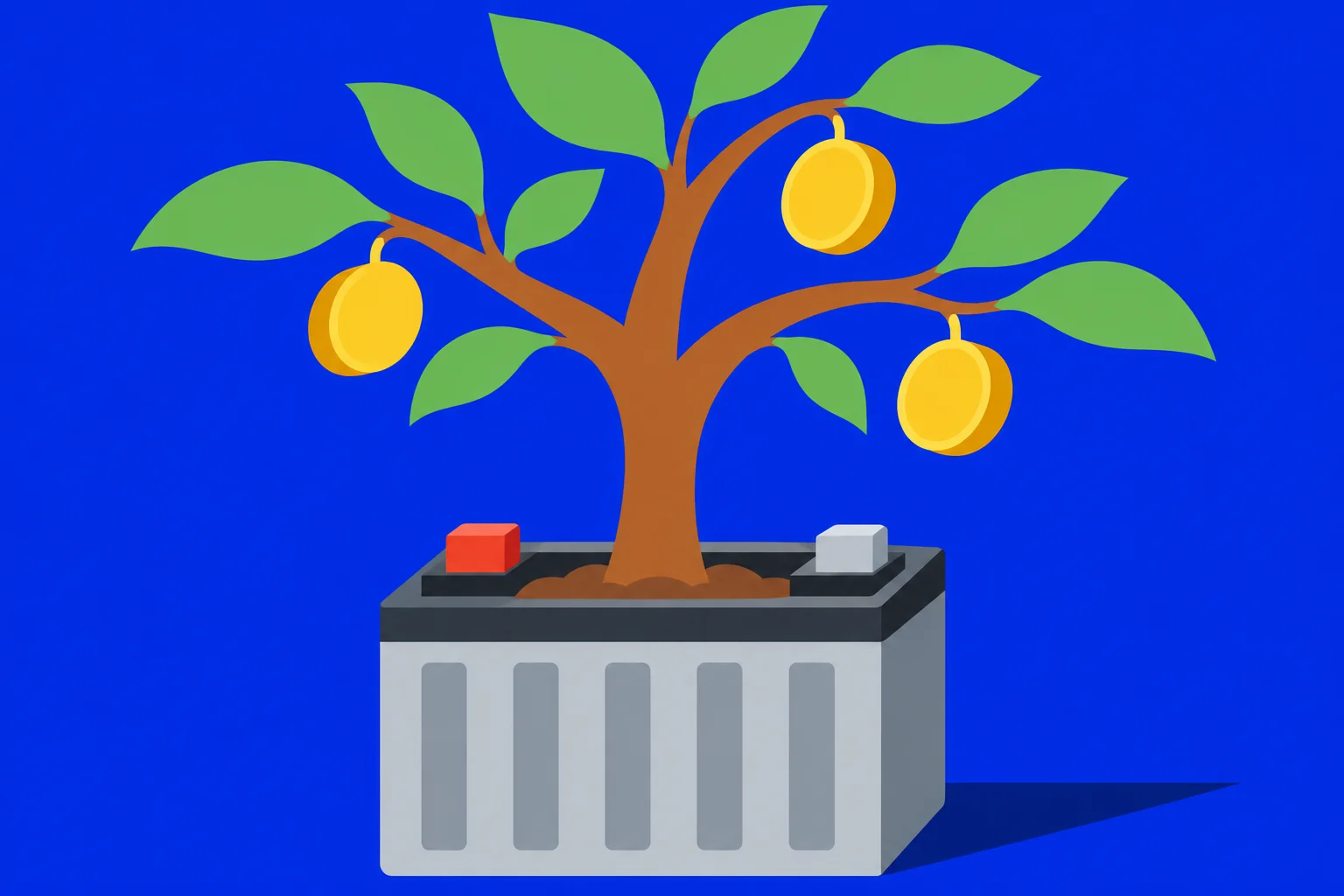
Plowing ahead gets easier when you have a lot of money, and Redwood has raised billions, including from Google and Nvidia. Nvidia’s venture arm, NVentures, joined a Series E round in October 2025. TechCrunch reported at the time that the round raised $350 million, was led by Eclipse, and valued Redwood at about $6 billion, according to a person familiar with it, which would be $1 billion more than its previous valuation. The money was meant for the energy-storage business as well as refining and materials production. Campbell’s advice is to find patient investors who understand that complicated industrial companies take years to build.
Hedging the boom
Then there’s the AI backlash. Data centers are drawing growing political opposition, and you might expect a company selling power to them to be nervous. Campbell isn’t, or at least not very. Data centers are important customers, he said, but the storage systems can serve factories and other industries too, and he argued the business would still have a strong future even if the AI boom went away. That is exactly what you want a supplier to say. It also happens to be true in a physical sense: a battery doesn’t care what is plugged into the other end.
When Barr asked what Tesla and Redwood had taught him about turning hard engineering problems into companies, Campbell said “Oh, man, what a great question,” and then gave a simple answer: question how things have always been done. In data centers, he pointed out, different companies handle different pieces of the power supply, and few have looked at the whole chain from the power line to the AI chip. His advice to founders is to find those overlooked gaps, cut out the needless complexity and show there’s a better way. He admitted that persuading an established industry to change is hard.
“If you see that kernel of efficiency,” Campbell said, “we can do this a different way.”
Somewhere a Model 3 owner thinks their car’s battery is finished. Redwood thinks it’s just between jobs.