
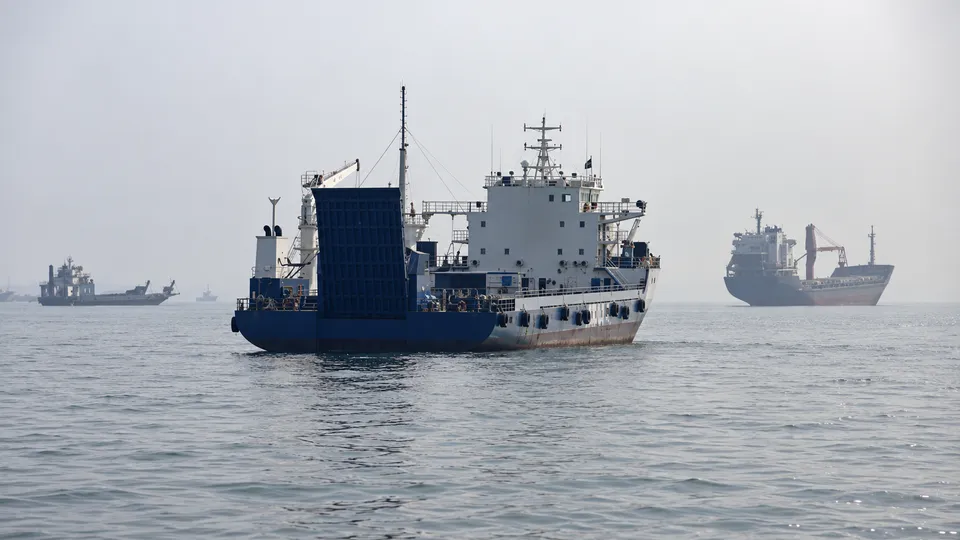
Al Mayeda is a Q-Max carrier, the class built to the maximum size Qatar’s LNG terminals can dock: 266,000 cubic metres of liquefied gas, 345 metres long, one of 14 such ships Qatar Gas Transport Company (Nakilat) owns and charters to QatarEnergy LNG. On Friday evening it was hit by what Nakilat called “unidentified objects” while transiting the Arabian Gulf. The company’s statement, filed with the Qatar Stock Exchange on Sunday and first reported by Al Jazeera, says no crew were hurt, no gas leaked, the ship is “safe, operational,” and the impact is still being assessed. It does not say who fired the objects. Nobody has claimed the attack.
That omission is now the normal shape of a Gulf shipping incident. Since the US and Israel opened their war on Iran in late February, hits on commercial vessels have run through the Strait of Hormuz and the wider Gulf at a pace that keeps climbing rather than settling: the shipping association BIMCO counted at least 30 vessels struck by 27 October, injuring 16 seafarers, more than double September’s 15 incidents, according to CNBC. “Ships are attacked really on a daily basis,” BIMCO’s Jakob Larsen told the outlet. Al Mayeda is simply the most recent entry on a running tally that, as of this incident, has no single owner of blame attached to most of its rows.
Why the strait matters more than the ship
The strait itself is the reason one damaged carrier makes news. Before the war, about 93% of Qatar’s LNG exports and 96% of the UAE’s transited the Strait of Hormuz, together accounting for roughly 19% of global LNG trade, and a quarter of the world’s seaborne oil moved through the same 33-kilometre channel, per the US Congressional Research Service’s running assessment of the chokepoint. Qatar is the world’s second-largest LNG exporter after the United States; there is no alternate pipe for that gas to Asia, which took almost 90% of Hormuz-transiting LNG before the war, and no quick way to redirect a 266,000-cubic-metre cargo overland.
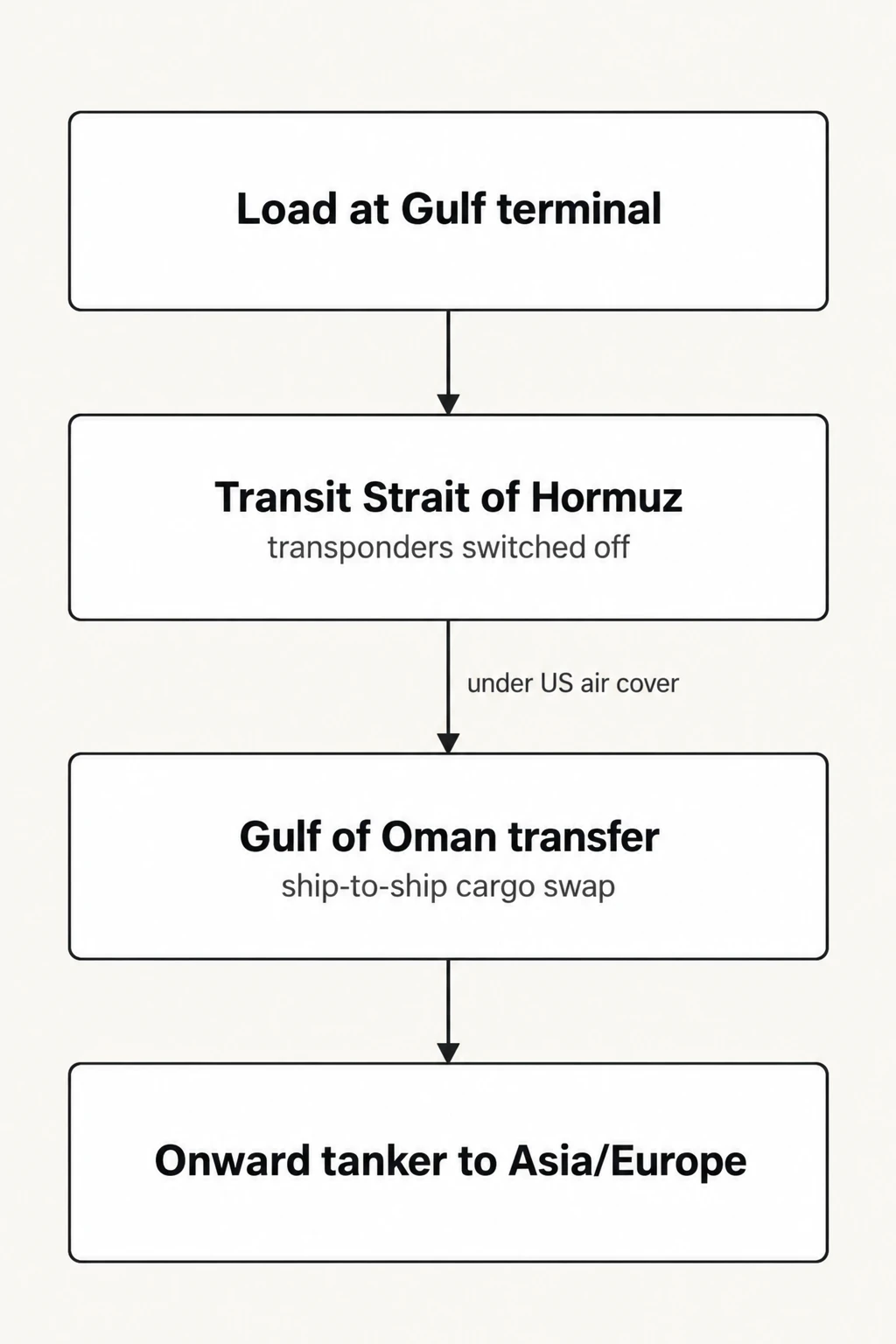
| From | To | How |
|---|---|---|
| Load at Gulf terminal | Transit Strait of Hormuz (transponders switched off) | |
| Transit Strait of Hormuz (transponders switched off) | Gulf of Oman transfer (ship-to-ship cargo swap) | under US air cover |
| Gulf of Oman transfer (ship-to-ship cargo swap) | Onward tanker to Asia/Europe |
Based on BIMCO, via CNBC reporting
That workaround — load, go dark, run the strait escorted, transfer cargo once clear of it, send a second ship on — now ties up roughly 20% of the global supertanker fleet, CNBC reported, because every transit needs a waiting partner vessel on the far side. It is the shipping equivalent of running a factory’s output across a single, shelled bridge by ferrying it over in the dark and reloading trucks on the other bank.
A toll with no published price list
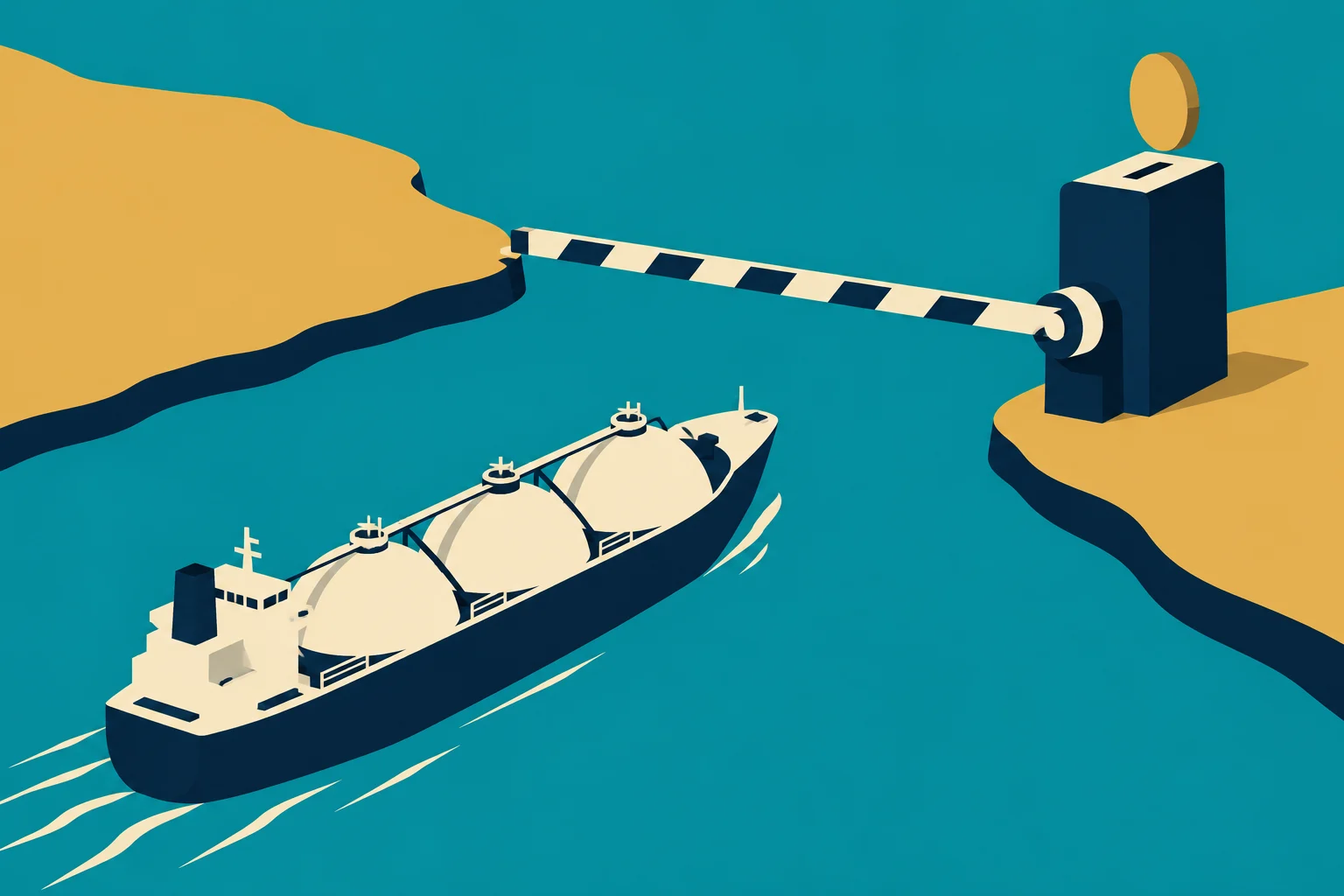
Iran has spent the year converting that geography into a revenue mechanism. In May it declared a “Persian Gulf Strait Authority” and said no vessel could cross without its permit; Iran’s parliament followed in August by approving fees for “maritime, environmental, fuel supply, insurance and safety” services in the strait, payable in rial or another currency Tehran accepts, according to a parliamentary spokesperson cited by GlobalSecurity.org. Early estimates from an Iranian lawmaker, reported by NPR, put the charge as high as $2 million a vessel. Iran has never published a tariff; Forbes reported the arrangement runs case by case, mostly covering Iranian-flagged ships and a handful of Indian, Pakistani and Chinese vessels with side deals. Oman has pitched a joint-management alternative built on voluntary payments rather than a unilateral toll; Iran rejected it. Maritime-law specialists say a mandatory transit fee is illegal under the law of the sea regardless of what it is called.
A ceasefire attempted in October did not hold; within days Iran re-declared the strait closed and US and Iranian forces resumed strikes, which is the immediate backdrop to Al Mayeda’s hit. Qatar, which has mediated between Washington and Tehran throughout, has pushed with France to have the strait reopened outright, without fees or transit limits — a position the Al Mayeda incident does nothing to help.
What keeps tankers moving anyway
Transit has continued only because the US Navy underwrites it. A carrier strike group enforces a blockade against Iran and American aircraft fly near-nightly escort over the strait; CNBC’s BIMCO source said shipowners “wouldn’t risk the voyages” without that air cover. The Congressional Budget Office puts the campaign’s running cost at $2 billion to $3 billion a month in munitions, jet fuel and logistics, a Wall Street Journal investigation into the Pentagon’s open-ended Gulf mission reported. The same reporting said Washington has told several Gulf states to prepare for a short, intense campaign after the 3 November US midterm elections — two days after Al Mayeda was hit.
The protection has a price tag that shows up in the charter market before it shows up at the pump. Hiring a very large crude carrier for the Hormuz run went from about $249,000 a day in early September to more than $900,000 a day by early October, CNBC reported, pushing transport cost per barrel from roughly $6.50 to about $21.
| VLCC charter rate ($/day) | |
|---|---|
| Early September 2026 | 249,000 |
| Early October 2026 | 900,000 |
The volume data show how uneven the flow has become under that premium. October’s Hormuz oil exports averaged 11.1 million barrels a day, CNBC reported, down only about 2% from September — but the last week of October alone averaged 7.3 million bpd, more than 40% below pre-war levels, against a nearly 90% collapse in March, the war’s first month. Brent crude closed Friday above $117 a barrel, within $1.35 of its March wartime peak of $118.35, having gained over 13% in October alone.
Nothing in Nakilat’s filing, nor in any statement issued since, identifies what hit Al Mayeda or why. That is consistent with most of this year’s merchant-ship attacks, which carry no claim of responsibility at all. Whether the midterm-linked escalation the Journal’s sources described actually arrives, and whether it changes who is willing to say out loud what an “unidentified object” in the Gulf actually was, are the two numbers worth watching through November.