
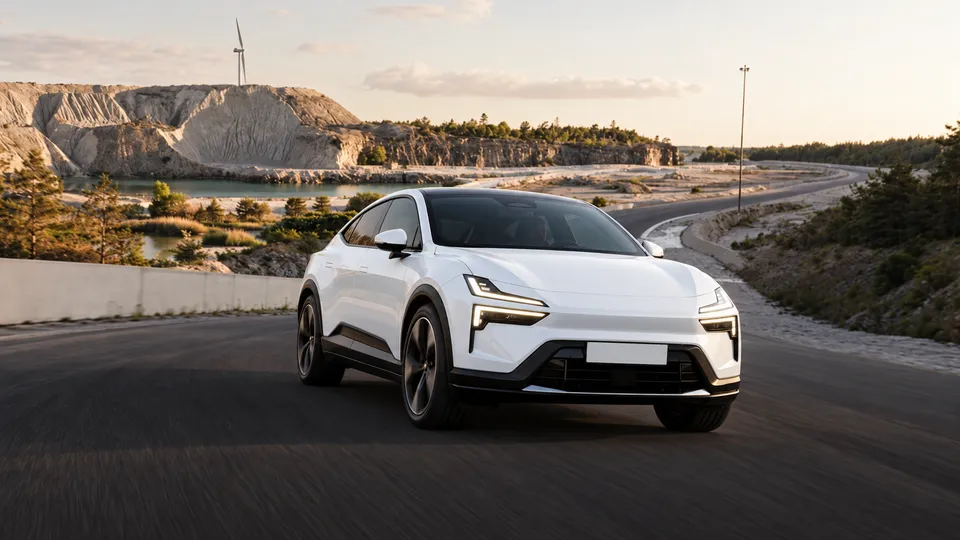
Writing in Ars Technica, Jonathan M. Gitlin begins the story a long way from Sweden. He starts on the Pontic-Caspian steppe, with some Yamnaya herder who looked at a horse and guessed that its back would carry him faster than his own legs. About five thousand years later, Gitlin observes, riding is a hobby, and the motors in an ordinary car have more power than a whole herd of animals could supply.
We still measure that power the way we always have: a stopwatch, a strip of tarmac, the time to 60 mph. Electric performance cars are now competing hard over that one number. Tesla has just claimed 0.8 seconds for its new Roadster. Measuring the machine is easy. Polestar, the Swedish electric-car brand, wanted to know what the machine does to the person driving it.
The quarry on Gotland
On 20 October the company and the University of Oxford’s SDG Impact Lab published the results of a pilot study, datelined Gothenburg. Researchers from Oxford’s engineering science and experimental psychology departments ran it. Twelve drivers took two versions of the Polestar 4 around the Gotland Ring, a circuit on the Swedish island of Gotland. One car was the Rear motor version, with 200 kW (268 hp). The other was the Dual motor with the Performance pack, with 400 kW (544 hp). Each driver lapped first gently, then dynamically. Gitlin calls the Polestar 4 a midsize crossover and a convincing alternative to the Porsche Macan. Americans can no longer buy one.
The drivers were wired up. They wore heart-rate monitors and skullcaps studded with electrodes, and the car’s own gaze-tracking driver-monitoring system watched their eyes. The researchers matched those readings against the car’s telemetry, added psychological assessments, and then interviewed every driver afterward.
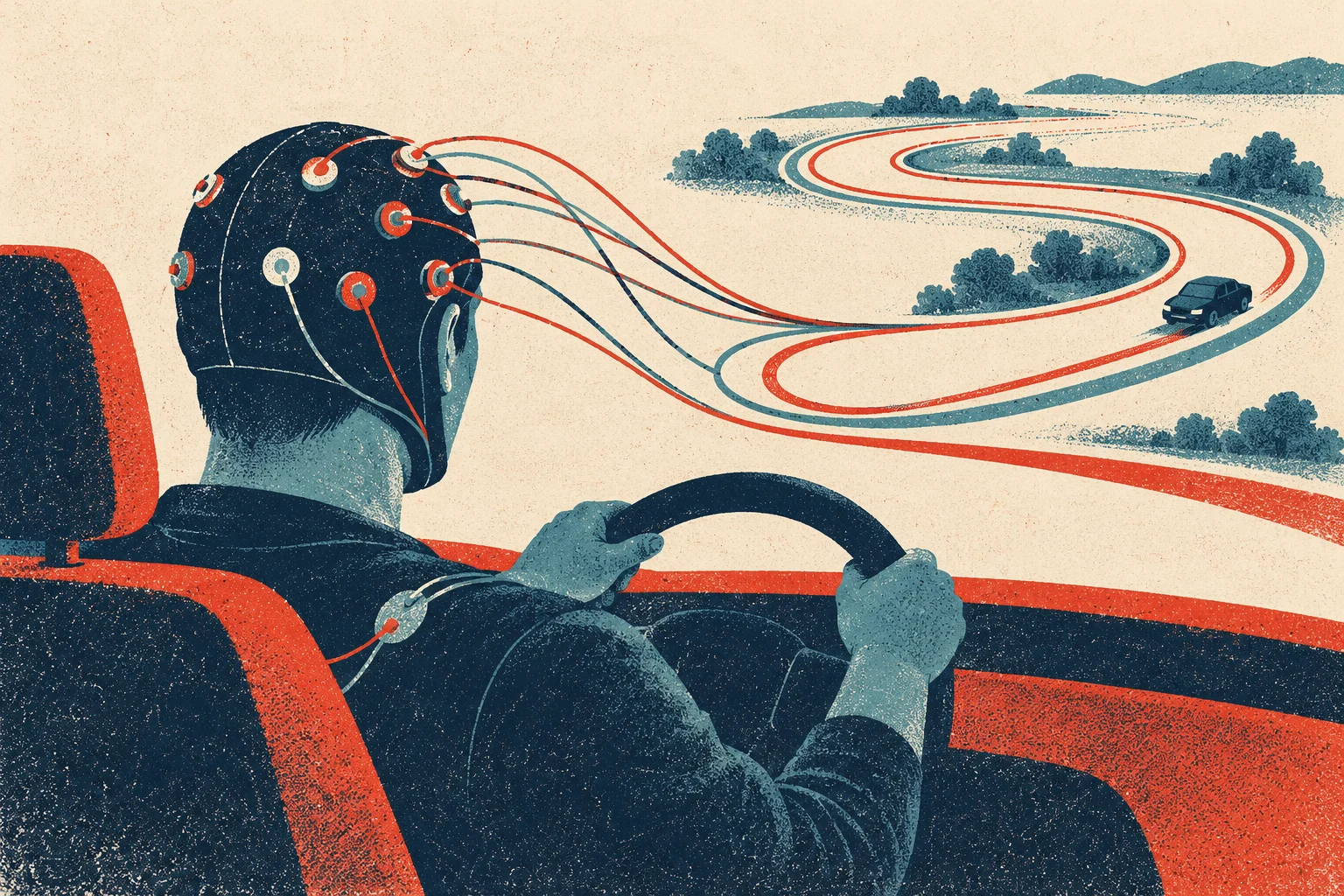
The camera was put there to catch a driver nodding off. Here it was used to record excitement.
What the body reported
The eyes changed most clearly. In dynamic driving the participants blinked less, their pupils widened, and they held their gaze longer. The researchers read this as deeper attentional engagement. They also say the telemetry could be linked to changes in the drivers’ physiological activation. The published summary gives no heart-rate figures, though, and no results from the electrodes on the drivers’ heads.
Then they compared the two cars. On matched fast laps the two ran at almost the same pace. The Performance-pack car had 32 percent higher peak acceleration and needed 15 percent less steering effort. It also pulled bigger cornering loads and accelerated hard more often.
So the second car had twice the power and set much the same lap time.
The drivers still preferred it. On a 100-point performance and dynamics scale they gave the Performance version 89.2 and the Rear motor 67.7. For overall experiential quality the scores were 93.0 and 77.9. Most drivers put the more powerful car ahead on both measures.
A controlled roller coaster
The interviews explain the scores better than the numbers do. The drivers described performance as a strong physical reaction held in check by trust, control and intense concentration. Several of them, separately, called it a “controlled roller coaster.” One said the car “makes you feel like a better driver than you are.” The Performance version produced that mix of thrill and confidence more consistently than the Rear motor did.
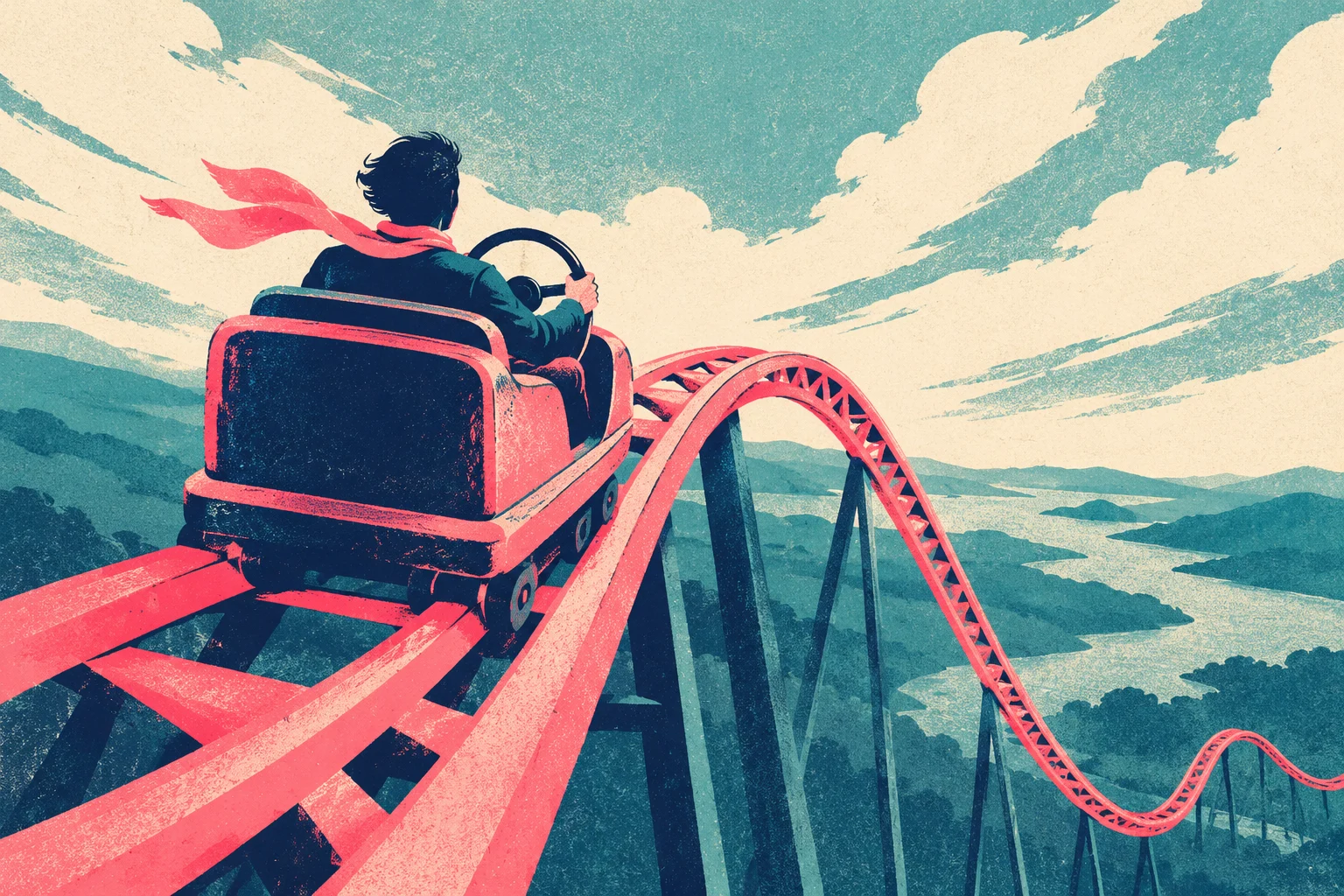
Performance is not simply about going faster.
That was Max Klapow, a doctoral researcher at the Oxford SDG Impact Lab. He argued that the experience comes from the confidence and sense of control a driver gets when the car responds predictably. Polestar’s head of product attributes, Christian Samson, said the company had set out to understand what a spec sheet misses. “As electric cars redefine what performance can be, we wanted to understand something that can’t be captured by a specification sheet alone: the human experience behind the wheel,” he said. “Working with University of Oxford allows us to look at performance through a different lens—connecting the engineering of the car with the experience of the person driving it.”
Twelve people on an island
The study has clear limits, and its authors say so. They call it a feasibility pilot with twelve participants, and they say a larger study is needed to establish whether the findings are reliable and valid. A car company paid to measure how much people enjoy its own cars, which is worth keeping in mind. Still, the most interesting result runs against the usual sales pitch. On a track built for speed, doubling the power barely changed the clock. What it changed was the driver: fewer blinks, wider pupils, a longer gaze, and the sense, which the car may have created, of being better at driving than they were.