
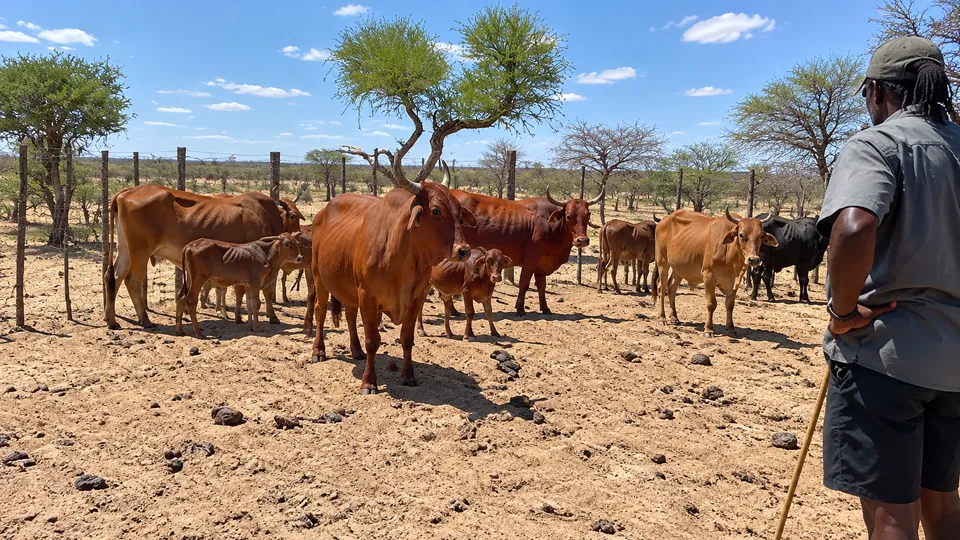
When you sell beef to the European Union, you are partly selling cows and partly selling a certificate saying the cows came from a place that has no foot-and-mouth disease. Most of the value sits in the certificate. Namibia has spent decades building it up, and in late September the certificate ran into trouble.
Al Jazeera’s Lisa Ossenbrink reports that Namibia’s Directorate of Veterinary Services confirmed foot-and-mouth disease on a commercial farm in the Karasburg State Veterinary District, in the southern //Kharas Region, on September 23. It was reportedly the first outbreak in the country’s primary commercial livestock zone in 60 years. On October 5, President Netumbo Nandi-Ndaitwah said teams had inspected 29,313 animals on 68 farms and recorded 127 positive cases on 15 of them. She said the government had set up 20 surveillance teams and 10 roadblocks. In an update covering the position as of October 6, the agriculture ministry put the count at 129 positive samples and 17 infected farms, with 72 of 81 targeted farms inspected.
Then the disease turned up at the other end of the country. On October 5, vets from the Katima Mulilo State Veterinary Office saw clinical signs in 20 cattle on Kalala Island, in the Kabbe constituency of the Zambezi Region. They sent 12 samples to the Central Veterinary Laboratory in Windhoek on October 6, and all 12 came back positive the next day. Nothing published so far shows that the virus travelled from //Kharas to Zambezi. As far as anyone has said, there are simply two outbreaks.
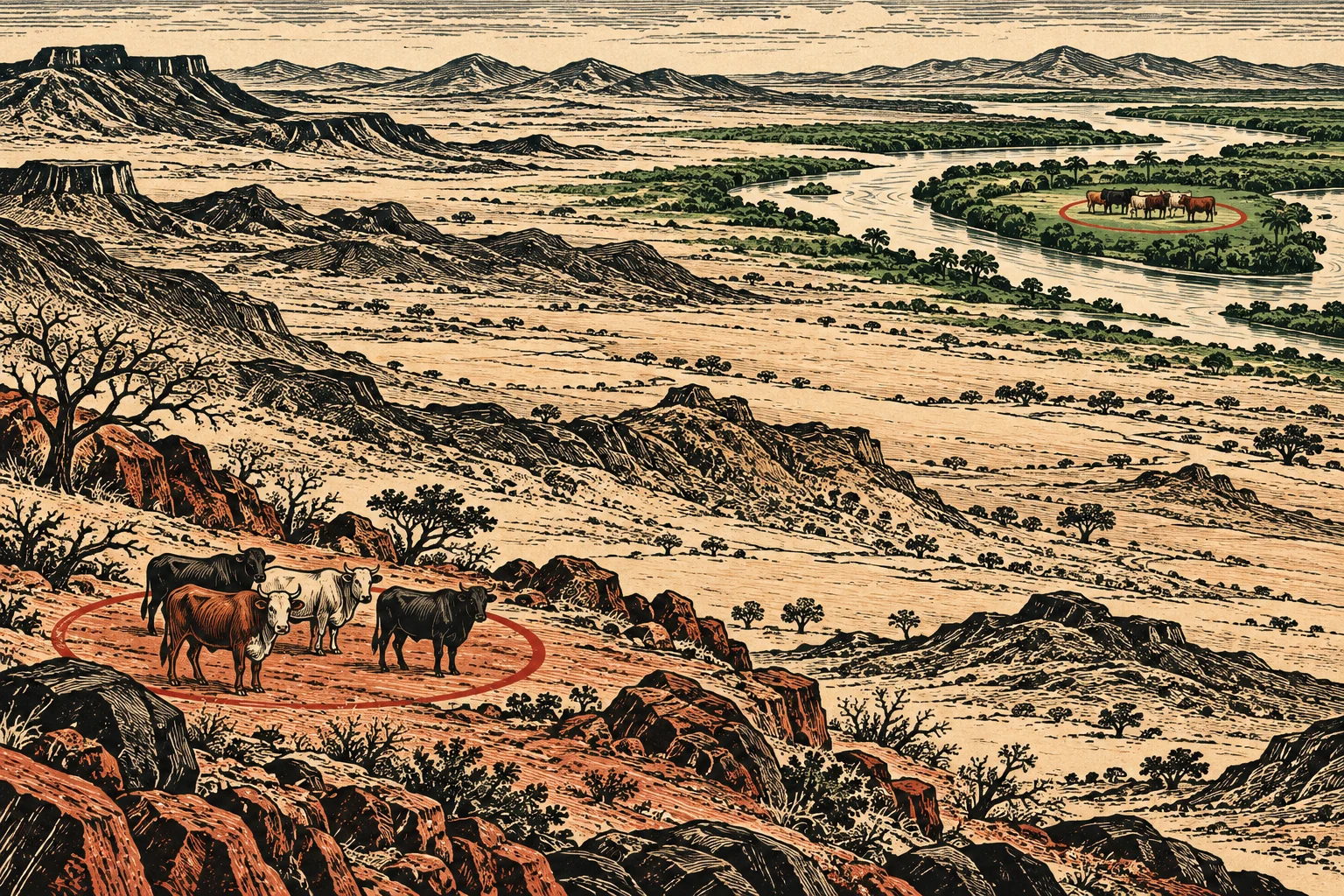
The zone is the product
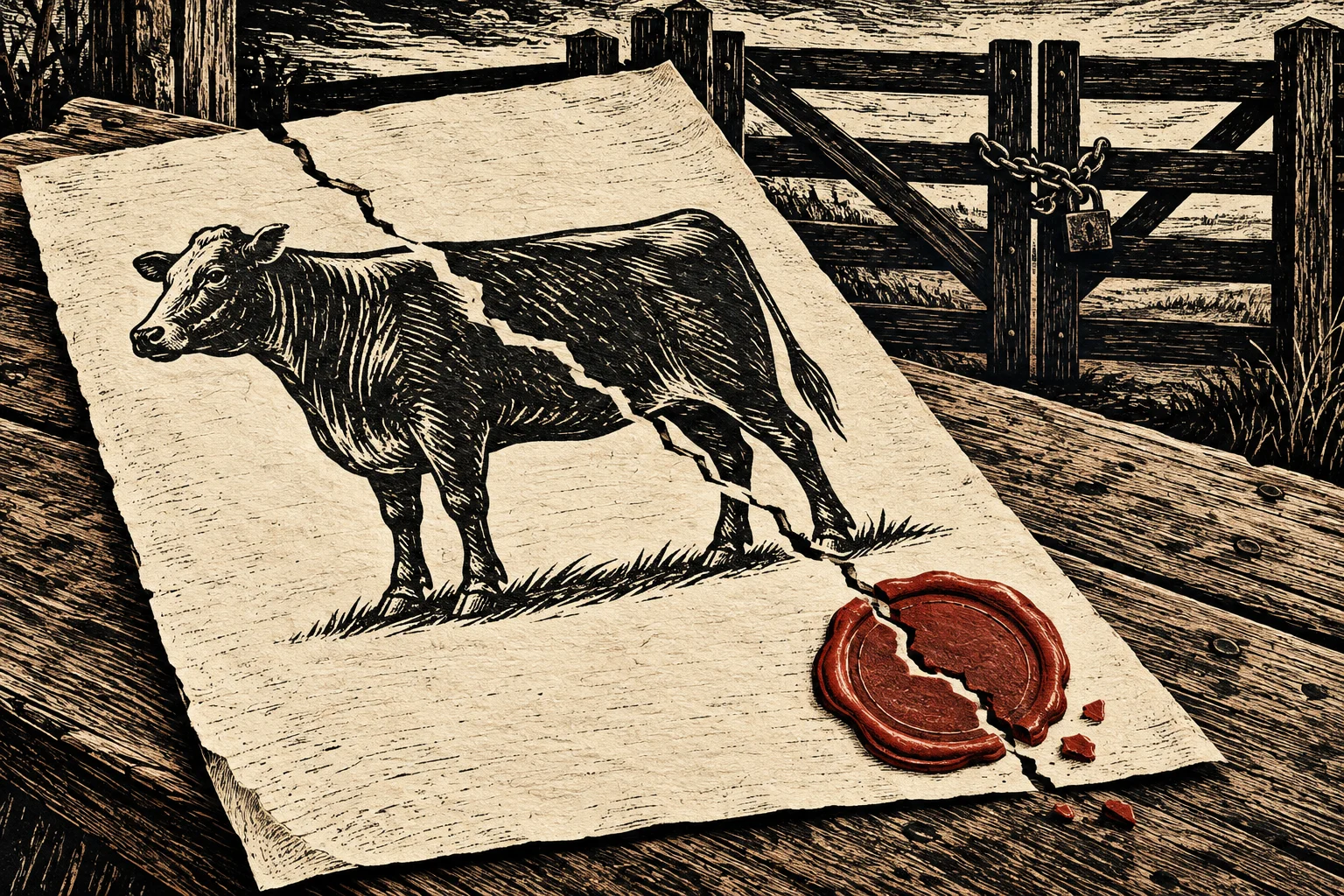
Foot-and-mouth disease is a highly contagious virus of cloven-hoofed animals: cattle, sheep, goats, pigs. It is very bad for trade, and it is worst for trade in places that are officially recognised as free of it. The EU does not certify Namibia as a whole. It certifies a zone, labelled “NA-1”, and the //Kharas farm was inside it. According to the EU’s statement, the World Organisation for Animal Health suspended the zone’s disease-free status with effect from September 22. The Commission then adopted Implementing Regulation (EU) 2026/2238, which amends the annexes listing where meat may come from. On October 5 the EU announced a temporary suspension of specified fresh meat from cattle, sheep and goats, certain products from other farmed and wild hoofed animals, and some processed products, “including biltong and jerky”.
It is not a blanket ban. Processed products that have had the EU’s prescribed risk-reduction treatment can still enter. Fresh meat that Namibian authorities certified before September 23 gets a 90-day transitional window, which runs to around December 22 if you count from that date, subject to EU border controls. Britain moved earlier: on September 25, Defra restricted commercial imports of fresh beef, sheep and goat meat from NA-1.
The awkward part of zoning is that the zone is the unit of trust. One infected farm in the far south makes the whole certified area suspect, including ranches hundreds of kilometres away whose cattle are fine. So the obvious fix is smaller zones. The Namibian has reported that the government plans to divide the FMD-free zone into smaller areas. This is the veterinary version of a bank splitting itself into subsidiaries so that one bad loan book can’t sink the whole group. The catch, I’d guess, is that each smaller zone still has to be believed by the people buying from it. Meanwhile, work started in October on a veterinary cordon fence along the Orange River, on the border with South Africa.
In Zambezi, a ministry notice on October 10 suspended the movement of cloven-hoofed animals and their raw products and cancelled permits already issued. It also halted auctions, informal markets and other gatherings of animals, and stopped slaughter at local abattoirs, informal markets and social events. Export abattoirs may keep slaughtering eligible cattle under the “commodity-based trade” system, as long as the animals meet quarantine requirements and pass traceability checks. That system certifies the meat by how it was handled rather than by where it came from. Emergency vaccination has begun there. So in Zambezi the export channel, which is the one with the most paperwork, is the one still open, and the village market is closed.
Who pays
The Meat Corporation of Namibia has sent about 400 production workers home on three weeks of special leave with full pay, according to The Namibian. The company has more than 700 staff in total, and the situation is due for review on October 23. Interim chief executive Albertus Aochamub called reports that the leave was unpaid “false and mischievous.” The paper also reported that Meatco had paid farmers N$31 million (about US$1.8 million) for cattle delivered to its Windhoek abattoir between August 29 and September 11. That money settles cattle that were already delivered. Nobody has said what the next delivery will be worth.
An export shock usually works like this: meat that can’t go abroad stays at home and gets cheaper there. Movement controls break that. The cattle can’t reach the cities, so prices fall for farmers and rise for city buyers at the same time. At Single Quarter, Windhoek’s largest open meat market, a vendor named Francisco said they “had to close the market for several days” just before the weekend and month-end, “when we need the money the most.” Another kapana vendor, speaking anonymously, said the meat is “much more expensive now” and that “if this continues for three months, it is going to be very bad for us.” At a supermarket in Okuryangava, manager Enrico De Azevedo, 23, said customers had panic-bought like they did with toilet paper during COVID-19: “Now, they can go and stack their meat next to their toilet paper.”
Marianne Pretorius of the Namibia Agricultural Union said the union supports the restrictions, which are “painful, but they are necessary.” Her warning is about the farm-gate side: “Even when domestic trade resumes, prices may remain under pressure until export markets reopen.” The union wants “market recovery to be treated with the same determination as disease control.” Gert Engelbrecht, a 40-year-old farmer from Aranos, said being able to move and sell livestock “is fundamental to keeping the farming operation going,” and that “ultimately, we need to regain our disease-free status.”
All this comes when the world’s biggest herds are already shrinking and beef buyers are short of supply. In a normal year that would be a good moment to be a certified exporter. A cow in Karasburg doesn’t know she lives in NA-1, and the virus doesn’t either. The European Union only goes by the label, and the label is what Namibia has to win back.