
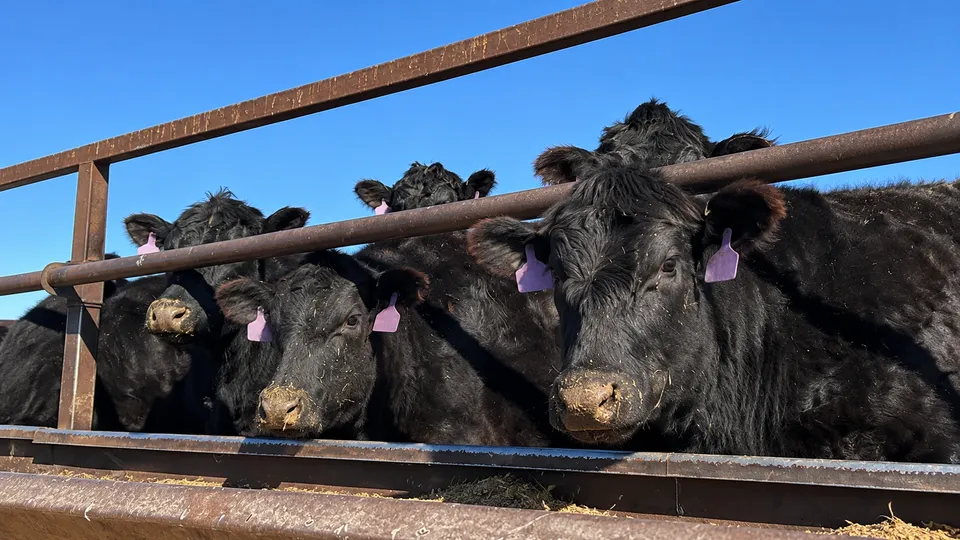
Consider the sheer的生物 — no. Consider the arithmetic. More than 90 percent of humanity eats meat in one form or another, and the three countries that supply more than half the world’s beef — Brazil, the United States, China — are watching their cattle herds shrink at the same time. Beef prices are soaring in China. American cattle farmers complain their operations are becoming unsustainable. Indian poultry rearers are slashing production targets because they cannot afford the feed. Call it the Great Thinning, and it is working its way toward a dinner table near you.
The chain is long and consumers see none of it: a cow takes years to raise before it becomes beef, chickens need feed tied to global grain and soya markets, and farmers need land, water and weather that cooperate. Disrupt any link, and the spiral begins.
The Numbers on the Hoof
Brazil’s total herd is estimated at 177.4 million cattle this year — down nearly 8 percent from 192.5 million in 2024, according to a March estimate by the U.S. Department of Agriculture. The USDA counted 86.2 million cattle and calves on American farms on January 1, 2026 — a historic low, and the smallest U.S. herd since 1951, according to USDA data reported by NPR. America’s beef cows — the females that produce the next crop of calves — number 27.6 million, down 1 percent, and the 2025 calf crop fell 2 percent. In China, the USDA estimated 94 million head in January 2026, a 14 percent plunge from 105 million in January 2024.
Production follows the herds downward in all three. The USDA projects a 2 percent decline in Brazil’s beef output and a 5 percent fall in exports; U.S. production in 2026 looks 4 percent below last year; China’s total beef supply is projected 12 percent lower than 2024 — grim math for the world’s largest beef consumer and importer, where prices have consequently gone through the roof.
The causes vary by flag. Brazil counts China and the European Union among its biggest beef customers, and both have imposed import restrictions that have disincentivised Brazilian producers, according to an analysis by Augusto Neto at S&P Global. On top of that, Brazil is in a “cattle reversion cycle” — rearers holding back slaughter to preserve their females and rebuild the herd, per the USDA. In the United States, drought has scorched 60 percent of cattle-rearing country, according to S&P Global’s Sampad Nandy, shrinking grazing land and driving feed costs up. And this week, three organisations representing breeders in Texas, Oklahoma and Kansas issued a joint statement arguing that Immigration and Customs Enforcement raids are disrupting their already strained operations — an industry that depends heavily on immigrant workers.
If prices are high, why not just raise more beef? Because of biology, Kenneth Foster, professor of agricultural economics at Purdue University, told Al Jazeera. Cattle production runs on biological supply cycles: it can take a couple of years from a market signal to new animals actually entering the supply. The fastest fix — keeping females for breeding instead of selling them — is exactly the bind Brazil is in: sell the animal today at a fat price, or carry the costs and risks of feeding her while you wait for calves that come later. Demand stays strong, supply stays tight, even at record prices. The USDA expects the U.S. herd正常 to rebuild eventually, but gradually. Sometimes the binding constraint is not technology, land or money. It is time.
Europe Shrugs, and Orders Chicken
Europe offers the adaptation case. The EU produced about 42.7 million tonnes of meat in 2025, but production is projected to fall about 3 percent between 2025 and 2035 — beef down 10 percent, pork down 7 percent — while poultry rises 5 percent. Consumption follows: beef and pigmeat decline through 2035, poultry up 9 percent. A chicken reaches market weight in weeks, not years, so the OECD-FAO Agricultural Outlook expects poultry to be the fastest-growing major meat category on Earth over the next decade.
But poultry has its own trapdoor, and India fell through it this year. In June, a large section of the country’s poultry industry announced plans to cut production by 25 percent — a decision from the All India Poultry Breeders’ Association — after soya meal prices jumped more than 40 percent in a month, colliding with a seasonal demand dip. Producers began culling parent breeder stocks, the very birds that produce future generations. Reuters reported in May that Indian soya meal had risen 41 percent in a month to a four-year high of 66,000 rupees ($687.5) per tonne; India then cancelled 25,000 tonnes of soya meal export contracts and started turning to soya bean imports from African countries.
There is the lesson in miniature: a price shock in one corner of the agricultural system — one protein meal, one monsoon, one raid, one drought — does not stay in its corner. It moves through feed, through breeder barns, through export contracts, until it arrives as a number on a market stall a hemisphere away. The changing climate, rising prices, shifting appetites and thicker trade walls are doing the rest of the rearranging. What the world eats next is being decided in pastures most of us will never see.