
Lake Dojran is shared by two states. The border between North Macedonia and Greece runs through its water, and near the southern shore, close to the crossing, lies a place called Mrdaja. Nobody went looking for it. According to The History Blog, the settlement turned up by accident in 2012, during construction work to extend a beach under military control, and heavy machinery destroyed much of it before anyone understood what was there. Archaeologists dug every year until 2014. Then the lake rose and covered it again.
That is often how the past comes back to us. Nobody sends for it. A bulldozer finds it, and the bulldozer belongs to somebody with other plans.
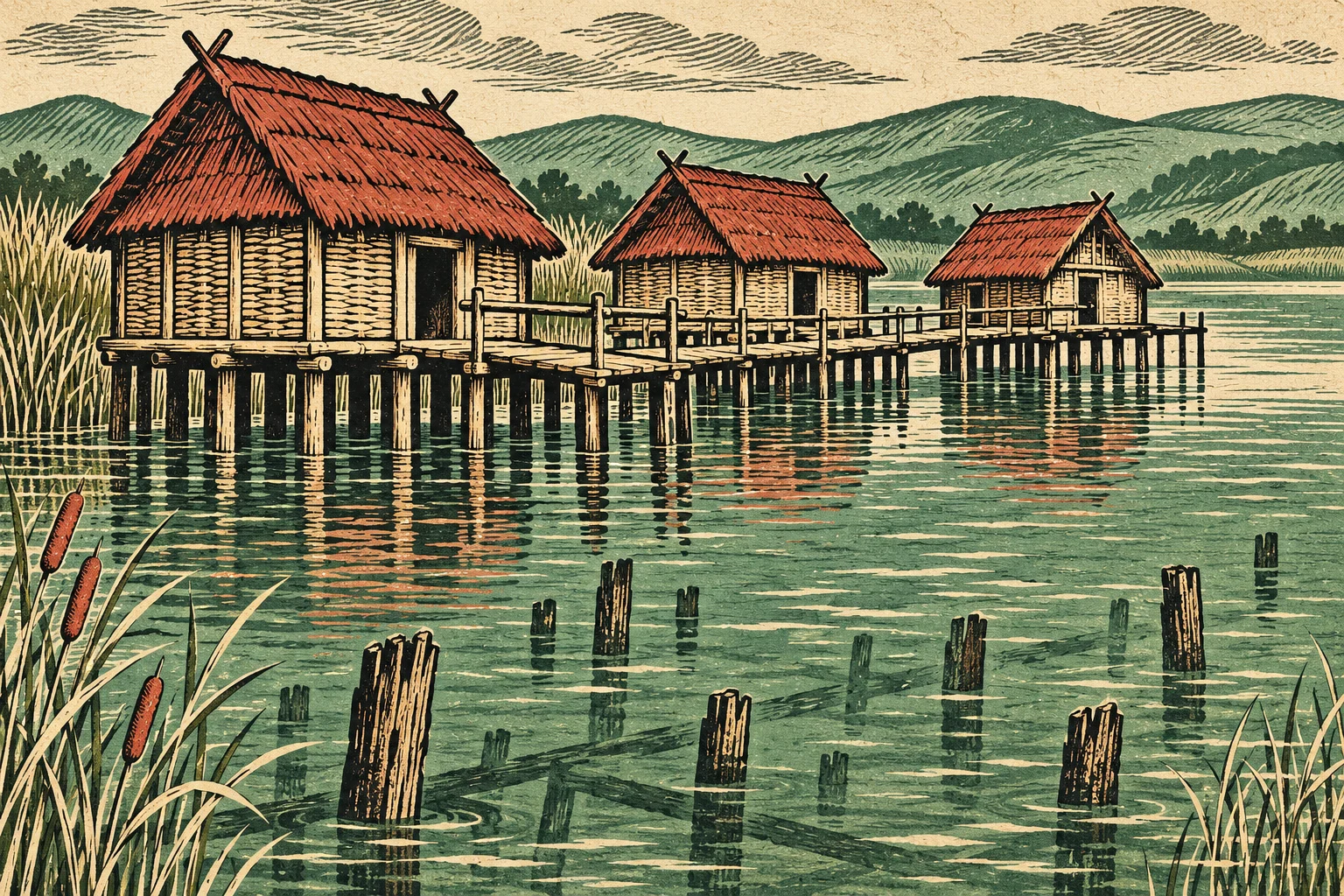
Three houses on the water
In the 2026 season a small team went back. As Leman Altuntaş reports for Arkeonews, in less than two months they examined about 350 square metres of the shore and found the remains of at least three prehistoric houses. The houses stood on wooden platforms raised above the lakeshore, joined to one another by wooden bridges. The excavation is run by the NU Institute and Museum – Strumica under the archaeologist and curator Zoran Rujak, with support from the Ministry of Culture and Tourism.
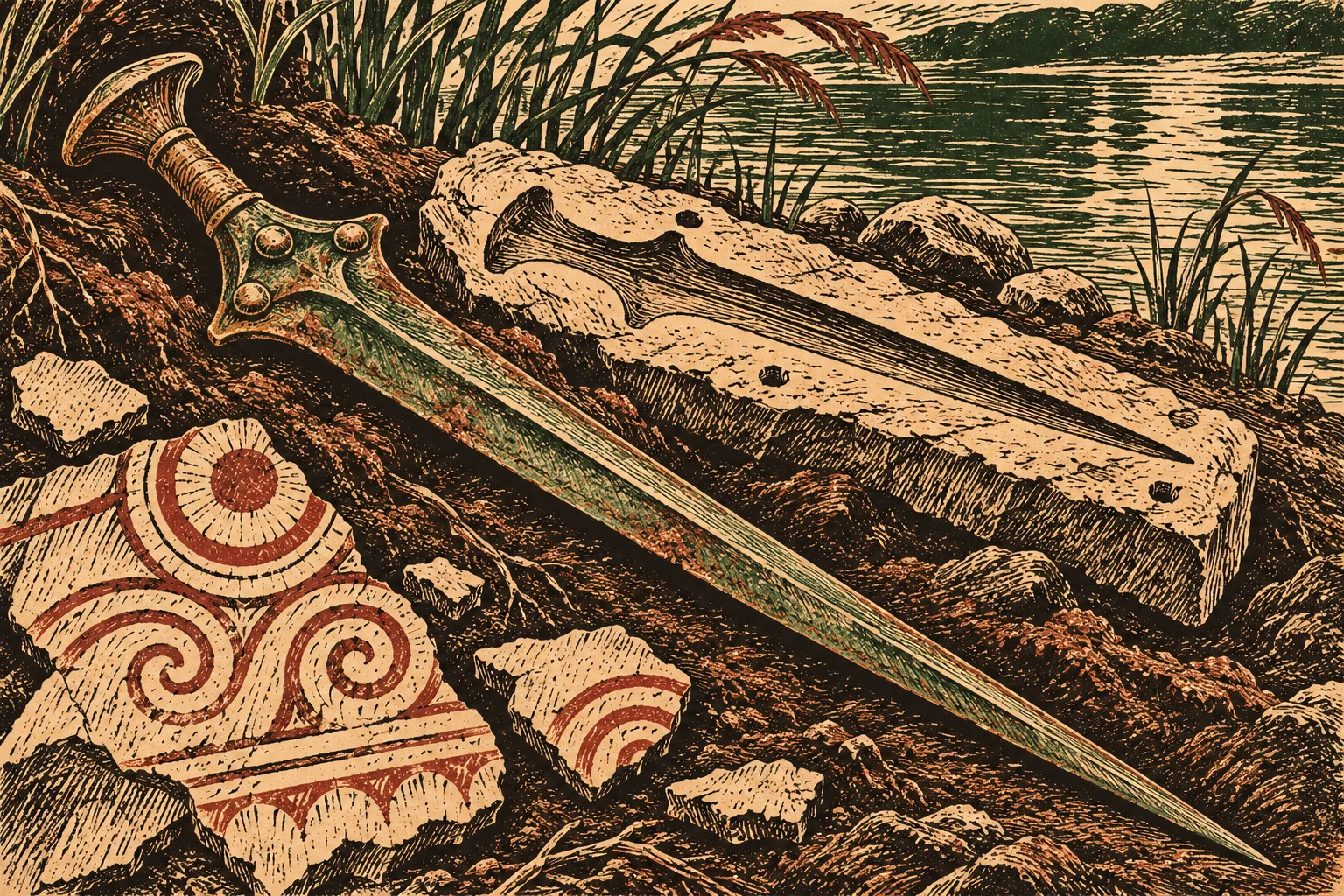
The team took one of the houses to be a metalworker’s because of what was crowded inside it and around it: bronze tools, objects from metal production, and molds for casting double-edged bronze axes. The molds matter most. They show that the people of Mrdaja were not simply waiting for bronze to arrive from somewhere else. They poured it themselves, and casting is difficult work.
Rujak thinks the man who lived there may have held a privileged place in the community because of his skill. The house seems to say the same. Surviving fragments of wall plaster show a facade decorated with embossed circles ringed by interlocking rings, and above them a frieze of spirals full of movement. The team also found traces of cinnabar, a red mineral probably brought from the Alšar mine deposit, which may have been used to paint the facade. If that reading is confirmed, this was a workshop built to be seen, a building meant to show off.
One reflection, offered only as that: in every age, whoever turns raw stone into a blade will sooner or later want a house that says so.
The sword
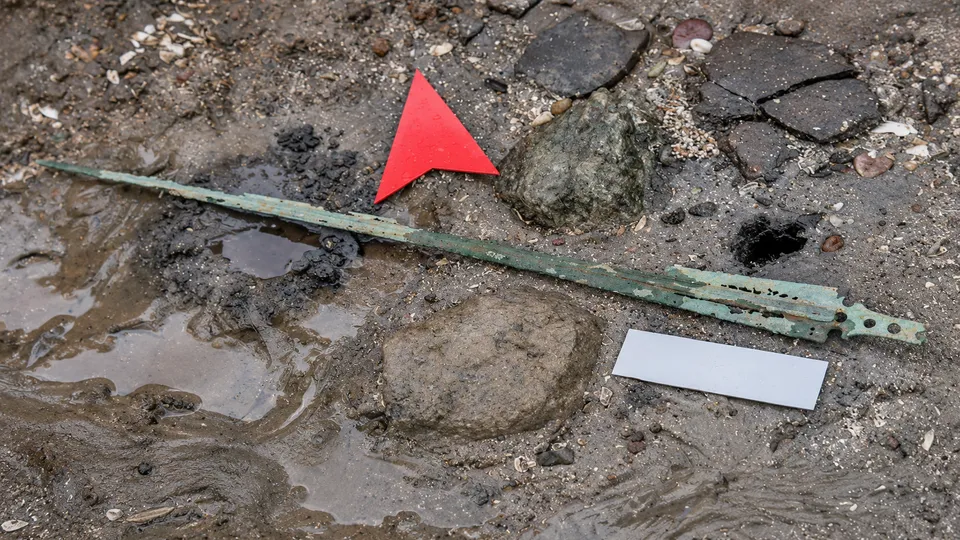
Weapons lay scattered around this house. The most important is a long, thin bronze sword of Mycenaean type, made for thrusting and roughly 3,500 years old. The Strumica outlet Strumica Denes reported that, as far as is currently known, it is regarded as the oldest sword ever found in Macedonia.
Near it lay a battle axe with two outer ribs around the socket, like examples known from the Carpathian region, a Kilindir-type double-edged bronze axe and a leaf-shaped bronze spearhead. Mycenaean blades and Carpathian axes ended up together on one small lakeshore. These are the shapes of the Aegean world to the south and of the lands to the north, and the people of Mrdaja traded in them, learned from them and copied them.
Rujak says the positions of the weapons, and their types, point to a violent event that may have happened in the middle of the second millennium BCE. The archaeologists have not confirmed it. Weapons lying near a house are a question about what happened. They are not yet an answer.
Sun, shells and net sinkers
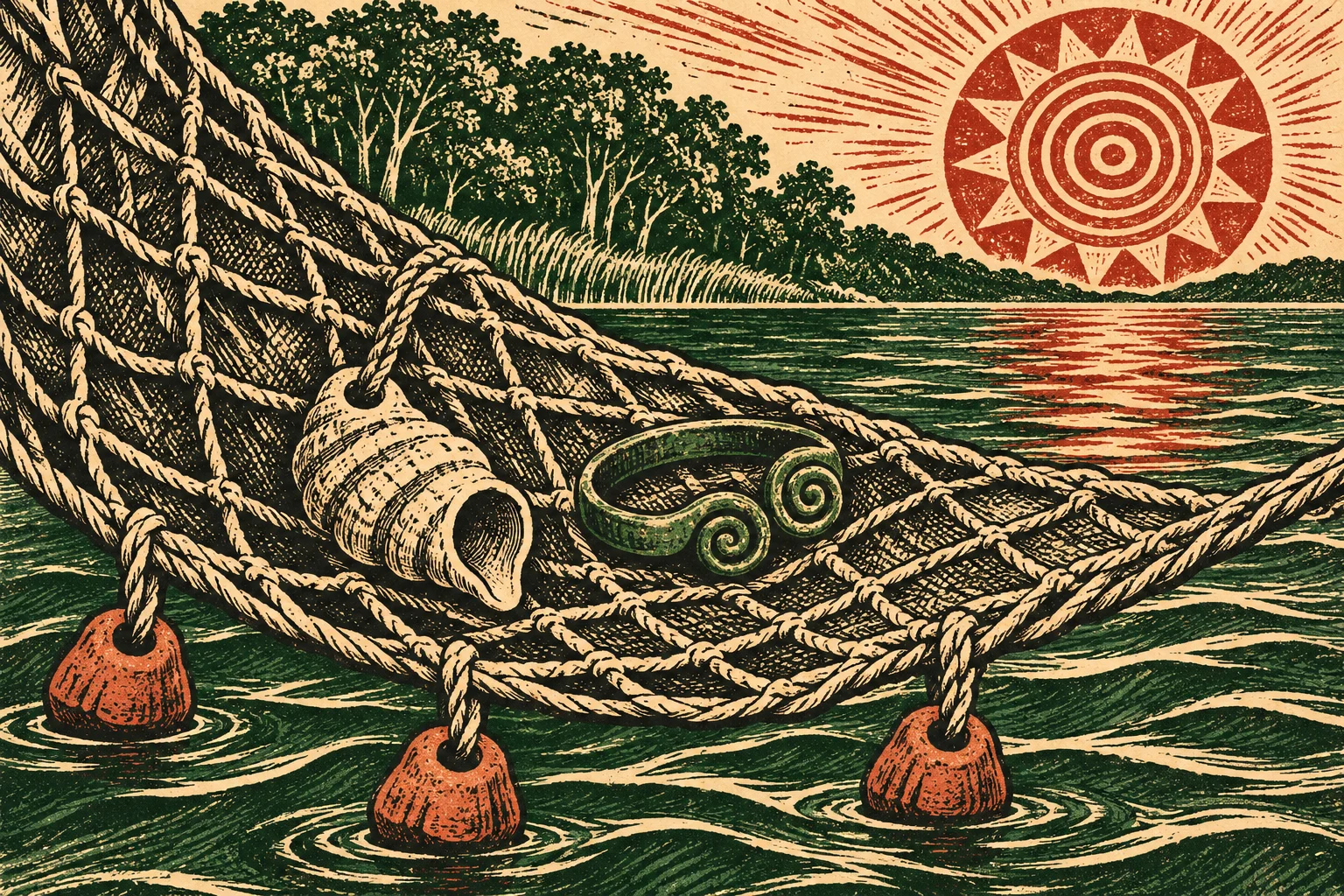
Ordinary life did not stop for the swords. Sun motifs are prominent in the decoration of the pottery and probably had a religious meaning. The team also recovered ritual objects identified as “consecration horns”, an amulet made from a sea-snail shell, rings of spiral bronze wire, ceramic net sinkers probably used for fishing, and small lead weights. These belonged to people who fished the lake, wore jewellery, weighed what they traded and looked to the sun.
Rujak argues that the community lived by more than fishing and daily chores. It had advanced metalworking, and its cultural ties ran from the Aegean to the Carpathians.
How it ended
Life at Mrdaja is believed to have gone on for almost the whole of the second millennium BCE, a long stretch in which objects, techniques and traditions moved back and forth between the Balkans and the Aegean. Earlier scholarship knew the site more narrowly: a 2018 study of its pottery described it as the only pile settlement then known on the shores of the lake.
Rujak suggests the settlement may have come to a violent end around the 12th century BCE, possibly tied to the wider instability that spread through the region at the close of the Late Bronze Age. In those same centuries, further south, Mycenaean towns were burning and raising walls. He is careful on one point, though. The possible earlier fight around the metalworker’s house should not be confused with the final abandonment. If there was violence, Mrdaja may have known it twice, centuries apart.
Now the team wants to bring the visitors in. It is working on an open-air museum over the water at Stari Dojran to show the architecture of the lake houses and the objects found in them, and the basic design for this “Museum on Water” is being drawn up. Local researchers had already proposed, in a paper on the site’s potential for tourism, that if digging continued, a pile dwelling could be rebuilt on the shore.
So the houses on stilts may rise above Lake Dojran once more, on the same shore where the army’s machines found them.