
National Geographic’s photographers took more than a million pictures in 2026. The magazine has chosen 25 of them as its Pictures of the Year, as Talia Lakritz reported for Business Insider, and all 25 run in the December issue. The collection was announced on November 17. Run the arithmetic and it comes to one frame in every 40,000. Odds like that make you suspect that being a National Geographic photographer is mostly an exercise in not getting the picture, and the photos themselves bear that out.
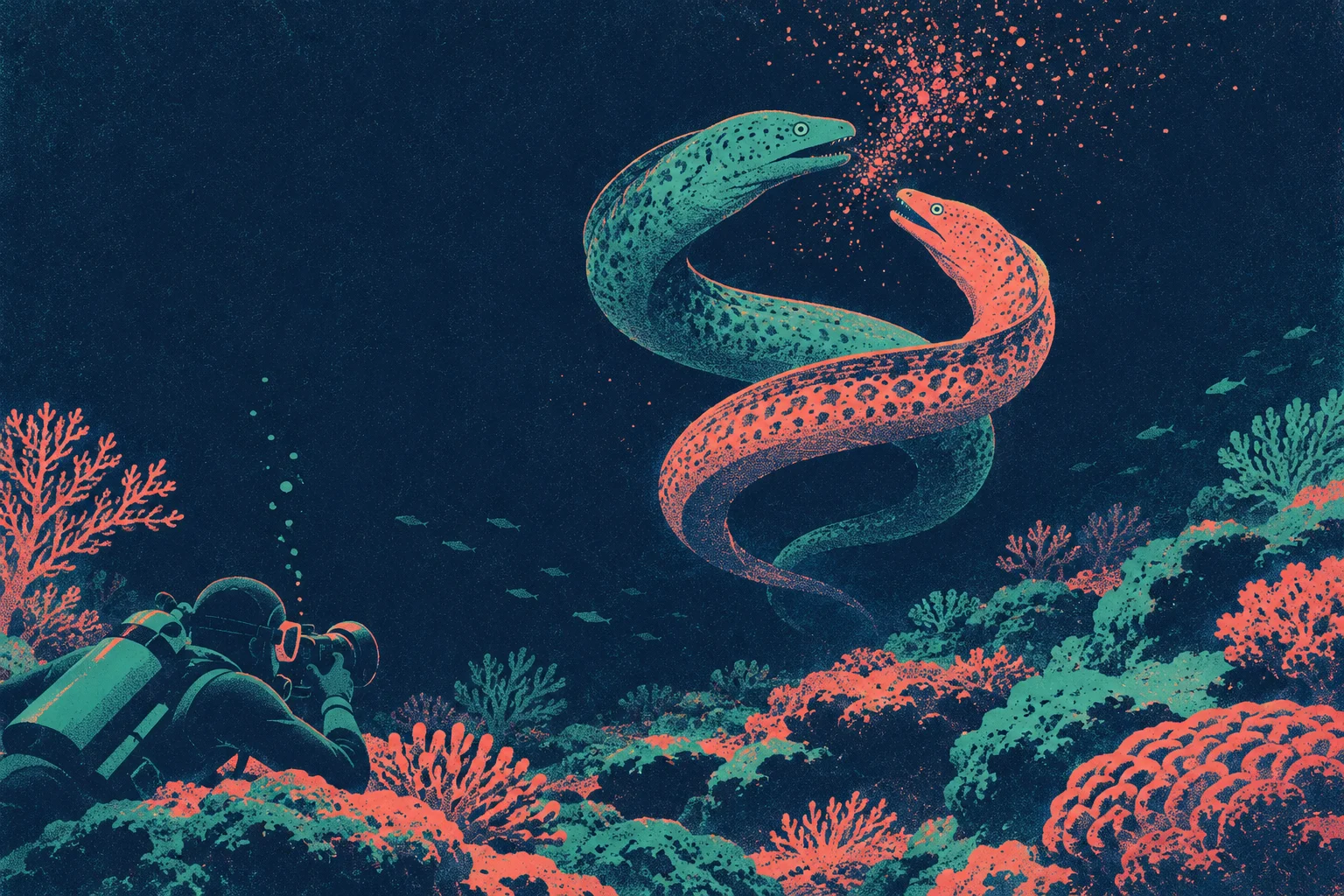
Start with the cover. Tony Wu photographed a pair of Abbott’s moray eels, Gymnothorax eurostus, spawning in Kagoshima Prefecture in Japan. In the frame the male is letting go of the female’s jaw while both release gametes into the water, three-tenths of a second after they left the cover of the coral. They are the first images ever taken of moray eels reproducing in the wild. The reason nobody had photographed it before is the timing: spawning takes less than two seconds, and Wu and his team needed hundreds of hours to catch it.
Here is a hypothetical, purely to make the arithmetic concrete. Suppose “hundreds of hours” meant 200. That is 720,000 seconds of waiting for something that lasts under two, a ratio of roughly 360,000 to one. It is a very inefficient use of a photographer if you measure output per hour. As a product, though, it is excellent, because nobody can copy it cheaply.
That is close to the pitch National Geographic is making. The magazine’s editor-in-chief, Nathan Lump, said the images “remind us how much there is still to discover about our planet, and that the deeply human work of documenting what’s real is more valuable than ever in a time when fakes are everywhere.” Put plainly: a picture of spawning eels is now something anyone can make in seconds, so the value of a real one sits in the hours behind it and in a trustworthy institution vouching that those hours happened. What the magazine sells is provenance. Provenance has limits, because a genuine photo can still come with the wrong story attached, as rews found when an award-winning elephant photo turned out not to show a mother grieving her own calf. Still, if you have to bet on authenticity, a team that spent hundreds of hours with eels is a decent bet.
An old shark, and a bribe
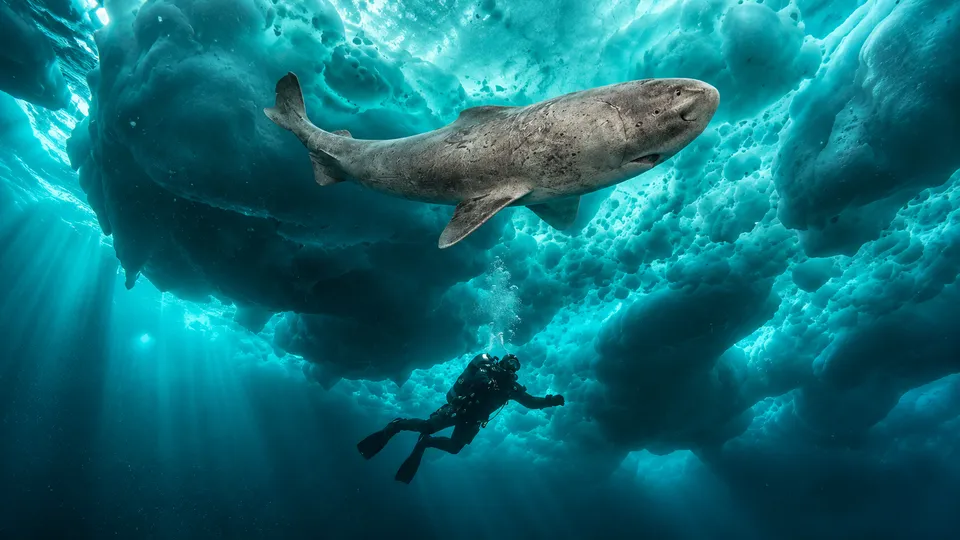
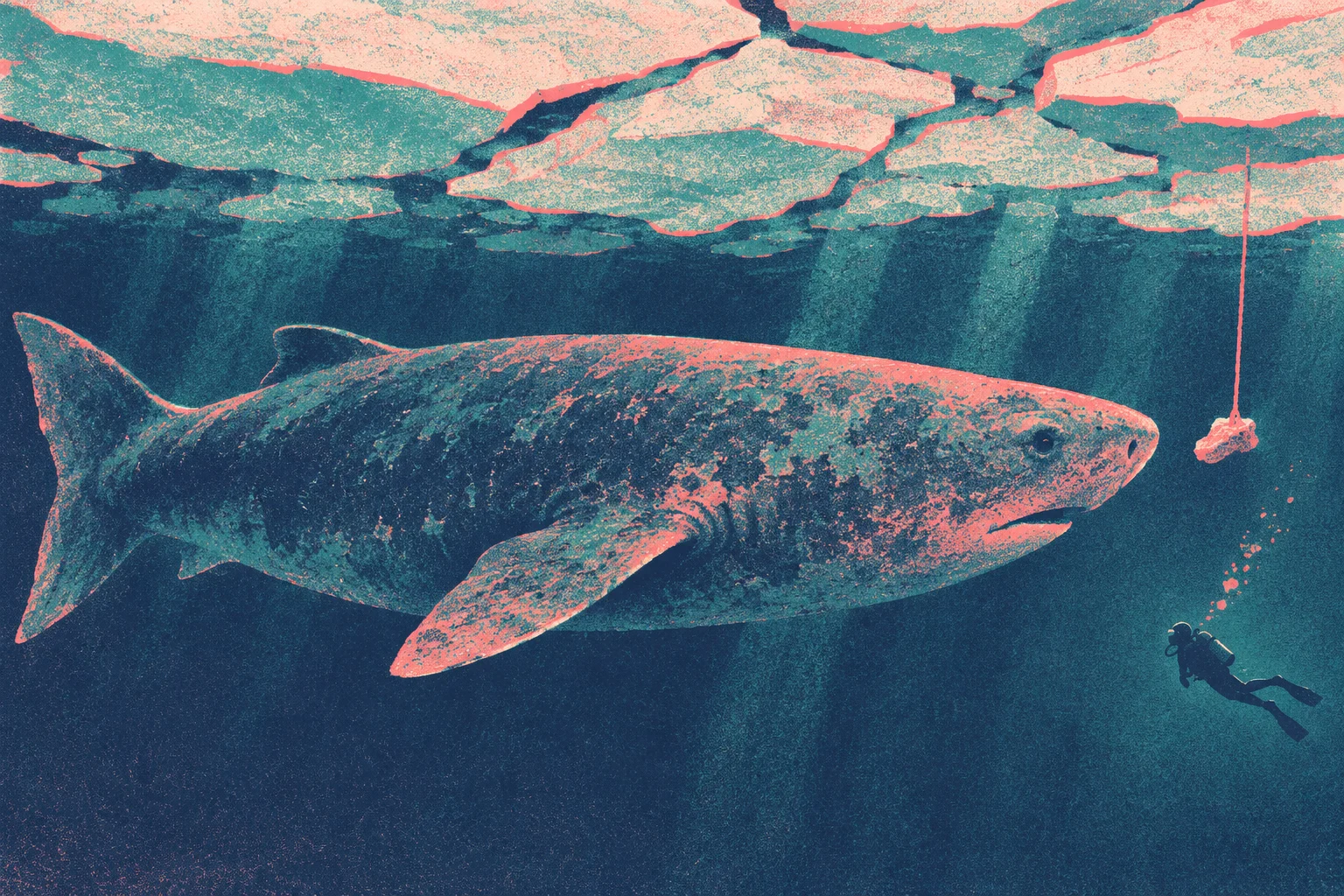
Kiliii Yüyan photographed a Greenland shark swimming near the diver Philipp Oppermann beneath sea ice more than 3 feet thick off East Greenland. Greenland sharks are the oldest vertebrates on Earth and can live as long as 500 years. Yüyan estimated that this one was born around the time of the American Civil War, which would make it about 160 years old, or roughly a third of the way through a maximum lifespan. According to DPReview, the picture was taken near Kulusuk on March 17, 2026, with visibility above 50 metres (165 feet). The shark came up from deep water at night because it was drawn by bait made of frozen ringed seal. So even the oldest vertebrate on the planet will show up for a photo shoot if you pay it, and it wants payment in seal.
Drought as a lighting assistant
Climate runs through the collection. Some of the time it is the subject, and some of the time it is quietly working as crew. Ralph Pace photographed a pygmy blue whale feeding on krill in New Zealand’s South Taranaki Bight while diving with researchers who study how warming waters are affecting krill and whales. Jason Gulley got an unusually clear view of a Gulf sturgeon in Florida’s Suwannee River during spawning season, and he got it because a long drought had left the river less murky than usual. The drought is what made the picture possible.
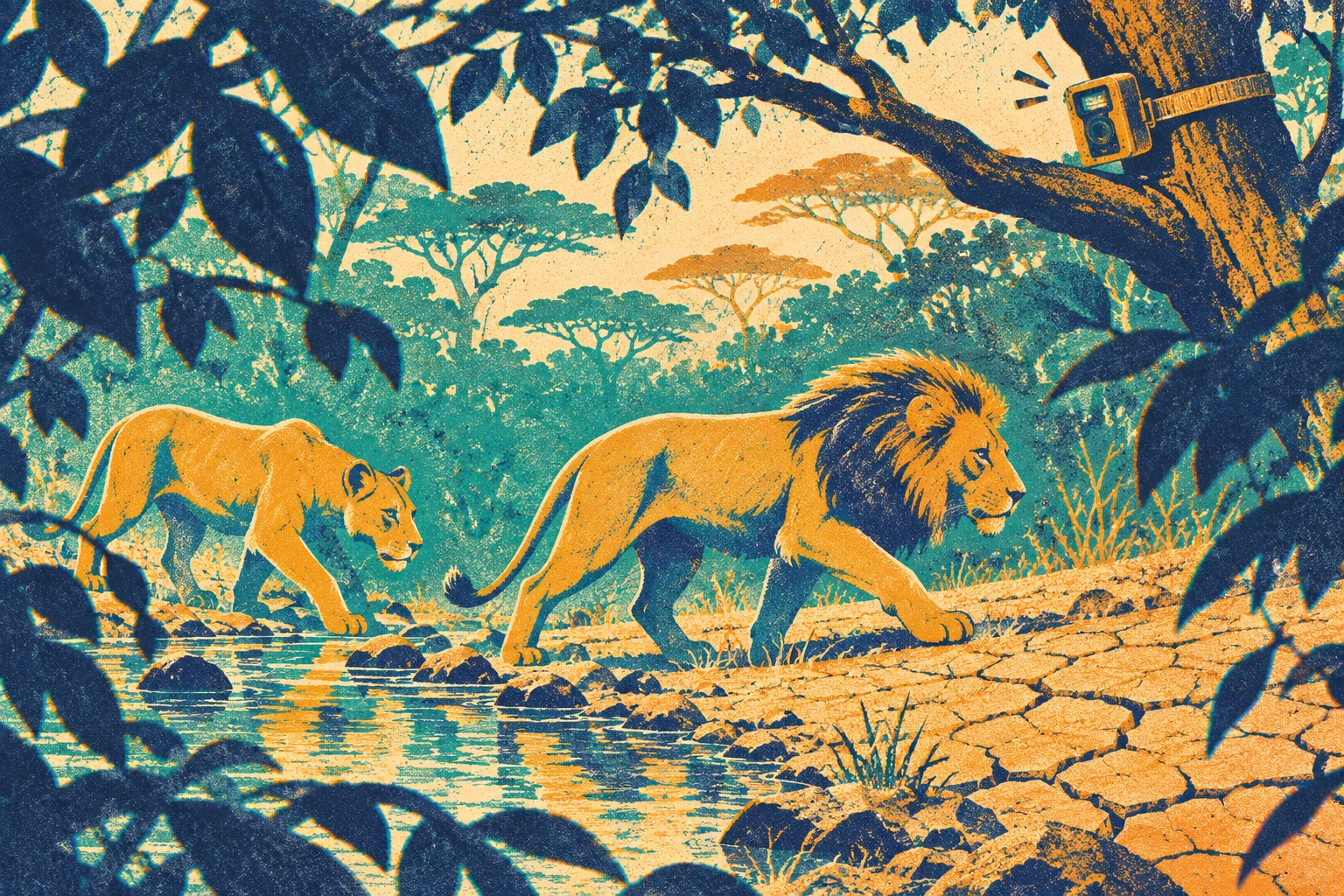
Will Burrard-Lucas’s photo shows two lions crossing a riverbank in the woods of Kenya’s Masai Mara National Reserve. Lions normally live in grassland rather than deep woods, and these two may have been pushed there by deforestation and drought. Burrard-Lucas worked with rangers to hide a camera trap high up on the bank. The crossing was supposed to be secluded and turned out to be a busy wildlife route, which is a very common outcome when you go looking for a secluded spot.
The rest of the wildlife selections had their own costs. Jaime Rojo spent 10 days getting a male resplendent quetzal in flight in Chiapas, Mexico. The bird takes its name from the serpent god Quetzalcoatl because of its long green tail. Ten days sounds cheap next to the eels. In Bongaigaon, Assam, India, Prakash Matada photographed a troop of endangered Gee’s golden langurs using a fisheye lens on a telescoping pole. The monkeys appeared curious about their own reflections in the lens. DPReview says this troop has an unusually close bond with humans, which helps explain why they treated a lens on a stick as a mirror and not as a threat.
The amateur
One of the photos came from outside the staff. Gabriel Jensen, a self-taught amateur underwater photographer, won National Geographic’s Your Shot Photo of the Year for a picture of a male banded jawfish aerating eggs near Palm Beach, Florida. Once the females spawn, male jawfish keep the eggs in their mouths and spit them out from time to time so oxygenated water circulates around them until they hatch. Jensen spent months trying to catch the fish with its mouth wide open, then entered the result in the #NatGeoYourShot challenge on Instagram.
“It’s delightful, and shows how a species cares for their young, something humans can all relate to,” said Anne Farrar, National Geographic’s senior managing photo editor. “What a cool glimpse into a little-seen world.”
Most human parents don’t carry their children around in their mouths. They will probably still recognise the job description: months of work, very little sleep, and the main reward is that eventually somebody takes a picture.