
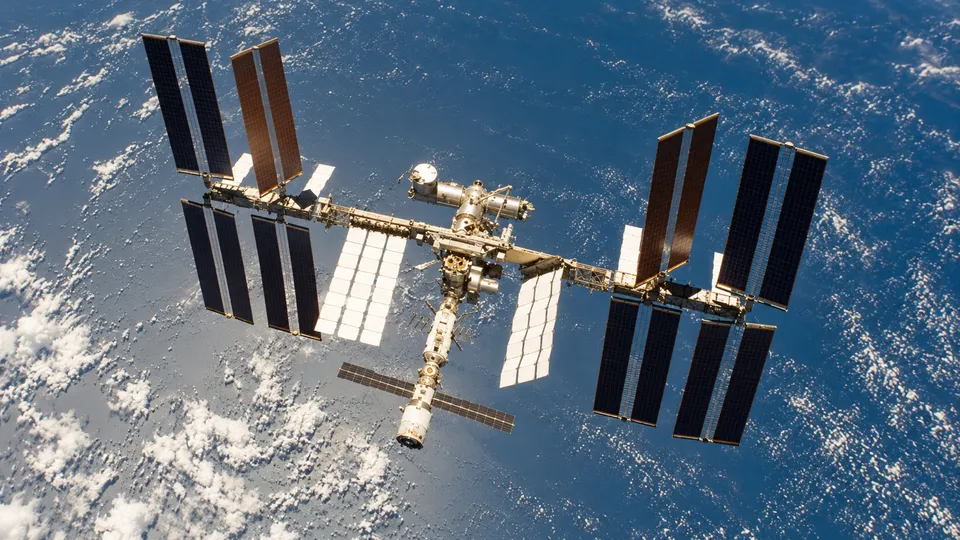
There is a house in orbit with a date written on its door. The International Space Station is to be brought down in 2030 or 2032, and the agency that has kept people living there does not mean to let the lights go out when it falls. On Friday, October 9, as Eric Berger reported for Ars Technica, NASA asked American companies to build what comes after it: private space stations where astronauts could live in low Earth orbit from as early as 2030.
A letter and 360 pages
The request for proposals runs to 360 pages. Its cover letter states the purpose in one plain sentence: “This will ensure NASA has a sustained human presence in LEO for crew members to perform science and exploration.” Companies that have spent years drawing stations without knowing exactly what their main customer wanted now have a document to read. Responses are due on December 8. NASA says it will choose “two or more” contractors for this phase and, according to Ars, intends to decide in April; the agency’s own release speaks of awards in spring 2027 and describes firm-fixed-price, multi-award, indefinite-delivery/indefinite-quantity contracts, with a later competitive task order covering final design, testing, certification and services.
The administrator, Jared Isaacman, chose words meant to sound like a vow.
We’ve made it clear that NASA will never give up its presence in low Earth orbit.
He went on: NASA would still need somewhere to do research, develop technology, train crews and prepare for the Moon and Mars, and commercial stations “may provide that capability while creating new opportunities for American industry and allowing NASA to concentrate more of our resources on the near-impossible missions ahead.” In the release he added a sentence every bidder will read twice: “The opportunity is significant, but the economics ultimately have to work.” And then: “We want to see credible plans, strong technical execution, and companies prepared to invest.”
Notice the “may”. A promise of permanence, carried on a conditional verb. This, one might reflect, is how a state talks when it hands a duty to the market: the presence is forever, the means go out to tender.
The ladder of money
The first rung is modest. Each Phase 1 winner is guaranteed at least $100 million. The rungs above it are worth billions. Phase 2 of the competition, which the bureaucracy calls Commercial LEO Destinations, begins next year and would pay for developing and certifying the stations; Phase 3 would buy at least four missions for NASA astronauts.
The road here ran through the usual stations of procurement. In March, two requests for information, one on destinations and one on transportation. In July, a draft request, an industry day, private meetings with companies. Not all of the replies were warm: the Space Frontier Foundation, in a letter on the draft, objected to how much “insight” authority NASA meant to keep over the providers. The cover letter now says the agency took in feedback from industry and government alike.
The question of the ride
A station with no way to reach it is a monument. And here the plan had a hole. In earlier talks NASA had suggested it might leave transportation to the contractors, asking them to sell the whole journey, launch to docking, as one service. But the only working American vehicle that carries astronauts belongs to SpaceX, and SpaceX has said it wants to retire Crew Dragon as soon as it can, almost certainly when the ISS is deorbited. It has not offered seats to private station operators. Two weeks ago NASA put another $359 million into Boeing’s effort to certify Starliner for crewed flights, leaning on the company it once doubted and on a capsule whose return to service is still years away.
The new documents go further. Bidders need not show a signed contract with Boeing or any other carrier, not even a letter of intent. NASA offers to “furnish” transportation for the first four NASA service missions to the private stations, which Berger reads as the agency most likely brokering deals between the station companies and Boeing. NASA’s public release still says providers must offer complete destination and transportation services; it is in the fine print that the agency has quietly picked up part of the load.
For the first time, too, the price is written down. For 2030, NASA estimates a four-seat crew flight at $325 million and a cargo flight at $300 million. Divide the first figure and a single seat comes to a little more than $81 million.
So the station is to be private. The ride, at first, is to be arranged by the state. And the state is counting on a capsule that has yet to carry a crew into service.
The suitors
Axiom Space, Voyager Space and Vast Space are all but certain to bid. Blue Origin won an earlier round of NASA funding, though there are questions about how committed it remains. SpaceX looks unlikely to compete, at least for now. On Friday afternoon the companies were still working through the pages, but they had something to say.
“The release of the RFP is an important milestone,” said Marshall Smith, chief executive of Voyager’s Starlab station. “We appreciate that NASA has incorporated both industry and government feedback. We believe Starlab has the strongest business plan and technical solution to be America’s next space station and we look forward to competing.”
A spokesperson for Axiom Space said its team was “actively reviewing the RFP now and is energized for the next steps in the process,” and promised a proposal that would “demonstrate that Axiom Space is the clear choice to meet NASA’s objectives in low-Earth orbit.”
Vast said it looked forward to competing “for the opportunity to build the commercial successor to the ISS.” Its spokesperson added: “We’re in final integration with Haven-1 and ready to keep building towards a multi-module station capable of supporting a continuous human presence.”