
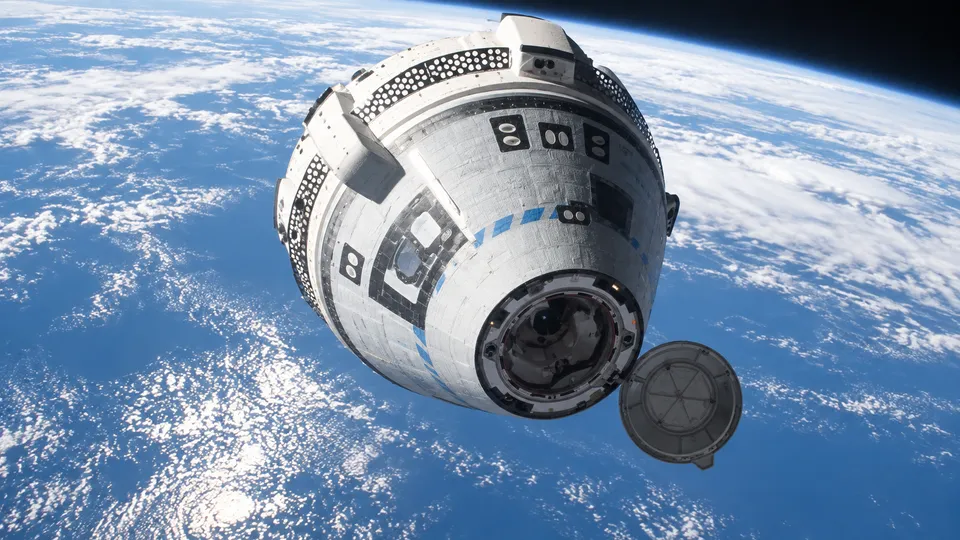
NASA keeps a ledger of its worst days under a dry administrative label: Type A mishap, defined as an incident involving more than $2 million in damage, the loss of control or destruction of a vehicle, or a loss of life. The list includes Columbia and Challenger. According to CNN, Jared Isaacman — who took over as NASA administrator in December — recently moved Boeing’s botched 2024 Starliner test flight onto it.
On Monday, in its first substantial update on the program in months, NASA laid out how Starliner climbs off that ledger. The capsule’s next flight will be uncrewed and will happen no earlier than December, Isaacman said; if it goes well, the earliest Starliner carries astronauts again is mid-2028. “Before crewed operations resume,” he said, some of the spacecraft’s thrusters require “a design modification.”
A new rocket and more money
Starliner also needs a new ride. The Atlas rockets that have carried it are retiring, and NASA said it is working with Boeing and United Launch Alliance to certify ULA’s new Vulcan Centaur for crewed missions. The agency expects to pay an additional $359 million for Starliner’s upgrades and the Vulcan certification. Dana Weigel, manager of NASA’s Low Earth Orbit Program, added that the agency is reopening the possibility of requiring two more Boeing flights under its current contract.
The arithmetic of the space station
The urgency comes from the calendar. The International Space Station is slated for decommissioning in the early 2030s and needs a rotating crew until then. Today, SpaceX’s Crew Dragon is the only operational American vehicle that can carry astronauts there — NASA, near the end of its contract, bought three more Dragon missions for $946 million earlier this month. But SpaceX has been open about sunsetting Dragon as it concentrates on Starship. “Given our extensive history with Starliner and the taxpayer investment already made,” Isaacman said, “we believe it represents the fastest path to preserving reliable crewed access to low Earth orbit.” SpaceX president Gwynne Shotwell acknowledged in 2024 that she expects Dragon to cease operations sometime in the 2030s; whether SpaceX would retire it while NASA still needs the rides is unclear. Asked about Boeing recently at the All-In Summit, per CNN, she was blunt: “Boeing has been paid — I think probably more than we have been paid — to develop their human capsule.” “We’re just going to let them have some business.”
The figures behind that remark: SpaceX has been awarded $5.92 billion for a demonstration mission and 17 operational flights, while Boeing has received $4.82 billion with a mandatory order for just four — before Monday’s extra $359 million. NASA had, in effect, already made Starliner its contingency plan of record.
The flight that got them here
Starliner has been in development for more than a decade, dogged by thruster problems that surfaced on uncrewed tests and then, in June 2024, on its first crewed flight, carrying astronauts Suni Williams and Butch Wilmore. They were meant to spend about a week docked at the station. Instead the capsule developed helium leaks and thruster outages en route; NASA judged it unsafe for their return, folded the two into the next station rotation, and brought them home on a SpaceX capsule after more than nine months in orbit. At the time, NASA and Boeing insisted the astronauts’ lives were never in danger. The Type A classification says something blunter.
Isaacman announced that NASA astronaut Woody Hoburg will command the next crewed Starliner mission. Hoburg called Williams and Wilmore “American heroes” who flew with “the utmost of professionalism, competence, and humility,” and said what keeps him up at night is not the hardware. “It’s the underlying pattern,” he said. “It was inadequate systems engineering and integration, creating gaps in hardware qualification. In the case of the helium leaks and the crew module (thruster) failures, the unqualified environment was actually on the ground.”
That is, the thrusters were damaged before Starliner ever left the pad, and the failure that belonged in a ledger was made in a factory. The capsule has now been assigned a decade of work, a new rocket, another $359 million and a commander — to prove it can do the one-week trip it was built for.