
Sergey Lavrov landed in Tehran on Monday afternoon to discuss ending a war that Russia did not start and cannot stop on its own. It was the Russian foreign minister’s first visit to Iran since February 2025 — twenty months, and one war with the United States and Israel, later. As Al Jazeera reported, Lavrov met his Iranian counterpart, Foreign Minister Abbas Araghchi; Araghchi said the talks focused on regional developments, including what Tehran calls the US-Israeli war on Iran, and on efforts to end it.
The war in question ran 40 days, according to Iranwire, which described the visit as an attempt to mediate between Tehran and Washington and to prevent a resumption of fighting. Iranwire also notes the constraint on the mediator: Moscow remains committed to its own war of attrition in Ukraine, now past the four-year mark, which limits what attention and hardware it can spend in the Gulf.
The timing of the visit was not subtle. Lavrov arrived in Tehran directly from Manama, Bahrain, where on Sunday, October 18, he had sat through the 9th Joint Ministerial Meeting of the Russia-GCC Strategic Dialogue. As The National reported, Gulf Cooperation Council states have been pressing Moscow to help halt Iranian attacks and to get the Strait of Hormuz reopened — the same request that opens the Al Jazeera account. The Gulf states, in other words, delivered their ask face-to-face roughly 24 hours before Lavrov walked into his meeting with Araghchi.
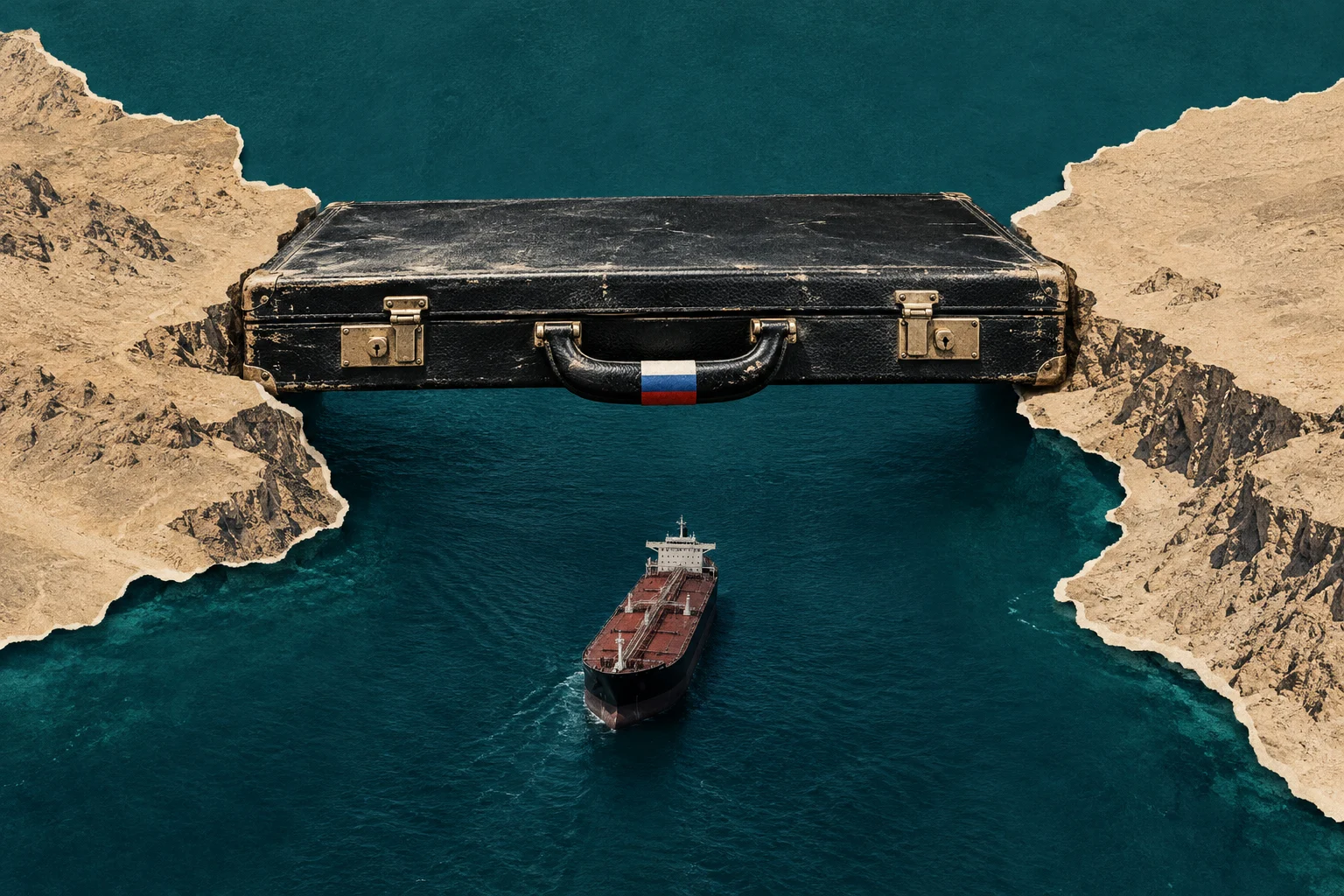
Tehran’s public position going in, per The New Arab, was a call to return to pre-war conditions in Hormuz, while Qatar and Pakistan push for a breakthrough to avert a second round of US-Iran fighting. What a return to pre-war conditions means in practice is the contested part: Iran has previously priced reopening the strait at $12 billion and conditions Washington has not accepted, and Iranian mines have kept hitting tankers on routes Tehran calls unauthorised. The National also records the escalation ladder Iran has been rehearsing if hostilities resume: Mohsen Rezaei, a senior security figure, has warned that regional undersea cables, data centres and AI facilities could be targeted.
Meanwhile, the land border
While Lavrov was meeting Araghchi in Tehran, about 700 kilometres southeast the physical traffic between Iran and its eastern neighbour was stopped cold. Pakistan has suspended trade with Iran at the Taftan and Gabd-Rimdan crossings in Balochistan province, with the decision emerging on Saturday, Al Jazeera’s Abid Hussain reported. The Quetta Chamber of Commerce and Industry put the count at about 2,000 freight trucks stranded on both sides of the line. For the cause, the two capitals gave explanations that do not overlap: Islamabad cited security concerns amid violence on both sides of the border; Tehran pointed to technical issues.
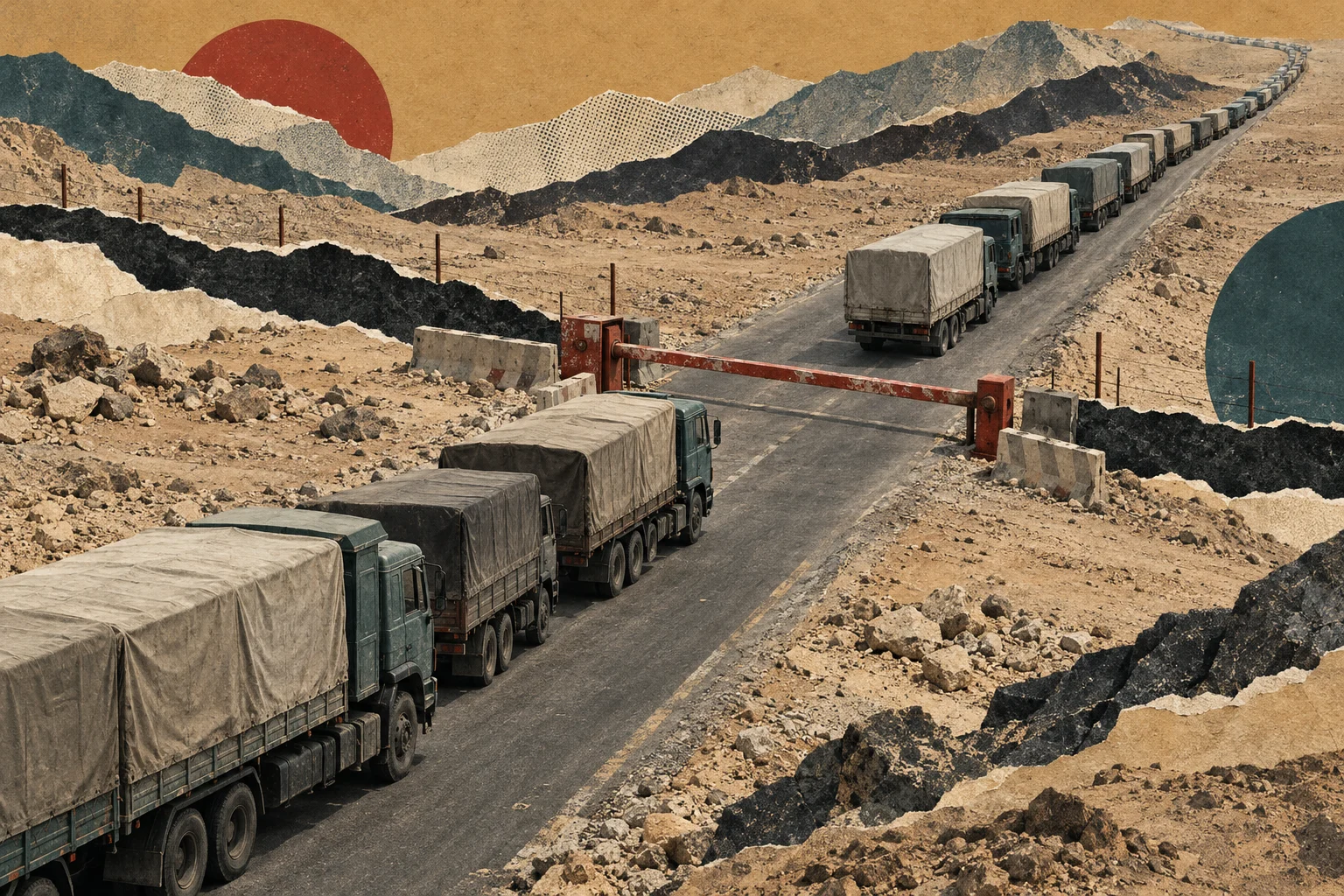
That divergence matters because border closures in Balochistan are usually legible — one side or the other announces a reason that both acknowledge. A closure the two capitals cannot even describe the same way, taken while a Russian mediator is in town to avert a war, reads less like a customs glitch and more like a government lowering its exposure. Pakistan, notably, is one of the two countries The New Arab names as pushing for a US-Iran breakthrough; shutting its trade crossings is the cheap, reversible version of preparation.
What has to be true for Lavrov’s trip to matter: that Moscow can carry an Iranian position Washington will read, and that Tehran will hold its fire while it waits. The record on the first half is thin. Iran’s last concrete offer — a seven-day plan to reopen Hormuz in exchange for lifting the American blockade — drew no formal answer from Washington at all. The numbers to watch this week are smaller and more observable: whether any of the 2,000 trucks at Taftan get a crossing schedule, and whether the Qatari channel produces a reply the last three mediation rounds did not.