
On Monday, 16 November, Telegram in Jordan began to stutter. Users noticed the disruptions first, according to the Jordanian broadcaster Roya News. The explanation came shortly afterwards from the Public Security Directorate, which announced a nationwide block on the messaging app. As Al Jazeera reported, the directorate said the aim was to curb illegal content and what it called “extremist material”, as part of a wider effort against cybercrime and for digital security.
A state rarely says much when it switches something off, and this one said little. According to the directorate’s statement, carried by the state news agency Petra and reported by the Jerusalem Post, the block is aimed at cybercrime, threats, extortion and unlawful content, extremist material among it, and rests on existing law. Citizens were told to “exercise caution when using social media applications”, to steer clear of unknown accounts and links, and to report unlawful activity through official channels. Parents were asked to watch over their children and turn on parental controls. The statement did not say how long the block would last.
The church at Hammoud
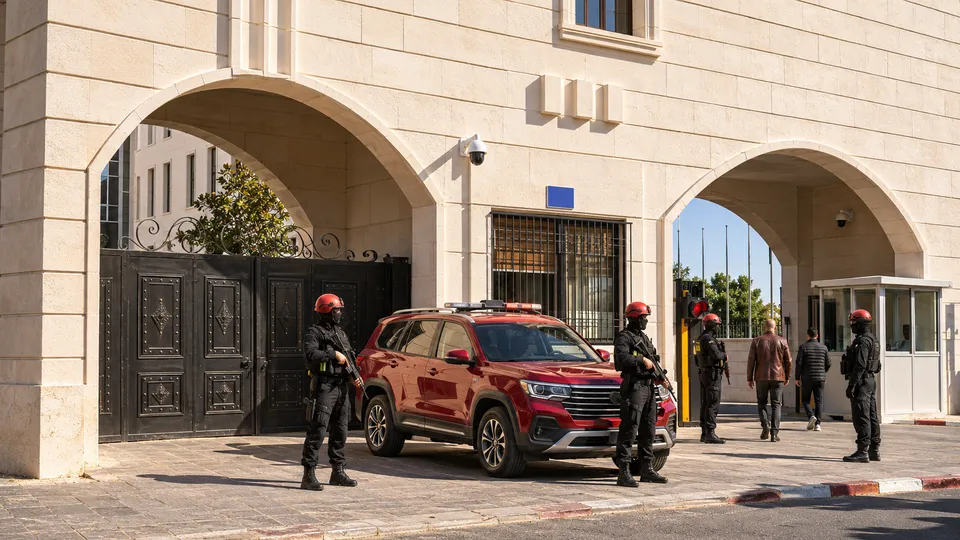
The order came at a particular moment. On 23 October gunmen attacked a Greek Orthodox church in Hammoud, a village in Karak governorate in west-central Jordan, during a funeral. The first reports counted at least seven dead. The toll now stands at nine, and the Jerusalem Post puts the number of injured at 40. In Amman, King Abdullah told parliament the attackers “are not of us”.
After that came the state’s response. Jordan carried out air strikes in Syria, which Amman said killed 20 ISIL fighters linked to the attack. On 5 November, a stabbing in Amman killed one security officer and wounded another, and the government called it terrorism. On Sunday, 15 November, three men were sentenced to death by hanging for the church attack.
A sentence on Sunday. A switch thrown on Monday.
The church does not appear anywhere in the directorate’s announcement as reported, and nobody has said in public that one thing caused the other. Al Jazeera placed the ban within the security crackdown that followed the killings. One can read the order of events and draw a conclusion. The ministries in Amman have left that to everyone else.

The app and its maker
The Russian entrepreneur Pavel Durov founded Telegram in 2013. Groups including ISIL are believed to use it, and Islamic State militants have issued statements through it over the years. It offers end-to-end encryption, though not in every conversation. The Middle East and North Africa make up roughly 8 percent of its users worldwide, according to Al Jazeera.
Durov is 42 and believed to be in Dubai. Several countries are investigating him. In July Russia issued a warrant for his arrest on charges of aiding “terrorism”, claiming Ukrainian spies had used the app to organise attacks, and if convicted he could face life in prison. He denies wrongdoing and says Telegram has done more than it is obliged to in moderating content and cooperating with the authorities. Last month, US court records showed the company handing over data on a suspect in the 7 October attack. Asked about Jordan, Telegram sent the Jerusalem Post an automatic reply:
Telegram is committed to protecting user privacy and human rights such as freedom of speech and assembly.
So Moscow accuses the app of serving terrorists, Amman blocks it in the name of fighting extremism, and its founder, a fugitive from his own country, says he has already given the authorities more than they asked for. This is a reflection, not a finding, but it comes up often: governments find it easier to close a door than to watch who goes through it.

Stopping every train
The two Israeli academics the Jerusalem Post asked to assess the move disagreed. Prof. Ronen Yitzhak of Bar-Ilan University saw the block as one step among several counterterrorism measures, partly meant to make citizens feel safer. Barak Gonen of the Jerusalem College of Technology was more doubtful. He called the measure legitimate but “very extreme”, and compared it to stopping “all the train transportation in the country because some terrorists are known to be on a train.”
He was not talking only about Jordan. He said he hoped Israel’s Shin Bet “has the capabilities of stopping the specific train without stopping all of the train activity.” That points to the real choice in front of every security service: track particular people, or switch off a whole network that millions of ordinary people use every day.
Jordan may not be alone. The National reported that Jordan and Iraq had both banned Telegram over national security concerns. In Amman, the directorate’s advice to the public stands as it was issued on Monday: be careful, avoid strangers online, and report what you see through official channels. It has given no date for when the app might come back.