
On Monday, November 2, the King of Jordan went to the parliament in Amman to perform one of the set pieces of his office: opening a session of the legislature with a Speech from the Throne. It was the third ordinary session of the 20th Parliament, and a royal decree issued on September 30 had already pushed it back to this date. A royal decree cannot set a country’s mood, though, and the mood this autumn came from the south, from Karak.
Al Jazeera reported that Abdullah II told the deputies that “the treacherous hand of terrorism” had reached out “to test the resilience of our state and the resolve of our people”. Families of the dead were in the chamber. The king asked the members to stand for a minute of silence.
A funeral at Hmoud
The silence was for the dead of October 23. That day gunmen attacked a funeral service at St George’s Greek Orthodox Church in the village of Hmoud, about 80 kilometres south of the capital. The first counts said at least seven dead, and the toll later rose to nine, all of them Christians. Reports of the wounded differ. The National put the figure at 34 and called it the deadliest attack on the minority since the 1950s, while CNN reported another 40 injured. Jordan declared three days of mourning.
People had gathered to bury someone, and they were made to bury more.
After that the state did what states do. Three men were arrested on suspicion of carrying out the attack. Interior Minister Mazen Al-Faraya said it came from “a terroristic, extremist way of thinking.” Then the response went beyond the border: Jordan’s air force struck targets in southern Syria that it linked to the assault, and Syrian authorities said civilians were killed, children among them, in the Deraa countryside.
“Not of us”
The phrase the king chose for the killers was short and old. “They are not of us,” he said, according to Al Jazeera’s translation. “There is no place for them among us, not today and not tomorrow.” The National’s rendering of the Arabic includes a vow that “we will not allow the terrorist outlaws to undermine the security and unity of this nation”, and the line that “Jordan has been, and will remain, unyielding against any brutal aggressor.” The blood of the Karak victims, he said, would remain a “debt we carry”.
It is worth pausing on what the formula does. Every government that suffers an attack like this first pushes the attackers out of the national family, in words, long before any court has ruled on them. Calling them “not of us” offers comfort to the grieving and reassurance to a frightened minority. It also lets the state avoid asking how its own people came to think this way. The interior minister had named the source, an extremist way of thinking, and a way of thinking does not respect borders.
According to Al Jazeera’s Ahmed Jarrar, the king put the response in a particular order: national unity and public awareness first, with the army and security services behind them, ready to strike “with an iron fist”. In the speech the fist came last. In practice it had already been used, over Deraa, a week before he spoke.
The neighbour to the west
Then the king turned to a threat he plainly considers larger than any cell of gunmen. “Israeli expansionist ambitions are the greatest threat to the future of the region and its security,” he said. “The humanitarian catastrophe in Gaza continues, and successive assaults persist in the West Bank and Jerusalem.” He also repeated a sentence Jordan’s rulers have used for years: “We reiterate, time and again, that there can be no security or stability in our region without upholding the Palestinian people’s right to their homeland,” as quoted in wire coverage.
These are hard words from the head of a state that made peace with Israel in 1994 and remains a close ally of the United States. They make more sense in a kingdom where millions of citizens have Palestinian roots. A Hashemite king has to speak to Washington and to his own streets at once, and here he did both.
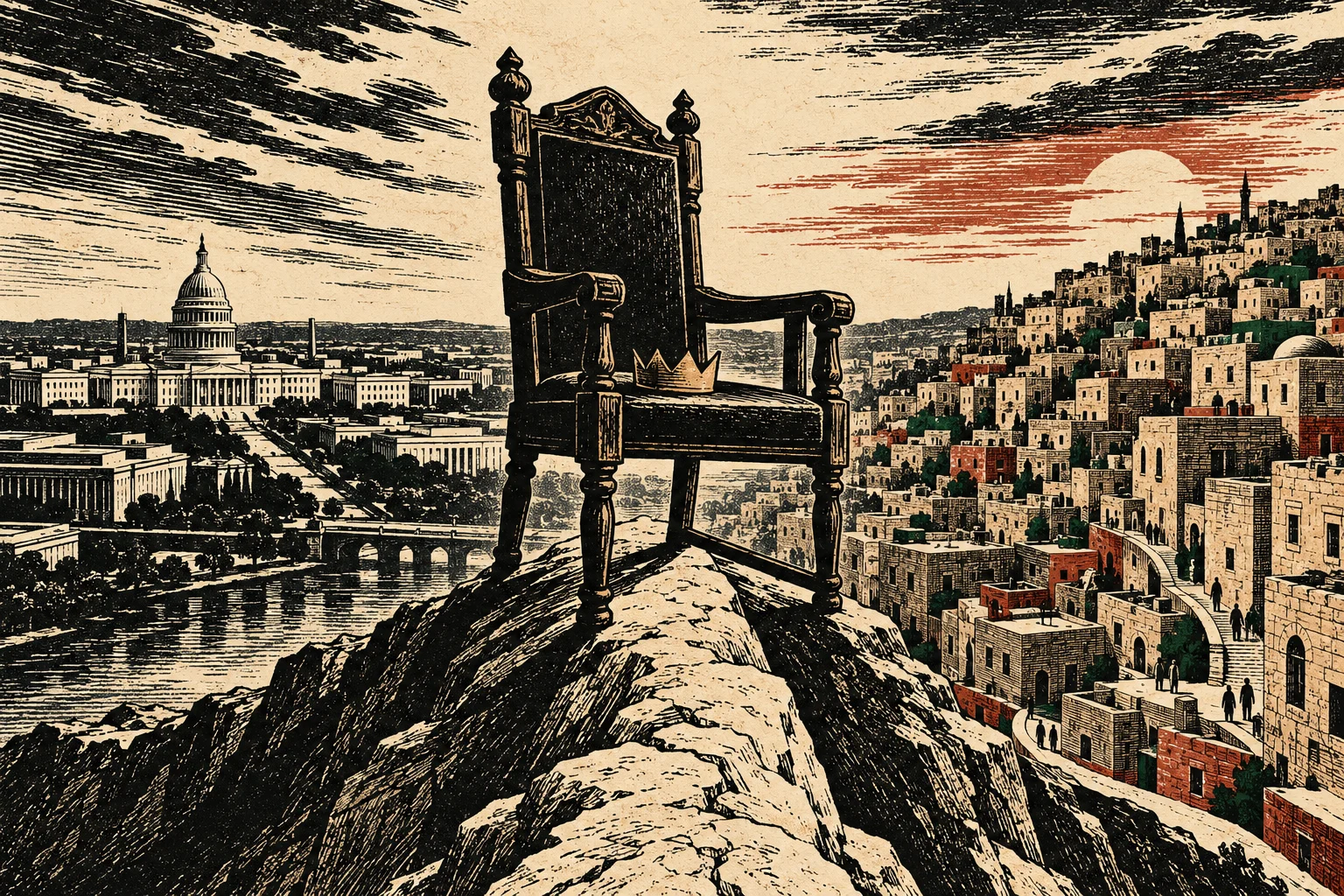
The bluntest line was about water. “We will not allow the thirst of Jordanians to be held hostage by any party,” the king said. He did not name the party. Jarrar connected the remark to fears in Amman that Israeli projects put Jordan’s water security at risk.
Instructions to the chamber
The rest of the speech was addressed to the people sitting in front of him. To the deputies he said: “Your differences of opinion are a strength so long as Jordan’s interest is the goal.” He told parliament to carry out its legislative and oversight duties and to keep watch on the government’s performance. He told the government to improve people’s living conditions and to speed up the major projects meant to strengthen the economy and its resilience.
For officials tempted to use their posts for their own ends, he had this: “The law knows no name, no position and no influence.”
Spoken from a throne, it is a sentence about the people below it. Whether it reaches those close to the throne is something no speech can show. That will only be known once the session is under way, and in Hmoud, where the families went home from the chamber to their dead.