
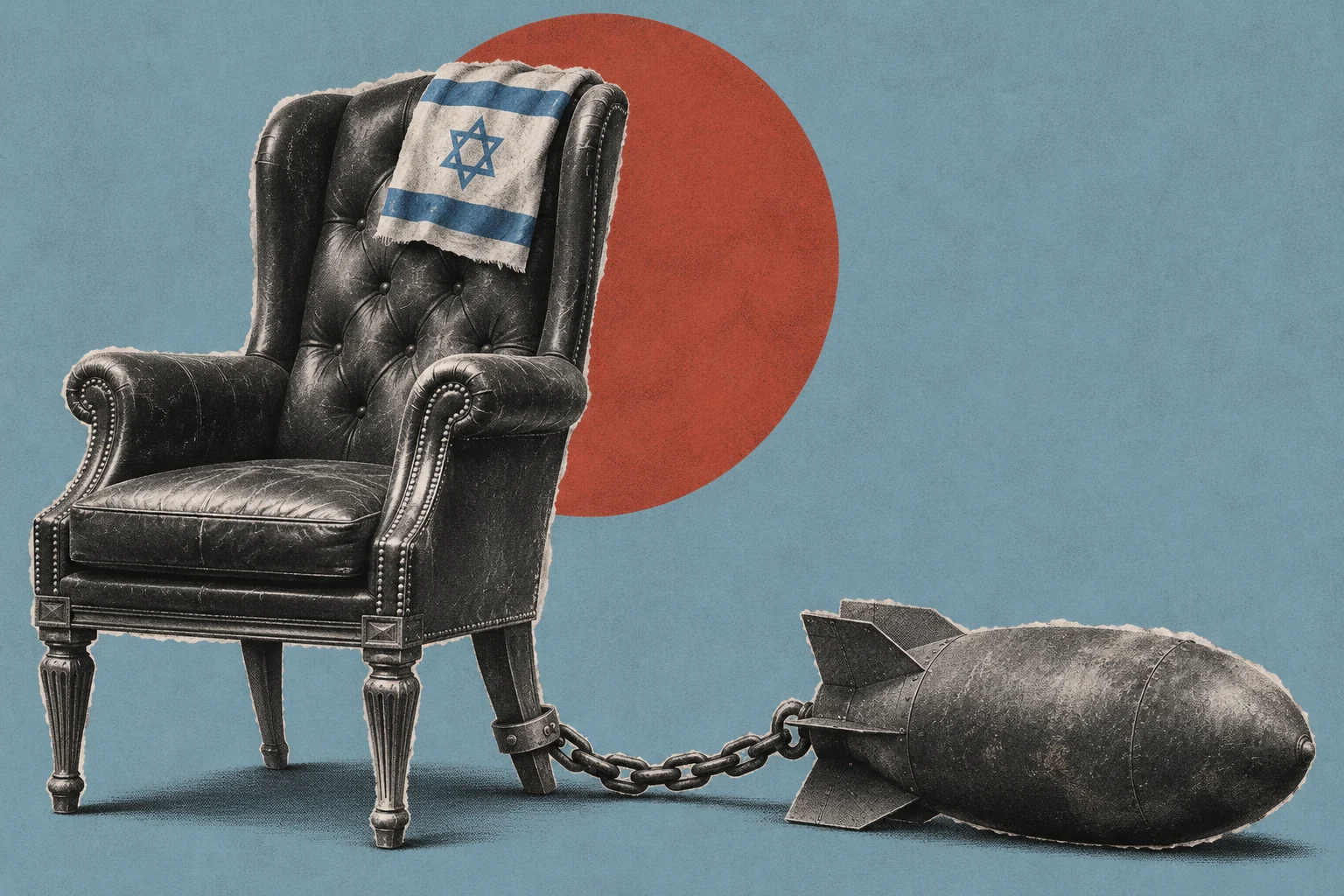
Israel’s security cabinet ordered the military on Wednesday to step up preparations for an attack on Iran, Israeli media reported. Prime Minister Benjamin Netanyahu now leads only a caretaker government after losing his majority in last month’s election.
The public broadcaster KAN said the directives “could lead it to carry out activities that could trigger a war.” The order puts Mr. Netanyahu at odds with Washington, with his own military commanders and with Gadi Eisenkot, the opposition leader now tasked with forming the next government. None of them has shown much appetite for a new campaign, Stephen Quillen reported for Al Jazeera.
Channel 13 reported that the military’s assessment, which was presented to both Mr. Netanyahu and Mr. Eisenkot, found no urgent need to strike.
In a letter sent Wednesday, Mr. Eisenkot told the prime minister that acting without an immediate threat could have “devastating consequences for Israeli democracy.” Mr. Netanyahu’s office answered that every government decision was made solely on security grounds “and in full coordination with the defense establishment,” according to The Japan Times. Avigdor Lieberman, the leader of Yisrael Beytenu, warned against decisions that drag the country into war “without parliamentary oversight.”
Mr. Netanyahu has reportedly called President Trump several times to push for a campaign, and Ynet reported that at least one of those calls got heated. On Thursday a U.S. official told KAN that Washington had told Israel to prepare. U.S. Central Command called that “mere speculation.”

Israel and the United States struck Iran together in February, and Mr. Netanyahu said last month that toppling the government in Tehran was his “primary objective.” The bigger obstacle now is “a loss of appetite in the US,” said Neve Gordon, a professor at Queen Mary University of London. He said the Trump administration has been leaning on economic pressure against Iran.
Legally, little stands in Mr. Netanyahu’s way. Article 30 of the Basic Law on the government lets an interim cabinet keep the same powers until it is replaced. Israel’s Supreme Court has set a “duty of restraint” that tells outgoing governments to avoid irreversible steps unless they’re urgent. But Or Asher of the Tachlith Institute told Reuters that security is “the clearest exception” and that the court has historically stayed out of decisions on war.
“A caretaker prime minister can legally take Israel to war, including against Iran,” Mr. Asher said. He said parliamentary oversight is at its weakest after a new Knesset convenes and before its committees are set up. A strike would still need the approval of the security cabinet, which Mr. Netanyahu chairs, The Jerusalem Post reported.
Mr. Gordon said the prime minister could act with cabinet backing by casting a strike as “urgent and in the national interest.” His supporters would approve, Mr. Gordon said, and voters in the bloc that wants him out would see a war as a bid to hold on to power. Most Israelis would still “rally around the flag,” he said.
Ehab Jabareen, an analyst, said caretaker status raises the “political burden of proof.” A rally effect, he said, says little about whether people think a war is justified, and the harder test would come once reservists are called up and families are back in shelters. Israelis would ask “why now?” A thin answer could make a strike look like an attempt to derail Mr. Eisenkot’s coalition talks, Mr. Jabareen said.
Anders Persson, a political scientist, said a joint operation with the United States would be easier to sell. The less support Mr. Trump offers, he said, the harder it becomes to “get away with it.”
There is a precedent. In May 2021, while serving as a caretaker, Mr. Netanyahu started an 11-day war in Gaza that killed at least 260 people there and 13 in Israel. The Bennett-Lapid government was sworn in the next month, ending his 12 years in office. Ehud Olmert and Yair Lapid also ordered Gaza operations while leading caretaker governments. Mr. Olmert’s war, which began in December 2008, was the deadliest of them, killing about 1,400 Palestinians.
Mr. Eisenkot’s talks are picking up speed in the meantime. Haredi leaders are hearing offers from more than one camp, The Times of Israel reported on Thursday.