
With the vote set for Tuesday, October 27, Benjamin Netanyahu has gone back to the oldest sentence he owns. Overthrowing the government in Tehran, he said, remains Israel’s “primary objective”. As Caolán Magee reported for Al Jazeera, the prime minister said it while his support was slipping in the polls, and after two meetings with American power: talks with President Donald Trump on Sunday and a visit from the Pentagon chief, Pete Hegseth. Nothing he said suggested that Washington had agreed to join another offensive against Iran, still less a campaign to bring down its leaders.
His office put it in the language of unfinished business. “We are committed to completing the elimination of the Iranian regime,” the statement said. “I have discussed this with Trump many times, including the day before yesterday.”
A visitor in the Negev
Hegseth’s visit was not announced in advance. Doron Spielman, a spokesperson for the prime minister, confirmed to Reuters that the two men met on Monday, October 19, at the Uvda air force base in the southern Negev desert. They discussed “the threats in the region”, Spielman said. Hegseth thanked Israel for hosting American forces, which Spielman said numbered in the thousands, and talked about Trump’s support for the prime minister. Axios, which first reported the trip, said it came eight days before the election, while the two governments were discussing whether to resume major combat operations against Iran. No decision to restart strikes has been announced, and the Pentagon has said nothing publicly.
The day before, Trump had endorsed Netanyahu for the October 27 vote. Vice-President JD Vance stayed out of it: “I’m not anti-endorsing him, but I’m not pro-endorsing him; I’m not getting involved in Israeli elections.” Polls suggest Netanyahu is trailing Gadi Eisenkot. In Al Jazeera’s report on the visit, its correspondent Nour Odeh said Washington was backing him “as Israel’s protector and as a leader who can work with the US on various issues such as regime change in Iran”.
Thirty years of one enemy
Some leaders keep one enemy for their whole careers, and the enemy ends up keeping them. Netanyahu has described Iran as a great danger since 1996. In July of that year he told the US Congress that Iran “has wed a cruel despotism to a fanatic militancy”. He has repeated the warning through three decades and many governments.
Twice now the warning has turned into war. The United States took part in the war of June 2025 and in the campaign that began on February 28, 2026. Neither brought the government in Tehran down. In March, Netanyahu conceded the point himself: “You can’t do it only from the air.” A ground component was needed, he said. He did not say what it would be.
The government he has promised to end is still in place.

What bombs can and cannot do
The analysts consulted by Al Jazeera did not doubt Israel’s capacity to destroy things. Urban Coningham, a research fellow at the Royal United Services Institute (RUSI), pointed to its weapons stockpiles and its aerial refuelling: “Israel could again establish air superiority and strike Iranian targets.” Caglar Kurc of Abdullah Gul University in Kayseri, Turkey, set out the limits. “Airpower can degrade military capabilities but cannot fully destroy offensive capabilities,” he said. “Well-hidden systems would survive.” In his view, changing the regime would take troops on the ground for years.
The quieter tools have their own limits. Israel still has “human intelligence assets on the ground”, Coningham said, and could use “cyberattacks”, but he called such assets “use and burn”: once they are used, the network behind them is exposed. Neither offers a clear route to a new government. In March, CNN reported that the Trump administration had discussed arming Kurdish opposition groups, but the idea went nowhere. “Kurdish groups lacked the military capabilities to take on the Islamic Revolutionary Guard Corps (IRGC),” Coningham said, and he doubted the Baloch groups too.
The arithmetic of interceptors
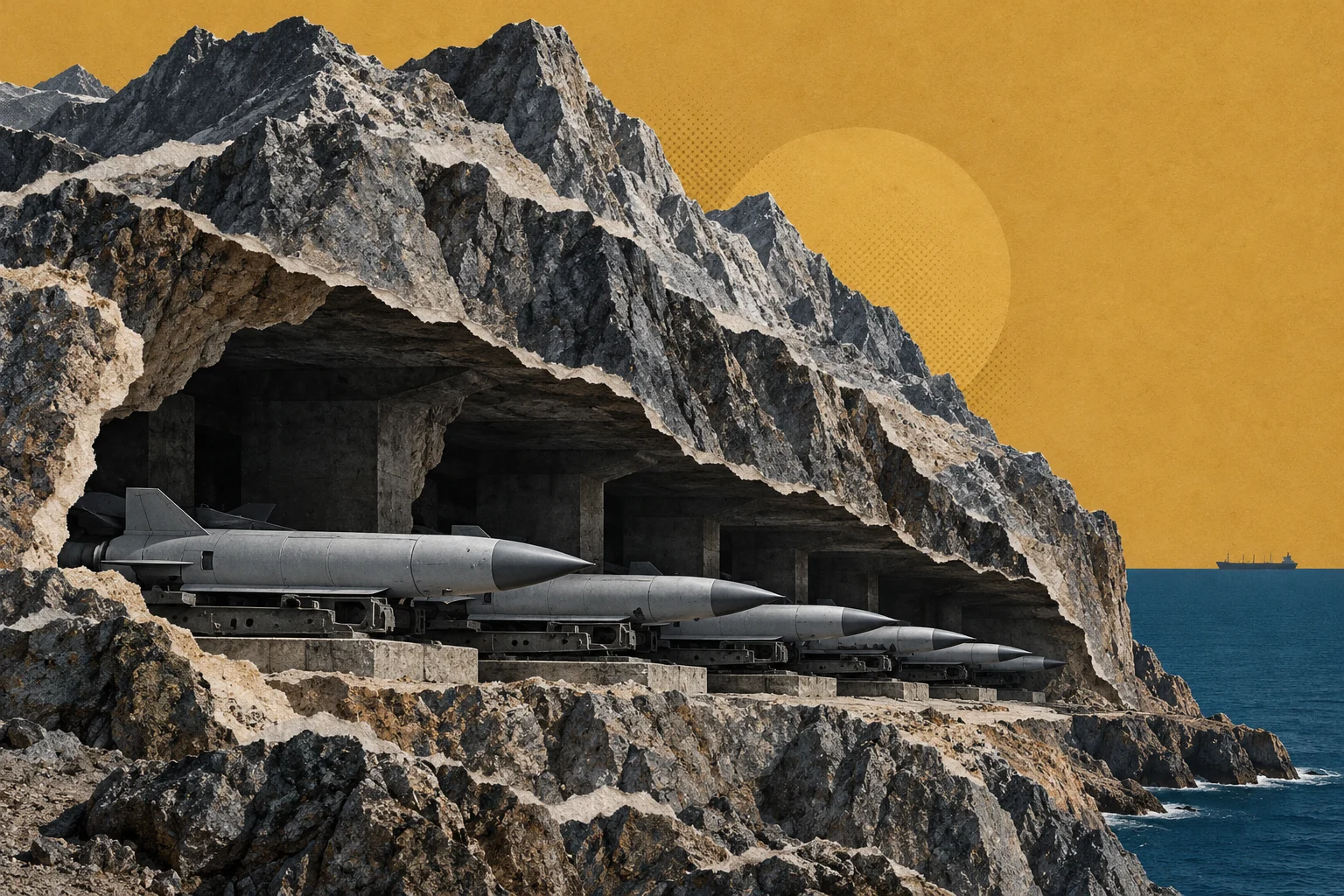
Iran can still hit back. Sidharth Kaushal, a senior research fellow at RUSI, said the “Iranians likely retain sizeable stocks of missiles”, though damaged targeting systems may make them less effective. Its anti-ship missiles are probably still plentiful because they are easy to make. Iran now builds older Chinese anti-ship cruise missiles itself, and the mountains of the south shelter their launchers from the air.
Coningham added a matter of accounting. Israel’s stock of interceptors has been drawn down, and every cheap Iranian drone brought down by an expensive interceptor shifts the balance a little further. Over a long war, the cost favours Tehran.
Waiting on Washington
Without Washington, the promise depends on someone else. The analysts think American participation unlikely, partly because Trump is under pressure not to escalate before the midterm elections. Trump has said on social media that he would not launch a new attack before the midterms in November, and Netanyahu told Israeli media this month that he is not seeking to attack Iran before the vote. The Financial Times reported that an Israeli proposal for renewed strikes did not win Trump’s approval, although the disagreement appeared to be about striking now, not about ruling out strikes later.
Acting alone, Israel would lack the 30,000-pound GBU-57 bunker-busters that American B-2 bombers dropped on Fordow and Natanz in June 2025. Coningham suggested that Iran might then strike only Israel and leave American assets and the Strait of Hormuz alone, which would leave Israel more isolated than it already is.
Kurc’s verdict was blunter. “You cannot change a regime unless you are prepared to deploy troops and stay in the country for some years,” he said. Israel, in his view, cannot control Iran, and the United States will not take on another regime change that could last decades.
Israelis vote on Tuesday. The overthrow of Iran’s government is the main promise in Netanyahu’s campaign, and the main outcome he cannot deliver on his own.