
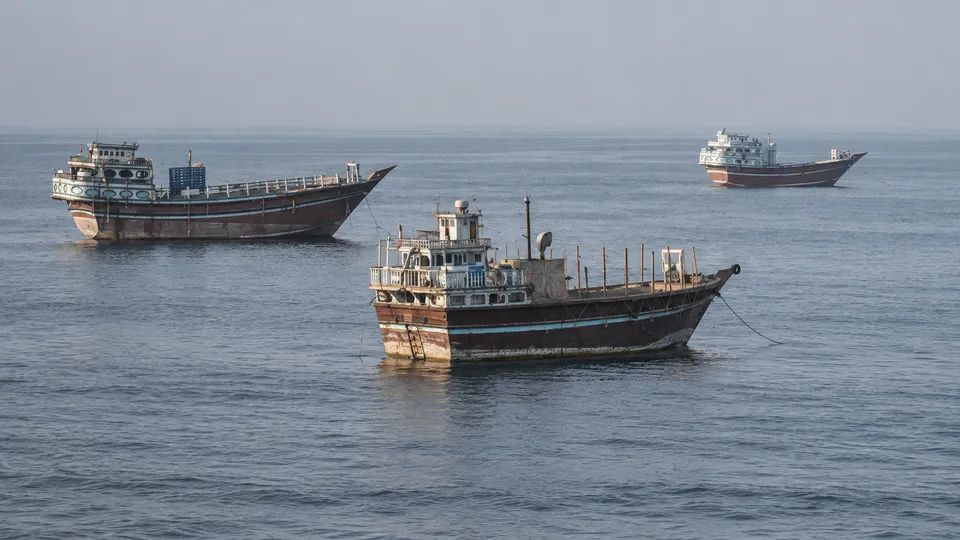
The simplest way to understand the Strait of Hormuz right now is as a bargaining chip. Before the war, roughly a fifth of the world’s oil and gas went through it. Since the US and Israel began striking Iran on February 28, it has been largely closed, and Iran’s position is that it will reopen when Washington accepts its terms. Iran says the US has already accepted some of its seven conditions for fully reopening the strait and ending the war. Iran wants all seven. Meanwhile a US naval blockade sits on Iran’s southern ports and sanctions keep tightening. Each side is squeezing the other and waiting for someone to blink.
The thing about a bargaining chip is that it only works if it’s scarce. If oil starts getting out of the Gulf anyway, a closed Hormuz becomes a much smaller threat. And oil has been getting out. As Maziar Motamedi reported for Al Jazeera from Tehran, Iranian authorities have now said plainly that they intend to break up the system that makes this possible: a shuttle run by Gulf Arab states with American help, which has pushed Gulf exports back toward pre-war volumes.
How the shuttle works
The mechanics are roughly these. Supertankers (VLCCs) and smaller vessels coordinate with the US military, load crude at Arab ports, and leave through southern corridors that hug Oman’s coast. They often sail at night with their transponders switched off. Out in the Gulf of Oman, the cargo is moved ship-to-ship onto other tankers, and some of the shuttles turn around and go back for another load. It is a relay race, run in the dark.
The legal theory behind it is not exotic. Michelle Wiese Bockmann of the maritime data firm Windward told Al Jazeera that Oman allows the ships through under the international right of transit passage, with US military assistance, and that this body of law underpins 11 billion tonnes of seaborne trade a year. She called the system highly effective.
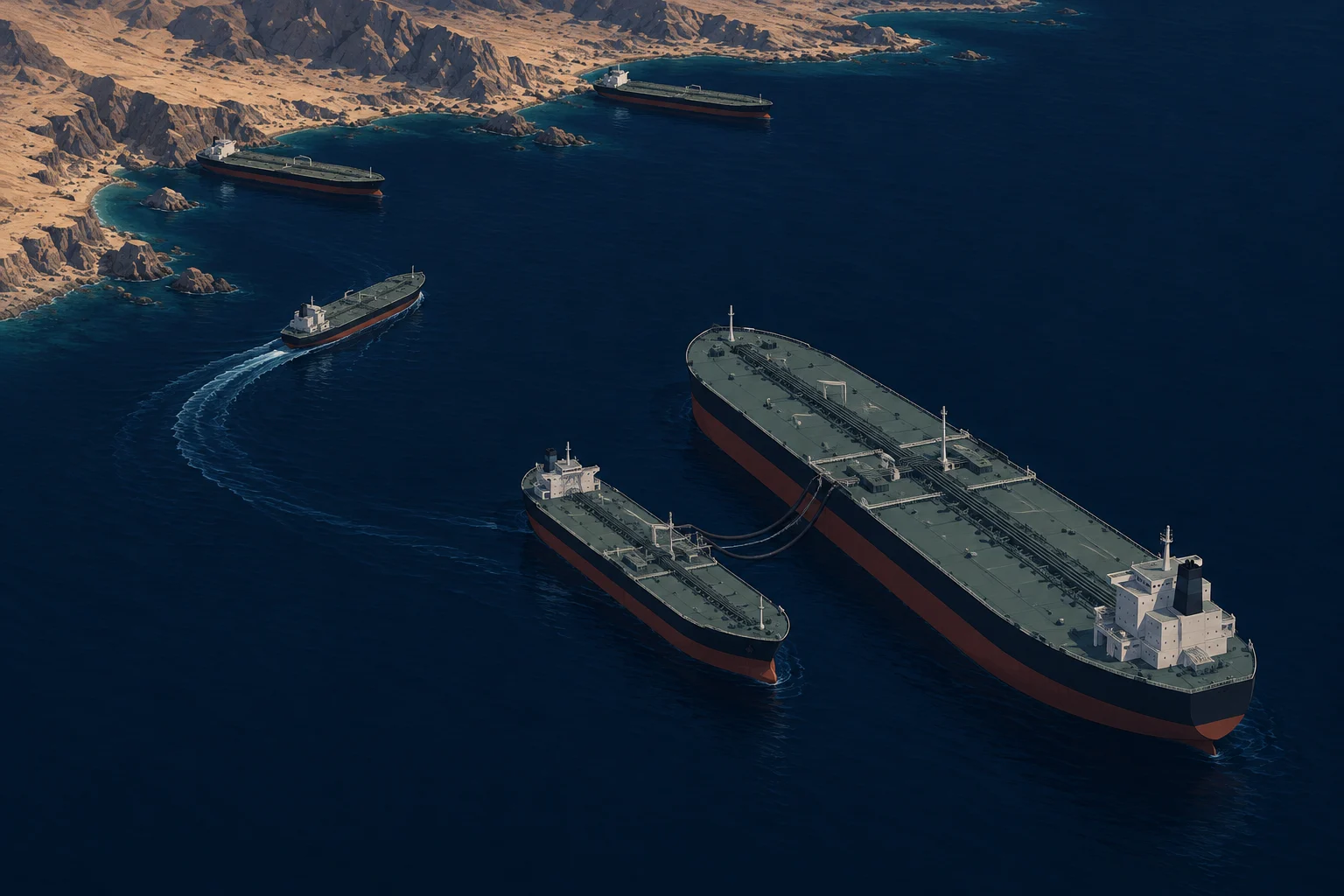
Iran’s security chief Mohsen Rezaei described it differently on Sunday night. He called the shuttle an explicit target and claimed that US Central Command, helped by the UAE’s military, uses smaller vessels to move oil onto bigger tankers. Then, addressing the people running it:
You are smuggling, but the strait is under Iran’s control, and we manage it.
Translated: we would like it to be our strait, permanently. The line looked aimed at Donald Trump, who has boasted of exports at times reaching pre-war levels, and it suggests Tehran wants lasting authority over Hormuz rather than just a better deal at the end of the war. Rezaei also threatened US-linked cables, data centres and artificial intelligence facilities in the UAE and around the strait, promised a harsh response if Iran’s energy or civilian infrastructure is hit again, and accused Saudi Arabia of helping the US without directly threatening Riyadh, which is already under attack from Yemen’s Houthis.
The leverage problem
Bockmann put the logic more cleanly than I could: the more effective the route has become, “the less leverage Iran has over Hormuz,” and the more attacks land on ships using the southern corridor. Windward counts at least 15 ships targeted in October so far. Overnight from Sunday to Monday several were hit, including two outbound tankers and one anchored near Sohar in Oman, where transfers allegedly take place. Last week a tanker was struck by a projectile off Qatar’s northern coast, well outside the strait itself. On October 9 the IRGC navy hit a VLCC off the UAE and, according to Euronews, said it would widen its targeting beyond Hormuz. This is the two-rulebooks problem in action: a ship that follows Washington’s rules breaks Tehran’s.
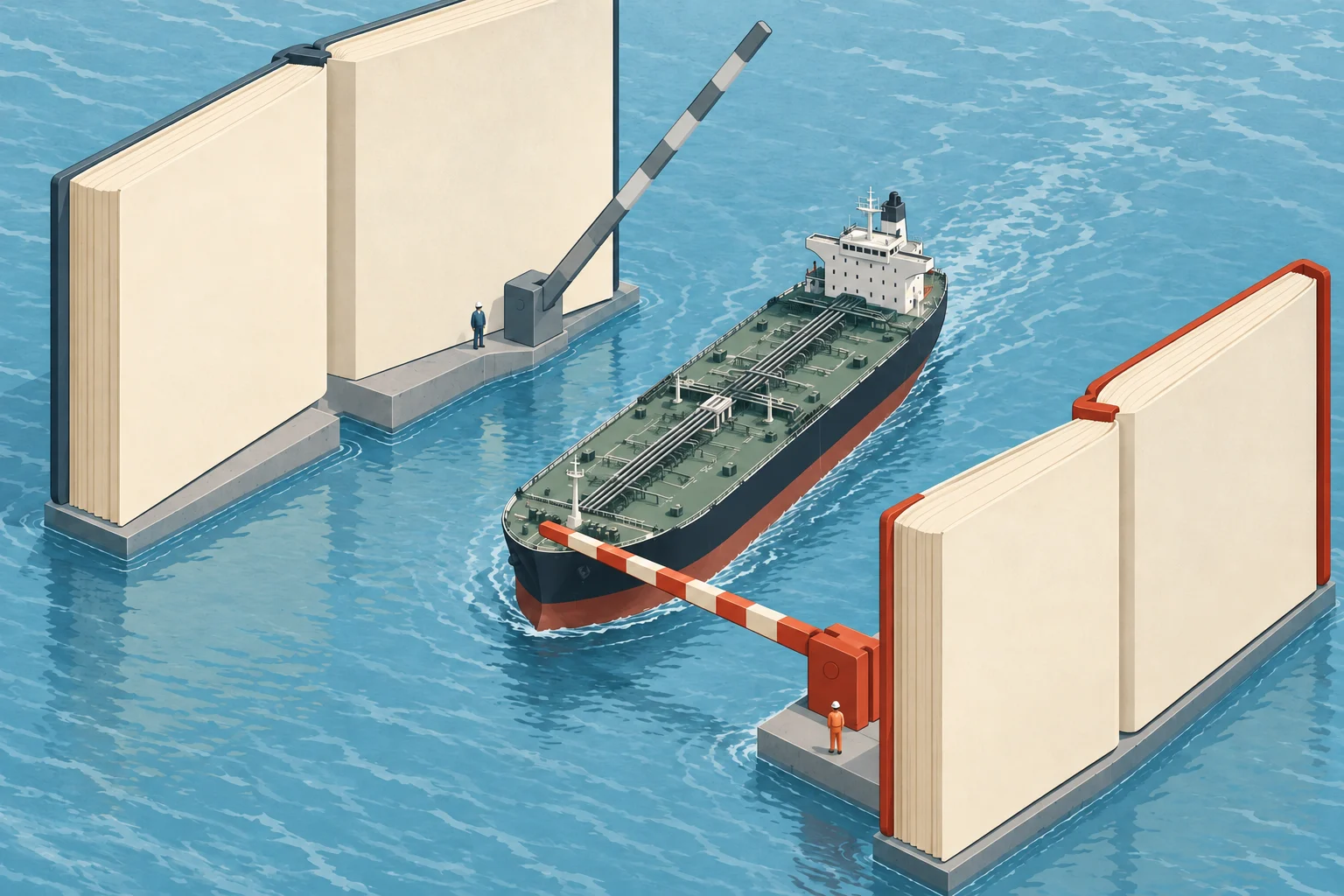
One small discrepancy. Rezaei says Iran has been hitting five or six shuttle vessels every night for weeks. Twelve days into October at that pace would be somewhere between 60 and 72 ships. Windward’s count is at least 15. Both statements serve their speaker, but only one comes from someone counting.
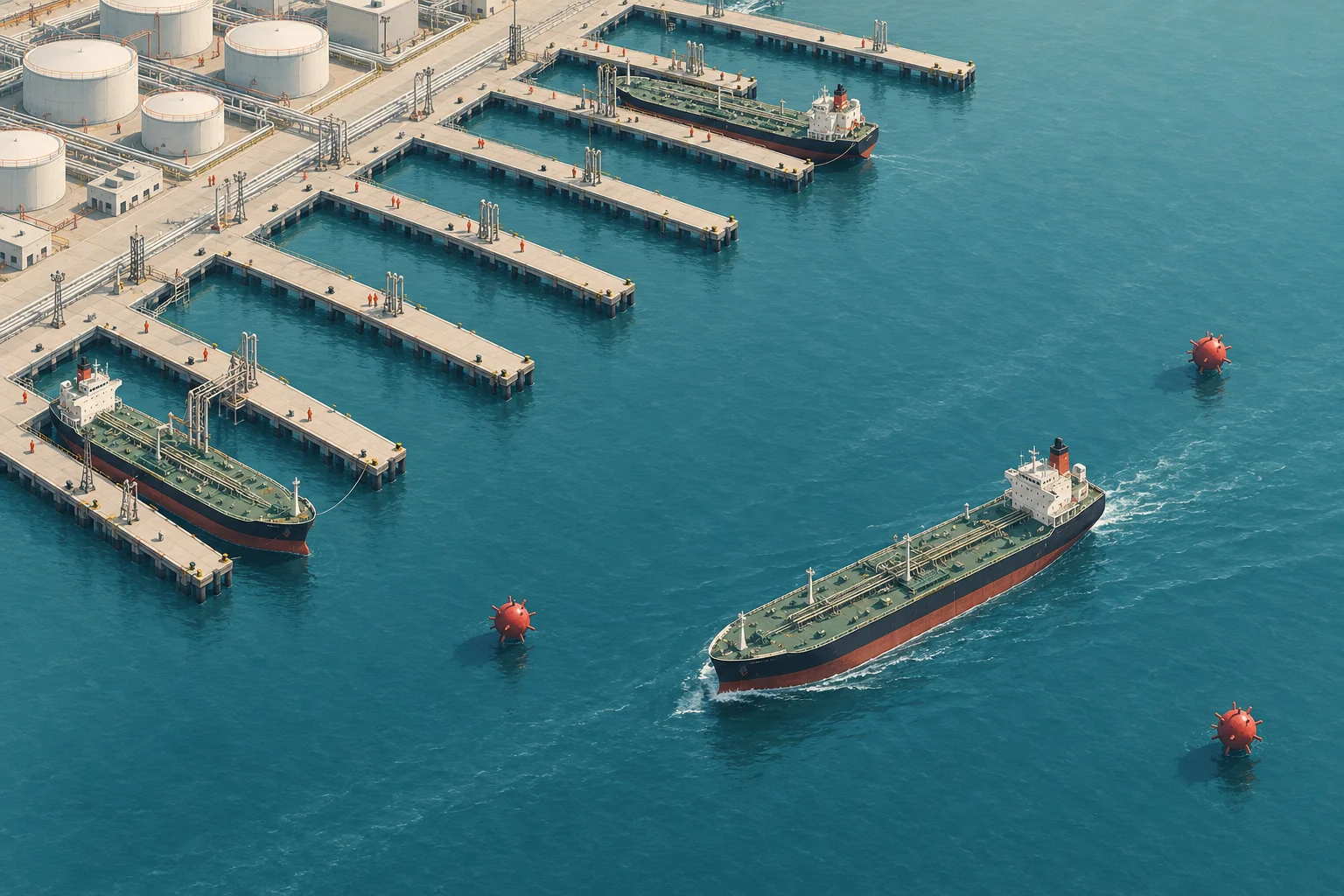
The IRGC is also leaning on mines. Its argument is that mines, believed laid since the war began, endanger any ship that doesn’t coordinate with Iran’s Persian Gulf Strait Authority. It said three tankers took major mine damage over the weekend and released footage of a burning ship, though no mine blast is visible in it. CNN reported the IRGC navy’s claim that a crude-laden supertanker exploded after hitting a mine on Saturday, and that the IRGC had warned six vessels anchored about 16 miles off Ras al Khaimah. Analysts tie the escalation to rising volumes: Kpler put flows at about 13.1 million barrels a day at the end of September.
Where the cost actually lands
Here is the part I find most interesting, because it’s where the war shows up in prices. Windward’s third-quarter numbers say Iran targeted 45 ships. Of those, 87 percent were tankers, so about 39. Around 47 percent, about 21, belonged to Gulf national shipping fleets. And 93 percent of the strikes, about 42, were in Hormuz, mostly on ships in the southern corridor with transponders off. Daily transits in the last week of September were 31, against 138 before the war, or about 22 percent of normal traffic.
So the oil is moving, but it is moving expensively. Freight now accounts for 25 to 30 percent of the cost of Gulf crude, against 1 to 3 percent before the war. National oil companies are offering discounts of up to $35 a barrel below their official prices. The main reason is a shortage of tankers willing to make the run, and between 15 and 20 percent of the world’s VLCCs are stuck in the shuttle’s inefficient loop of loading, sneaking out, transferring and coming back. Bockmann says that has “cascading impacts for all vessel classes on freight and values across the world.”
That is a strange equilibrium. Iran can’t shut the oil off, but every attack makes the next cargo pricier, and that cost is paid by Gulf producers in discounts and by everyone else in freight. Hamidreza Azizi of Crisis Group said Tehran seems to feel no urgency to strike a deal because its pressure on Hormuz is felt globally, while asking “whether Tehran is overestimating its ability to sustain this pressure.” The US, for its part, has left Iran waiting for a full answer on those seven conditions.
Meanwhile shipowners do what shipowners always do with risk, which is put a price on it. Right now somebody holding a VLCC can collect a large premium for being willing to sail a supertanker past Oman at night with its lights off.