
Iranian officials have rejected American claims that Tehran can no longer pay for its allied militias, even as President Masoud Pezeshkian acknowledged on Sunday that U.S. strikes and a naval blockade had caused serious problems.
They were answering Adm. Brad Cooper, the head of U.S. Central Command, who said in a video message on Friday that the United States had blocked at least $25 billion in Iranian crude exports and helped freeze about $350 million in Iranian cryptocurrency. He said the Islamic Revolutionary Guards Corps wasn’t paying its troops and that militias aligned with Iran were “withholding payments to their soldiers in order to funnel money back to the IRGC,” Al Jazeera’s Maziar Motamedi reported from Tehran.
“The Islamic regime is clearly feeling the economic pain, and the IRGC is increasingly showing signs of greater desperation as a result,” Admiral Cooper said, according to ANI. He said the strikes and the blockade of Iran’s southern ports had “dealt severe blows” to the country, and that “Iran has no exports or imports by sea.” His figures could not be independently verified. Washington has had few clear victories to point to in the war.
Abdolnaser Hemmati, the governor of Iran’s central bank, said talk of a collapse “is nothing more than an illusion.” Officials in Tehran also disputed a U.S. Treasury warning that Iran could lose control within months.

Mr. Pezeshkian went less far. He said the government was relying on the country’s own capacity, and that curbing consumption had spared Iran gasoline imports that would have cost $12 billion. He promised to return the revenue from recent fuel price increases to households through slightly larger electronic food vouchers.
Iran’s 90 million people were already living with runaway inflation, low wages and a weakening currency after years of war, mismanagement and sanctions. The World Bank this month projected that the economy would shrink 7.7 percent in the 2026-27 fiscal year. Earlier this month the rial fell to a record low as the blockade cut off oil sales.
Admiral Cooper also said 400 ships had passed through the Strait of Hormuz in seven days and that the United States had helped Gulf partners ship more than 100 million barrels of crude in that period, The Tribune reported.
How much money still leaves Tehran is hard to pin down. For decades the Guards’ Quds Force has supplied allied groups with cash, weapons, components, training and manufacturing know-how, according to UN experts and U.S. officials. The groups also raise their own money through businesses, oil sales and donations, and some Iraqi factions draw state funds through the Popular Mobilization Forces.
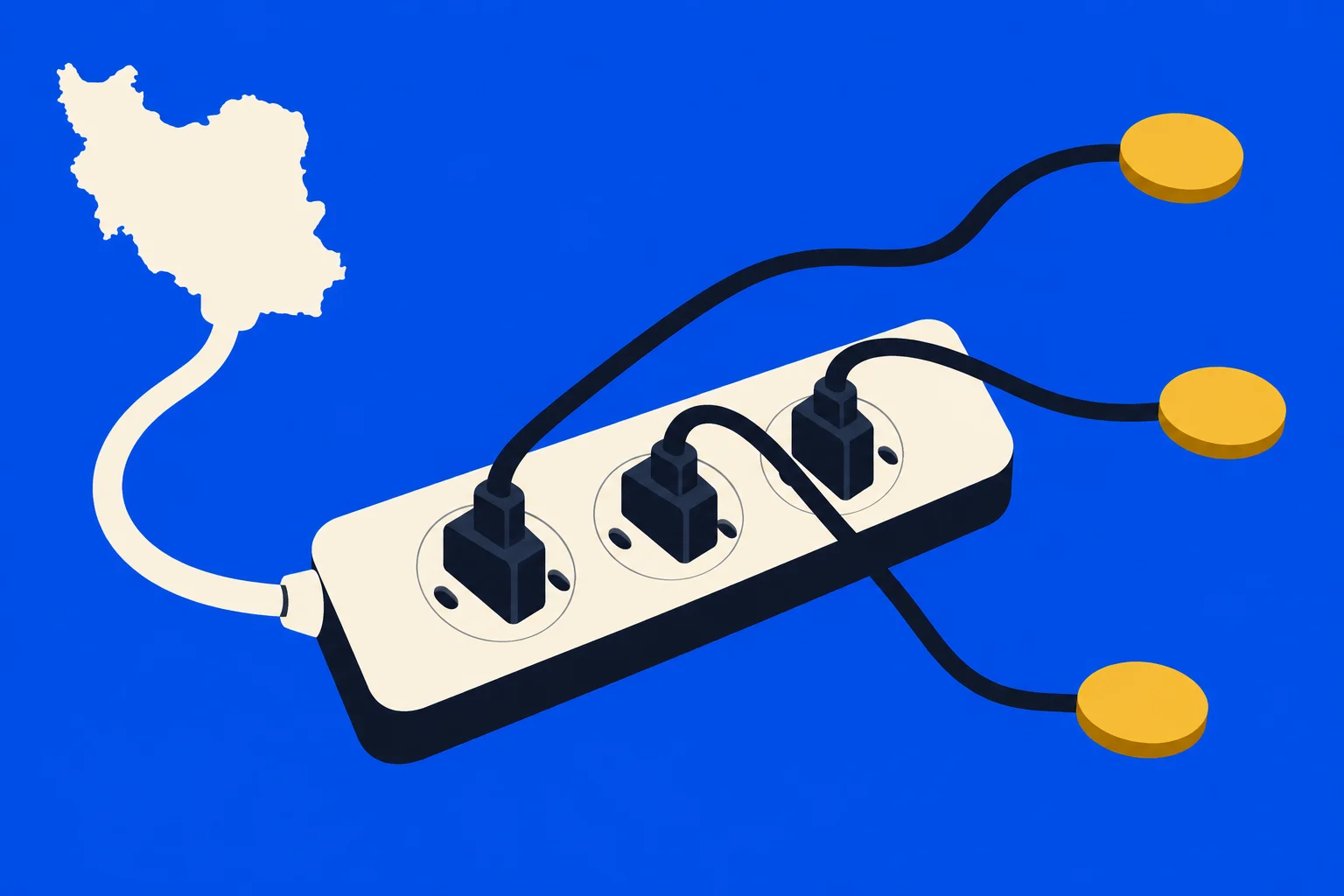
Money moves both ways. In September the Treasury accused Kataib Hezbollah of siphoning Iraqi resources to support Iran.
Reuters, citing unnamed sources, reported this month that Hezbollah received $200 million from Iran in September. The State Department dismissed the report, saying Hezbollah was “trying to save face with fake stories about cash influxes from Iran.”
Michael Knights, the head of Middle East and North Africa research at Horizon Engage, said Hezbollah and the Houthis had struggled for years and, with economies at home that are “badly broken,” still depended on Iranian stipends and fuel. Iraqi factions are better off, he said, and some Iraqi militiamen and civil servants are paid late even as militias send money abroad to Iran, the Houthis and Hezbollah.
Whatever its finances, Tehran is “stuck in an aggressive cycle of escalation” with the United States, Mr. Knights said. “Trump is betting that being poorer will make Iran’s regime more flexible, but that has never been a good bet.”
Negar Mortazavi, a senior fellow at the Center for International Policy, said she expected Tehran to keep putting its allies first. Economic pressure limits Iran’s military resources, she said, but won’t necessarily change the Guards’ calculations “or force Tehran to surrender.”