
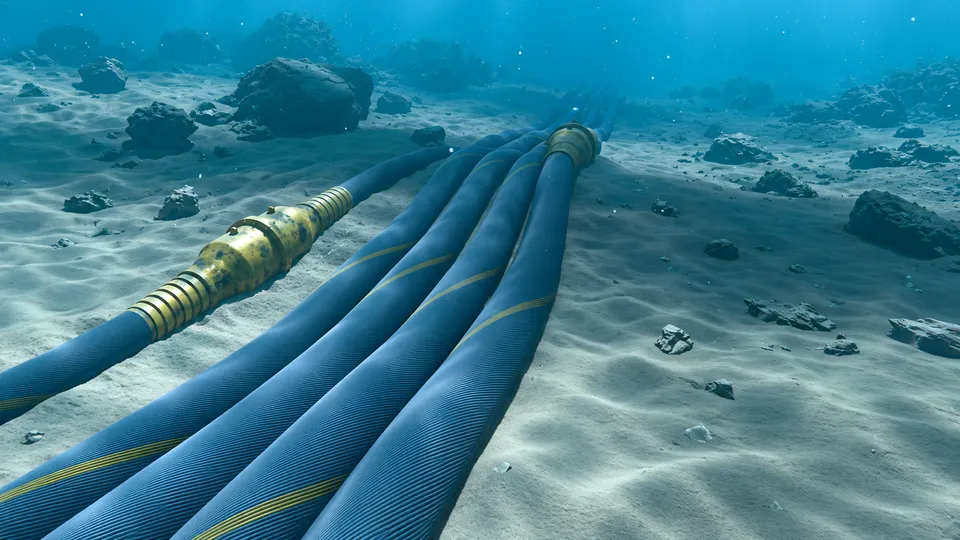
Mohsen Rezaei, the head of Iran’s Supreme National Security Council, gave a number for the infrastructure Tehran says it is still holding back from targeting: more than $2 trillion. That is his own valuation, in a weekend interview carried by Iran’s state broadcaster and reported by Al Jazeera and Fortune, of US-linked cables, data centres and AI facilities in the UAE and around the Strait of Hormuz. He called them, in Fortune’s report, the “pulse of the American economy in this region.”
The United States has extremely expensive assets in the UAE and around the Strait of Hormuz... We have not yet included these assets among our targets. But if war breaks out, many of these cables, data centres, artificial intelligence facilities and numerous other sites will be destroyed.
The chokepoint under the chokepoint
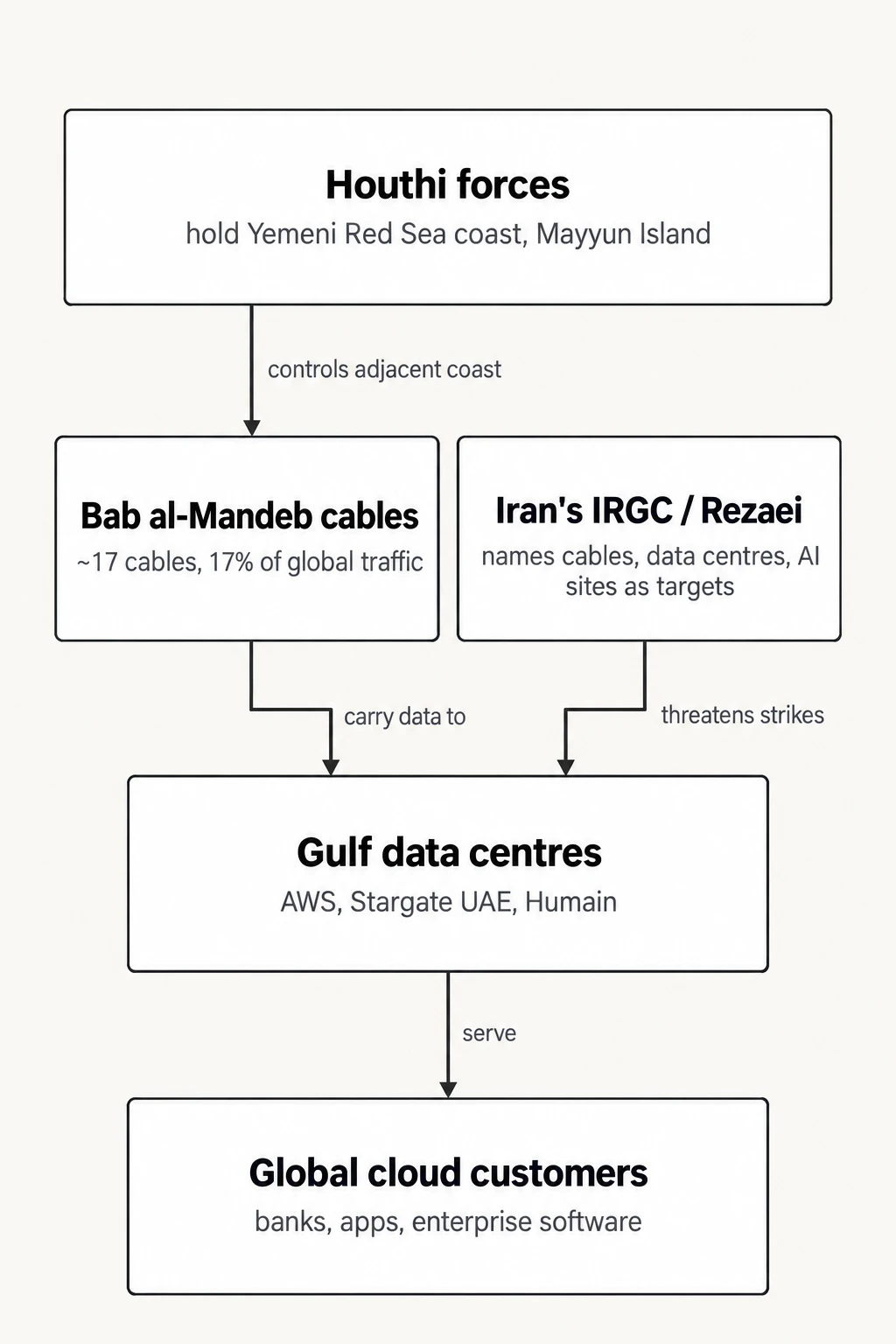
The warning lands on top of a separate chokepoint Iran’s allies already control. Houthi forces captured Yemeni territory along the Red Sea coast last month, as rews reported, reaching Mayyun Island on September 11 and splitting the Bab al-Mandeb strait between the two shores it holds. The strait is 26km wide at its narrowest, per CSIS. Roughly 17 submarine cables run through that gap, carrying 17% of global internet traffic and more than 90% of all data capacity between Europe and Asia, according to the research firm TeleGeography. Fighting between Houthi and Yemeni government forces for ground on both sides of the strait, including a disputed recapture of Mocha on October 5, is happening in the same 26km band those cables run through.
| From | To | How |
|---|---|---|
| Iran's IRGC / Rezaei (names cables, data centres, AI sites as targets) | Gulf data centres (AWS, Stargate UAE, Humain) | threatens strikes |
| Houthi forces (hold Yemeni Red Sea coast, Mayyun Island) | Bab al-Mandeb cables (~17 cables, 17% of global traffic) | controls adjacent coast |
| Bab al-Mandeb cables (~17 cables, 17% of global traffic) | Gulf data centres (AWS, Stargate UAE, Humain) | carry data to |
| Gulf data centres (AWS, Stargate UAE, Humain) | Global cloud customers (banks, apps, enterprise software) | serve |
Based on Al Jazeera, CSIS, TeleGeography
This already happened, once
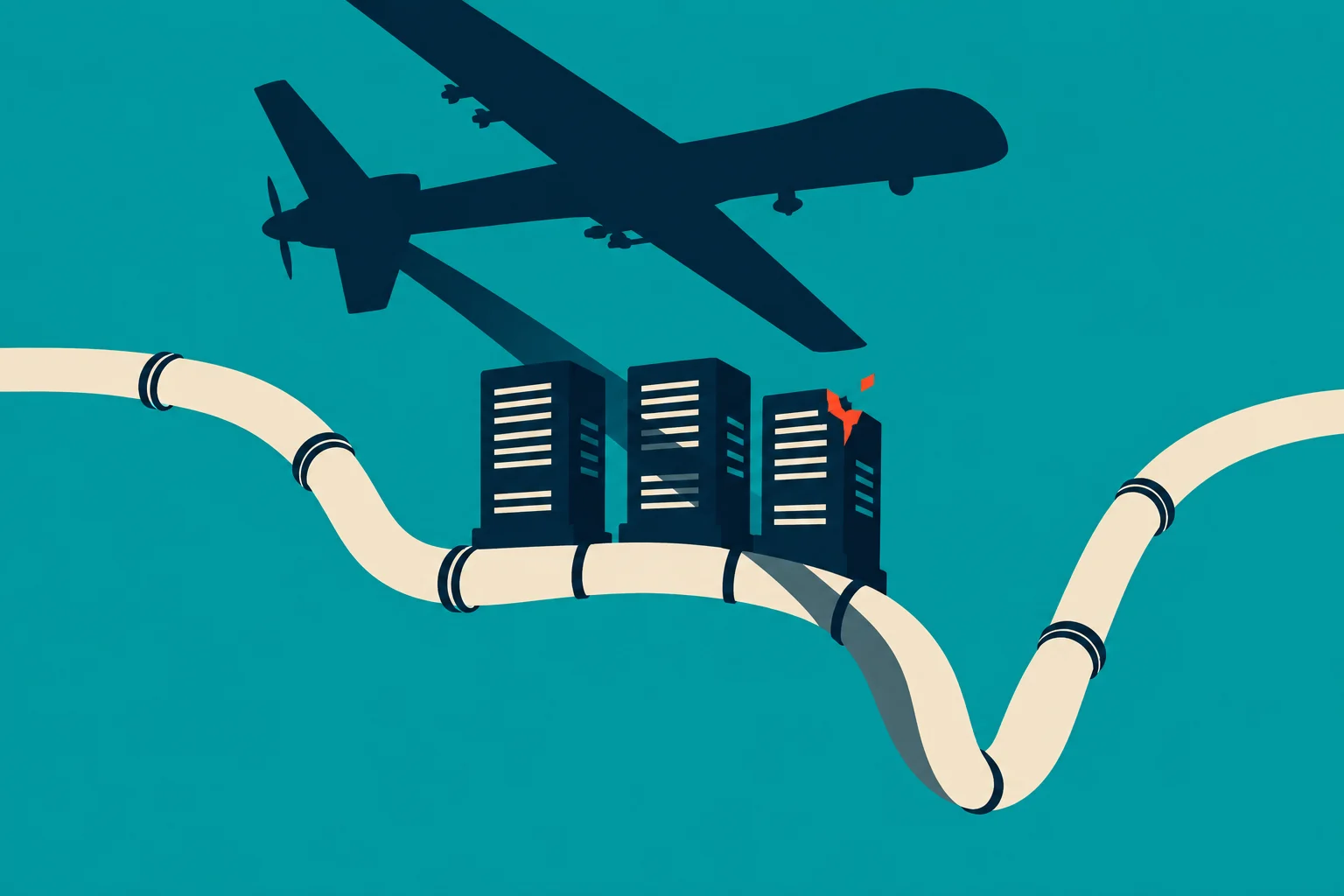
Rezaei’s threat is not hypothetical. On March 1-2, 2026, Iranian drones struck three AWS facilities at once: two availability zones of the ME-CENTRAL-1 region in the UAE, hit directly, and a third site in Bahrain’s ME-SOUTH-1 region, damaged by a nearby blast, according to CNBC. The Uptime Institute called it the first confirmed military strike on a hyperscale cloud provider. The outages reached the ride-hailing app Careem, the payments firms Alaan and Hubpay, and banks including ADCB and Emirates NBD, plus enterprise software from Snowflake. A month later, on April 3, Iran struck the Bahrain AWS site again, starting a fire that drew Bahrain’s Civil Defence, per India’s state broadcaster.
The IRGC followed the March strikes with a list: on March 31 it named 18 US technology firms as legitimate military targets, including Amazon, Microsoft, Nvidia, Google, Apple, Meta, Oracle, Cisco, IBM, HP, Tesla and Boeing, arguing the data centres support “the enemy’s” military and intelligence work. By October the list had grown to include the Emirati AI firm G42, per reporting cited in Fortune. The analyst Doug Madory of Kentik made the structural point at the time: Hormuz and the Red Sea cable route are now both inside active conflict zones at once, something he called unprecedented for global connectivity.
Deterrence aimed at the Gulf, not just Washington
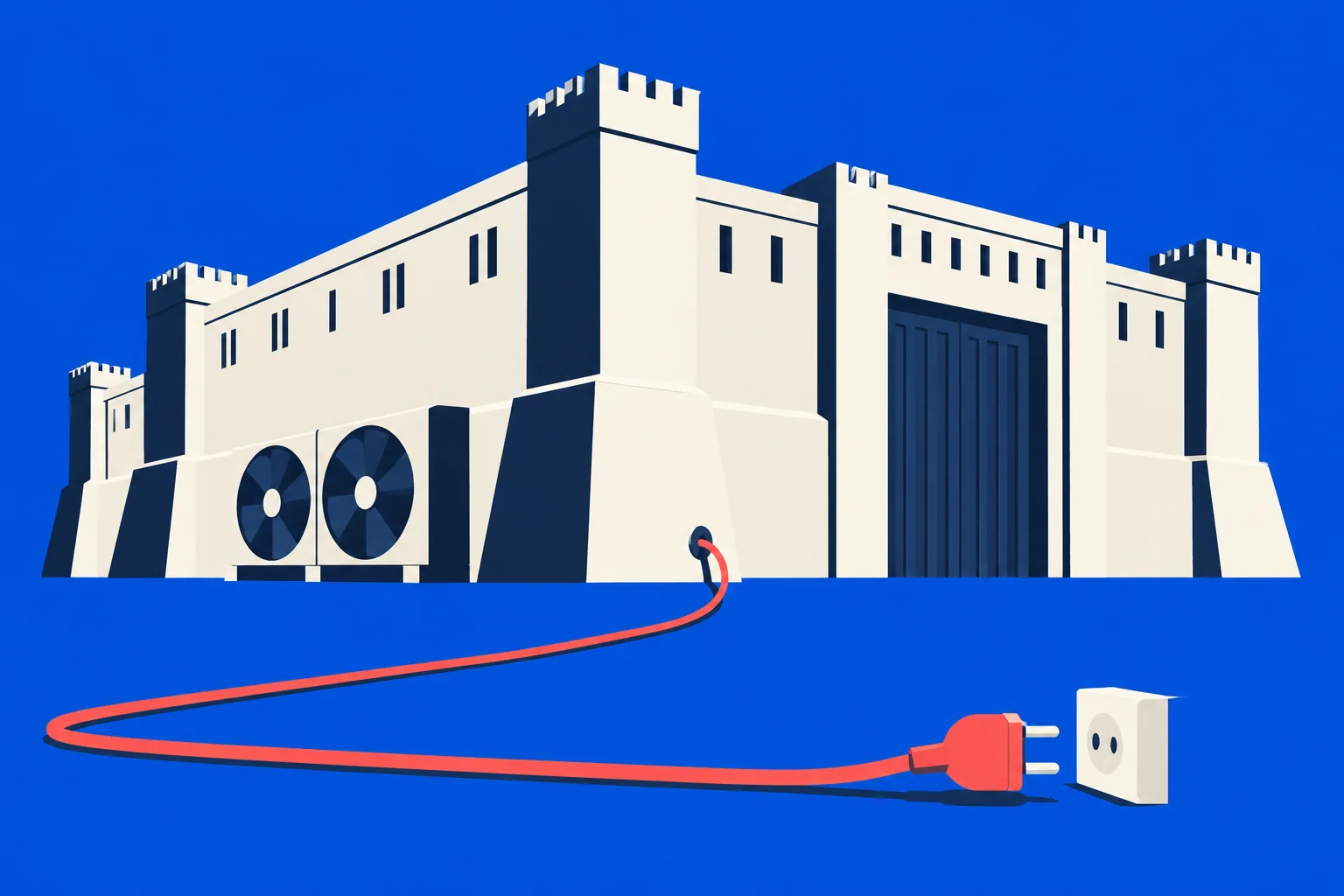
Andreas Krieg, a security-studies lecturer at King’s College London, told Al Jazeera that Rezaei’s warning is less a threat to the Pentagon than to Abu Dhabi, Riyadh and Doha, since it makes the case that hosting American AI infrastructure makes the Gulf a target. “The Gulf has traditionally sold itself as a stable environment in an unstable region,” Krieg said; that pitch is the thing Iran is trying to undercut. He also made a narrower technical point: an attacker does not need to destroy servers to take a data centre offline, because cooling and power systems sitting outside the hardened core are easier to hit and just as disabling. Gulf militaries, in his assessment, can intercept most incoming drones and missiles, but cables “are difficult to protect continuously” across hundreds of kilometres of seabed, and real resilience would require redundancy outside the Gulf’s own borders entirely.
What’s actually being staked
The scale being risked is itself large relative to the region’s economy. Stargate UAE, the G42-OpenAI-Oracle-Nvidia campus near Abu Dhabi, is designed for 5 gigawatts of capacity and backed by roughly $10 billion of initial investment, with the first 200 megawatts due online this year, according to CNBC’s coverage of the launch. Amazon has separately committed $5 billion to an AI hub in Saudi Arabia, where the PIF-backed Humain project is chaired by Crown Prince Mohammed bin Salman. Microsoft has pledged over $10 billion across Kuwait, Qatar, Saudi Arabia and the UAE through 2030, plus more than $400 million specifically for subsea and land connectivity, according to figures reported by Al Jazeera. Qatar’s sovereign fund and Blue Owl Capital added a $3 billion data-centre commitment in September 2025. None of that capital assumes the facilities it is building might sit inside a war zone twice in two years.
The region’s response so far is to route around the problem rather than armour it. Iraq signed a deal on October 7 with Qatar’s Ooredoo to carry data from the port of al-Faw to Rabia, near the Turkish border, Iraq’s communications minister Mustafa Jabar Sanad said, and Al Jazeera reported that Google and Meta have begun shifting some traffic onto Iraqi routes, citing an anonymous source relayed by Rest of World. That solves the single-point-of-failure problem on paper. Iraq is not, at the moment, a conflict zone in the way Yemen’s coast and the waters around Hormuz are, which is presumably the point. Whether that holds, and whether a 5-gigawatt campus built on a 26km-wide strait’s good behaviour is a sound bet either way, are the two numbers worth checking back on.