
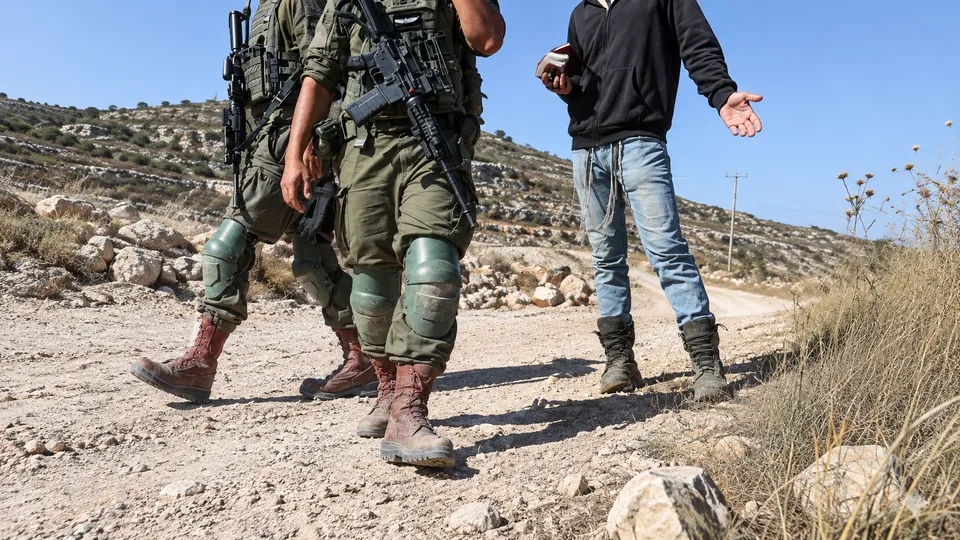
There is a village called Tal, southwest of Nablus, where the same man has been seen in two different costumes. The first time, according to an investigation published by Al Jazeera on November 10, he came in civilian clothes and assaulted farmers. The second time he came back to the same village in a military uniform, with a military-issued weapon, and gave the residents orders.
Reporter Mohamad Al-Atrash’s team identified him by facial matching and the testimony of villagers: Yitzhak Levi Filant, a settler from Yitzhar, known locally as “Yaqoub”. In August 2024 the Biden administration put him on the United States sanctions list. He did not stay there long. On January 24, 2025, four days after President Donald Trump revoked the order that created the programme, the Treasury removed everyone designated under it, and his name appears in the Federal Register notice of removals.
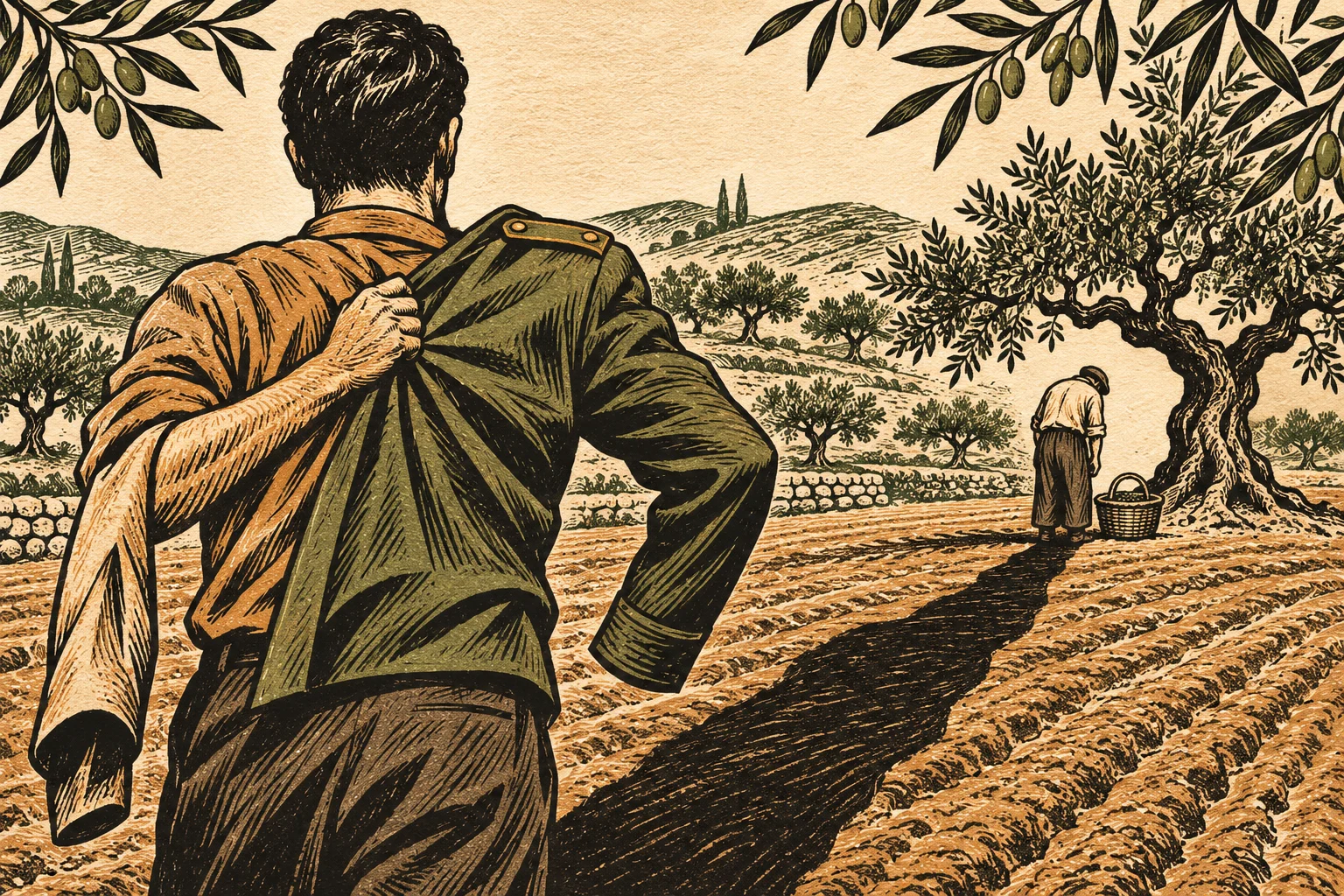
A uniform is a strange piece of cloth, one might reflect. It can turn an act into an order, and a raider into the authority the victim was supposed to call for help.
Abbas Melhem, who directs the Palestinian Farmers Union, describes exactly that conversion as ordinary daily life. “When the farmer says, for example, to a settler: ‘I will call the army,’ the settler tells him: ‘There is no need for that.’ He goes to his car, then puts on his military uniform and returns and tells him: ‘I am the army!’” The army and the settlers, he said, “are two sides of the same coin”.
Near Susya, March 7
In the Hebron area the overlap has killed people. On March 7, the investigation found, a settler named Nahman moved onto Palestinian land near the Susya settlement and called for reinforcements. An off-road vehicle arrived carrying two brothers, Shem Tov and Luria Luski. Luria Luski, who has been filmed in military uniform elsewhere, opened fire. Amir Shanaran, a local resident, was killed. His cousin was badly wounded.
His father told Al Jazeera what he saw.
“The first two shots in the air, bang, and then he came to my nephew, hit him with the muzzle of the rifle in his face here. I came and tried to defend my nephew. Shem Tov came and hit me in my head with the stick. I fell. My late son, may God have mercy on him, Amir, came. He came to defend me. He pushed the settler away from me. He shot him on the spot.”
By Al Jazeera’s count, 63 Palestinians have been killed by settlers since October 7, 2023, the day of the Hamas-led attacks on southern Israel that were followed by the war on Gaza. Fourteen of them were shot by people serving in the army or wearing its uniform. Other footage shows a soldier, Bezalel Talia, raiding Palestinian homes and detaining residents while also running a training camp for settler youths involved in attacks on villages.
The battalions
The overlap has an institutional home: the army’s Regional Defence battalions, known as Hagmar. Since 2023 they have grown sixfold, and their work has moved from guarding settlements to backing settler operations. Assaf Surya, the battalions’ deputy commander in Hebron, has acknowledged in an Israeli media interview that most Hagmar members are settlers doing reserve duty.
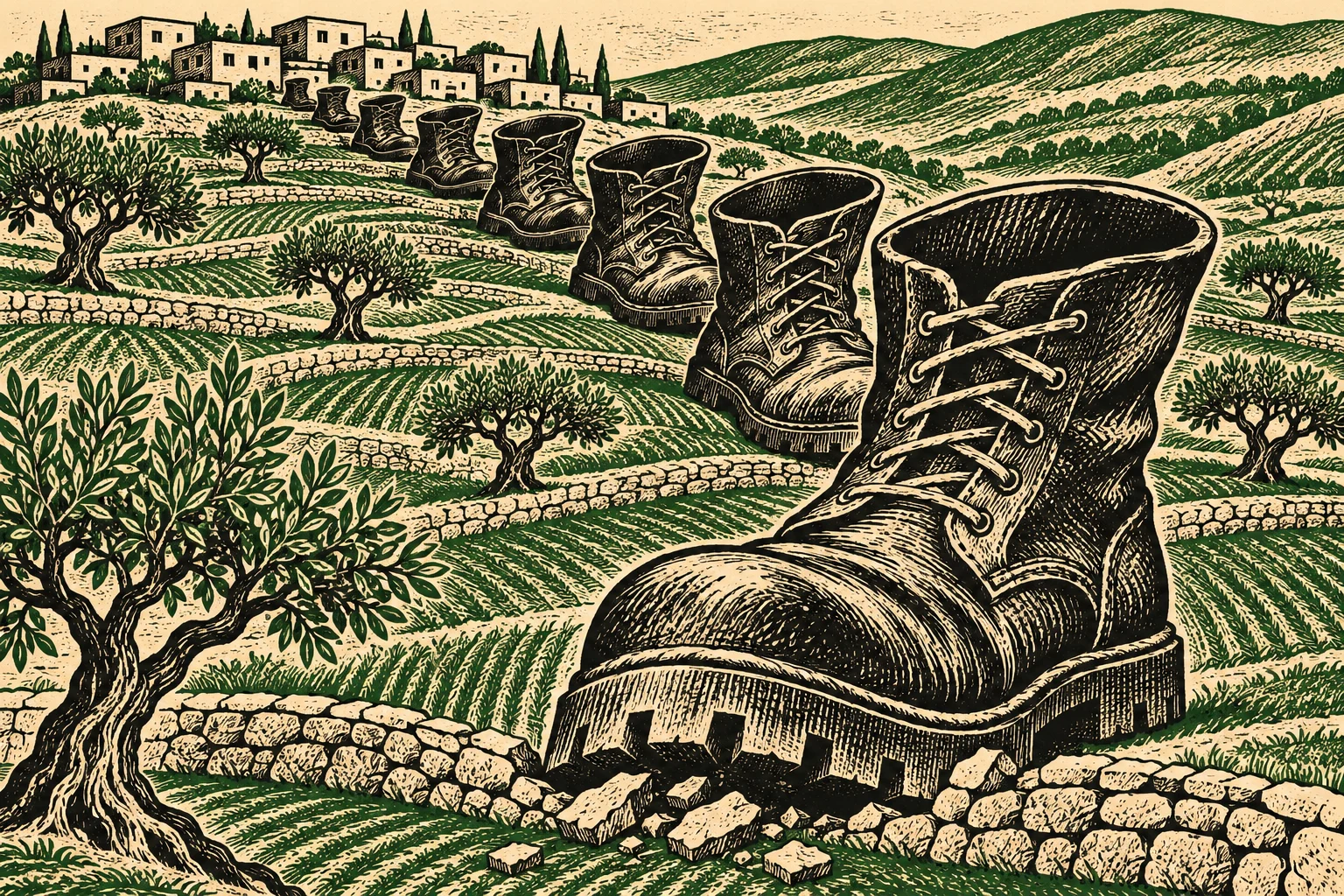
Mohannad Mustafa, an analyst of Israeli affairs, said the force was armed by the army and by the Ministry of National Security and backed politically and financially by the government. “Part of the idea of defending the settlements now has become geographical expansion, expelling the Palestinians from their lands and restricting them,” he said. Gideon Levy of Haaretz called the entry a decision: “The settlers made the decision to enter into the Israeli army and specifically in the units stationed in the West Bank.” Gradually, he said, more and more commanders are settlers themselves.
Licences, ranges, olives
The weapons come by two roads, through military service and through the government. National Security Minister Itamar Ben-Gvir has said that at least 120,000 civilian weapon licences have been issued to settlers under the current government. Training takes place at settlement firing ranges such as the one at Ma’on. Amir Daoud of the Colonization and Wall Resistance Commission adds that former security officers who retired or resigned have joined settler militias and handed them information to use against Palestinians.
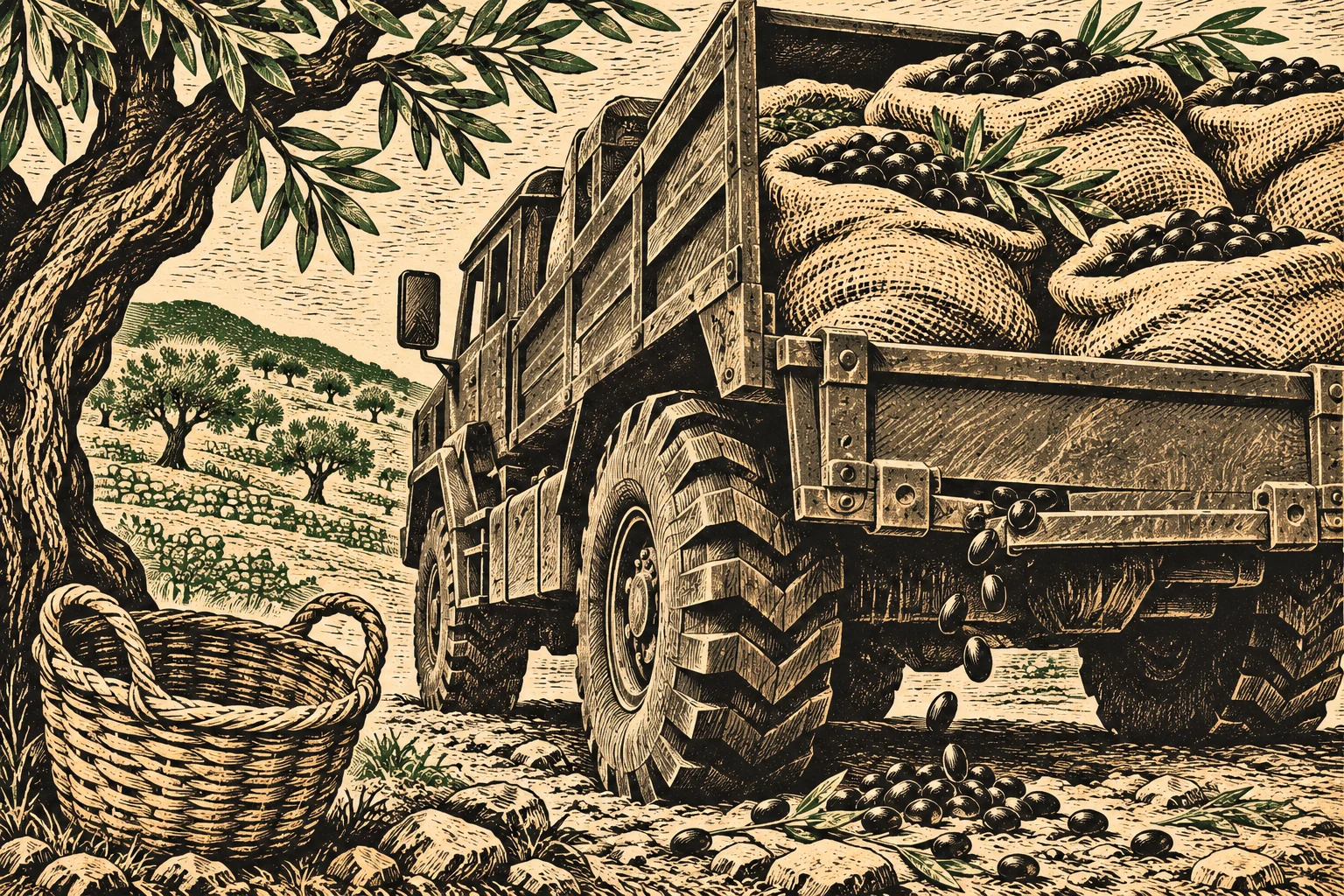
Al Jazeera says this armed network has let settlers take control of about one-fifth of the West Bank, a figure that matches what sheep-farming outposts alone are estimated to hold, and has forced 118 Palestinian communities from their land under Prime Minister Benjamin Netanyahu’s government. Often the official forces simply watch. Levy recalled a farmer killed by a settler in Yasuf weeks ago: the army “remained standing idly by”, he said, and nobody was brought to justice. Melhem said that of the roughly 50 tonnes of olives stolen so far this year, in a harvest season marked by beatings, most were taken with the army’s participation, much of the fruit “transported in the military cars themselves”.
Itamar Avneri, a founding member of the Israeli movement Standing Together, said the government gives settlers and army alike “a blank cheque in order to commit these crimes and escape any punishment”, and that the soldiers who join in “know that they will escape punishment”.
Ninety-three point six
On that point the bookkeeping agrees with him. The Israeli rights group Yesh Din’s data sheet for 2005 to 2025 found that 93.6 percent of the settler-violence investigations it monitored ended without an indictment: 1,578 files. Most were closed on grounds of “offender unknown”. Of nearly 30 organised mass attacks the group recorded between 2023 and November 2025, soldiers or police were reported present, helping directly or indirectly, in 16. Its [August 2026 report](https://s3.eu-west-1.amazonaws.com/files.yesh-din.org/The+Next+Frontier+(settler+violence+area+A-B)+report/The+Next+Frontier_August+2026_ENG.pdf) counted 225 incidents in or near 102 Palestinian communities from the start of 2025 to the end of June 2026.
“If the Israeli soldier shoots a dog tomorrow and if the settler shoots the Palestinian,” Levy said, “I believe that the soldier who shot the dog will be brought to justice quicker than that settler who shot targeting the farmer.”
In the hills near Susya the question of which of the two he is, soldier or settler, was settled for one family on March 7. The man who fired had worn both.