
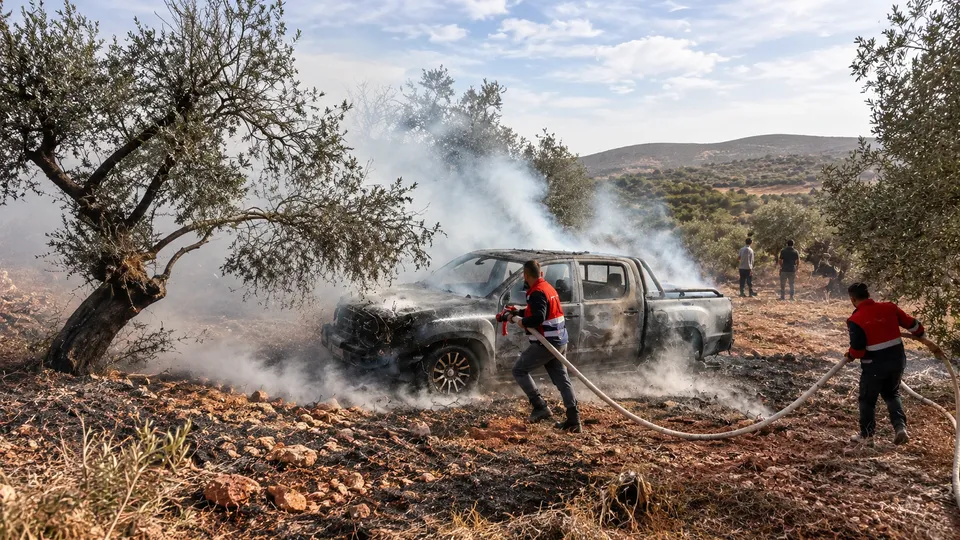
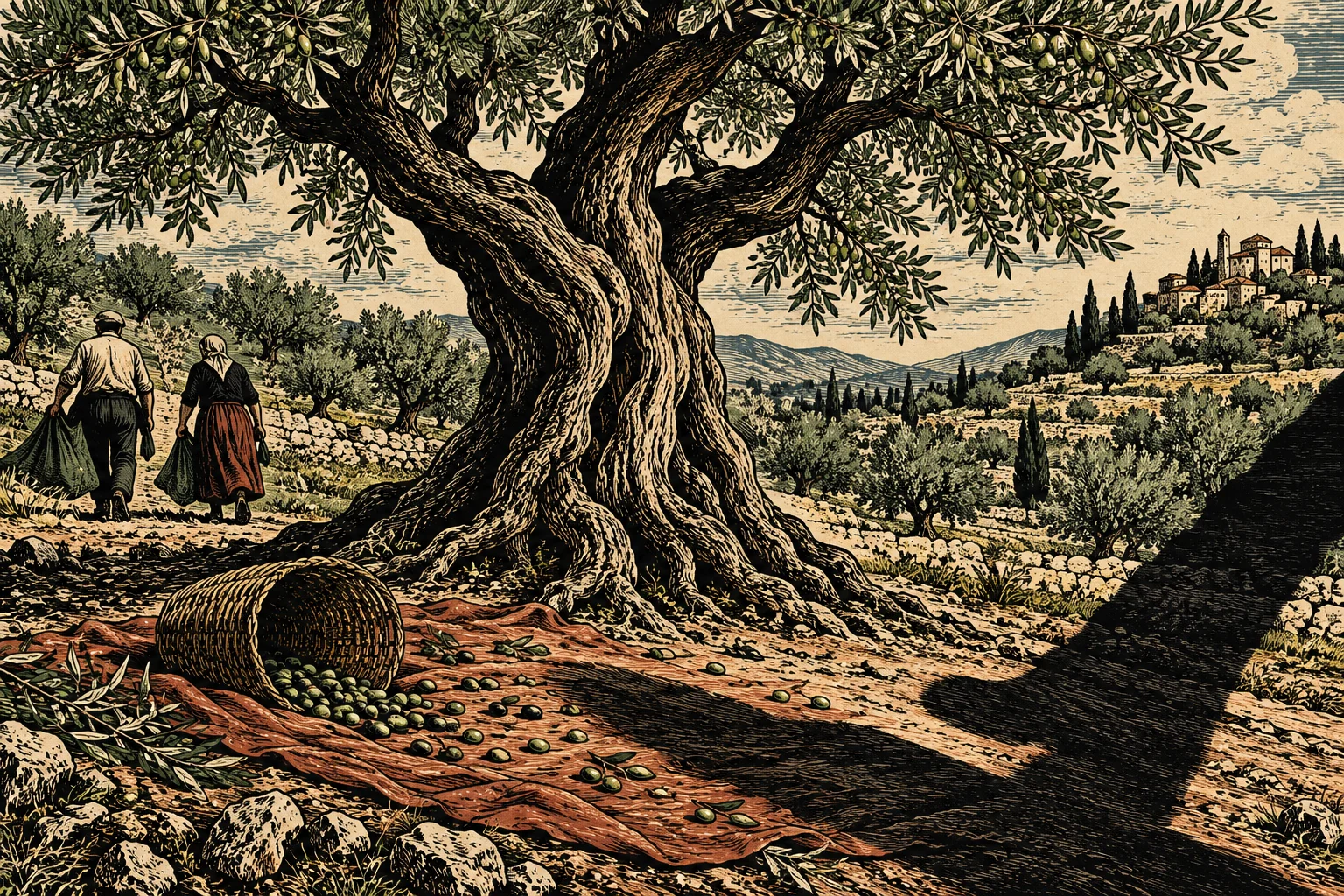
In the occupied West Bank, October is the month of the olive. A family’s income for the year can hang on a few weeks among the trees. This October the harvest also comes with a ruling, issued by a rabbi, on who is entitled to pick.
The edict
The ruling came from Rabbi Dov Lior, a prominent rabbi for National Security Minister Itamar Ben-Gvir’s Jewish Power party and a leading authority among the Hilltop Youth, the religious Zionist movement devoted to seizing Palestinian land in the West Bank. Lior wrote that harvesting olives in the Holy Land is entirely permitted, and that the security dangers give it an added virtue. Jews, he said, may harvest even in areas far from Jewish communities, so as to show ownership of the land in public and fulfil God’s commandment to conquer it. The land, he claimed, belongs to the Jewish people, and the Palestinians neither bought nor rented it.
The trees, in this reading, belong to whoever reaches them first. Saturday showed what happens when the edict meets the groves.
Saturday, village by village
The list compiled by Al Jazeera, which called the attacks pogroms, reads like a gazetteer of the hill country. In Ma’in, a village in the Masafer Yatta area south of Hebron, settlers attacked residents and six people were injured, four of them women and one a child, according to the Palestine Red Crescent Society. In Deir Ammar, west of Ramallah, Israeli forces opened fire on farmers picking olives and drove them off their land, the Palestinian news agency Wafa reported. Settlers in the same area shot and wounded two Palestinians. In Tuqu, southeast of Bethlehem, Israeli forces fired on a Palestinian civilian car.
In Kafr Malek, northeast of Ramallah, settlers raided a farm at dawn and killed about 20 sheep, the mayor, Najeh Rustum, told Al Jazeera. Israeli forces had come into the village the night before, he said, and fired tear gas canisters that set a house on fire and caused material damage.
Further north, on the Beit Furik plain east of Nablus, settlers destroyed olive trees while Israeli forces arrested landowners and pickers, according to Al Jazeera’s Nour Odeh, reporting from Ramallah. In the al-Hariq area of Deir Jarir, east of Ramallah, she said, settlers under army protection fired live ammunition at farmers to keep them from finishing the harvest and forced them away. They smashed the vehicle of an international activist, Jonathan Budlak, and threw stones at a farmer’s car. In Burqa, near Ramallah, soldiers and settlers together stopped farmers from picking. In Wadi al-Sha’er, southeast of Salfit, settlers attacked farmers.
Even foreigners were not spared. Al Jazeera also reported that settlers attacked a visiting European delegation near Taybeh. Belgium’s foreign minister, Maxime Prevot, said Belgian, French and Polish diplomatic staff and Catholic representatives were among those targeted. A French mayor, Bernard Baudoux, was assaulted and vehicles were damaged. Israeli police opened an investigation, and Prevot called for further European Union sanctions. A day earlier, masked settlers had beaten a Washington Post photographer at the harvest in Abu Falah.
Three hundred
Odeh would not treat these as separate incidents.
What we see, whether it’s in Beit Furik, Kafr Malek, Deir Jarir or elsewhere in the occupied West Bank, is part of a campaign.
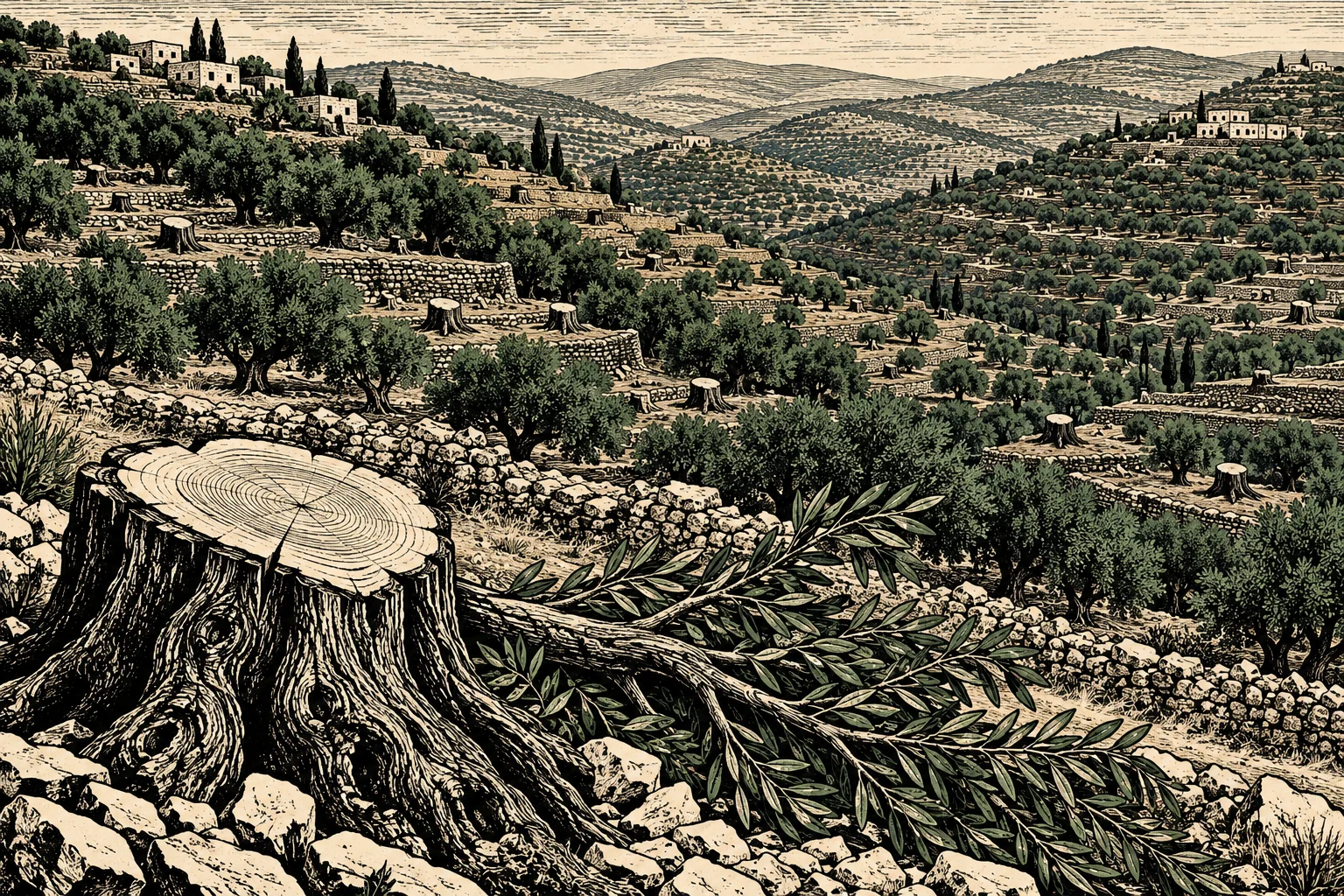
Settlers, she said, have grown bold enough to advertise their attack campaigns on social media. “There have been 300 documented attacks since the beginning of October, and that has had a devastating impact on a very important season for Palestinian farmers,” she said. The danger, in her account, comes from soldiers as much as settlers, since the army routinely steps in to protect the attackers and turns on Palestinians who defend their land.
She said Prime Minister Benjamin Netanyahu plays the attacks down and nothing concrete is done to stop them. “It is a matter of debate among politicians, but no one is stopping these settlers, whose names, locations and homes are known,” she said. In her view the violence is allowed to go on because “it is politically expedient”, and because it wins votes ahead of the elections on October 27.
A reflection, not a finding: a state that can find a man’s address but says it cannot find the will to knock on his door has already made a choice. It has simply decided not to announce it.
The road to Beit Jala
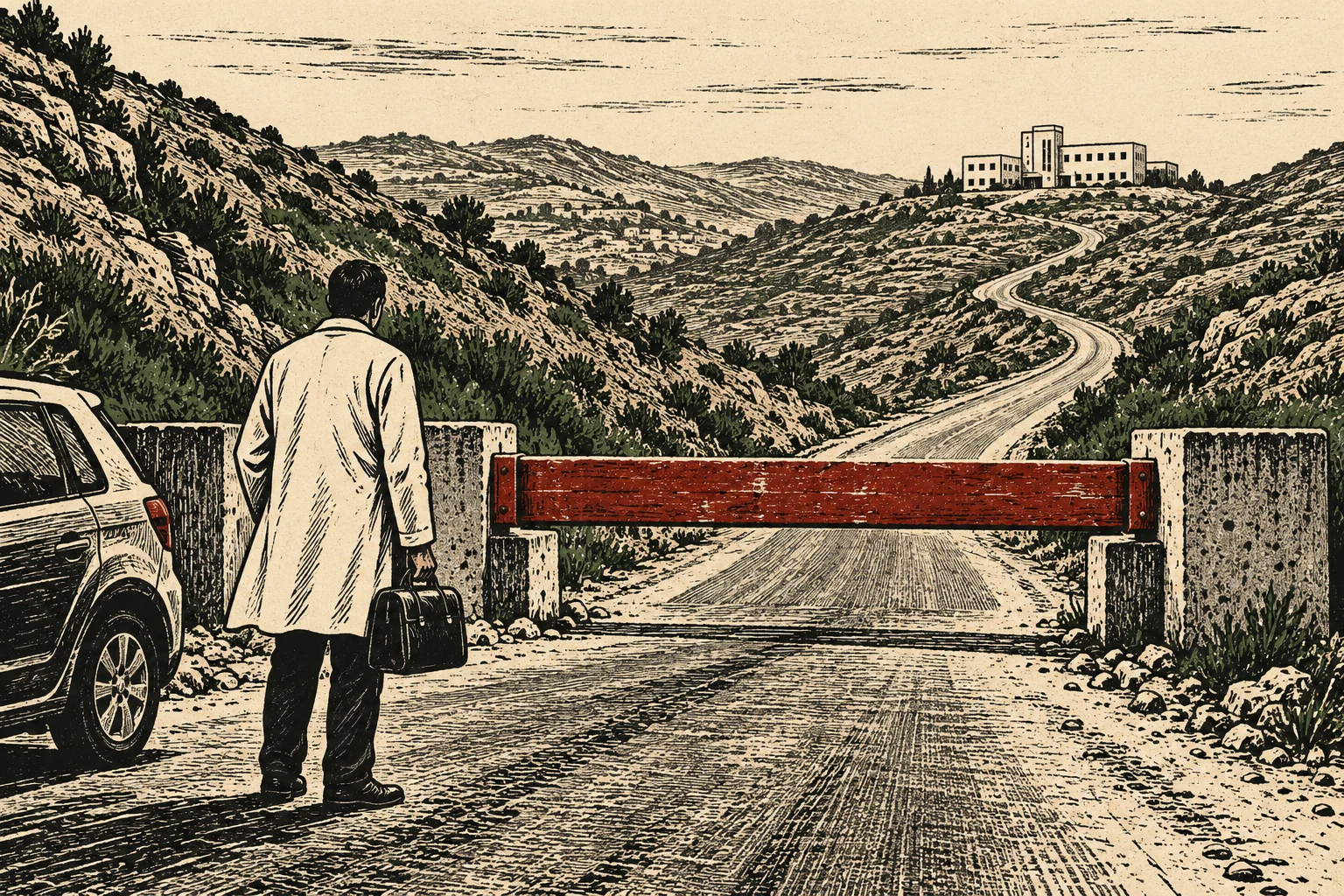
Violence in the groves is one way the occupation reaches daily life. A second Al Jazeera report, from Beit Jala Government Hospital, describes another, slower one. Khaldoun Atwan, who heads the hospital’s daytime oncology unit, commutes from Hebron. The Nabi Yunis checkpoint in Halhul seems to be “always closed”, so he leaves his car there and finishes the trip by taxi.
Beit Jala is the only government hospital for the roughly 320,000 people of Bethlehem governorate. According to the report, it is the only public provider of cancer treatment and dialysis for the southern West Bank, and it also takes patients from Hebron, East Jerusalem and sometimes Jericho. For three years the Palestinian Authority’s finances have been shrinking. International aid has fallen and Israel has disrupted its transfers of Palestinian tax revenue, a policy the report attributes to Finance Minister Bezalel Smotrich. Unpaid suppliers have stopped sending medicines, and staff are paid about half their wages.
The oncologist Hisham Amle said about 90 percent of essential supplies used to be available, but chemotherapy drugs, immunotherapies and biologics are now missing. The pharmacy director, Khuloud Dweib, said eight oncology medicines and four biologics had recently arrived, enough for about six to eight weeks. Iyad Dari, a dialysis physician, said some staff can afford to come in only two or three days a week. He described a patient from Nahalin held for four to five hours at a checkpoint, who reached a 7–8am appointment at 4pm. A journey that once cost about 10 shekels now cost more than 100, and some patients need dialysis four times a week.
A Bethlehem man named Ahmed said his sister, who has Crohn’s disease, went three months without Humira. Atwan said he cannot count the deaths linked to the disruption, because some poor patients die at home. Milena Ansari of Physicians for Human Rights Israel said that Israel, as the occupying power, is responsible for ensuring access to healthcare. The report carries no Israeli response.
Atwan’s shift ends at 3pm. He then tries to reach Bab az-Zawiya in Hebron for shared transport, with no way of knowing which checkpoints will be closed.