
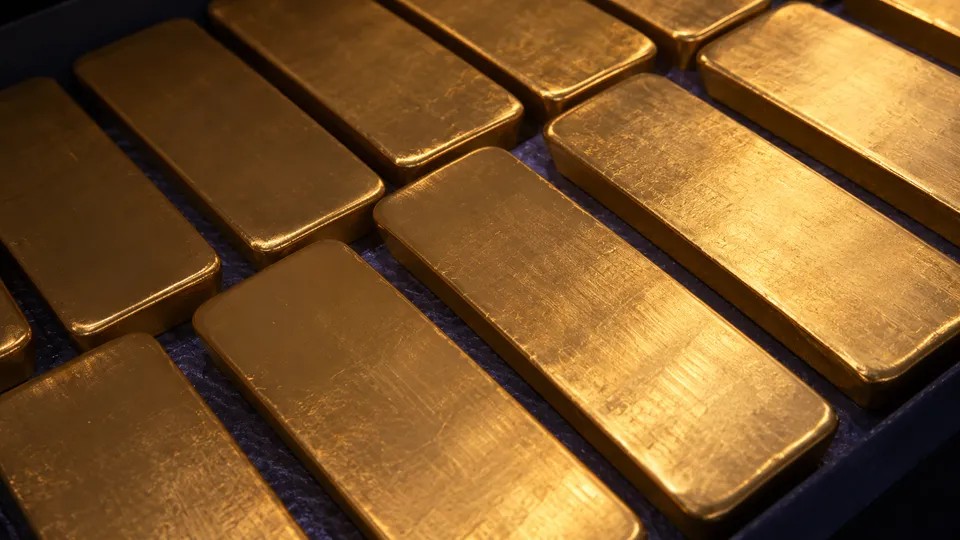
Hong Kong imported 112.7 metric tons of Russian gold from January through July, already a record for any full year, according to an analysis of official trade data by the precious metals firm BullionVault.
The previous high was the 92.1 tons Hong Kong took in during all of 2025. In 2021, the year before Russia’s full-scale invasion of Ukraine, the figure was 3.3 tons. Russian bullion made up almost 15% of the city’s non-monetary gold imports over the seven months, up from 0.6% in 2021, [CNBC reported](<https://www.cnbc.com/2026/10/06/russia-gold-hong-kong-china-western-sanctions.html>). BullionVault puts the share at 14.7%, according to [its own write-up](<https://www.bullionvault.com/gold-news/gold-price-news/gold-russia-china-090720261>) of the Hong Kong Census and Statistics Department figures.
Not every count is that high. The Financial Times reported in September that imports for the same seven months had reached a [record of nearly 100 tons](<https://united24media.com/world/russian-gold-imports-to-hong-kong-reach-record-100-tonnes-amid-western-sanctions-22320>). It was not clear what accounted for the gap between the two tallies. The import data also don’t show where the gold goes after it lands.
Vita Spivak, a senior consultant at Gatehouse Advisory Partners, told CNBC that most of it goes on to the mainland. “Most gold goes to Mainland China as it hasn’t placed sanctions on Russian gold,” she said. Getting around sanctions isn’t the only draw, Ms. Spivak said: “It provides direct access to the world’s largest gold-consuming market.”
Before the war, Russian producers sold mostly to London. Russia’s gold exports to Britain from 2019 to 2021 were equal to about two-thirds of its mine output, according to BullionVault data. That route closed on March 7, 2022, when the London Bullion Market Association [suspended all six Russian gold and silver refiners](<https://www.bloomberg.com/news/articles/2022-03-07/lbma-suspends-russian-gold-refineries-from-good-delivery-list>) from its Good Delivery lists, the accreditation needed to trade bars in the London market. Bars those plants made before that date are still accepted, according to [the association’s guidance](<https://www.lbma.org.uk/good-delivery/russian-good-delivery-bars-update>). The United States, Britain and other Western governments then put their own restrictions on Russian gold.
“Russian exports of gold to the UK and other Western-sanction nations of course collapsed,” Adrian Ash, BullionVault’s director of research, told CNBC. He said the Hong Kong numbers reflected “the kind of support and bilateral trade for which Putin has repeatedly thanked Xi.”
Moscow has rebuilt other parts of its trade around sanctions too, including through a network of shell companies that moves money for Russian clients.
The Russian metal is arriving as Hong Kong’s gold trade grows across the board. The city imported nearly 766 tons of non-monetary gold in the first seven months, on course to pass the 974 tons it took in during 2023, according to BullionVault. June alone brought more than 150 tons, the most in a month in over a decade.
Hong Kong was long the main entry point for gold headed into China, though Beijing has since opened other import hubs, including Shenzhen and Beijing itself, and the city’s share has shrunk, according to S&P Global. It is now spending on storage, clearing and trading facilities.
“Hong Kong has always been an important entre-pot for gold going into China,” said Rhona O’Connell, head of market analysis for EMEA and Asia at StoneX. Shanghai has taken business from the city in recent years, Ms. O’Connell said, but Hong Kong is in “a race with Singapore for hub supremacy and is about six months ahead in terms of infrastructure.”
China is buying heavily. The government has named gold a “strategic mineral” and has pushed physical bullion to households as a way to store savings. The People’s Bank of China added more than 40 tons to its official holdings in the first half of 2026, more than double what it bought a year earlier, according to S&P Global data.
“We do know that whether it’s the PBOC or if it’s the Chinese consumers, they’ve all been buying quite a bit of gold,” Charles Chang, Greater China country lead for corporates at S&P Global Ratings, told CNBC in an interview. “In times of high uncertainty, consumers tend to want to protect their savings, and they find gold as one vehicle for that.”