

Health officials in Taiz, the Yemeni city Houthi forces have encircled since early October, said a recent fall in recorded cases of diarrhea and cholera likely masks a worsening outbreak, because many sick people can no longer reach a clinic, according to a report by AbdulHakim Helal for Al Jazeera published on Saturday.
The city’s Epidemiological Surveillance Department recorded 5,642 cases over its latest four-week reporting period, according to figures it gave Al Jazeera. Of those, 5,228 were acute watery diarrhea, 232 were suspected dengue fever and 182 were suspected cholera.
Dr. Yasin Abdulmalik, the department’s director, said the number of diarrhea cases had dropped because the roads were closed and black-market fuel cost too much for patients to make the trip. “More than twice this number of cases were unable to reach” health facilities, Dr. Abdulmalik said.
Taysir al-Samiei, a health communications official, said patients’ ability to get to hospitals had fallen by 60 to 70 percent by the end of the siege’s second week.
A video that circulated on Tuesday showed a woman from Jabal Sabir holding the body of an infant relative, Gaza Ali Abdulmughni al-Shaqab, wrapped in a white shroud. The girl died after her family couldn’t get her emergency care.

“Our children are dying because of the siege. We have no open road, no medics and no medicines,” the woman said.
The Yemeni Network for Rights and Freedoms said Houthi forces had attacked the vehicle taking the baby to the hospital along mountain roads. That account could not be independently verified.
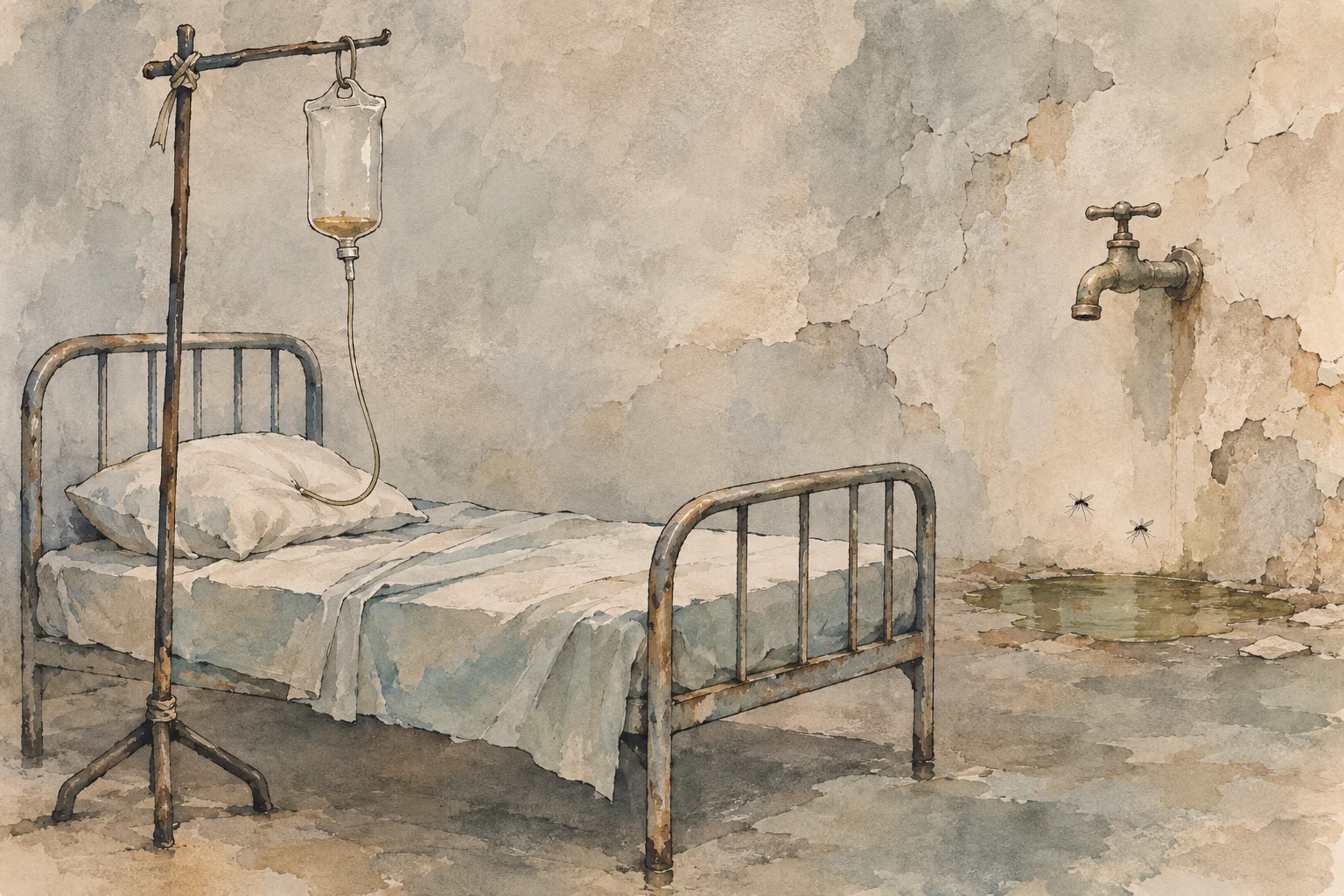
Dr. Fares al-Absi, a health consultant, tied the diarrhea and cholera cases to unsafe water and said access to the al-Dhabab water basin had been restricted. “Only about 8 percent of Taiz’s water needs are currently being met,” he said.
Dengue is spreading too, Dr. al-Absi said, because stagnant water and uncollected rubbish give mosquitoes places to breed. He accused the Houthis of blocking sanitation trucks from reaching the city’s western landfill.
The United Nations’ figures run higher than the local count. The UN Office for the Coordination of Humanitarian Affairs said nearly a quarter of a million people had lost access to basic health care, among them more than 186,000 children under 5 and 23,000 pregnant women, Arab News reported. The office said 12 hospitals were at risk of closing or had already cut services, while more than 1,400 cases of acute diarrhea and suspected cholera were reported in a single week.
The siege tightened in early October, when the Houthis cut the last major supply route into the government-held parts of the city, after taking ground along the Red Sea coast in September. Government counteroffensives have made limited gains. The government says nearly two million people have been cut off from food, water, medicine and fuel for more than a month, and the UN has warned that 800,000 people in the city were cut off.
The World Food Program said on Oct. 14 that it could not reach more than 600,000 people who depend on its aid, calling the situation “especially alarming.” Human Rights Watch said on Oct. 29 that the siege “may amount to the war crime of using starvation as a method of warfare.”
The Houthis deny responsibility and blame government forces. Residents, aid workers and UN officials blame the Houthis, according to Human Rights Watch.
OCHA and its health partners are coordinating a 90-day emergency plan to keep lifesaving services running, restore disrupted care and strengthen disease surveillance.