
The square on the west side of the Brandenburg Gate takes its name from a date, the eighteenth of March, and in Berlin dates are never innocent. On Saturday, 31 October, at two in the afternoon, under a sun that gave light but little warmth, people began to fill the Platz des 18 März. Germany had joined the movement. As Gouri Sharma reported for Al Jazeera, thousands rallied in the capital and in more than 30 other German cities, making the country the latest in Europe to be reached by the wave of student protest moving across the continent.
The crowd was not only young. There were anti-fascist activists and students dressed for Halloween. There were the grandmothers of Omas gegen Rechts, the elderly women who march against the far right. And there were camera crews. The old had come to stand beside the young, which tells you something about who believes the young.
A loose alliance
The call came from a loose alliance that named itself Gen Z Regelt, roughly “Gen Z sorts it”. By Saturday morning nearly 180,000 people had signed up across 34 cities, with Berlin, Frankfurt, Cologne and Munich as the main hosts; Reuters had put the number expected at more than 160,000. The organisers listed six grievances. Among them were the rising cost of living, cuts to education and military conscription, the last a matter of government plans that would put this generation in uniform.
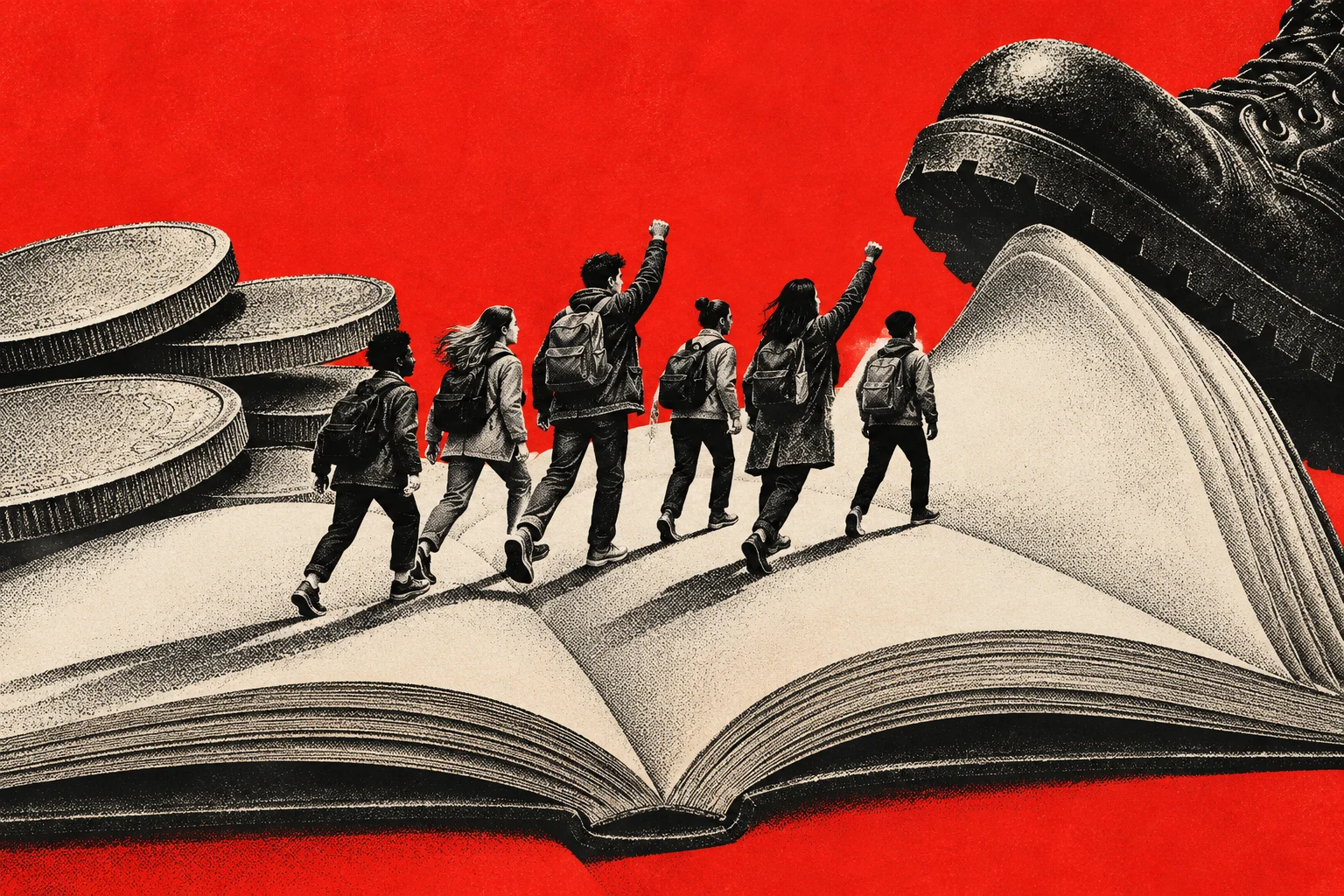
Earlier in October, Anadolu reported the student initiative’s call for nationwide protests under a different name, Gen Z steht auf, and the police warning that radicals might attach themselves to it. A movement with no single name, no party and no headquarters is hard for a ministry to read. That is part of its strength, and part of its weakness.
Two rulers, one square
Then came the counting, the old ritual of every protest. Berlin police estimated about 5,000 demonstrators. The alliance said about 10,000. Nationwide, the organisers told the dpa news agency that more than 100,000 had taken part, a figure well below the 180,000 who had signed up, and one that no one else had confirmed. The state counts with one ruler and the street with another, and in France, as the same quarrel over numbers showed, the gap between the two counts becomes a small political fight of its own.
Part-time jobs and billions
Veronika Dinter is 23 and studies political science in Hannover. She took a part-time job to pay for her degree. She called the crisis “the political failure of our government”, and she faulted Chancellor Friedrich Merz for funding the military “with billions of euros” while education is cut. Emma Heymann, a 24-year-old student in Berlin, said her generation is angry at cuts that eat into the quality of life, and she objected to spending “billions on the military” and on what she called genocide in Gaza.

Phil Tziartzianis travelled eight hours from Kassel to stand beside his friend Jan Chrominski. It mattered, he said, to be “among other young people who feel the same way”. Some in the crowd carried placards bearing images of Merz, Reuters reported, and a Technical University of Berlin student, Sean Baker, said he had come to draw attention to the crumbling buildings on his campus. The alliance’s spokeswoman, Lina Friedrich, framed the day in the oldest terms there are: “We are here today to fight for peace and freedom, rather than for war and coercion.”
So the arithmetic is simple. A young woman works part-time to pay for lectures. In those same years the state finds billions for arms and asks her generation to be ready to serve.
Boards on the windows
Authority prepared for the march as it always does: by expecting the worst. Politicians had warned beforehand that the protests might turn violent. The demonstrators answered that this framing was a way of not talking about what they had come to say. The day before, according to Reuters, workers had nailed protective wooden boards over the windows and storefront of a luxury boutique in Berlin. The organisers told marchers to keep their faces visible, even under Halloween costumes.
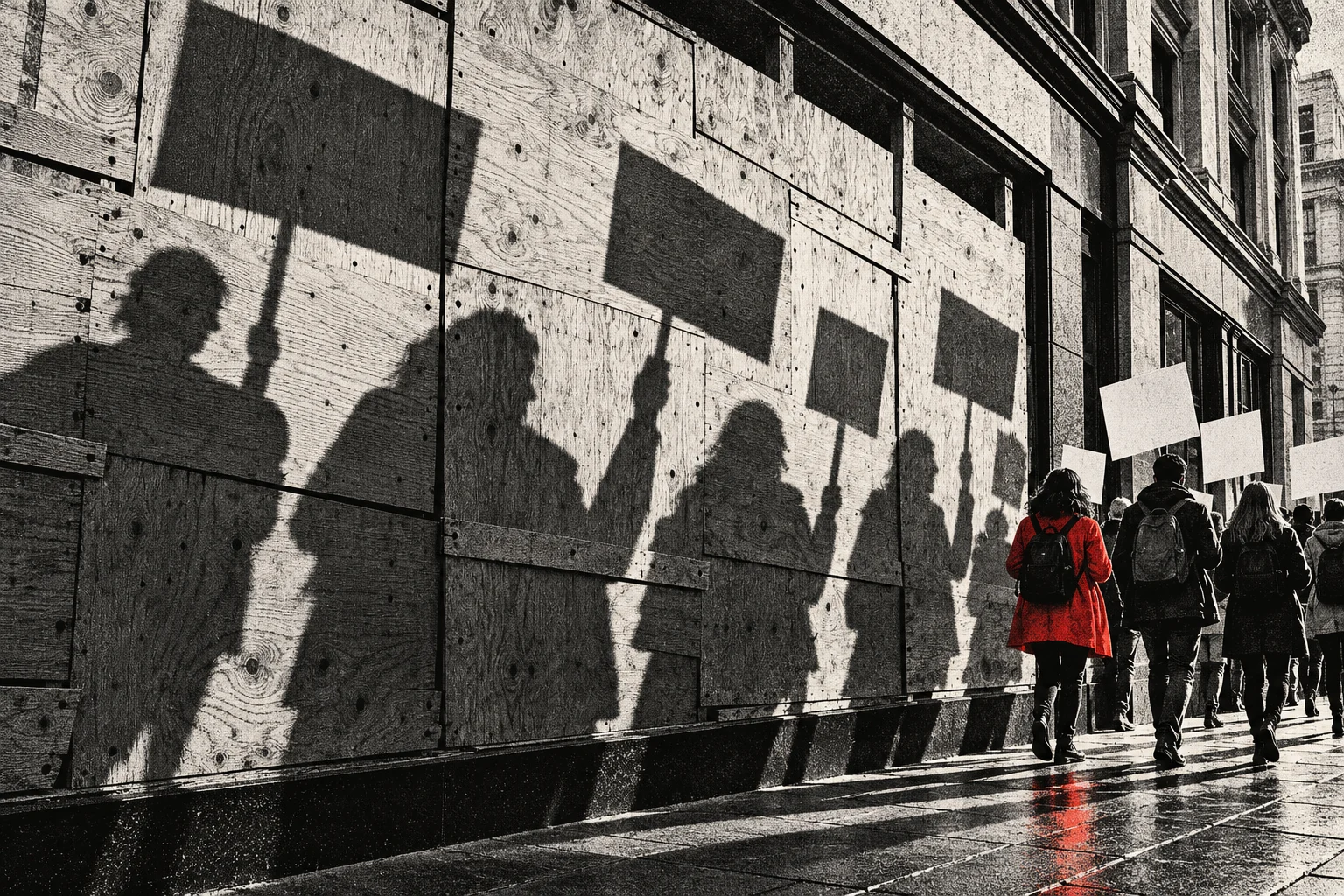
Dinter’s request to the police was plain: “to not confront our demonstrations with any kind of violence.” In Berlin it held. Police reported minor trouble, pyrotechnics among it, and said the day had passed largely peacefully. In Cologne it did not quite hold: scuffles broke out when officers moved to contain a march. Around 5:30pm a separate protest, called by another alliance, began in a different part of the capital. The national school students’ organisation, BSK, had already distanced itself from the initiative and planned its own day of protest for 20 November.
A continent of the young
Kilian Hampel, a senior research fellow at the University of Konstanz’s Future of Work Lab, said the frustration had been building for years and belonged to a wider European wave. He called complaints about poor educational infrastructure “legitimate”. Similar protests have come before in France, Belgium, Italy, Spain and Serbia. In France, the lycées were blockaded in early October and the young marched by the hundred thousand later in the month.
On the same Saturday, as CNN reported, hundreds of thousands marched again in France, where the unions have called a nationwide strike over the cost of living for 5 November. Germany’s school students have their own date, 20 November. The calendar is filling up.