
It began in late September with the buildings: classrooms falling apart, teachers who never arrived, too little money for anything, and a university admissions system the lycée students wanted changed. It was a small grievance, the kind ministries usually wait out. They could not wait this one out. The lycées blockaded their own future, the Yellow Vests joined them, and the unions followed. A movement that started as a complaint about leaking roofs has become a weekly test of the French state’s nerves.
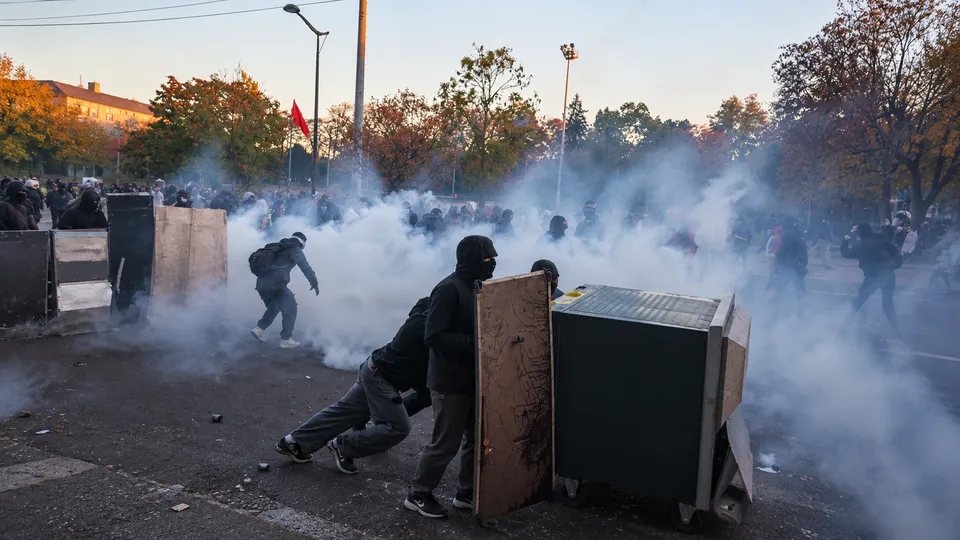
On Saturday, 31 October, the third weekend in a row, the test came again. Police fired tear gas at protesters in Paris and Lyon, Al Jazeera reported, as hundreds of thousands of people, most of them young, marched over the cost of living and the state of the schools.
Two arithmetics
The authorities put the national turnout at 320,000, 70,000 of them in Paris. A week earlier they had counted 410,000, including 110,000 in the capital. The coalition of youth organisations and student unions gave its own figure: nearly half a million, 200,000 of them in Paris.
Every revolt in France has two counts, the state’s and the street’s, and the space between them is where each side keeps its hopes. The government says the movement is shrinking. The organisers say it is holding.
The edge of the map
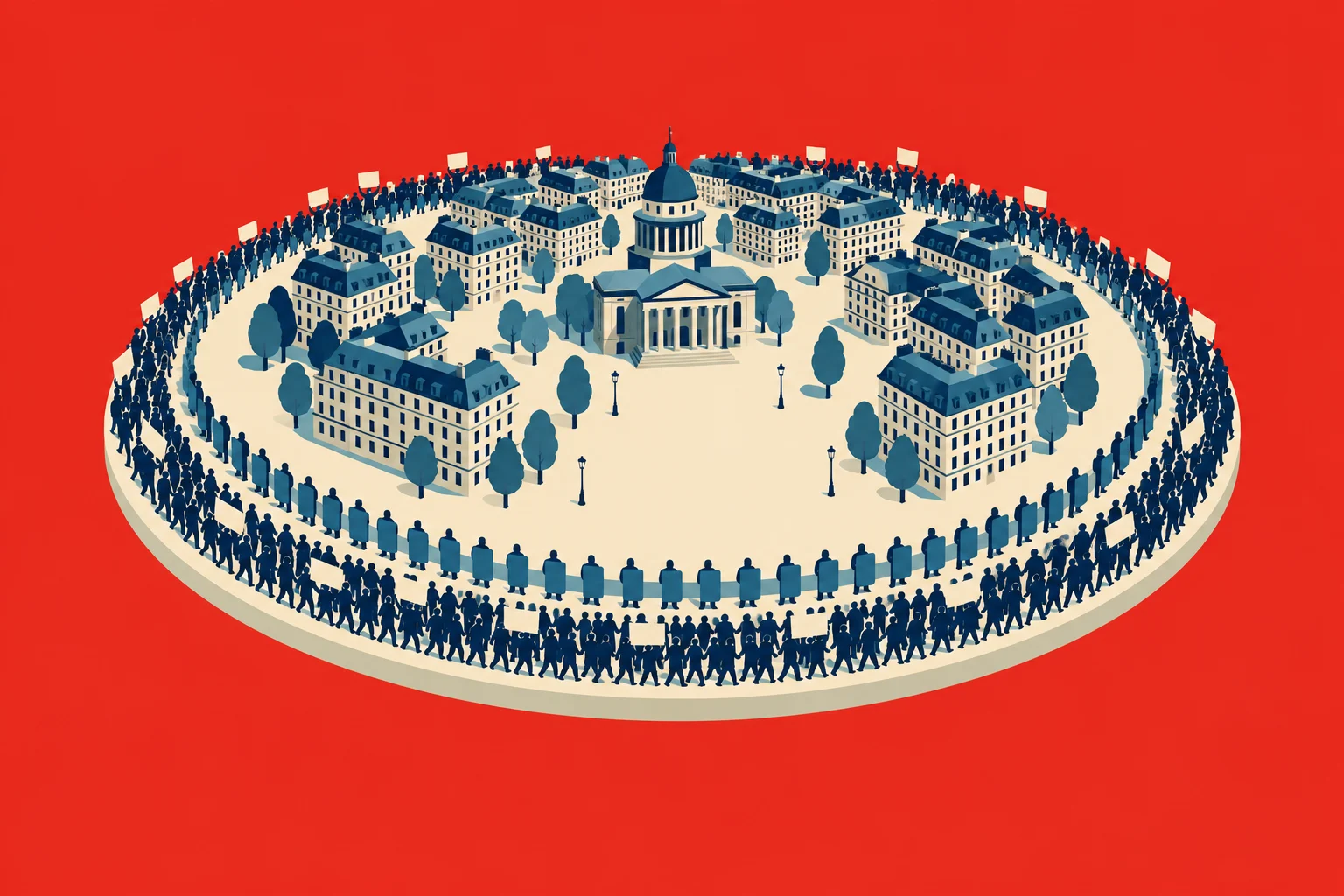
The Interior Minister, Laurent Nuñez, had warned of a “very high risk of public disorder” and ruled that demonstrations would be authorised only outside town centres. Seventy thousand law enforcement officers were deployed across the country. In Paris, after a last-minute court battle, the main march was moved away from the centre, away from the ministries and the monuments, out to the city’s edge.
Then there was Halloween. Nuñez spoke of separate calls to gather from 8 p.m. “by radical far-left groups and radicalized Yellow Vests,” some of them invoking the holiday while calling for “revolution” and “insurrection”. He called these incitements to serious public disorder and said the gatherings would be banned. The word “purge”, taken from the film series in which all crime is legal for twelve hours a year, had been circulating online. On X the Paris police posted: “At Halloween, the rules remain the same!” Covering your face in public carries a €150 ($170) fine. Carrying a weapon, even a fake one, can bring up to three years in prison and a €45,000 fine.
A government had to remind its citizens that a plastic sword is still a sword. That tells you how far the autumn has gone.
The day began as a carnival. Thousands walked through eastern Paris dressed as anything from Spider-Man to Frankenstein, with a helicopter circling overhead. By afternoon, according to CBS News, police were using tear gas and water cannon in Paris, Marseille, Lyon, Toulouse and Rennes. In Lyon, projectiles were thrown at officers. In Paris a riot policeman was hit by a Molotov cocktail as his unit charged. By 2 p.m. officers had made 27 arrests, against 217 the Saturday before. Later in the day the interior minister said the protests had gone well despite the clashes.
Jean-Luc Mélenchon, the hard-left presidential candidate, marched too. He accuses President Emmanuel Macron’s government of “taking an increasingly authoritarian turn.”
The ghost of 17 October
Officials are still haunted by the first great Saturday. On 17 October more than 550,000 people marched, CNN reported, and according to the Interior Ministry more than 3,000 shops were attacked or looted, some of them destroyed, and over 2,700 people were arrested. Nuñez says more than 1,000 officers have been injured since the movement began. The 70,000 officers of the second Saturday were deployed again for the third.
Asked by the YouTuber Hugo Travers about the students who have been hurt, Macron called the violence a “collective failure”.
I think no high school student started pushing for their demands expecting to suffer such terrible consequences. And I don’t know a single police officer who signed up to find themselves caught up in such terrible and violent moments either.
It is a strange kind of sentence. The man at the top of the state describes the state’s own work in the passive voice, as if it were the weather.
Across the Rhine
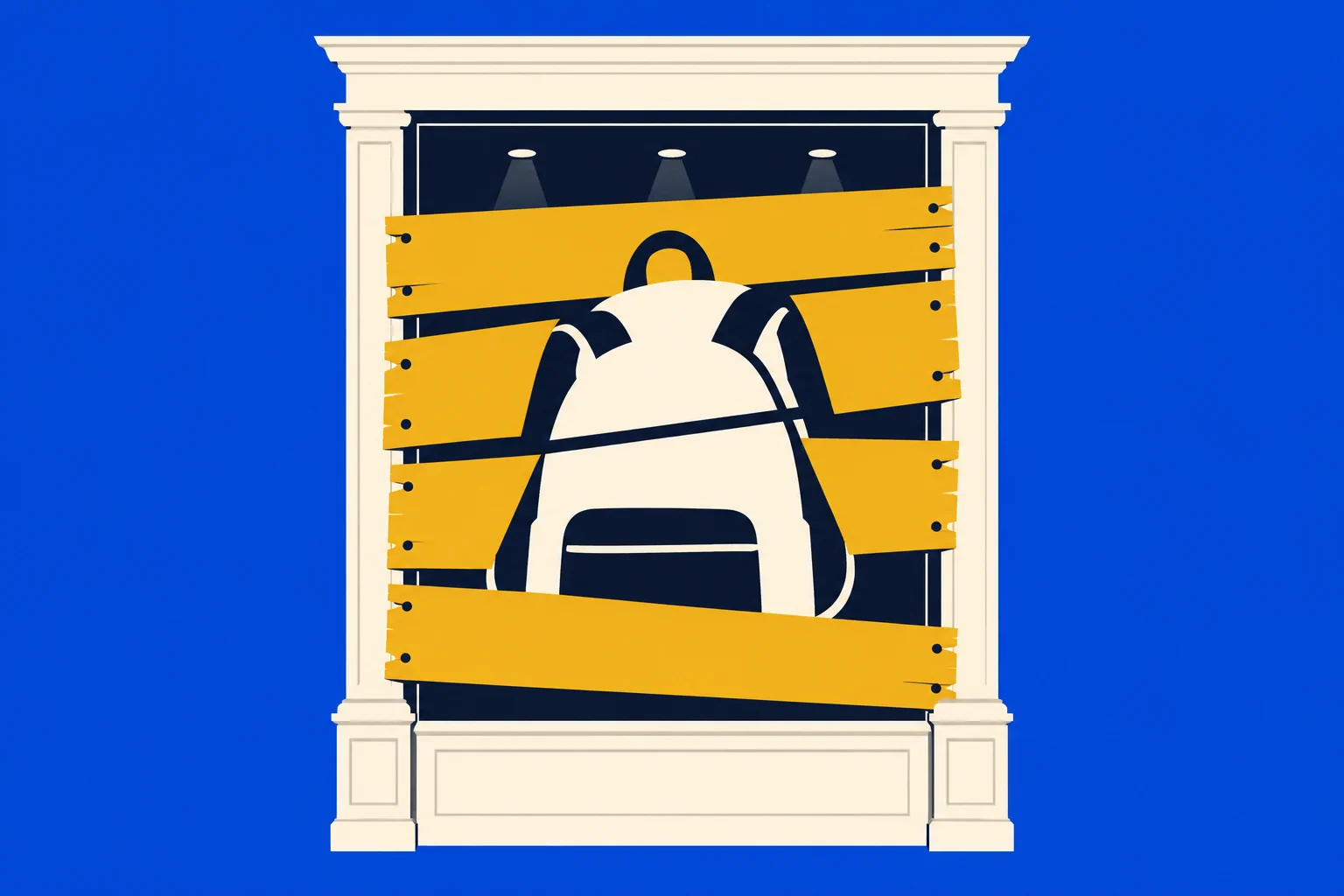
The same Saturday the contagion reached Germany. A new youth movement, “Gen Z regelt”, or “Gen Z has got this!”, called people out against the cost of living, underfunded schools and universities, environmental neglect and a possible return of compulsory military service. “We are young people who no longer want to watch decisions being made about our future without us,” its website says. It asked marchers to stay peaceful and to keep their faces visible, costumes or not. Extra police were sent out across the country. On Berlin’s Kurfürstendamm the luxury shops boarded up their windows.
The expectations varied. Roughly 150,000 people had registered in about 30 cities, according to Al Jazeera. Reuters put sign-ups at more than 160,000 across 34 cities. The streets gave a smaller answer. Reuters reported that official afternoon figures were well below the 182,000 the organisers had first expected: police in Frankfurt, Munich and Berlin counted 6,000 protesters, while the organisers’ website showed around 36,000. At the Brandenburg Gate, where organisers had hoped for up to 10,000, police counted 2,700 and described the march as trouble-free.
After dark the mood changed. In Prenzlauer Berg a more radical march, “Gen Z hat genug!” (“Gen Z has had enough!”), which the Berlin organisers had disowned in advance, set off firecrackers, and the Berliner Zeitung reported 56 arrests. In Frankfurt, police said Molotov cocktails had been thrown at emergency workers and shop windows smashed, and part of the Zeil shopping street was closed. The national school students’ organisation, the BSK, distanced itself from the movement while calling the students’ concerns legitimate.
France’s next date is Thursday, 5 November, when the inter-union coalition has called a nationwide strike over rising living costs. The pupils who started this over their crumbling classrooms will be marching next to their parents’ unions.